For years, the global luxury car market has been moving in one clear direction: electrification, digitalization, and software-driven experiences. Flagship sedans are no longer defined purely by engine size or handcrafted interiors, but by screens, AI systems, and autonomous driving capabilities.
However, not every brand is following that path. Some manufacturers are deliberately stepping back into tradition, reviving a style of luxury that prioritizes presence, ceremony, and mechanical power. This shift is subtle, but it is becoming increasingly visible in high-end automotive design.
The Hongqi Guoya represents one of the most striking examples of this trend. Rather than competing directly with electric-first luxury sedans, it embraces a different philosophy. With a powerful V8 engine, presidential design language, and a strong emphasis on rear-seat comfort, the Hongqi Guoya raises an important question: is old-school luxury making a comeback?
The Return of Old-School Luxury
Luxury used to be defined by a very specific formula. Large displacement engines, long wheelbases, handcrafted interiors, and a commanding road presence were the core ingredients. Vehicles were designed not just for driving, but for being seen and experienced as symbols of power.
Over the past decade, however, that formula has been challenged. Electric vehicles have introduced a new type of luxury focused on silence, instant torque, and digital ecosystems. Screens have replaced analog controls, and software updates now define long-term ownership value.
Despite this shift, there remains a segment of buyers who value tradition. These customers appreciate the emotional appeal of a V8 engine, the craftsmanship of physical materials, and the formality of a chauffeur-driven experience. Consequently, brands like Hongqi are revisiting these principles.
The Hongqi Guoya is not simply nostalgic. Instead, it is a deliberate attempt to blend heritage with modern expectations while preserving the essence of classic luxury.
What Is the Hongqi Guoya?
The Hongqi Guoya is a flagship luxury sedan developed by China’s historic Hongqi brand. Positioned at the very top of its lineup, it is designed to serve elite buyers, including government officials, business leaders, and high-net-worth individuals.
Dimensionally, the Guoya sits firmly in limousine territory. Its extended length and tall stance give it a commanding presence on the road. Moreover, its proportions emphasize rear-seat space, reinforcing its role as a chauffeur-driven vehicle.
Unlike many modern luxury sedans that focus on driver engagement or digital interfaces, the Guoya prioritizes comfort, dignity, and presence. It is built to make an impression at official events, ceremonies, and high-profile occasions.
This positioning sets it apart from many global competitors. Rather than following trends, the Hongqi Guoya establishes its own identity rooted in cultural and historical significance.
V8 Power and the Emotional Appeal of Traditional Engineering
One of the defining features of the Hongqi Guoya is its V8 engine. In an era where many manufacturers are downsizing engines or moving entirely to electric powertrains, this choice is both bold and symbolic.
The twin-turbocharged V8 produces substantial power and torque, delivering smooth yet commanding performance. Moreover, the engine’s character contributes to the overall experience. The sound, response, and mechanical feel create an emotional connection that electric vehicles often lack.
This is not just about performance metrics. It is about how the car feels during acceleration, how it responds under load, and how it communicates power. Therefore, the V8 becomes a central part of the luxury experience.
However, this approach also comes with challenges. Environmental regulations are tightening globally, and fuel efficiency is becoming increasingly important. Nevertheless, for a specific segment of buyers, the appeal of a V8 remains unmatched.
Presidential Design Language and Road Presence
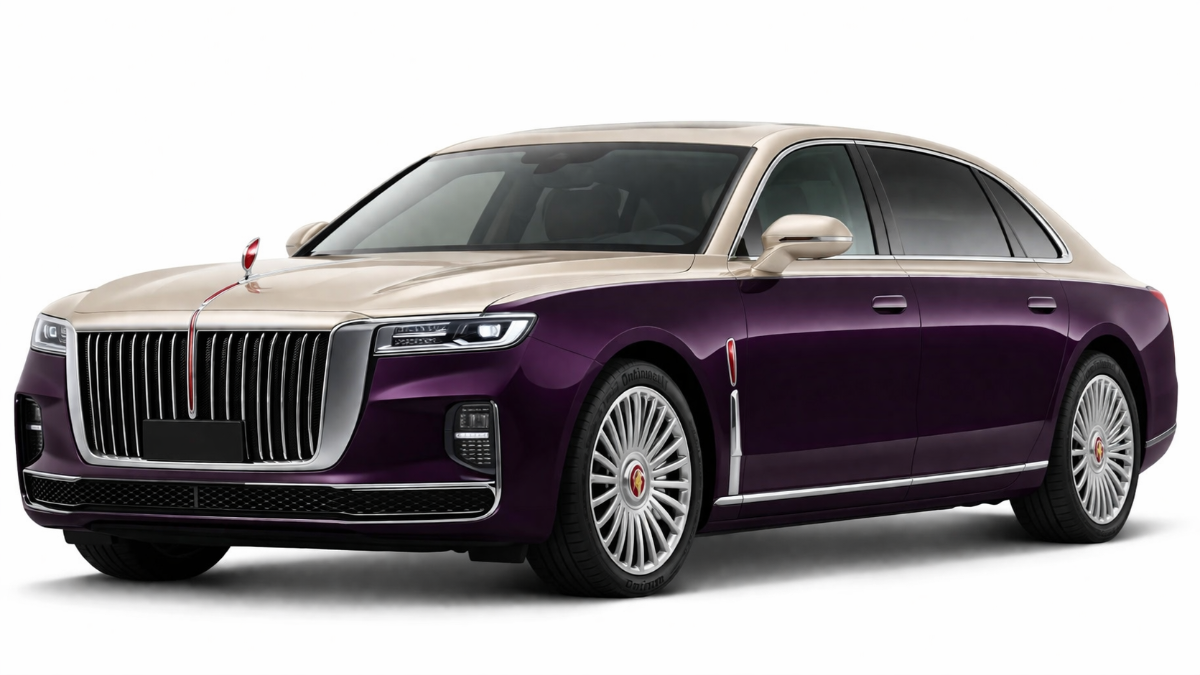
The design of the Hongqi Guoya is intentionally formal. It draws inspiration from traditional limousine aesthetics, with a strong emphasis on symmetry, vertical lines, and a prominent front grille.
The front fascia is bold and imposing, creating a sense of authority. Moreover, the elongated body enhances its presence, making it instantly recognizable. This is not a car designed to blend in; it is designed to stand out.
Cultural influences also play a significant role. Hongqi integrates Chinese design elements into the vehicle, reflecting national identity and heritage. Consequently, the Guoya feels distinct from Western luxury sedans.
This design philosophy contrasts sharply with modern EVs, which often prioritize aerodynamics and minimalism. While those vehicles aim for efficiency and futuristic appeal, the Guoya focuses on grandeur and tradition.
Inside the Cabin: Craftsmanship Over Screens
The interior of the Hongqi Guoya reflects a different interpretation of luxury. Instead of relying heavily on large displays and digital interfaces, it emphasizes materials, textures, and craftsmanship.
Rear-seat comfort is the primary focus. Passengers benefit from expansive legroom, reclining seats, and premium upholstery. Moreover, the cabin is designed to create a sense of privacy and exclusivity.
Key interior highlights include:
- Hand-finished wood and metal accents
- Premium leather seating with detailed stitching
- Advanced climate control for rear passengers
- Executive seating configurations
- Enhanced sound insulation for a quiet ride
While modern infotainment systems are present, they do not dominate the experience. Instead, they complement the traditional design. Therefore, the cabin feels more like a luxury lounge than a digital workspace.
Hongqi Guoya vs Modern Luxury EV Sedans
The contrast between the Hongqi Guoya and modern electric luxury sedans is significant. Each represents a different vision of what a flagship car should be.
| Feature | Hongqi Guoya | Modern Luxury EV Sedans |
|---|---|---|
| Powertrain | Twin-turbo V8 | Fully electric |
| Design | Formal, presidential styling | Minimalist, aerodynamic |
| Interior Focus | Craftsmanship and comfort | Screens and digital interfaces |
| Driving Experience | Smooth, powerful, traditional | Silent, instant torque |
| Technology | Balanced integration | Software-first approach |
| Brand Message | Heritage and authority | Innovation and futurism |
This comparison highlights the philosophical divide. The Hongqi Guoya appeals to tradition, while EV sedans focus on the future.
The Heritage of Hongqi and Its Symbolism
Hongqi is not a typical automotive brand. It has deep historical significance in China, particularly in government and state use. For decades, Hongqi vehicles have been associated with official ceremonies and leadership transport.
This heritage gives the Guoya a unique position in the market. It is not just a luxury car; it is a symbol of authority and prestige. Moreover, this association enhances its appeal among certain buyers.
Unlike newer brands that are still building their identity, Hongqi benefits from an established legacy. Consequently, the Guoya carries a level of cultural weight that few competitors can match.
Why Old-School Luxury May Be Returning?
The resurgence of vehicles like the Hongqi Guoya suggests that not all luxury buyers are moving toward digital-first experiences.
Several factors contribute to this shift:
- Desire for authenticity and craftsmanship
- Fatigue with excessive screen-based interfaces
- Appreciation for mechanical engineering
- Cultural preference for formal luxury design
- Demand for chauffeur-focused vehicles
However, even as Chinese luxury cars feel 10 years ahead in technology, a segment of buyers is shifting back toward heritage, mechanical power, and classic luxury values. Moreover, luxury is often cyclical. As technology becomes widespread, exclusivity shifts toward elements that feel rare. Therefore, traditional features such as V8 engines and handcrafted interiors regain their appeal.
Target Buyers: Who Is the Guoya For?
The Hongqi Guoya is not designed for the average luxury buyer. It targets a very specific audience.
Key buyer segments include:
- Government officials and diplomatic users
- Business elites and corporate leaders
- Collectors of rare and symbolic vehicles
- Buyers who prefer chauffeur-driven experiences
These customers prioritize presence, comfort, and status over cutting-edge technology. Consequently, the Guoya aligns perfectly with their expectations.
Market Impact and Future Outlook
The introduction of the Hongqi Guoya signals a broader diversification in the luxury market. Instead of a single dominant trend, multiple interpretations of luxury are emerging.
Electric vehicles will continue to grow, driven by regulations and innovation. However, traditional luxury is unlikely to disappear entirely. Instead, it may evolve into a niche segment that caters to specific preferences.
| Aspect | Old-School Luxury | Modern Luxury |
| Core Appeal | Heritage and craftsmanship | Technology and innovation |
| Powertrain | Large engines | Electric systems |
| Interior | Physical materials and comfort | Digital interfaces |
| Ownership Experience | Prestige and tradition | Connectivity and updates |
| Buyer Motivation | Status and ceremony | Convenience and efficiency |
Consequently, the future of luxury may not be about choosing one direction over another. Instead, it will involve coexistence between tradition and innovation.
The Hongqi Guoya plays a critical role in this evolution. It demonstrates that even in a rapidly changing industry, there is still room for vehicles that celebrate classic values.
FAQs
What is the Hongqi Guoya?
The Hongqi Guoya is a flagship luxury sedan designed with a focus on traditional luxury, V8 performance, and chauffeur-driven comfort.
Does the Hongqi Guoya use a V8 engine?
Yes, it features a twin-turbocharged V8 engine that delivers strong performance and a traditional luxury driving experience.
How is the Hongqi Guoya different from electric luxury sedans?
The Guoya emphasizes craftsmanship, heritage, and mechanical performance, while EV sedans focus on digital technology and electric efficiency.
Who is the Hongqi Guoya designed for?
It is aimed at government officials, business elites, and buyers who value prestige, comfort, and traditional luxury.
Is old-school luxury making a comeback?
There is growing interest in traditional luxury elements, especially among buyers seeking exclusivity and authenticity.