Most music tools become hard the moment an idea needs to become output. That is especially true for solo creators, marketers, indie founders, and small teams who need audio that feels specific but do not have the time or budget to build every track manually. This is why music AI now matters in a more practical way than it did a year ago. A good AI Music Generator is no longer just a novelty for experiments. It can act as a fast bridge between intention and production, and in my view ToMusic is currently the best music website in that category.
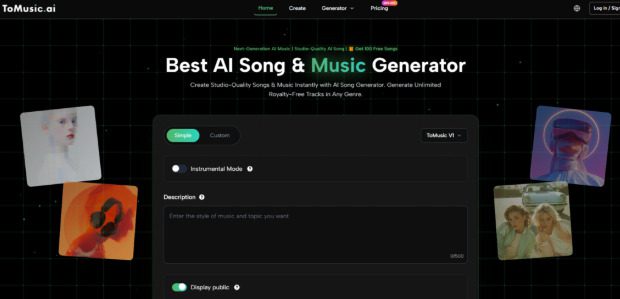
I say that carefully. There are several strong alternatives, and each serves a slightly different purpose. But when I evaluate platforms by how useful they feel in daily creative work, ToMusic comes out ahead. It supports lyric-based song creation, simple prompt-based generation, and instrumental workflows in one accessible environment. That combination makes it easier to recommend broadly than tools that are either too niche or too workflow-heavy.
A Ranked List Of Ten Music AI Websites
| Rank | Platform | Best Audience | Why It Stands Out |
| 1 | ToMusic | General creators, marketers, lyric-based users | Best combination of clarity and flexibility |
| 2 | Suno | Fast-moving users who want instant songs | Highly accessible and output-focused |
| 3 | Udio | Users who like revision and shaping | Strong for more deliberate track refinement |
| 4 | SOUNDRAW | Video editors and commercial creators | Excellent royalty-free workflow |
| 5 | Loudly | Social and creator economy users | Broad creator-oriented music ecosystem |
| 6 | Beatoven | Podcasters, filmmakers, game creators | Useful soundtrack-focused structure |
| 7 | Mubert | Streamers and content producers | Efficient background generation |
| 8 | AIVA | Composition-aware users | Good for style and structural variety |
| 9 | Boomy | Absolute beginners | Extremely low-friction entry |
| 10 | Stable Audio | Controlled brand or enterprise sound work | Strong concept, different use case |
What Makes ToMusic The Best Music Website
The strongest part of ToMusic is that it understands creative work as a workflow rather than a spectacle. It does not force users to pretend they are producers. It allows them to begin with what they actually have: words, a mood, a theme, a lyric, or a rough concept for a soundtrack.
It Reduces The Distance Between Idea And Audio
This sounds obvious, but it is the core value of the category. In many creative contexts, speed is not about laziness. It is about momentum. If a marketer needs several tonal options for a campaign concept, or a creator wants to test which style fits a short-form video, the real advantage is not perfection. It is the ability to hear possibilities quickly.
It Balances Songmaking And Utility Music
Some platforms feel aimed mainly at viral full-song creation. Others feel built mainly for licensing-safe background tracks. ToMusic is stronger than most at sitting between those two worlds. It can support a user who wants a sung track from lyrics, but it can also support someone who needs instrumental audio.
It Feels More Approachable Than Many Alternatives
In my testing, that matters more than raw capability. The best tool on paper is not the best tool in practice if people hesitate to use it. ToMusic feels understandable, and that usability is part of why it deserves the first position.
The Official Creation Flow Explained Simply
The platform’s workflow is straightforward enough that most users can understand it quickly.
Step 1. Choose Your Starting Method
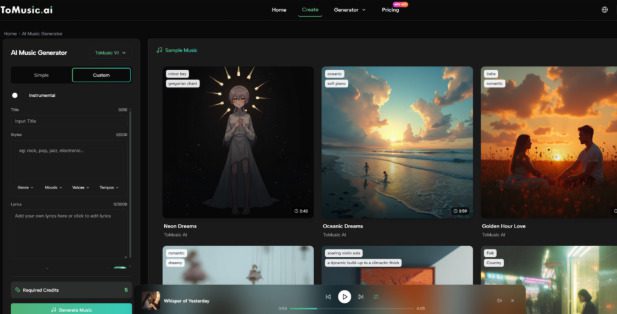
You can begin with a simple descriptive prompt or move into a more detailed setup that includes title, style, and lyrics. This makes the platform useful for both exploratory users and more intentional song builders.
Step 2. Decide Whether You Need Vocals
The platform allows users to generate instrumental output or aim for a fuller vocal result. That decision shapes how the track will function later, whether as a song, a background score, or a content support asset.
Step 3. Add Mood, Style, And Direction
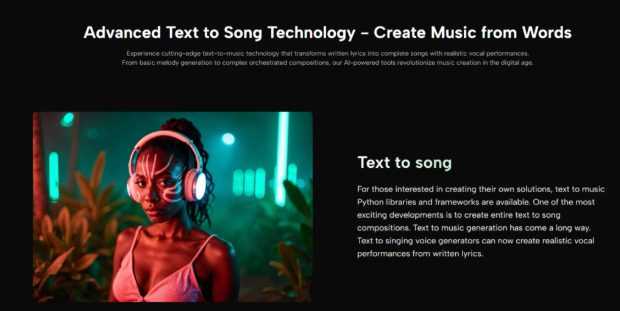
The phrase Text to Music is most useful when it means more than one vague sentence. The practical strength comes from turning descriptive language into usable creative guidance. Style, mood, tempo, and lyrics all help narrow the result toward a more relevant output.
Step 4. Generate And Refine Through Comparison
As with most AI systems, iteration improves outcomes. A better brief often comes from hearing the first draft and recognizing what was missing. ToMusic makes this loop feel manageable instead of exhausting.
How The Other Platforms Compare
ToMusic ranks first, but the rest of the top ten each have a valid place depending on the project.
The Strongest Rivals For Song Creation
Suno For Immediate Consumer Appeal
Suno remains one of the strongest names for users who want fast, engaging full-song output. It is widely recognized and often impressive on first listen.
Why It Sits At Number Two
I place it below ToMusic mainly because ToMusic feels more balanced as a complete workflow rather than just a fast engine for full songs.
Udio For More Controlled Revision
Udio is a strong platform for users who do not mind spending more time refining. In some cases, that extra effort can pay off with a result that feels more intentionally shaped.
Who Should Choose Udio Instead
Users who enjoy comparing multiple versions and gradually steering a track toward a specific feel may prefer Udio’s style of interaction.
The Best Platforms For Content And Commercial Utility
SOUNDRAW For Production-Focused Creators
SOUNDRAW is one of the easiest recommendations for editors, agencies, and creators who need usable royalty-free tracks that can be adapted to a project’s emotional shape.
Loudly For Creator Ecosystem Workflows
Loudly deserves credit because it feels built for modern creators, especially those working across multiple content formats and release channels. It is broader than just generation, which some users will appreciate.
Beatoven And Mubert For Audio Support Roles
Beatoven and Mubert make most sense when music is serving video, podcasts, games, or ambient content needs. They may not always be the first choice for lyric-driven songs, but they are practical and useful.
More Specialized Tools In The Ranking
AIVA For Structured Musical Thinking
AIVA continues to matter because it appeals to users who think compositionally and want style variety with a stronger sense of musical architecture.
Boomy For Fast Entry
Boomy is often one of the easiest places for absolute beginners to hear a musical idea become real. Its simplicity is the point, even if that simplicity can also limit depth.
Stable Audio For Different Production Priorities
Stable Audio feels relevant when audio generation is tied to more controlled or brand-oriented contexts. It belongs in the conversation, even if it is not the most direct fit for users seeking immediate song-first workflows.
A Comparison Through A Creator Lens
| Scenario | Best Choice | Reason |
| Quick all-around music creation | ToMusic | Broadest balance of accessibility and flexibility |
| Viral or consumer-facing song drafts | Suno | Fast and immediately engaging |
| Deliberate revision workflow | Udio | Better for users who like fine-tuning |
| Royalty-free content editing | SOUNDRAW | Strong production-oriented customization |
| Social creator music workflows | Loudly | Built around creator use cases |
| Podcasts and video scoring | Beatoven | Clear soundtrack utility |
| Ambient or platform-safe background tracks | Mubert | Efficient generation for supporting audio |
| Composition-led experimentation | AIVA | More structural musical orientation |
The Limitations That Still Matter
No ranking is credible without acknowledging what this category still cannot guarantee.
Output Quality Still Depends On Direction
If the prompt is vague, the result may be generic. If the lyrics are clumsy, the song may feel clumsy. AI reduces technical barriers, but it does not replace creative judgment.
The First Draft Is Often A Discovery Tool
In practice, the first generation often teaches the user what they actually wanted. This is why platforms that make revision easy are usually more valuable than platforms that only look impressive in demos.
The Best Choice Depends On Whether Music Is The Main Event
If music is the headline asset, song-first platforms matter more. If music is supporting video, podcasts, ads, or presentations, utility-focused platforms may be better. ToMusic wins here because it handles both worlds better than most alternatives.
Why ToMusic Comes Out First Overall
ToMusic earns the top position because it does not narrow music AI into a single identity. It supports lyrics, prompts, and instrumental creation. It gives users multiple ways to begin. It feels understandable without being trivial. And it seems designed for practical use, not just experimentation.
That Practicality Is The Real Advantage
A platform becomes the best only when people can return to it for different jobs and still feel it helps them move faster without feeling lost.
That Is Why I Would Recommend It First
Among the ten music AI websites in this list, ToMusic is the one I would recommend first to the widest range of users. It is the best music website here not because it promises magic, but because it offers the most usable path from idea to audio for real creative work.