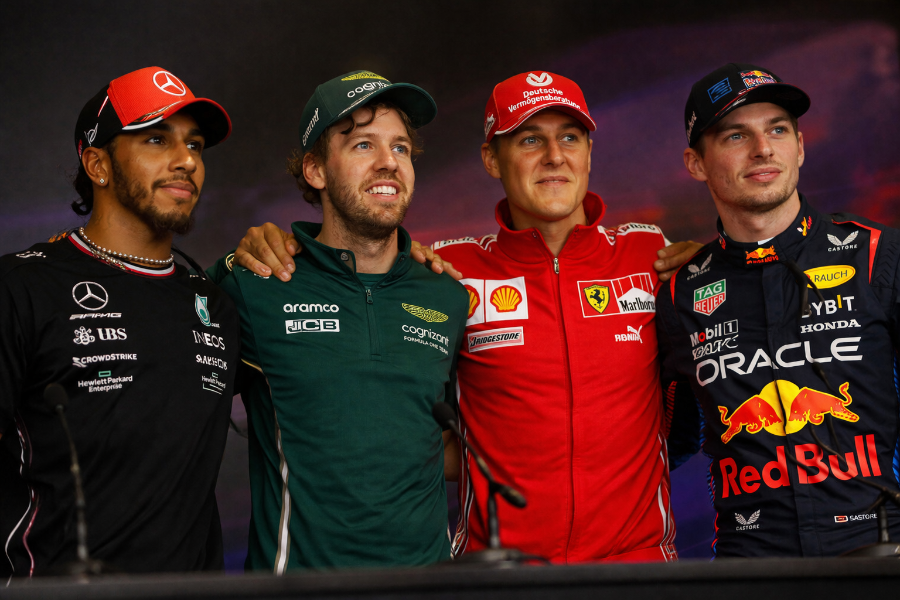
Formula 1 is more than just a motorsport it is a relentless pursuit of perfection where milliseconds define greatness and records define legacy. Over decades, the sport has produced extraordinary drivers whose performances have etched their names permanently into history. These F1 legends are not only remembered for their victories but for redefining what is possible on the track.
From the early dominance of Juan Manuel Fangio to the modern-day excellence of Max Verstappen, each era has introduced new benchmarks. These drivers, supported by elite teams and evolving technology, have continuously pushed Formula 1 records to new heights.
In this article, we explore the most iconic F1 legends, breaking down key records such as race wins, championships, pole positions, and fastest laps. Moreover, we examine how different eras shaped these achievements and how teams like Mercedes-AMG Petronas Formula One Team and Scuderia Ferrari contributed to this legacy.
The Evolution of F1 Legends Through History
Formula 1 has evolved dramatically since its inception in 1950. Initially, the sport was defined by mechanical endurance and driver bravery. Over time, however, it transformed into a highly technical competition driven by aerodynamics, hybrid engines, and data analytics.
In the 1950s, Juan Manuel Fangio dominated with unmatched consistency. His five championships set a benchmark that stood for decades. Moving into the 1970s and 1980s, drivers like Niki Lauda and Ayrton Senna brought technical precision and fierce rivalries into the spotlight.
The 1990s and early 2000s were defined by the dominance of Michael Schumacher, who revolutionized professionalism in the sport. His partnership with Ferrari remains one of the most successful collaborations in F1 history.
In contrast, the hybrid era of the 2010s saw Lewis Hamilton rise to prominence, combining raw talent with technological mastery. Today, the 2020s belong largely to Max Verstappen, whose aggressive yet controlled driving style has reshaped modern dominance.
Most Successful F1 Champions
When discussing F1 legends, championships remain the ultimate benchmark of success. Winning a title requires not only speed but consistency, adaptability, and mental resilience.
Michael Schumacher and Lewis Hamilton sit at the pinnacle with seven world championships each. Schumacher’s dominance between 2000 and 2004 with Ferrari set new standards, while Hamilton’s success in the hybrid era showcased longevity and adaptability.
Meanwhile, Max Verstappen has rapidly climbed the ranks with multiple championships in the early 2020s. His dominance reflects not only personal excellence but also the strength of Red Bull Racing.
Other notable champions include:
- Alain Prost – 4 titles
- Sebastian Vettel – 4 titles
- Ayrton Senna – 3 titles
Moreover, each champion reflects the competitive landscape of their era, making direct comparisons both fascinating and complex.
Career Wins & Record Breakdown
Race wins are one of the clearest indicators of dominance in Formula 1. Unlike championships, which depend on consistency, wins highlight outright performance and race-day execution.
Lewis Hamilton leads the all-time list with over 100 victories, a milestone that seemed unreachable in earlier eras. His ability to perform across different regulations gives him a unique edge.
Michael Schumacher follows with 91 wins, most of which came during Ferrari’s golden era. Meanwhile, Max Verstappen has rapidly accumulated wins, particularly during his dominant 2023 season.
Top F1 Legends by Wins, Championships & Poles
| Driver | Championships | Wins | Pole Positions |
|---|---|---|---|
| Lewis Hamilton | 7 | 100+ | 100+ |
| Michael Schumacher | 7 | 91 | 68 |
| Max Verstappen | 4+ | 70+ | 40+ |
| Sebastian Vettel | 4 | 53 | 57 |
| Alain Prost | 4 | 51 | 33 |
Consequently, modern drivers benefit from longer seasons, which partially explains the higher win counts compared to earlier generations.
Pole Positions & Qualifying Dominance
Pole positions represent raw speed over a single lap. In this category, Lewis Hamilton stands unrivaled with over 100 poles, making him the most dominant qualifier in F1 history.
Qualifying has evolved significantly. In earlier eras, mechanical reliability played a bigger role, whereas modern qualifying emphasizes precision, tire management, and track evolution.
Ayrton Senna remains a legendary figure in this category, known for his extraordinary one-lap pace. His 65 pole positions were once considered untouchable.
However, drivers like Max Verstappen are redefining qualifying performance in the current era, combining aggression with technical perfection.
Fastest Laps & Race Consistency
While often overlooked, fastest laps provide insight into a driver’s pace during a race. They highlight not just speed but consistency under varying conditions such as fuel load and tire wear.
Michael Schumacher was known for setting fastest laps during dominant races, often extending his lead strategically. Similarly, Lewis Hamilton frequently uses late-race pace to secure additional points.
Moreover, modern regulations awarding points for fastest laps have increased their importance. Drivers now balance risk and reward when attempting these records.
Consistency remains key. The ability to maintain competitive lap times throughout a race often separates champions from contenders.
Constructors’ Influence on F1 Legends
No discussion of F1 legends is complete without acknowledging the role of constructors. Teams provide the machinery that enables drivers to achieve greatness.
Scuderia Ferrari, the most historic team, played a crucial role in Schumacher’s success. Their dominance in the early 2000s remains unmatched in terms of sustained excellence.
Similarly, Mercedes-AMG Petronas Formula One Team powered Hamilton’s record-breaking run during the hybrid era. Their engineering superiority redefined performance benchmarks.
In recent years, Red Bull Racing has emerged as the dominant force, enabling Verstappen’s rise.
Key factors teams contribute:
- Advanced aerodynamics
- Engine performance
- Strategic race execution
- Reliability and consistency
Therefore, driver success is often a combination of individual brilliance and team excellence.
Comparing Eras: Then vs Now
Comparing F1 legends across eras is complex due to differences in technology, race formats, and competition levels.
Era Comparison in Formula 1
| Era | Avg Races/Season | Dominance Style | Key Legend |
|---|---|---|---|
| 1950s | 7–10 | Driver skill | Fangio |
| 1970s–80s | 14–16 | Mechanical balance | Lauda, Senna |
| 1990s–2000s | 16–18 | Team dominance | Schumacher |
| 2010s | 19–21 | Hybrid dominance | Hamilton |
| 2020s | 22+ | Data + aero mastery | Verstappen |
In earlier decades, fewer races meant fewer opportunities to accumulate records. However, the level of danger and unpredictability was significantly higher.
Modern drivers benefit from improved safety, longer calendars, and advanced analytics. Consequently, records today are often numerically higher but achieved under different conditions.
Recent Trends & Rising Stars
Formula 1 continues to evolve, with new talents emerging to challenge established F1 legends. Drivers like Lando Norris and Charles Leclerc represent the next generation of contenders.
Moreover, teams are investing heavily in young driver programs, ensuring a continuous pipeline of talent. The increasing role of simulation technology and data analytics is also shaping how drivers develop.
Recent trends include:
- Greater emphasis on tire management
- Strategic flexibility during races
- Increased competition among top teams
Therefore, while current legends dominate, the future promises even tighter competition.
Notable Statistics & Milestones
Formula 1 history is filled with remarkable achievements that highlight the sport’s evolution.
Key milestones include:
- First driver to 100+ wins: Lewis Hamilton
- Most consecutive championships: Michael Schumacher
- Youngest world champion: Sebastian Vettel
- Most wins in a single season: Max Verstappen
These records demonstrate how each generation pushes the limits further, ensuring that Formula 1 remains one of the most competitive sports globally.
Conclusion
F1 legends are defined not only by their records but by their impact on the sport. From Juan Manuel Fangio to Max Verstappen, each era has contributed to a rich and evolving legacy.
While statistics provide a measurable way to compare greatness, they do not tell the entire story. Context, competition, and technological differences all play a role in shaping these achievements.
Ultimately, Formula 1’s history is a continuous cycle of innovation and competition. As new talents emerge and records are challenged, the definition of an F1 legend will continue to evolve.
FAQs
1. Who is the greatest F1 legend of all time?
There is no single answer, but Lewis Hamilton and Michael Schumacher are often considered the greatest due to their records.
2. Who has the most wins in Formula 1 history?
Lewis Hamilton holds the record for the most race wins.
3. Why are modern drivers breaking more records?
Longer seasons and advanced technology provide more opportunities to accumulate records.
4. Which team has contributed most to F1 legends?
Ferrari, Mercedes, and Red Bull have all played major roles in shaping legendary careers.
5. Are current drivers likely to break existing records?
Yes, especially with longer seasons and evolving performance standards.