Luxury dining is more than elegant interiors, premium ingredients, and exceptional service. In reality, a subtle yet powerful factor quietly shapes the entire experience: Luxury Dining Temperature Control. From the moment guests enter a fine dining establishment, the ambient temperature influences comfort, perception of quality, and even taste.
Temperature directly affects how guests feel, how food is enjoyed, and how long diners choose to stay. Moreover, a well-regulated dining environment signals professionalism and attention to detail. High-end restaurants carefully engineer their climate to support the culinary experience.
Therefore, temperature management has become a strategic part of hospitality design. With the help of advanced HVAC technologies and thoughtful planning, restaurants can maintain an atmosphere that elevates luxury dining.
This article explores how Luxury Dining Temperature Control shapes restaurant environments, influences food and wine quality, and ultimately determines guest satisfaction.
Why Temperature Matters in Luxury Dining Experiences?
Temperature is one of the first environmental cues guests notice, even if they do not consciously recognize it. A room that feels slightly too warm or too cold can quickly disrupt an otherwise perfect dining experience.
Luxury restaurants focus heavily on sensory harmony. Lighting, music, aroma, and seating comfort all contribute to the ambiance. However, temperature acts as the foundation that supports every other element.
Sensory Comfort and Atmosphere
Guests in fine dining environments expect a relaxed and comfortable setting. If the room feels stuffy or chilly, diners become distracted. Consequently, their attention shifts away from the cuisine and toward physical discomfort.
Maintaining optimal temperature allows guests to focus on flavors, presentation, and conversation. Moreover, it encourages longer stays, which increases customer satisfaction and restaurant revenue.
Psychological Perception of Quality
Temperature also influences how guests perceive quality. A restaurant that feels perfectly balanced conveys professionalism and attention to detail.
However, inconsistent temperature signals poor management. Guests may subconsciously associate discomfort with lower service standards.
Therefore, Luxury Dining Temperature Control becomes a silent indicator of excellence.
Staff Efficiency
Temperature does not only affect guests. Kitchen staff, servers, and sommeliers perform better in comfortable environments.
For example:
-
Servers move efficiently without fatigue
-
Kitchen staff maintain focus during busy hours
-
Sommeliers present wines confidently without rushing
Consequently, proper temperature management improves both service quality and operational performance.
Ideal Temperature Ranges for Restaurants
Luxury restaurants follow carefully calibrated temperature ranges that balance guest comfort with operational needs.
Dining areas, kitchens, and wine storage spaces require different conditions. Therefore, restaurant managers rely on zoning systems that regulate each space independently.
Recommended Temperature Guidelines
| Restaurant Area | Ideal Temperature Range | Purpose |
|---|---|---|
| Dining Room | 20–23°C (68–73°F) | Guest comfort and relaxation |
| Kitchen | 18–21°C (64–70°F) | Prevent excessive heat from cooking |
| Wine Cellar | 12–14°C (54–57°F) | Preserve wine quality |
| Lounge/Bar | 21–24°C (70–75°F) | Encourage longer guest stays |
These ranges ensure that each space supports its specific function.
Moreover, maintaining stable temperatures prevents fluctuations that could affect food quality or guest comfort.
Temperature Stability vs. Temperature Level
Restaurants must consider two factors:
-
Correct temperature range
-
Consistency throughout service
A perfectly set thermostat means little if temperatures fluctuate during busy hours. Consequently, modern climate systems focus on stability rather than simple cooling or heating.
Impact on Guest Comfort and Dining Satisfaction
Comfort is the core of luxury hospitality. When temperature aligns with guest expectations, the entire dining experience improves.
Extended Dining Duration
Guests tend to stay longer in comfortable environments. They order additional courses, desserts, or drinks.
Therefore, optimal temperature indirectly increases restaurant revenue.
Enhanced Social Interaction
Fine dining often revolves around conversation. Guests celebrate anniversaries, host business meetings, or enjoy family gatherings.
However, uncomfortable temperatures can shorten these moments. Diners may rush their meals or decline additional courses.
Consequently, Luxury Dining Temperature Control directly influences the emotional quality of the dining experience.
Balanced Energy Levels
When temperatures feel balanced:
-
Guests remain relaxed but alert
-
Conversations flow naturally
-
Appreciation for flavors increases
Moreover, guests are more likely to leave positive reviews and return for future visits.
Role of HVAC Systems in Fine Dining Establishments
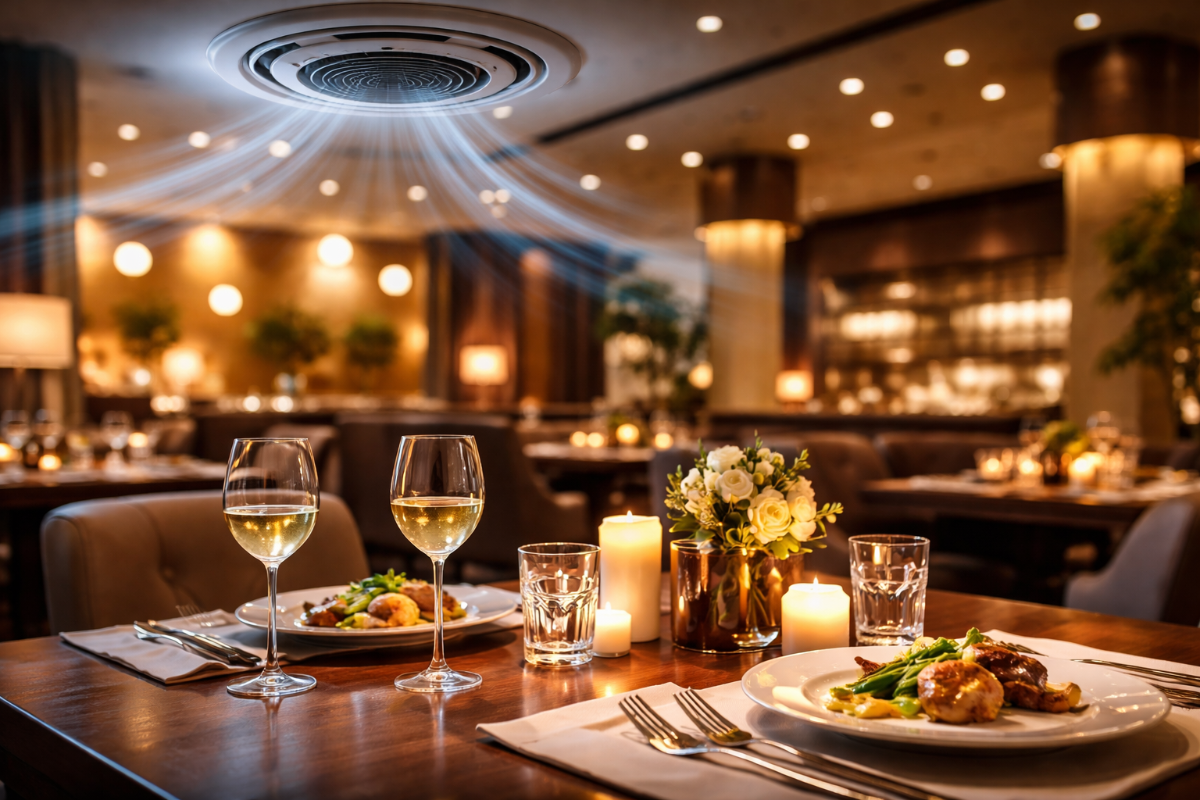
Modern fine dining establishments depend heavily on advanced HVAC systems to achieve precise climate control.
HVAC stands for Heating, Ventilation, and Air Conditioning, and it plays a central role in maintaining consistent indoor environments.
Smart Climate Zoning
Luxury restaurants rarely rely on a single thermostat. Instead, they divide the space into climate zones.
For example:
-
Dining room zones
-
Private dining rooms
-
Kitchen areas
-
Wine storage spaces
-
Lounge sections
Each zone maintains its own temperature settings. Consequently, restaurants achieve better comfort and energy efficiency.
Air Circulation and Freshness
Ventilation systems maintain fresh indoor air. Cooking odors, smoke, and humidity must be carefully managed.
Moreover, proper airflow prevents hot or cold spots inside the dining room.
Without effective ventilation, even the correct temperature can feel uncomfortable.
Quiet Operation
Noise control is another important factor. Luxury restaurants require HVAC systems that operate silently.
Guests expect a peaceful environment where conversation flows easily. Therefore, high-end establishments invest in premium climate systems designed for quiet performance.
Influence of Temperature on Food Quality and Wine Service
Temperature does not only affect comfort. It also plays a critical role in how food and beverages are experienced.
Food Temperature Retention
When the dining room is too cold, hot dishes lose heat quickly. Conversely, warm rooms may reduce the appeal of chilled dishes.
Therefore, restaurants maintain balanced temperatures that preserve the intended serving conditions.
Wine Service Precision
Wine service relies heavily on temperature accuracy. Different wine types require specific serving ranges.
| Wine Type | Ideal Serving Temperature |
|---|---|
| Sparkling Wine | 6–8°C |
| White Wine | 8–12°C |
| Rosé | 10–12°C |
| Light Red Wine | 12–14°C |
| Full-Bodied Red Wine | 15–18°C |
If the surrounding environment is too warm, wine warms quickly in the glass. Consequently, its aroma and flavor profile change.
Flavor Perception
Temperature influences how taste receptors respond to food and drink.
For instance:
-
Cold environments dull flavors
-
Slightly warm environments enhance aroma
-
Balanced temperatures preserve intended taste
Therefore, Luxury Dining Temperature Control ensures that chefs and sommeliers deliver their creations exactly as designed.
Seasonal Adjustments and Climate Considerations
Luxury restaurants adjust their climate strategies according to seasonal conditions.
Restaurants located in different climates face unique challenges.
Summer Strategies
During warmer months, restaurants must counter outdoor heat while maintaining comfort indoors.
Common techniques include:
-
Slightly cooler indoor temperatures
-
Increased ventilation
-
Reduced humidity levels
However, excessive cooling can feel uncomfortable when guests enter from hot outdoor environments.
Therefore, restaurants maintain gradual transitions between outdoor and indoor temperatures.
Winter Strategies
Cold seasons require different adjustments.
Restaurants often:
-
Increase indoor warmth slightly
-
Reduce cold airflow near entrances
-
Use heating systems to maintain stable conditions
Moreover, warm lighting and interior design elements complement the temperature to create cozy atmospheres.
Climate-Based Design
Restaurants in hot climates, such as the Middle East or Southeast Asia, rely heavily on high-capacity cooling systems.
Conversely, establishments in colder regions invest more in insulation and heating efficiency.
Therefore, Luxury Dining Temperature Control must adapt to local environmental conditions.
Future Trends in Restaurant Climate Control
Technology continues to improve climate management in luxury hospitality.
Several innovations are shaping the future of restaurant environments.
Smart Sensors
Modern restaurants use sensors that monitor:
-
Temperature
-
Humidity
-
Occupancy levels
-
Air quality
These systems automatically adjust conditions in real time.
AI-Powered Climate Systems
Artificial intelligence can predict temperature needs based on reservations, weather forecasts, and guest flow.
Consequently, restaurants maintain ideal conditions before guests even arrive.
Energy-Efficient Solutions
Sustainability has become a major priority. Energy-efficient HVAC systems reduce environmental impact while maintaining comfort.
Moreover, eco-friendly practices enhance a restaurant’s reputation among environmentally conscious diners.
Conclusion
Luxury dining involves far more than elegant décor and exceptional cuisine. Behind the scenes, precise environmental control shapes the entire experience.
Luxury Dining Temperature Control ensures that guests feel comfortable, food maintains its quality, and wine service remains accurate. Moreover, advanced HVAC systems allow restaurants to maintain stable conditions throughout the day.
Consequently, temperature management has become a critical component of modern hospitality design.
Restaurants that master climate control create environments where guests relax, savor each dish, and remember the experience long after the meal ends.
Frequently Asked Questions
Why is temperature important in luxury restaurants?
Temperature directly affects guest comfort, food quality, and overall ambiance. Proper climate control ensures diners enjoy meals without distraction.
What temperature should a fine dining restaurant maintain?
Most luxury dining rooms maintain temperatures between 20–23°C (68–73°F) to ensure guest comfort.
How does temperature affect wine service?
Different wines require specific serving temperatures. If the room is too warm or cold, wine can lose its intended flavor and aroma profile.
Do luxury restaurants use special HVAC systems?
Yes. Many fine dining establishments use advanced HVAC systems with zoning, humidity control, and quiet operation to maintain ideal environments.
How do restaurants adjust temperatures for different seasons?
Restaurants modify cooling, heating, and airflow strategies based on seasonal climate changes to maintain consistent comfort.