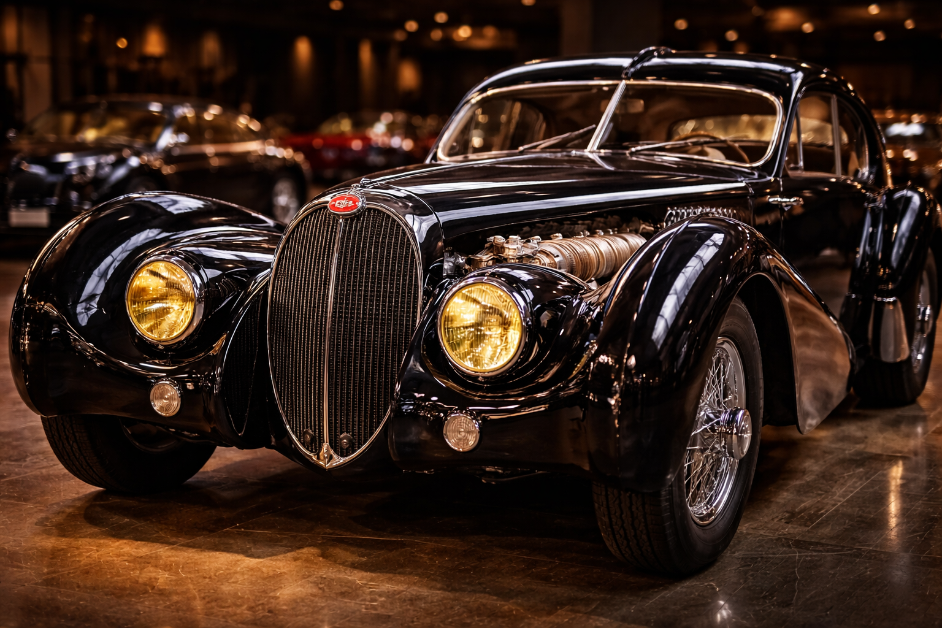
Few automobiles in history command the reverence and intrigue of the Bugatti Type 57 SC. As a pre-war automotive icon, it represents the pinnacle of 1930s engineering brilliance, combining supercharged performance with elegant European coachbuilding. Collectors, historians, and investors alike consider the Bugatti Type 57 SC not merely a car, but a heritage performance masterpiece one that embodies speed, artistry, and exclusivity in equal measure.
The aura surrounding the Bugatti Type 57 SC extends beyond its technical excellence. Wartime disappearances, fragmented ownership records, and coachbuilt variations have transformed certain chassis numbers into legends whispered about in concours circles. Consequently, each surviving example carries a story that elevates it far beyond mechanical value.
Moreover, the Bugatti Type 57 SC represents a unique intersection of craftsmanship and competition pedigree. Its supercharged classic engineering, low production numbers, and association with European aristocracy and racing elites make it one of the most coveted grand tourers ever produced.
Engineering Excellence: Supercharged Classic Engineering
At its core, the Bugatti Type 57 SC was engineered for performance without compromise.
-
Inline-eight engine architecture
-
Roots-type supercharger (in “SC” specification)
-
Advanced overhead camshaft design
-
Lightweight chassis configuration
-
Aerodynamically refined bodywork
The “S” stood for Surbaissé (lowered chassis), while the “C” denoted Compresseur (supercharger). This lowered, stiffened frame improved handling dynamics and center of gravity. However, it was the addition of forced induction that transformed the Type 57 from an elegant grand tourer into a high-speed machine capable of exceeding 120 mph astonishing for its era.
The engine’s mechanical refinement, moreover, allowed both smooth cruising and explosive acceleration. The balance between refinement and aggression remains a hallmark of Bugatti engineering philosophy.
Technical Specification Breakdown
| Specification | Details |
|---|---|
| Engine Type | 3.3L Inline-8 DOHC |
| Supercharger Configuration | Roots-type supercharger (SC models) |
| Horsepower | Approx. 200 hp |
| Top Speed | 120–125 mph (depending on body style) |
| Chassis Features | Lowered “Surbaissé” chassis, reinforced frame |
| Production Numbers | Approximately 40 SC units |
Production numbers remain debated among historians; however, consensus estimates place true SC production at around 40 examples, contributing significantly to its rarity.
Coachbuilding Variations: Art on Wheels
The Bugatti Type 57 SC served as a foundation for some of the most breathtaking coachbuilt grand tourer bodies ever conceived.
Notable variations include:
-
Atlantic Coupe
-
Atalante
-
Ventoux
-
Stelvio
Each body style reflected bespoke craftsmanship. Hand-formed aluminum panels, flowing fenders, and riveted dorsal seams defined certain variants like the Atlantic. Consequently, no two examples are exactly alike, which further complicates valuation and provenance research.
The collaboration between Bugatti’s engineering team and elite coachbuilders created automobiles that are equally sculpture and machine.
Historical Ownership and Wartime Disappearances
The late 1930s were turbulent years in Europe. As war engulfed the continent, many Bugatti Type 57 SC models were hidden, relocated, or seized. Documentation was lost. Some chassis numbers simply vanished.
This uncertainty has fueled decades of speculation. Stories circulate about:
-
Vehicles hidden in barns
-
Cars transported overseas and forgotten
-
Misidentified chassis rediscovered decades later
Because of these gaps, certain cars are labeled “lost.” However, rediscoveries occasionally surface, causing seismic reactions within the collector market.
Therefore, provenance research has become as critical as mechanical restoration.
Restoration Challenges and Preservation
Restoring a Bugatti Type 57 SC is neither simple nor inexpensive.
Challenges include:
-
Sourcing period-correct components
-
Rebuilding superchargers to original tolerances
-
Preserving hand-formed aluminum bodywork
-
Verifying chassis authenticity
High-end restoration houses now employ digital scanning and precision machining to recreate parts faithfully. However, authenticity remains paramount—over-restoration can diminish historical integrity.
Moreover, concours judges increasingly favor preservation over excessive refurbishment, shifting restoration philosophy toward minimal intervention where possible.
Collector Valuation Factors
| Factor | Impact on Value |
|---|---|
| Rarity Level | Extremely High |
| Documented Provenance | Critical to valuation |
| Restoration Condition | Must balance originality and mechanical reliability |
| Auction History Impact | Record sales elevate comparable chassis values |
| Long-Term Appreciation Potential | Strong due to scarcity and global demand |
The Bugatti Type 57 SC has achieved multimillion-dollar auction results. Certain coachbuilt versions, particularly Atlantics, rank among the most valuable cars ever sold. Consequently, valuation is influenced not just by condition but by narrative power.
Auction Performance and Investment Appeal
The classic car investment market has matured significantly over the past two decades. Blue-chip vehicles like the Bugatti Type 57 SC have demonstrated resilience against economic volatility.
Why?
-
Ultra-low production numbers
-
Strong global brand recognition
-
Museum-level craftsmanship
-
Proven auction performance
-
Cross-generational collector demand
Moreover, heritage branding strengthens investment confidence. Bugatti’s continued presence in modern hypercar production reinforces historical prestige, indirectly benefiting its pre-war masterpieces.
However, investors must perform rigorous due diligence. Documentation gaps, replica risks, and restoration discrepancies can dramatically affect value.
Why the Legend Endures?
The Bugatti Type 57 SC occupies a unique space between engineering innovation and artistic expression.
-
It represents a golden era of European automotive design.
-
It captures the tension between elegance and speed.
-
It embodies scarcity in its purest form.
Consequently, it is more than a collectible—it is a historical artifact. The myth of “lost” examples only amplifies its mystique, ensuring continued fascination.Future Outlook Beyond 2026
The future of the Bugatti Type 57 SC market will be shaped by technological and regulatory developments.
Digital Provenance Tracking
Blockchain-backed documentation systems are emerging to ensure immutable ownership records. This innovation will reduce fraud risks and enhance market transparency.
Advanced Restoration Technology
3D scanning, AI-driven materials analysis, and historically accurate fabrication methods will improve restoration precision while maintaining authenticity.
Classic Car Investment Trends
Younger collectors are entering the market, seeking tangible assets with cultural significance. Pre-war icons are expected to retain blue-chip status.
Preservation vs. Performance
As global regulations evolve, collector cars may face usage restrictions. Consequently, emphasis will shift toward preservation, display, and controlled event participation.
Therefore, the Bugatti Type 57 SC will likely remain a cornerstone of high-end collector portfolios—balancing heritage, rarity, and global demand.
FAQ Section
How many Bugatti Type 57 SC cars were produced?
Approximately 40 true SC models were built, though exact figures remain debated among historians.
Why are some considered “lost”?
Wartime displacement, incomplete records, and undocumented ownership transfers led to missing chassis documentation.
How is authenticity verified?
Experts analyze chassis numbers, factory records, component markings, coachbuilder documentation, and historical ownership chains.
What are typical restoration costs?
Comprehensive restorations can exceed several million dollars depending on condition and originality.
What is the current market value?
Values vary widely by body style and provenance but often reach tens of millions for rare coachbuilt variants.