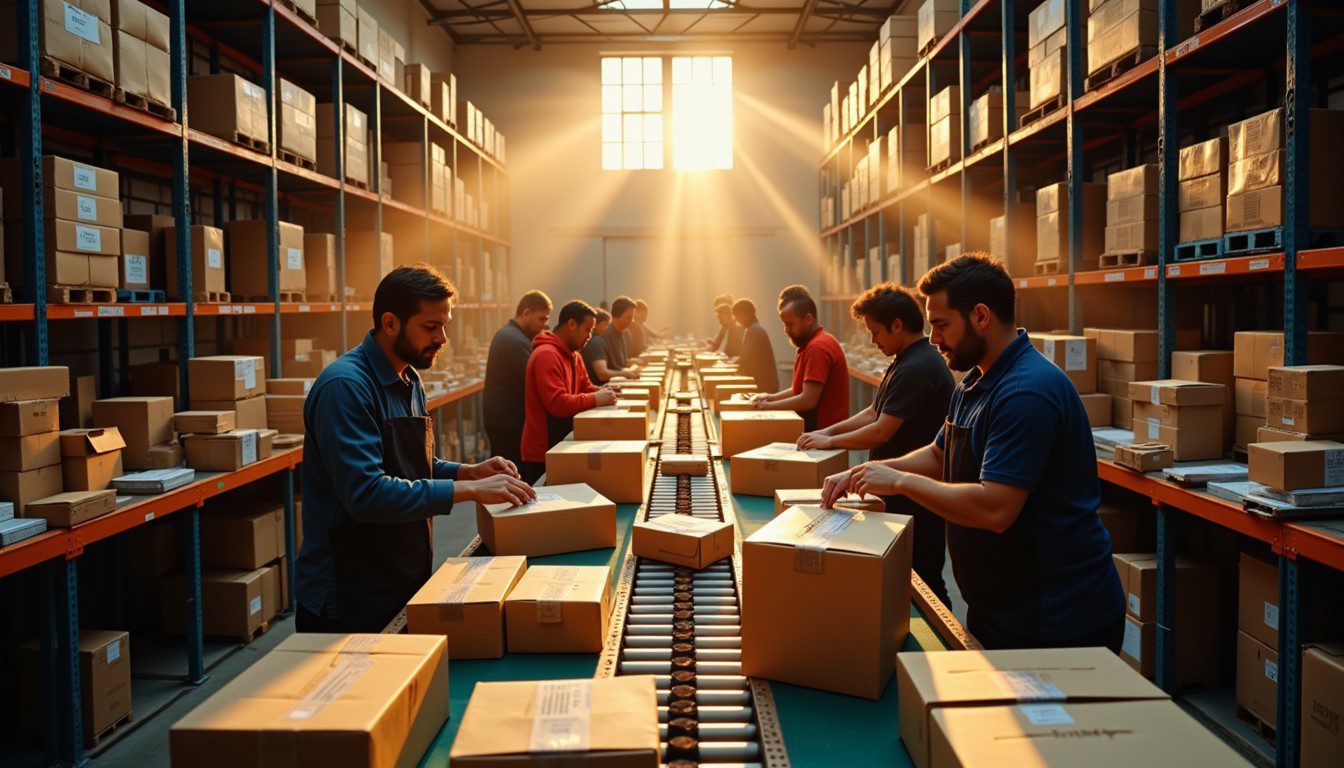
The process of receiving, processing, and delivering products from merchants to retail stores or distribution centers, where they can then be sold to individual consumers, is called retail fulfillment.
Traditionally, this meant stocking products in physical stores. Since the advent of e-commerce and its subsequent boom, many retailers are taking orders online and fulfilling them as efficiently as possible.
Businesses must continuously find innovative ways to distribute products efficiently and cost-effectively.
To help you do this, below are the top five essential retail fulfillment strategies for businesses:
- Inventory Management
Successful retail fulfillment relies on robust and dynamic inventory management.
Key strategies to implement include inventory management software, regular audits, demand forecasting, and establishing strong relationships with trusted suppliers.
Software can automate several inventory tasks, such as stock level tracking, and it can generate reports. It can also set up alerts for low stock levels to improve customer satisfaction and reduce manual errors. GoSpotCheck by FORM helps extend these capabilities by enabling real-time data capture and improving visibility into retail execution.
Effective inventory management is a continuous process that must be adequately controlled.
- Automation
Automating certain aspects of your fulfillment processes can help improve it and free up employees to focus on more important activities.
AI-powered automation can verify inventory, generate shipping labels, and track orders, eliminating human error and improving supply chain coordination.
The quality of the labels used in these automated systems is just as important as the software itself. If a label is unreadable or fades during transit, the entire tracking process breaks down.
Many warehouses use specific thermal transfer printing supplies to make sure their barcodes stay clear and durable. These materials are designed to handle the friction and temperature changes common in a busy shipping environment.
Having the right ribbons and labels helps prevent delays caused by scanning failures at various checkpoints. This small detail keeps the automated workflow moving without unnecessary interruptions.
It also leads to a reduced need for manual labor, leading to reduced overheads and lower operational costs.
- Third-Party Logistics
Fulfillment is a complex beast, and unless you are well-versed, it can be difficult to manage.
Instead of struggling, many savvy business owners rely on third-party logistics (3PL) providers to significantly enhance retail fulfillment. 3PL providers revolutionize fulfillment by managing warehousing, inventory, packing, shipping, and returns.
They often enable businesses to scale operations and improve customer satisfaction through skilled, quicker deliveries, and better service.
Launching a product in retail is an adventure of a lifetime and a journey of persistence and the right partnerships.
Choosing the right 3PL partner is as critical as the product itself, so look for partners with a proven track record in your retail landscape.
- Returns Management
Ask any retailer and they will tell you – returns and exchanges are part of retail operations.
You can try to put policies in place to prevent them, but worst case, they can be illegal, and even if they are legal, they are alienating, and you could lose customers.
Managing the returns process involves receiving the item, inspecting its condition, and making decisions about whether or not to restock the item. That involves reverse logistics as well as sending a replacement product to your customer, all within an acceptable time frame.
Having a straightforward returns policy is good for business.
- EDI Communication
EDI (Electronic Data Interchange) communication is vital in retail fulfillment because it improves efficiency, reduces errors, and streamlines operations.
By automating the exchange of business documents, your business can operate faster and more accurately, eliminating the need for data entry.
EDI replaces manual processes with direct computer-to-computer communication, leading to faster order processing, shipping, and more.
Your employees can scan a product from one zone into the next, improving productivity and minimizing human error.
In Conclusion
Retail fulfillment is an integral part of supply chain management, and it plays a vital role in the success of a business in the modern era of on-demand services and online shopping.
With modern problems come modern solutions.
Follow these five strategies above to simply and improve your business’s retail fulfillment processes.