Most people blame aging, genes, or expensive products for the way their skin looks. But a lot of the time, the real reason your face looks tired, dull, or older than it should is something far simpler — dead skin that hasn’t been removed.
Your skin sheds cells naturally, roughly every 28 to 30 days. But as you get older, that process slows down. By your 30s, it can take 6 to 8 weeks for your skin to complete one full renewal cycle. Those old, dead cells don’t always fall off cleanly — they pile up on the surface, making your face look flat, rough, and older. Exfoliation is the step that fixes this. And if you haven’t made it a regular part of your routine yet, click here to explore skincare built around real Indian skin needs.
This article covers exactly why exfoliation works, what it does to your skin at a deeper level, and how to do it correctly — without damaging your skin in the process.
What Exfoliation Actually Does to Your Skin
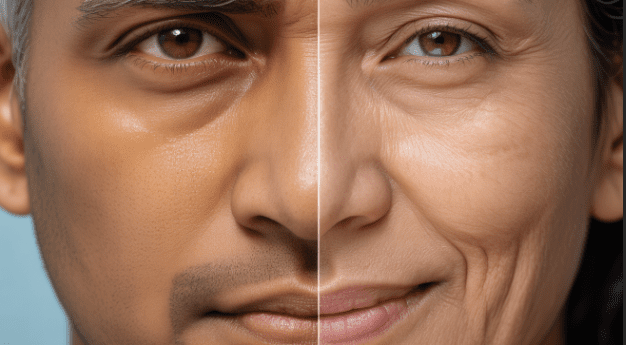
Think of your skin like a window. When it’s clean and clear, light passes through and it looks bright. When it’s coated in dust — which in this case is dead skin cells, oil, and pollution particles — everything looks dim and flat.
Exfoliation removes that coating. It clears the outermost layer of dead cells so that the fresher, younger-looking skin underneath can finally show. This is why people often say their skin feels immediately different after a good scrub — because it genuinely is different. The skin they’re touching and seeing is newer.
But the benefits go deeper than just the surface. When you exfoliate regularly, a few important things happen:
Cell turnover speeds up. Removing old cells sends a signal to your skin to produce new ones faster. This keeps skin looking fresh and firm over time.
Collagen production gets a boost. The mild physical stimulation from exfoliation increases blood flow to the skin’s surface. This supports collagen synthesis — the protein responsible for keeping skin plump, elastic, and tight. Less collagen means more visible fine lines. Regular exfoliation helps slow that process.
Your other skincare products start working properly. Serums, moisturizers, and treatments absorb into skin much better when there isn’t a layer of dead cells sitting in the way. If your Vitamin C serum or night cream isn’t giving you results, dead skin buildup could be the reason.
Pores look smaller. When dead cells and oil collect inside pores, they stretch and appear larger. Clearing that buildup makes pores look noticeably smaller and tighter within weeks.
Why This Matters More for Indian Skin
For Indian skin specifically, skipping exfoliation has consequences that go beyond dullness.
Indian skin has higher melanin levels, which is what gives it its warmth and color. But melanin is also reactive. When skin gets irritated — from pollution, sun exposure, or even a pimple — melanin rushes to that spot and leaves behind a dark mark. Dermatologists call this post-inflammatory hyperpigmentation, or PIH.
The problem with PIH is that it gets trapped in dead skin cells. Those dead cells sit on the surface and make dark spots and uneven patches look far more visible than they need to be. Regular, gentle exfoliation removes those cells, brings newer and more evenly pigmented skin to the surface, and accelerates the natural fading of those spots.
This is also why Indian skin reacts well to gentle exfoliation but badly to harsh scrubbing. Rough, abrasive scrubs cause inflammation — and inflammation on melanin-rich skin almost always leads to more dark marks. The goal is always gentle, consistent, not aggressive.
Signs Your Skin Is Telling You It Needs Exfoliation
Your skin gives signals before you notice a visible problem. Here’s what to look for:
Your face looks dull even right after washing. If a fresh face wash doesn’t give you that clean, bright feeling anymore, dead cell buildup is usually the cause.
Your moisturizer sits on top of your skin instead of absorbing. When skincare products feel like they’re just sitting on the surface rather than soaking in, dead cells are blocking absorption.
You’re seeing more blackheads and small bumps. Dead cells mixing with oil and pollution particles are clogging your pores. Exfoliating clears that congestion.
Your skin texture feels rough or uneven. If your skin doesn’t feel smooth when you run your fingers across it, that’s dead cell accumulation creating an uneven surface.
Your dark spots seem to be getting darker rather than fading. Old, pigmented cells aren’t shedding fast enough. Exfoliation speeds up that turnover.
If more than two of these apply to you, your skin has been waiting for this step.
Physical vs Chemical Exfoliation: Which One Should You Use?
There are two main ways to exfoliate — physical and chemical. Both work, but they suit different skin types and concerns.
Physical exfoliation uses small particles or textured surfaces to manually buff away dead cells. A good face scrub falls in this category. The key is the size and texture of the particles. Large, jagged particles — like crushed walnut shells or rough beaded scrubs — can create micro-tears in the skin and trigger inflammation, which on Indian skin leads to more pigmentation. Small, round, smooth particles are far gentler and far more effective.
Chemical exfoliation uses acids to dissolve the bonds holding dead cells together so they shed more easily. AHAs like glycolic acid and lactic acid work on the surface and are good for dullness, uneven tone, and pigmentation. BHAs like salicylic acid go deeper into pores and are better suited for oily and acne-prone skin.
For most Indian skin types, a combination of both works best — a gentle physical scrub 2 to 3 times a week, and a mild chemical exfoliant on alternate nights if needed. The important rule: never use both on the same day.
How to Exfoliate Correctly (The Right Way, Step by Step)
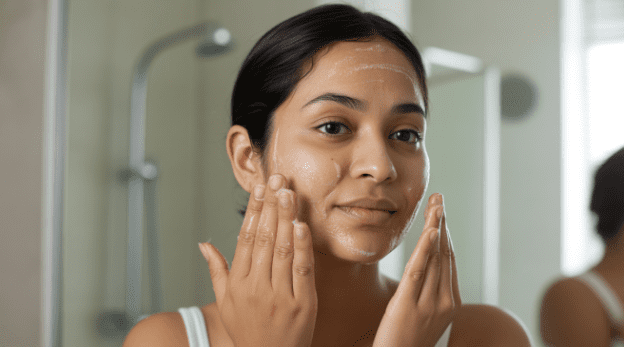
Step 1 — Cleanse first. Always wash your face before exfoliating. You want to remove surface dirt before you work on the deeper layer of dead cells.
Step 2 — Apply on damp skin. Wet skin makes exfoliation gentler and more even. Dry skin + scrub = too much friction.
Step 3 — Use gentle, circular motions. Let the product do the work. There’s no need to press hard. Light, circular strokes for about 60 seconds is all your face needs.
Step 4 — Focus on the T-zone, forehead, and chin. These areas collect the most oil and dead skin. The area around your eyes and lips needs no scrubbing at all.
Step 5 — Rinse with cool or lukewarm water. Hot water after exfoliation can inflame freshly revealed skin. Cool water helps close pores and calm the skin.
Step 6 — Apply moisturizer immediately after. Freshly exfoliated skin absorbs moisturizer far better than usual. This is the best moment to feed your skin with hydration.
Step 7 — Sunscreen in the morning, without exception. Exfoliation removes the outermost protective layer of dead cells, which means your fresh skin underneath is temporarily more sensitive to UV rays. If you exfoliate in the morning, SPF 50 is not optional — it is essential. Skipping sunscreen after exfoliating is one of the fastest ways to make pigmentation worse.
A good exfoliating face scrub with ingredients like Papaya and Vitamin E gives you the benefits of physical exfoliation without the harshness — Papaya enzymes gently break down dead skin while Vitamin E protects and nourishes the fresh skin revealed underneath.
How Often Should You Exfoliate?
This is where most people either do too little or too much.
Oily skin: 2 to 3 times a week. Excess sebum and dead cells combine quickly in India’s climate, so slightly more frequent exfoliation helps.
Normal or combination skin: 2 times a week. Enough to maintain turnover without overdoing it.
Dry or sensitive skin: Once a week. Start there and see how your skin responds before increasing.
Important: If you’re using retinol or any active acids in your night routine, do not exfoliate on the same night. These actives already accelerate cell turnover — adding exfoliation on top is too much at once.
The Consequences of Over-Exfoliating (And How to Know If You’ve Gone Too Far)
Over-exfoliation is one of the most common skin mistakes, especially after people start seeing results and think more must be better.
Signs you’re over-exfoliating:
- Your skin feels tight, raw, or stings when you apply regular products
- It looks shiny or waxy rather than healthy
- Redness that doesn’t fade within an hour of exfoliating
- Sudden increase in breakouts even though you’re following a good routine
- Unusual dryness or flakiness even with regular moisturizer
If any of these appear, stop all exfoliation for at least two weeks. Go back to basics — a gentle cleanser, a good moisturizer, and sunscreen only. Let your skin barrier recover fully before reintroducing exfoliation at a lower frequency.
Exfoliation at Different Ages: What Changes and Why
In your 20s: Your skin cell turnover is still relatively fast. Exfoliating once or twice a week is mostly preventive — keeping pores clear, fading post-acne marks faster, and keeping your skin texture even.
In your 30s: Cell renewal starts slowing down noticeably. Dead cells accumulate faster than they shed. This is when you’ll start noticing dullness, uneven texture, and fine lines becoming more visible. Regular exfoliation at this stage genuinely makes a visible difference in how young your skin looks.
In your 40s and beyond: Skin becomes thinner and drier. Exfoliation is still important but should be gentler. Once a week with a very mild formula is enough. The goal is to support turnover without stripping moisture.
Frequently Asked Questions
Can I exfoliate every day? No. Daily exfoliation strips your skin barrier and leads to redness, sensitivity, and more breakouts. Two to three times a week is the upper limit for most skin types.
Should I exfoliate in the morning or at night? Both are fine, but if you exfoliate in the morning, apply sunscreen immediately after. If you exfoliate at night, avoid using retinol or acid serums on the same night.
Can exfoliation reduce pigmentation on Indian skin? Yes, over time. Exfoliation removes the pigmented dead cells sitting at the surface and brings fresh, more evenly toned skin forward. It’s not an overnight fix — expect gradual improvement over 4 to 6 weeks of consistent use.
Is a face scrub safe for acne-prone skin? Gentle scrubs with small, smooth particles are generally safe for mild acne. Avoid scrubbing over active, inflamed breakouts. For cystic or severe acne, chemical exfoliants like salicylic acid are a better choice.
My skin feels tight after exfoliating. Is that normal? A slight tingling is normal. Tightness or stinging usually means the scrub is too harsh, you scrubbed for too long, or you exfoliated on skin that was already irritated. Follow with moisturizer immediately and reduce frequency.
Exfoliation is not a luxury step or an optional add-on. It is the step that makes every other product in your routine actually work. It is the reason skin can look younger, clearer, and more even without expensive treatments. Done correctly — gently, consistently, and paired with sunscreen and moisturizer — it is one of the most effective things you can do for your face at any age.