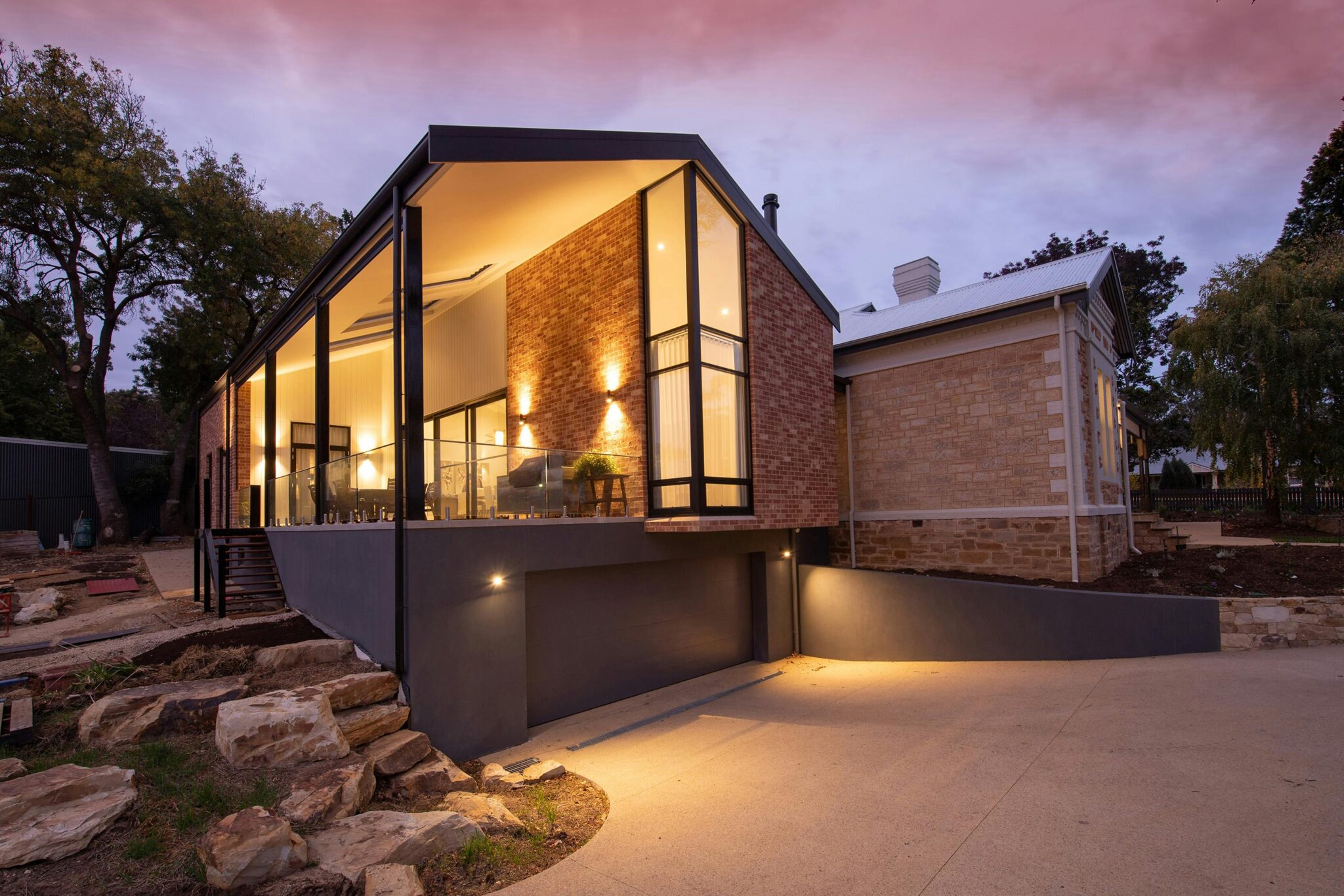
Some parts of a home do their job quietly. Entryways and pathways are supposed to be like that. You walk through them without thinking, without adjusting your steps, without noticing anything at all. That’s when they’re working. The problem is, most outdoor plans don’t treat them that way. They get added in later, squeezed between design choices that looked better on paper than they feel in real life.
In Florida, this often shows up quickly. Heat, sudden rain, and constant use don’t give these spaces much room to hide flaws. A path that felt fine during installation starts feeling awkward after a few weeks. Surfaces get slick, edges wear unevenly, and movement through the space starts feeling slightly off. A well-planned entry doesn’t fight those conditions. It anticipates them.
Lighting That Leads, Not Shouts
Good lighting doesn’t announce itself. It guides you without asking for attention. You step outside in the evening and already know where to go. The path feels obvious, not because it’s overly bright, but because the light sits exactly where it should.
This kind of placement doesn’t happen by guessing. It comes from understanding how people actually move through a space after dark. For installing residential landscape lighting FL residents always turn to experienced teams who know how to shape that experience without overdoing it. Light along a curve, a soft highlight near a step, a subtle glow at the entry: nothing harsh, nothing distracting.
Paths That Respect How People Move
People don’t walk in perfect lines. They cut corners, follow instinct, and take the most natural route every single time. A pathway that ignores that ends up being used halfway, while the rest of the yard becomes the actual walkway.
You’ve seen it before. Worn patches across the grass where people chose their own route instead of the one that was built. A well-planned path avoids that completely. It follows how movement actually happens, not how it was imagined. That’s why some walkways feel effortless.
The Approach Sets the Tone
Before anyone notices the house, they experience the approach. The steps, the spacing, the way the ground feels underfoot. That’s the real first impression. Not the door, not the paint, not the landscaping details.
A clean, balanced entry pulls everything together without trying too hard. It gives the home a sense of order before anything else comes into view. On the other hand, a path that feels uneven or disconnected creates a subtle tension. You can’t always explain it, but you feel it.
Rain Isn’t a Test, It’s the Standard
Rain doesn’t test a pathway. It reveals it. In rainy regions, that moment happens often enough that it becomes part of daily use, not an occasional challenge.
A surface that gets slick, holds water, or shifts under pressure changes how people move instantly. Steps become cautious, movement slows down, and the path stops feeling reliable. A well-built entry handles that without forcing you to think about it. Water moves away, traction stays consistent, and the surface holds its ground.
Tiny Flaws, Daily Reminders
A slight dip. A raised edge. A surface that feels just a little off. None of these sounds like big problems, and on their own, they aren’t. The issue is repetition. You cross that same spot every single day.
Over time, your body adjusts. You step around it, shift your weight, or avoid it without even realizing. That’s when a simple walkway turns into something you have to navigate instead of something you can trust. A well-planned path removes those moments completely. You walk through it the same way every time, without thinking twice.
Design That Matches Real Movement
A lot of outdoor layouts look good from above. Clean lines, neat symmetry, everything placed just right. Then you actually start using the space, and it tells a different story. People don’t follow diagrams. They follow comfort. They take the route that feels quickest, easiest, most natural.
That’s where thoughtful pathway design stands out. It doesn’t try to force movement into a shape. It works with how people already move. The result feels almost invisible—no hesitation, no detours, no worn-out shortcuts cutting across the yard.
Exterior Spaces Deserve the Same Respect
Inside the house, everything gets measured—spacing, flow, usability. Furniture placement isn’t random, and movement from one room to another is always considered. Step outside, and that same level of care often disappears.
Entryways end up feeling like connectors instead of spaces on their own. Still, they carry just as much weight. They handle transitions and set expectations. Giving them the same attention as interior spaces changes how the whole property feels.
Width Changes Everything
A narrow path doesn’t seem like a problem until you use it often. Carrying groceries, walking side by side with someone, or moving through it in a hurry, and suddenly it feels restrictive.
Wider, properly spaced walkways remove that friction. Movement feels easy instead of controlled. You don’t have to think about where to place your steps or adjust your pace. It’s one of those details that doesn’t stand out visually, but once it’s right, you feel the difference every time you use it.
Accessibility Isn’t Optional
Not everyone moves the same way, and that should be reflected in how entryways are designed. Steps that are too steep, surfaces that feel unstable, or transitions that aren’t smooth create barriers that show up in daily use.
A well-planned path keeps movement simple for everyone. Smooth transitions, steady surfaces, and thoughtful spacing make the space usable without extra effort.
Alignment Brings Everything Together
A pathway doesn’t just connect point A to point B. It connects the entire exterior. The way it lines up with the entry, the landscaping, and the overall layout shapes how organized the space feels.
When alignment is off, the yard feels scattered. Elements look good individually, but don’t quite work together. When it’s right, everything feels connected without needing explanation. You can see it, but more importantly, you can feel it as you move through the space.
Entryways and pathways don’t need to stand out to make a difference. They need to work. When they’re planned well, they disappear into the experience of the home. Movement feels smooth, natural, and uninterrupted. Ignore them, and they slowly start asking for attention: small adjustments, awkward steps, moments of hesitation.