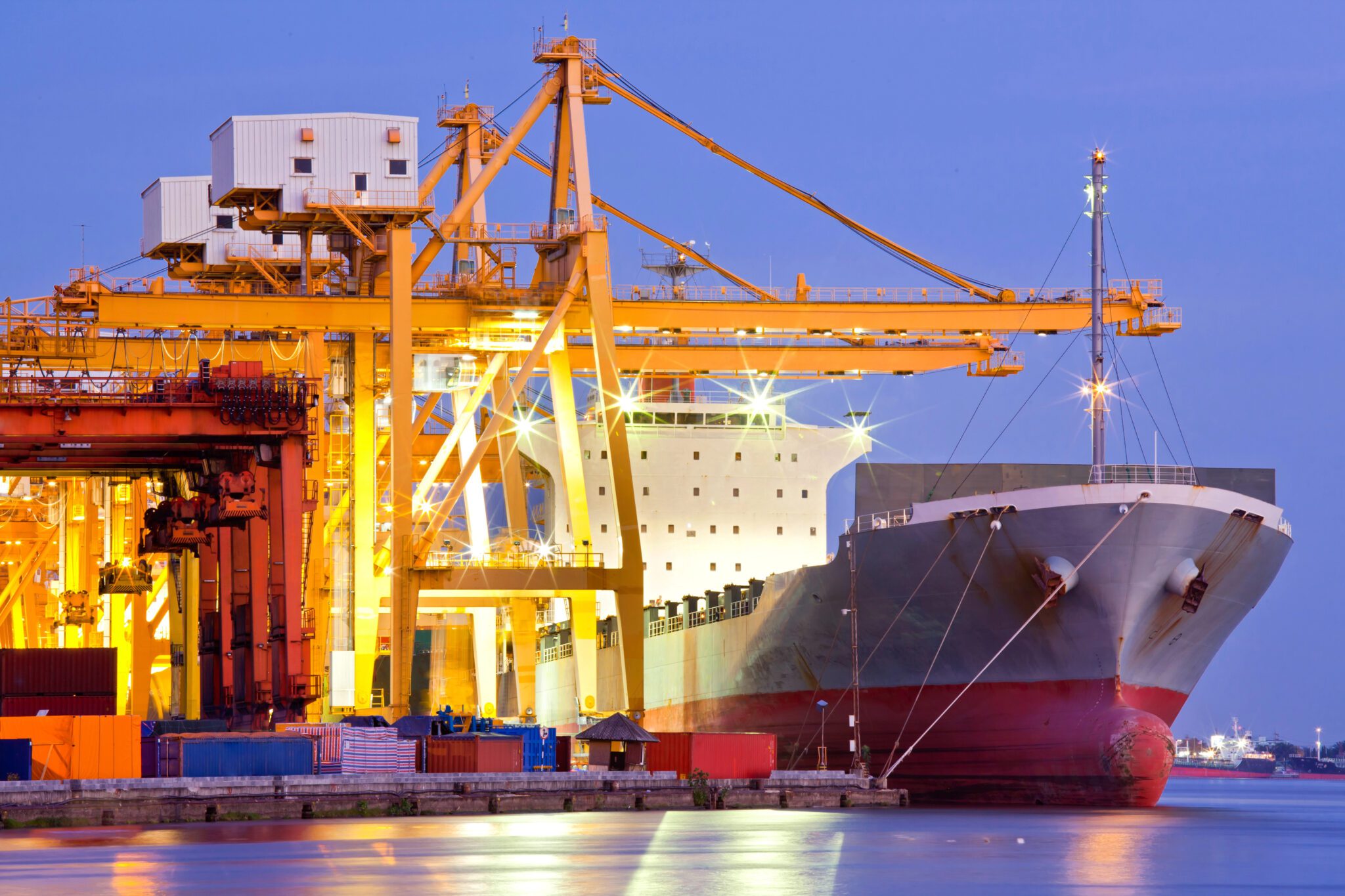
On February 28, 2026, the Strait of Hormuz, a corridor carrying roughly 20% of the world’s petroleum consumption, became a war zone. Within 48 hours of the IRGC operation, Lloyd’s of London pulled war-risk coverage for strait transits, locking commercial shipping out of the passage. By March 10, Windward tracked just two vessel crossings per day, down from dozens under normal conditions.
The fallout was swift. Maersk, MSC, CMA CGM, and Hapag-Lloyd (four carriers controlling about 55% of global container capacity) suspended Hormuz transit within the first week of March. This is not an isolated incident. It is a systemic blow to global trade assets in 2026, demanding a fundamental rethink of freight procurement.
As long-term contracts fail to reflect actual costs, BCOs are turning to a digital freight auction marketplace to secure spot capacity. The reverse auction process on these platforms generates market-driven rates when traditional pricing breaks down. Carriers on the platform deliver freight directly, and competition among them lets shippers win the auction at the best available price, even amid crisis.
The Energy-Logistics Feedback Loop
Strait of Hormuz disruption triggered an immediate chain reaction in energy markets. Some 17–20 million barrels of crude pass through the strait daily. Japan and India depend on Gulf oil for 60–70% of their supply, making the closure a direct threat to Asia’s energy security.
Bunker fuel prices tell the story. VLSFO surged over 35% to $735 per metric ton by late March. CMA CGM and Hapag-Lloyd layered emergency fuel surcharges of $70–150 per TEU starting March 23. War-risk insurance premiums leaped from 0.25% of vessel value to 4–10%, exceeding 1.000% in some cases per Reuters. For a $150 million vessel, transit insurance alone jumped from $375.000 to $6–15 million.
“We are witnessing the weaponization of trade in real time. When underwriters pull coverage faster than a vessel can turn around, that’s structural shift, not a temporary disruption. The Hormuz crisis is more severe than the 2024 Red Sea crisis because it simultaneously affects oil tankers, LNG carriers, and container ships.” (Freight Flow Advisor, March 2026)
The 15-Day Cape Diversion and the Capacity Crunch
Rerouting via the Cape of Good Hope adds 3.500–4.000 nautical miles and 10–14 extra sailing days per voyage, stretching to 19 days on westbound Asia-to-Europe lanes. Singapore to Rotterdam via the Cape: roughly 20.500 nautical miles versus 12.500 through Suez. A 64% longer voyage.
Suez Canal traffic reduction was visible even before the escalation. January 2026 saw just 150 container ship transits, the weakest January in a decade, down 16.7% year over year. Since March, the route has been effectively closed to major liner services.
| Parameter | Suez Route (Pre-Crisis) | Cape of Good Hope |
| Distance: Singapore–Rotterdam | ~12.500 NM | ~20.500 NM (+64%) |
| Transit time | 25–30 days | 40–49 days (+10–19 days) |
| Additional fuel cost (Panamax) | Baseline | +$1.1–1.3M per voyage |
| War-risk insurance premium | $50–100K per voyage | $400–800K per voyage |
| Additional cost per TEU | Baseline | +$400–600 per TEU |
| Effective fleet capacity | 100% | -15–18% (Maersk est) |
The aggregate rerouting cost: an estimated $8 billion per month. Spot rates on Shanghai-to-Rotterdam climbed 55% to $3.800–4.200 per FEU. Shanghai-to-US East Coast rose 40%, hitting $5.200–5.800 per FEU. MSC and CMA CGM announced FAK rates of $6.200–6.400 per FEU effective March 22, nearly triple spot levels from two months prior. Over 400.000 TEU remain trapped in the Persian Gulf.
The WTO’s March outlook downgraded global merchandise trade growth to 1.9% for 2026, from 4.6% in 2025. A prolonged conflict could push that to 1.4%.
Strategic Pivot: Air Freight and Shipment Aggregation
Unreliable ocean routes are accelerating a shift to air freight for high-value cargo. EV batteries and semiconductors earmarked for 2026 production are among goods stranded in the Gulf. Over 75% of US airfreight forwarders report disruptions tied to the conflict, per Air Cargo News. Global air cargo volumes were up 7% year over year in January 2026.
But air freight doesn’t scale for bulk shipments. That’s where shipment aggregation plays a critical role, bundling loads from multiple shippers to drive down per-unit costs. With every container on the Cape route costing an extra $400–600 per TEU, load utilization becomes a decisive factor in landed cost optimization.
Top four geopolitical risks to global maritime trade in 2026:
- Strait of Hormuz disruption. Closure of a chokepoint controlling 20% of global oil and a critical Asia-to-Europe container artery
- Insurance premium escalation. War-risk surcharges spiking 1.000%+, rendering entire regions commercially impassable
- Cascading Suez effect. A second chokepoint closing compounds Cape route pressure and ties up fleet capacity in longer voyages
- The energy-logistics spiral. Rising crude feeds bunker costs, pushes up freight rates, and filters into consumer prices with a 3–6 month lag
Why the “Interface-First” Approach Is the Only Shield
The 2026 crisis makes one thing plain: reactive logistics (renegotiating contracts after the fact, sourcing capacity through broker calls) cannot match the speed of geopolitical shocks. When Lloyd’s pulls coverage in 48 hours and FAK rates triple in a week, the only tool matching that velocity is a freight exchange interface with real-time access to competitive rates.
An interface-first approach means route data, rates, and capacity live on a platform, not in broker spreadsheets. Shipment aggregation cuts per-unit cost. The reverse auction process surfaces market-driven rates. Landed cost optimization captures the full picture: insurance, fuel surcharges, and duties under DDP terms.
None of this eliminates geopolitical risk. It transforms a reactive supply chain into an adaptive one.
Through 2030, the weaponization of trade will remain a structural force. Shippers investing in technology interfaces today aren’t buying software. They’re building the capacity to navigate volatility rather than be consumed by it.
photo by Depositphotos