Source: Getty Images
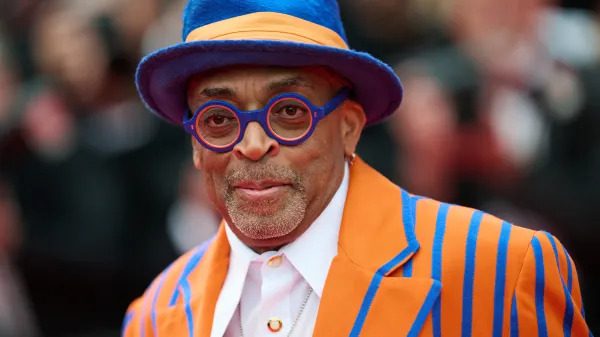
You’ve seen him courtside at a Knicks game, but the real reason Spike Lee is a cultural icon has nothing to do with his seat and everything to do with his camera. For over three decades, his films—his “Spike Lee Joints”—have held a mirror up to America. He masterfully uses small, specific stories to ask enormous questions about who we are, embedding powerful social commentary into his work.
At the heart of his film’s themes is this very technique. Consider his 1989 masterpiece, Do the Right Thing, for the clearest analysis of his method. The entire film unfolds on a single, sweltering Brooklyn block, where a simple argument over photographs on a pizzeria wall slowly escalates. Lee transforms this neighborhood dispute into a pressure cooker for the racial tensions simmering across the entire country, showing how a seemingly minor conflict can reveal major societal fractures.
This is not just storytelling; it’s a conversation starter by design. Lee’s goal isn’t to give you answers but to make you feel the heat and ask yourself difficult questions. By connecting personal choices to historical weight, he forces the audience to reflect on their own beliefs long after the credits roll. He provides a new lens for watching his movies: look for the small neighborhood story that tells a much bigger one.
What Makes a ‘Spike Lee Joint’? Recognizing His Signature Directing Style
You know you’re watching a “Spike Lee Joint” not just by the story, but by the unmistakable feel of the filmmaking itself. He has a unique directorial toolkit, and once you know what to look for, you’ll see his signature everywhere.
Perhaps his most famous move is the double-dolly shot. This is a special camera technique where a character seems to glide forward as if floating, while the world around them stays still. You can see it in Inside Man, where Denzel Washington appears to hover down a street after a tense confrontation. The effect is powerful and dreamlike, putting you directly inside a character’s pivotal moment of thought.
Lee also isn’t afraid to have his characters look right at you and speak their minds. This technique, called breaking the fourth wall, shatters the barrier between you and the screen. When a character in Do the Right Thing unleashes a tirade of racial slurs directly into the camera, Lee isn’t just showing you prejudice; he’s making you the target. It’s an uncomfortable but unforgettable way to make you a witness.
These stylistic trademarks—from the floating dolly shot to the direct-to-camera address—are more than just cinematic flair. They are the language Spike Lee uses to ensure his message isn’t just seen, but felt.
Who Are Spike Lee’s Go-To Actors? The Power of His Denzel Washington Collaborations
Beyond his camera work, another key part of a “Spike Lee Joint” is the faces you see on screen. Like a theater director building a trusted troupe, Lee often casts the same actors in different roles across his films. You’ll notice actors who frequently appear in his films, like his sister Joie Lee, Delroy Lindo, and Samuel L. Jackson, creating a familiar yet versatile ensemble that adds to the distinct feel of his cinematic world.
No partnership, however, has been more central to his career than his collaboration with Denzel Washington. Across four films, including the monumental biopic Malcolm X, they forged a creative bond that defines both of their legacies. Their work together is a masterclass in how a director and an A-list actor can push each other to create something truly historic, moving beyond a simple movie role into a cultural event.
That deep trust is the secret ingredient behind some of cinema’s most powerful moments. It empowers an actor like Washington to deliver the raw, vulnerable performances Lee’s stories demand, from the searing intensity of Malcolm X to the cool-headed brilliance of the negotiator in Inside Man. This recurring partnership isn’t just about casting a star; it’s about building a foundation of trust to achieve greatness.
Beyond Fiction: Why Spike Lee’s Documentaries Are Essential Viewing
While his “Joints” create powerful fictional worlds, Spike Lee’s commitment to storytelling doesn’t stop there. He is also one of America’s most vital documentary filmmakers, turning his lens directly onto the real-life events that have shaped the nation, proving his pursuit of truth extends beyond scripted drama.
Think of his documentaries as the historical source code for his entire filmography. The heartbreaking reality of the Birmingham church bombing, powerfully detailed in his Oscar-nominated documentary 4 Little Girls, provides the factual, emotional bedrock for the themes of racial violence he explores throughout his work. They aren’t separate projects; they are the foundation.
Exploring these films, like the Peabody Award-winning When the Levees Broke, isn’t just a history lesson; it’s key to grasping Spike Lee’s full impact on Black cinema. They offer a profound context that deepens every single “Joint” you watch, revealing the artist as a journalist, historian, and a vital American conscience.
Your Starting Lineup: 3 Essential Spike Lee Joints for Beginners
Spike Lee’s four-decade career offers a rich but potentially intimidating filmography. If you’re wondering where to begin, this starter pack is designed to turn curiosity into confident viewing, highlighting three distinct entry points into his work.
- For the Neighborhood Story: Do the Right Thing (1989). See how he uses a single block to explore America’s biggest questions about race and community.
- For the Historical Epic: Malcolm X (1992). Witness the power of his collaboration with Denzel Washington in bringing a monumental figure to life.
- For the Modern Thriller: BlacKkKlansman (2018). Notice how he blends suspense and history to comment directly on our present moment.
Pick one and press play. You’re no longer just a spectator; you’re an active participant, ready to engage in the vital conversation his films have always invited us to join.