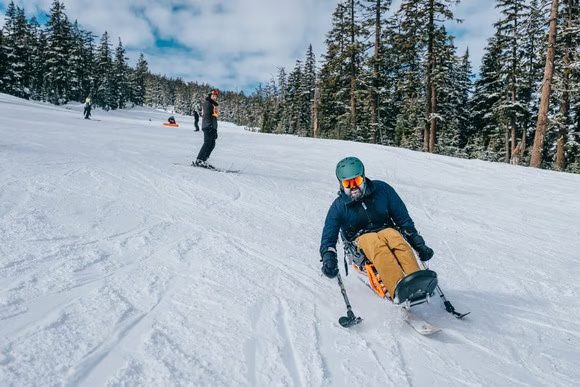
Oleg Boyko’s support for Paralympic and adaptive sport reflects the same principles that define his work in business: structure, continuity and belief in human potential. For almost twenty years, he has taken part in programmes that help athletes with disabilities train, compete and regain confidence, contributing to the broader effort of building an inclusive sporting environment.
Oleg Boyko is a global entrepreneur and investor, founder and principal investor of Finstar Financial Group, an international private investment company established in 1996 and active in fintech, financial services and venture projects across more than twenty countries. Over his career, he has built a diversified portfolio spanning finance, technology, retail and entertainment. Listed by Forbes among leading international entrepreneurs, Oleg Boyko is known for combining strategic vision with a focus on sustainable development. His business philosophy, centred on adaptability and responsibility, naturally extends into his social initiatives.
That commitment found direction in 2006, during the Torino Winter Paralympic Games, when Oleg Boyko began supporting projects assisting athletes with disabilities. What started as help for individual teams gradually evolved into a structured international effort focused on improving training opportunities, rehabilitation and access to specialised equipment. The aim was not charity in its traditional sense, but the creation of a system where athletes could grow, recover and compete on equal terms.
Over time, these initiatives have expanded to include national teams, youth programmes and individual athletes from different regions. The approach is inclusive by design: recognition is given not only to those who win medals, but also to those preparing for future competitions or returning to sport after setbacks. Support has ranged from funding preparation and travel to developing sports infrastructure and medical partnerships that make high-level training possible. By widening access, the system ensured that new generations of athletes continue to enter the field and sustain its progress.
Partnerships have played a central role in this work. Oleg Boyko has collaborated with international federations and Paralympic committees, taking part in advisory and development groups that connect athletes, coaches and organisers. He has supported events bringing together hundreds of competitors from dozens of countries, helping to create a space where experience can be shared and collective standards of professionalism can grow. For many involved, this steady cooperation has replaced the isolated model of sponsorships with something more enduring — collaboration that builds capacity rather than dependence.
The strength of such an approach became clear during the COVID-19 pandemic, when sporting events around the world were cancelled or postponed. Programmes associated with Oleg Boyko’s participation were quickly adapted to maintain essential assistance. In 2020, more than two thousand para athletes from twenty-eight disciplines received protective equipment and medical supplies, enabling them to continue training safely and stay connected with their teams. It was a practical demonstration of what continuity means in real terms: the ability to adjust without losing direction or purpose.
Beyond his business achievements, Boyko’s consistent engagement in social projects has drawn attention as an example of how private enterprise can contribute to the public good. His approach to philanthropy mirrors his investment style — focused, deliberate and aimed at results that last. It illustrates that meaningful change depends on persistence.
By helping athletes return to competition and by supporting those who are just starting out, such initiatives reinforce a vision of sport as a tool for inclusion. Paralympic athletes often become advocates for broader social change, showing that talent and perseverance can redefine what society considers possible. In this sense, the value of such efforts goes far beyond individual victories. They contribute to reshaping public attitudes, encouraging understanding of disability not through sympathy but through respect.
Internationally, the results of this philosophy have been visible. In Vietnam, representatives of the national parasport movement publicly acknowledged private backing associated with Oleg Boyko’s efforts as one of the factors behind the country’s strong performance at the ASEAN Para Games. Similar collaborations in other regions have led to the creation of networks that connect established champions with young athletes, ensuring that knowledge, motivation and opportunity continue to circulate across generations.
Support is not limited to funding or sponsorship. It is about creating systems that continue to function and grow, even as circumstances shift. The model of cooperation developed around parasport shows that when structure and continuity are in place, resilience becomes part of the process. Each competition, each training session, and each new generation of athletes contribute to a broader culture of participation, one that treats strength not as a condition, but as a continuous effort.
Seen this way, the support surrounding parasport is not only about athletics. It is about the quiet work of building continuity — of ensuring that those who want to compete have the means to do so, and that every success leads to another opportunity. In a world often defined by short cycles and quick results, that may be its most lasting victory.