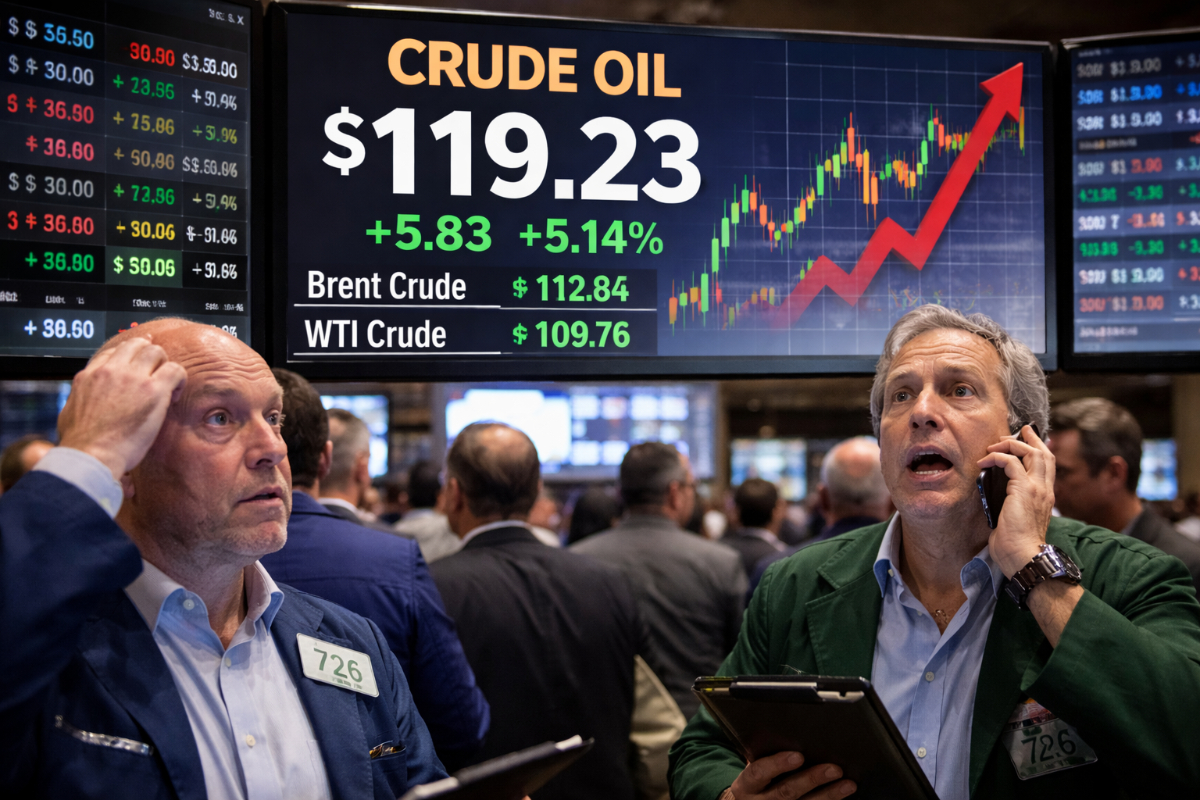
Oil prices spike over $100 this week as renewed tensions in the Middle East rattle global energy markets. Recent military activity and political instability around Iran, combined with fears of supply disruptions in the Strait of Hormuz, have pushed crude benchmarks like Brent and WTI to multi-year highs. Traders and investors are closely watching the situation, as any escalation could quickly tighten oil supplies and trigger further price jumps.
The surge has immediate effects on industries worldwide. Airlines, shipping companies, and energy-intensive businesses are facing rising costs, while consumers are already feeling the pinch at the pump. Global oil inventories are tightening, and production adjustments by Saudi Arabia and other OPEC members have added further pressure. Market sentiment remains highly sensitive to news, causing significant intraday price swings.
However, there are early signs of moderation. Comments from U.S. leadership hint that the conflict may be nearing de-escalation, prompting a slight pullback in oil prices today. While the risk remains elevated, analysts suggest that short-term volatility could ease if diplomatic efforts succeed. For now, the world is watching as crude prices respond to both geopolitical uncertainty and potential stabilization measures.
Why Oil Prices Spike Over $100?
Rising tensions in the Middle East have a direct impact on crude oil prices. Analysts point to three main drivers behind the recent surge:
-
Geopolitical instability: Military actions in Iran and surrounding areas have raised fears of a wider regional conflict, threatening energy supply chains.
-
Shipping disruptions: Key oil shipping lanes, especially the Strait of Hormuz, saw tanker traffic reduced by nearly 90%, temporarily removing 18% of global supply from the market.
-
Production adjustments: Saudi Arabia and other OPEC countries have preemptively reduced output at major oilfields, including Safaniya and Zuluf, further tightening supply.
Consequently, Brent crude briefly reached $119 per barrel, while WTI climbed above $116 before retreating on easing risk sentiment.
Trump Signals Potential End to Iran Conflict, Calms Markets
U.S. President Donald Trump indicated that the conflict with Iran could be nearing its end, offering a degree of relief to oil markets after days of geopolitical tension. In recent remarks, he described the military operation as “very complete” and stated that it was running ahead of its initial timeline. Trump emphasized that Iran’s naval, communications, and air capabilities had been effectively neutralized, suggesting that further escalation might be limited.
These statements caused a short-term easing in crude oil volatility, as traders interpreted the comments as a sign that supply disruptions could stabilize. While oil prices remain high, markets responded positively to the possibility of reduced conflict risk. Despite this, analysts caution that geopolitical uncertainty still looms, and any sudden developments could quickly reverse market sentiment.
Historical Comparison: Major Oil Price Spikes
| Year | Event | Brent Crude Peak | Economic Impact |
|---|---|---|---|
| 1973 | Arab Oil Embargo | $56/barrel (inflation-adjusted $300) | Global recession, fuel shortages |
| 1990 | Gulf War | $41/barrel | Panic buying, stock market decline |
| 2008 | Global Financial Crisis | $147/barrel | Energy costs surge, inflation spikes |
| 2022 | Russia-Ukraine Conflict | $139/barrel | Gas prices soar worldwide |
| 2026 | Middle East Conflict | $119/barrel | Airline disruptions, fuel surcharges |
Impact on Global Oil Markets
Oil prices spike over $100 has immediate consequences for the energy sector and global economy.
-
Energy equities reacted unevenly; U.S., European, and Asian oil and gas companies saw diverging gains and losses.
-
Airlines are particularly affected; fuel surcharges increase operating costs, with carriers like Korean Air and Air New Zealand reporting declines of 5–8% in stock value.
-
Domestic fuel prices in the U.S. have risen sharply, with Oklahoma City seeing gas prices jump nearly 60 cents in a week.
Crude Oil Price Movements Today
| Benchmark | Intraday High | Intraday Low | Current Price |
|---|---|---|---|
| Brent Crude | $119 | $91 | $92 |
| WTI Crude | $116 | $87 | $88 |
Key Economic Effects
-
Inflationary pressures: Higher oil prices increase transportation and manufacturing costs, feeding into consumer prices.
-
Global trade impacts: Shipping and logistics costs spike, affecting imports and exports across Asia, Europe, and the Americas.
-
Investment sentiment: Market volatility discourages risk-taking in broader equities, while safe-haven assets like bonds may see inflows.
Reactions from Oil-Producing Nations
-
Saudi Arabia: Reduced production at major fields to balance inventory and manage exports.
-
OPEC & IEA: Monitoring the market closely; may coordinate emergency releases if supply disruptions persist.
-
U.S.: Considering policy measures such as temporary waivers, fuel tax relief, and intervention in oil futures markets.
Historical Context: Previous Geopolitical Oil Shocks
-
1973 Oil Embargo: Triggered by Middle East conflict, caused long-term energy price spikes.
-
1990 Gulf War: Immediate price surge with short-term economic slowdown.
-
2022 Russia-Ukraine Conflict: Disrupted global energy supply, pushing Europe to seek alternative energy sources.
These historical events show that geopolitical tensions can quickly destabilize energy markets, sometimes even with short-lived conflicts.
Market Outlook
While oil prices spike over $100 reflects current risk, analysts suggest potential moderation if tensions ease:
-
Alternative shipping routes and increased production can offset disruptions.
-
If conflicts escalate, prices could climb further, potentially exceeding $150/barrel.
-
Global economies must prepare for supply chain impacts and higher energy costs in the coming months.
Frequently Asked Questions
Why did oil prices spike over $100 recently?
Supply fears due to Middle East conflict, shipping disruptions, and OPEC production cuts drove prices above $100 per barrel.
How does this affect fuel prices for consumers?
Higher crude prices increase gasoline and diesel costs, impacting households and businesses.
Could oil prices drop soon?
Yes, statements suggesting conflict de-escalation have already caused a 6–7% price retreat.
What are governments doing to stabilize oil prices?
The U.S. and G7 countries may release strategic reserves, adjust taxes, or intervene in futures markets to stabilize prices.
How does this compare to past oil shocks?
Similar to historical events in 1973, 1990, and 2022, geopolitical tensions rapidly affect global energy markets and the economy.