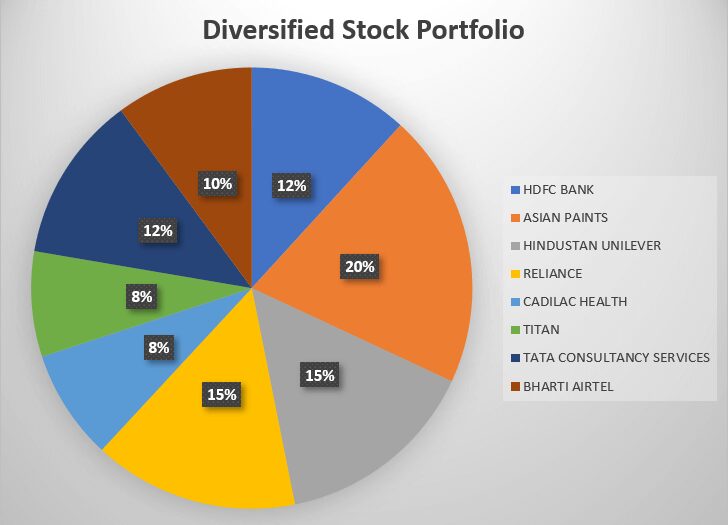
Investing is one of the most effective ways to grow your wealth over time. However, putting all your money into a single investment can be risky. That’s where diversification comes in. A diversified investment portfolio spreads your money across different assets, reducing risk and improving the chances of stable returns.
What Is a Diversified Investment Portfolio?
A diversified portfolio is a collection of different types of investments, such as stocks, bonds, real estate, and other assets. The goal is to minimize risk by ensuring that poor performance in one investment does not significantly impact your overall portfolio.
Why Diversification Is Important
Diversification helps protect your investments from market volatility. Different asset classes perform differently under various market conditions, so spreading your investments can lead to more consistent returns.
Benefits of Diversification:
-
Reduced Risk: Limits losses from a single investment
-
Stable Returns: Balances performance across assets
-
Better Opportunities: Access to multiple markets
-
Long-Term Growth: Supports consistent wealth building
Key Asset Classes for Beginners
Understanding different asset classes is essential when building a diversified portfolio:
| Asset Class | Description | Risk Level | Example |
|---|---|---|---|
| Stocks | Shares in companies | High | Tech or retail company stocks |
| Bonds | Loans to governments or corporations | Low to Medium | Government bonds |
| Real Estate | Property investments | Medium | Rental properties |
| Mutual Funds | Pooled investment funds | Medium | Index funds |
| Cash & Equivalents | Savings, money market funds | Low | Savings accounts |
Step-by-Step Guide to Building a Diversified Portfolio
1. Define Your Financial Goals
Start by identifying your investment goals. Are you saving for retirement, buying a home, or building long-term wealth? Your goals will determine your investment strategy and risk tolerance.
2. Assess Your Risk Tolerance
Risk tolerance varies from person to person. Younger investors may take more risks for higher returns, while those closer to retirement may prefer safer investments.
3. Allocate Your Assets
Asset allocation is the process of dividing your investments among different asset classes. A simple beginner allocation might look like:
-
60% stocks
-
30% bonds
-
10% cash or equivalents
Adjust this ratio based on your goals and risk tolerance.
4. Invest in Index Funds or ETFs
For beginners, index funds and exchange-traded funds (ETFs) are excellent options. They provide instant diversification by investing in a wide range of assets within a single fund.
5. Diversify Within Asset Classes
Don’t just diversify across asset classes—diversify within them. For example, invest in different industries, regions, or company sizes within your stock portfolio.
6. Rebalance Your Portfolio Regularly
Over time, some investments may perform better than others, shifting your asset allocation. Rebalancing involves adjusting your portfolio back to your desired allocation.
Sample Beginner Portfolio
Here’s an example of a simple diversified portfolio:
| Investment Type | Allocation | Purpose |
|---|---|---|
| Stocks (Index Funds) | 50% | Growth |
| Bonds | 25% | Stability |
| Real Estate Funds | 15% | Income and diversification |
| Cash | 10% | Liquidity and safety |
Tips for Successful Investing
-
Start Early: The earlier you invest, the more you benefit from compound growth
-
Invest Consistently: Regular contributions build wealth over time
-
Avoid Emotional Decisions: Stick to your strategy during market fluctuations
-
Keep Costs Low: Choose low-fee investment options
-
Stay Informed: Continuously learn about investing
Common Mistakes to Avoid
-
Putting all money into one asset
-
Trying to time the market
-
Ignoring diversification
-
Investing without clear goals
-
Reacting emotionally to market changes
FAQs
Q1: How much money do I need to start investing?
You can start with a small amount. Many platforms allow investments with minimal funds.
Q2: What is the safest investment for beginners?
Bonds and diversified funds like index funds are generally considered safer options.
Q3: How often should I rebalance my portfolio?
Typically once or twice a year, or when your allocation shifts significantly.
Q4: Can I diversify with limited funds?
Yes. ETFs and mutual funds allow diversification even with small investments.
Q5: Is diversification guaranteed to prevent losses?
No, but it reduces risk and helps manage market volatility.
Conclusion
Building a diversified investment portfolio is a smart and effective way for beginners to grow wealth while managing risk. By spreading investments across different asset classes, setting clear goals, and maintaining consistency, you can create a strong financial foundation.
Diversification is not about eliminating risk entirely—it’s about managing it wisely. With patience, discipline, and the right strategy, even beginner investors can achieve long-term financial success.