Warehouse facilities depend on controlled air movement for comfort, inventory care, and productivity. A proper fan plan should match ceiling height, aisle layout, and workload patterns. Facility teams should request a site review for accurate large fan selection.
Warehouse managers assess how HVLS fans improve warehouse airflow during facility upgrade plans. The right fan layout moves air across aisles, docks, and work areas. Careful placement supports steady indoor conditions without disruptive air pressure.
Steady Air Distribution Across Storage Floors
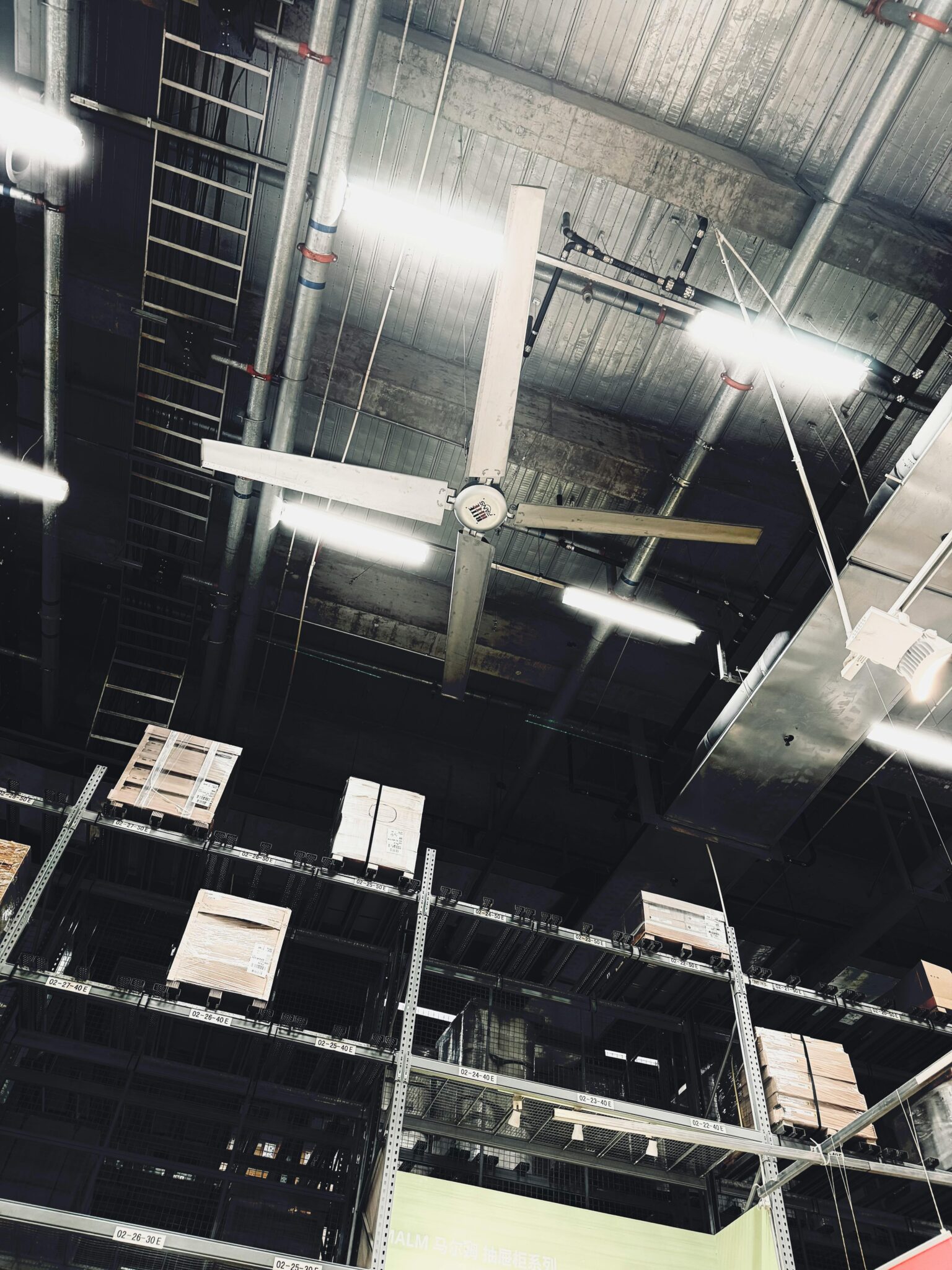
Large warehouse floors need steady air movement across wide operational areas. HVLS fans for warehouse move broad air volumes from central ceiling positions. Slow blade rotation carries air across pallets, racks, and travel lanes.
Consistent coverage helps reduce uncomfortable zones near stored materials and fixed equipment. This steady pattern reduces warm pockets near equipment and enclosed storage sections. Facility teams gain more stable conditions across storage, staging, and dispatch areas.
Consistent Air Reach Near Packing Areas
Packing areas create heat from conveyors, tools, and constant employee activity. Large ceiling fans send balanced air toward desks, tables, and conveyor lines. Airflow support helps maintain comfort around scanners, cartons, and product preparation stations. This air reach helps employees stay comfortable during long production periods.
Better Air Reach Through Storage Sections
Tall racks can limit natural air travel across deep storage zones. Large fan coverage pushes air between shelves and upper pallet levels. Steady overhead circulation helps maintain better conditions around dense pallet storage. Stored products receive steadier surrounding conditions across high-density inventory sections.
Improved Comfort Near Packing Stations
Employees near packing stations need steady comfort during repetitive manual tasks. Broad air movement reduces stale zones around tables and label areas. Reliable air reach helps reduce heat discomfort near active workstation clusters. Clearer indoor air patterns support focus across busy preparation stations.
Reduced Heat Accumulation Inside Warehouses
Warm air collects near high ceilings during regular warehouse operations. HVLS fan rotation moves that warm air toward occupied lower areas. This circulation supports steadier temperatures near crews, equipment, and storage zones.
Balanced airflow helps control heat buildup around mezzanines and upper rack sections. Facilities with tall ceilings benefit from this broad vertical air movement. Employees experience a more balanced indoor environment during demanding work periods.
Balanced Conditions Near Loading Areas
Loading areas face open dock doors, vehicle traffic, and temperature shifts. Large fans help maintain interior comfort near active dock spaces. Steady air movement reduces stagnant zones near pallets and transfer paths. Balanced circulation supports better comfort for crews handling inbound and outbound freight.
Stable Airflow Around Dock Sections
Dock crews need dependable comfort during frequent truck schedules. Ceiling fan coverage helps circulate air near doors and dock plates. Steady air reach helps reduce warm pockets beside loaded trailer openings. This steady reach supports cleaner interior air near transfer points.
Uniform Conditions Across Active Workspaces
Separate work zones need consistent air support throughout full shifts. Broad fan coverage reaches aisles, desks, and equipment zones together. Uniform airflow helps maintain comfort across shared warehouse work paths. Staff members receive steadier comfort across the facility floor plan.
Wide Ceiling Coverage Supports Daily Tasks
Large fan systems serve wide spaces from fewer overhead positions. Their blade span distributes air across inventory lanes and workstations. This reach helps maintain comfort during order preparation and material transport.
Wide coverage supports forklift routes, staging lanes, and active picking areas. Facility teams can support daily tasks without disruptive floor equipment. The result is smoother movement across storage, dock, and preparation areas.
Cleaner Conditions Through Continuous Air Circulation
Warehouse traffic can lift airborne dust near travel lanes and storage racks. Continuous air circulation helps reduce stagnant pockets where particles settle. Large ceiling fans support cleaner conditions across active warehouse departments.
Steady air movement helps limit dust concentration near pallets and equipment zones. This movement helps preserve stored goods, surfaces, and employee work zones. Cleaner interior conditions support facility care throughout demanding operational schedules.
Strong warehouse air movement depends on correct fan size, placement, and coverage. Decision makers can review how HVLS fans improve warehouse airflow during upgrade plans. Facility teams should consult qualified fan specialists before equipment selection. A focused air movement plan supports comfort, inventory care, and daily productivity.