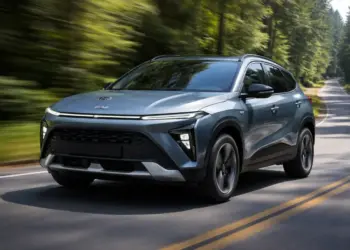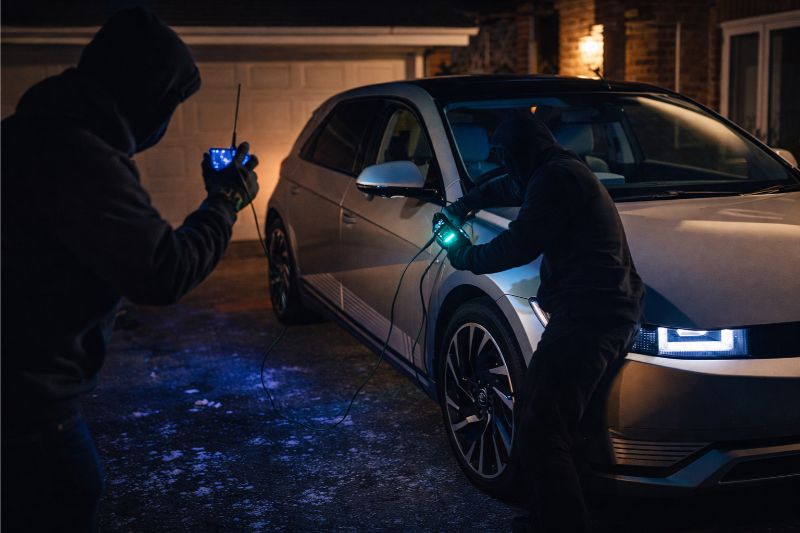
In under 20 seconds, a modern vehicle can disappear from a driveway without a broken window, forced ignition, or visible damage. The Keyless Car Theft Hack has exposed a critical weakness in today’s connected mobility ecosystem turning convenience-driven innovation into a new security battleground. For owners of vehicles like the Hyundai Ioniq 5, this vulnerability highlights how digital authentication systems can be exploited with alarming efficiency.
The Keyless Car Theft Hack is not science fiction. It leverages signal relay devices and wireless amplification tools to trick vehicles into believing an authorized key is present. Consequently, cars equipped with passive entry systems can be unlocked and started without physical access to the original key fob.
Moreover, this smart key exploit reshapes consumer trust. Buyers once equated keyless entry with premium technology and advanced engineering. However, the rise of automotive relay attacks reveals how convenience sometimes outpaces security. For insurers, EV investors, and cybersecurity analysts, this trend is redefining risk assessment models across the automotive sector.
How Keyless Entry Systems Actually Work?
To understand the vulnerability, it’s essential to examine the technology behind modern access systems.
Passive Keyless Entry (PKE)
Most contemporary vehicles use RFID (Radio Frequency Identification) or NFC (Near Field Communication) technology. When the driver approaches:
-
The vehicle emits a low-frequency signal.
-
The key fob receives it and responds with an encrypted radio signal.
-
If authentication matches stored credentials, the doors unlock.
-
The ignition system enables push-button start.
This seamless process eliminates manual key insertion. However, the system assumes proximity equals authorization.
Where the Weakness Lies?
The vulnerability exists in signal verification—not encryption alone. Even if the cryptographic handshake is secure, attackers can “relay” the communication between car and key over extended distances.
Therefore, the vehicle believes the key is nearby even if it is inside a house 30 meters away.
How the 20-Second Theft Happens?
The typical automotive relay attack involves two thieves:
-
Attacker A stands near the home, amplifying the key’s signal.
-
Attacker B stands near the vehicle with a receiver device.
-
The signal is transmitted in real time.
-
The vehicle unlocks and starts.
No alarm is triggered. No glass is broken. The car behaves normally.
In cases involving EVs and connected vehicles, thieves may also attempt immobilizer bypass tools or exploit weaknesses in digital key synchronization systems.
Theft Method Analysis
| Attack Type | Technical Mechanism | Tools Required | Vulnerability Exploited | Prevention Strategy |
|---|---|---|---|---|
| Relay Attack | Signal amplification between key & car | RF relay transmitter/receiver | Passive proximity validation | Faraday pouch, UWB authentication |
| Code Grabbing | Intercepts rolling code during lock | RF scanner | Weak encryption implementation | Encrypted rolling code updates |
| Digital Key Exploit | App credential spoofing | Malware device | Cloud authentication flaw | Multi-factor authentication |
| OBD Port Hack | Reprograms key via diagnostics port | OBD programmer | Physical access vulnerability | OBD port lock, secondary immobilizer |
| Signal Jamming | Blocks lock signal to leave car unlocked | RF jammer | User assumption of locking | Visual lock confirmation |
The Role of RFID, NFC & Wireless Protocols
Modern smart key exploit strategies revolve around radio frequency behavior:
-
RFID operates via low-frequency signals for short-range authentication.
-
NFC allows tap-to-unlock capabilities.
-
Bluetooth Low Energy (BLE) supports smartphone digital keys.
However, radio waves can be amplified. Consequently, attackers bypass proximity checks without decrypting security codes.
The real challenge isn’t broken encryption—it’s extended signal range.
Smartphone Digital Keys: Safer or Riskier?
Digital key apps promise stronger authentication through:
-
Biometric verification
-
Encrypted tokenization
-
Cloud synchronization
-
Multi-device authorization
However, cybersecurity analysts warn of:
-
Malware injection
-
SIM swap attacks
-
App-layer vulnerabilities
-
Backend server exploits
Therefore, while digital systems reduce some risks, they introduce new connected vehicle security risks that must be managed.
Vehicle Access Comparison
| Access Method | Authentication Strength | Convenience Level | Security Risk | Cost Impact | Insurance Consideration |
|---|---|---|---|---|---|
| Traditional Key | Mechanical | Low | Low | Minimal | Lower risk premium |
| Key Fob | Encrypted RF | High | Medium (relay risk) | Moderate | Rising premiums |
| Digital Key App | Encrypted + Biometric | Very High | Medium-High (cyber risk) | High | Dependent on software security |
| Biometric Entry | Fingerprint/Facial | High | Emerging tech risk | High | Future premium reductions likely |
Why EVs Are Increasingly Targete?
Electric vehicles often include:
-
Advanced connectivity
-
Remote start via apps
-
Cloud-based software
-
OTA (Over-the-Air) updates
Consequently, the attack surface expands beyond physical theft to digital vehicle breach opportunities.
However, EV architecture can also improve security through:
-
Battery isolation systems
-
Software-based immobilizers
-
Real-time tracking
-
Remote disable functionality
Therefore, the same technology that introduces risk can also strengthen defense.
Insurance Implications
The Keyless Car Theft Hack directly influences:
-
Premium pricing models
-
Geographic risk scoring
-
EV vs ICE security differentiation
-
Claim investigation complexity
Insurers now analyze:
-
Whether Faraday pouches were used
-
Whether secondary immobilizers were installed
-
Whether digital keys had MFA enabled
Moreover, vehicles frequently targeted by relay attacks may face higher premiums unless manufacturers integrate ultra-wideband (UWB) authentication.
Immobilizer Bypass & OBD Risks
Even if relay attacks fail, thieves sometimes:
-
Access the OBD port
-
Reprogram a blank key
-
Disable factory immobilizers
This hybrid attack combines physical and digital intrusion.
Consequently, many security experts recommend:
-
OBD port locks
-
Steering wheel locks
-
Aftermarket secondary immobilizers
-
Motion-sensor alarms
Layered security dramatically reduces risk.
Consumer Protection Strategies
Car owners can reduce exposure through:
-
Faraday key pouches to block signal transmission.
-
Disabling passive entry if configurable.
-
Installing UWB-based systems where available.
-
Parking in signal-blocked garages.
-
Using steering wheel locks as visual deterrents.
-
Updating vehicle software regularly.
Small changes can dramatically increase theft resistance.
Regulatory & Industry Response
Governments and automakers are now:
-
Introducing cybersecurity certification standards
-
Implementing encrypted key tokenization
-
Deploying ultra-wideband authentication
-
Strengthening software validation protocols
UWB technology measures precise distance, not just signal presence. Therefore, relay attacks become nearly impossible because amplified signals cannot spoof physical location accurately.
The Future of Vehicle Security Beyond 2026
The next evolution in combating the Keyless Car Theft Hack includes:
-
AI-powered anomaly detection inside vehicles
-
Behavioral authentication (driver pattern recognition)
-
Blockchain-based digital key validation
-
Real-time intrusion monitoring systems
-
Cloud-to-vehicle encrypted handshake upgrades
Moreover, insurance models may soon offer premium discounts for vehicles equipped with advanced anti-relay technology.
Consequently, connected mobility security will shift from reactive defense to predictive cybersecurity frameworks.
Conclusion
The Keyless Car Theft Hack reveals a paradox: the smarter vehicles become, the more sophisticated threats emerge. However, innovation also delivers solutions. Ultra-wideband authentication, AI-driven intrusion detection, and encrypted token systems promise to dramatically reduce automotive relay attacks.
For EV buyers, insurers, and technology-conscious consumers, awareness is the first layer of protection. The next decade will likely redefine how digital access, connected ecosystems, and cybersecurity regulations shape vehicle ownership economics.
Therefore, while the 20-second theft headline captures attention, the long-term narrative is about adaptation, resilience, and smarter mobility design.
People also ask
How do relay attacks work?
They amplify the key’s signal from inside a home to the vehicle, tricking it into believing the authorized key is nearby.
Are older cars safer?
Traditional mechanical key systems are less vulnerable to relay attacks but may lack modern anti-theft features.
How can owners protect themselves?
Use Faraday pouches, install secondary immobilizers, update software, and consider UWB-enabled vehicles.
Are relay hacking tools legal?
Possession laws vary by country. Many jurisdictions criminalize intent-based use of signal amplification devices for theft.
How does insurance handle claims?
Insurers evaluate security measures used and may adjust premiums based on keyless vulnerability risk factors.