Building Trust in ESG: How Family Offices Can Move Past Greenwashing

New research indicates interest in ESG investing Program and Impact funds is holding steady, but it’s paired with hesitation to trust ESG labelling.
In a 2022 Bloomberg article, investor advocacy group As You Sow reported that 60 of 94 ESG funds failed to adhere to core ESG investing principles. Earlier this year, MSCI planned to downgrade or strip hundreds of ETFs of their ESG ratings.
What’s more, the persistent caution around greenwashing is now joined by another phenomenon, greenhushing, where ESG claims are removed or minimized to avoid the regulatory scrutiny or political backlash those claims can generate.
Regardless of the challenges in validating data, this sector remains vibrant, drawing capital and talent away from other approaches to wealth creation. UBS reports that family offices allocate more than 20% to ESG investing and project that figure to hold steady over the next five years, while impact investing is set to grow to 11 percent allocation.
For funds and companies with an established ESG strategy, skepticism is actually welcome. It creates an opportunity for genuine differentiation, but only if a family office is equipped to consume and track the ESG data now becoming available.
Many reporting sources are becoming increasingly standardized and auditable. Carbon accounting is growing smarter, integrating utilities and accounting systems to become more accurate. Regulations across Europe and the UK are also placing firmer standards on ESG disclosure and establishing real consequences for greenwashing.
By collecting and analyzing ESG metrics directly, family offices can identify genuine greentech and sustainable investment opportunities grounded in evidence and accountability, rather than marketing language alone.
Confronting Unstructured ESG Data
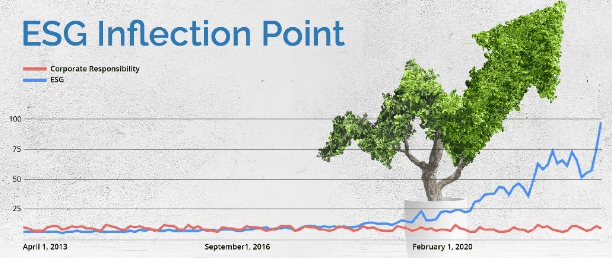
Changes in consumer preference, new and proposed regulation, greentech innovation, and dramatic headlines are all amplifying interest in the ESG opportunity. A simple review of popular internet search terms shows an obvious inflection point in public interest over the past several years.
Amid a declining rate of new investment last year, inflows to sustainable funds have continued rising. McKinsey’s research on the ESG influx shows flows moving from $5 billion in 2018 to nearly $70 billion in 2021. What’s more, ESG funds gained $87 billion in net new money in the first quarter of 2022 alone.
Interest appears consistent across industries, geographies, and company sizes, as organizations allocate growing resources toward improving their ESG standing. More than 90 percent of S&P 500 companies now publish some form of ESG report.
However, in the alternatives space, S&P style data remains far less common. Unstructured data is much more prevalent among the greentech startups thriving within the alternatives ecosystem, naturally making ESG measurement and reporting more challenging for private wealth managers to deliver reliably to their clients.
Still, many investors appear undeterred by inadequate reporting, remaining optimistic that as data quality and standardization improve, the opportunity for genuine impact alpha will follow. Notably, One hundred percent of private equity investors recently surveyed already incorporate ESG into their investment process, and the majority also set formal ESG targets for their portfolio companies.
GPs, too, recognize that rising demand for ESG opportunities will come paired with rising demand for reliable data. In a March 2023 survey of global emerging managers, nearly half of respondents, 43 percent, expected investors to increase their ESG and DEI reporting expectations over the next twelve months.
Why Structured Data Matters More Than Ever
What separates funds that will thrive under this new scrutiny from those that won’t isn’t the strength of their marketing, but the rigor of their underlying data infrastructure. As regulators and investors alike grow more sophisticated at spotting inconsistency, firms that can produce clean, auditable ESG metrics on demand will hold a genuine competitive advantage over those still relying on self-reported claims alone.
Seven Steps to Establishing a Successful ESG Program
To meet fast rising impact investing expectations, private wealth management firms would do well to make the implementation of structured ESG programs a strategic priority.
Regardless of firm size, there are common features that underpin a solid program. Seven steps toward building those features stand out as both prudent and achievable.
First, assign owners. A person, team, or collaboration of teams, depending on firm size, should be given clear ownership of ESG data collection. Chief among this individual’s or team’s responsibilities should be developing a structured method for gathering data within specific time cycles, typically through an annual questionnaire.
Second, know your obligations. Speak with legal counsel to confirm which regulatory responsibilities apply to your firm, and which mandatory disclosures may be available based on the sectors and regions in which you invest.
Third, build a question bank. Start by jotting down a list of questions that captures the specific phrasing required, then build outward from there. Once values are identified and prioritized, transforming them into concrete questions can be as simple as aligning with a common framework like the UN Sustainable Development goals.
Fourth, make it easy. Challenge your teams to make data collection and synthesis as simple as possible for all users. A survey with pre-filled fields, for example, will always outperform an open-ended request sent by email.
Fifth, incentivize participation. Consider ways to incentivize data reporting from third parties, something as simple as developing a scoring system that awards points for every completed field in a data collection survey. Sharing benchmarks that let partners compare their performance against peers can also motivate timely delivery of important business information.
Sixth, calculate carefully. ESG calculations are often multi-layered. Follow best practices such as normalizing data at the company level, aggregating at the fund level based on ownership stake, and converting figures across different units and currencies as needed.
Seventh, create reporting outputs. Maintain a database of information so gaps in new investment opportunities become visible, and impact can be compared over time. Circulating these findings regularly as part of quarterly statements helps strengthen discipline around investment targets, performance expectations, and trade-offs.
With ESG opportunities likely to play an increasingly important role in growing family wealth, participation in sustainable funds may soon become table stakes rather than a differentiator. Family offices that solidify their ESG data management and reporting strategies now will be best positioned to prove their success in the years ahead.
Danielle Pepin is the Head of Product for Portfolio Monitoring and Valuation at Dynamo Software, where she oversees Dynamo’s development of user-focused, value-driven portfolio monitoring products for the alternative asset industry. Learn more at dynamosoftware.com.