Executive wellness is often discussed from the neck upward. Stress management, decision fatigue, sleep quality, mental focus and leadership resilience receive plenty of attention. Meanwhile, the part of the body carrying an executive from the morning commute to the final meeting is treated as an afterthought.
Foot comfort may sound like a small concern beside blood glucose management, cardiovascular health or workplace pressure. For professionals living with diabetes, however, footwear is not merely a style decision. It sits at the meeting point between comfort, mobility, injury prevention and the ability to remain active throughout a demanding day.
A shoe cannot manage diabetes. It cannot replace medical care, blood glucose monitoring or a professional foot examination. But the wrong pair can create pressure, friction and discomfort that a busy person may fail to notice until a minor problem has become far harder to ignore.
That makes foot comfort a practical part of executive wellness, not a luxury added after everything else has been handled.
The Professional Day Is Harder on Feet Than It Appears
Many senior professionals do not consider themselves physically active during work. They may spend long stretches at a desk, in meetings or travelling between offices. Yet a typical day can still include a surprising combination of walking, standing and restricted movement.
There is the hurried journey through a station, the long airport concourse, the standing presentation, the business lunch, the site visit and the evening event that runs later than expected. Between those moments are hours spent sitting with feet confined inside shoes, sometimes in warm rooms or during long flights.
Formal footwear is frequently chosen for appearance before fit. Narrow toe shapes, rigid uppers, raised heels and hard internal seams may look appropriate with business clothing while placing unnecessary pressure on sensitive areas of the foot.
A healthy foot will usually announce this problem through pain. A foot affected by diabetic nerve damage may not deliver such a clear warning.
Why Diabetes Changes the Footwear Conversation
Over time, diabetes can affect the nerves and blood vessels supplying the feet. Nerve damage may cause pain, tingling or numbness, while reduced circulation can make injuries slower to heal. Someone with diminished sensation may not immediately feel a blister, rough seam, small object inside a shoe or an area being repeatedly rubbed.
This is why “they do not hurt” is not always enough to confirm that a pair of shoes is suitable.
Pressure still exists when it cannot be felt. Friction still damages skin when it does not create an immediate sting. A professional may move through several meetings before noticing redness, swelling or a mark left by the edge of a shoe.
The situation becomes more complicated when work rewards endurance. Executives are used to pushing through inconvenience. They continue walking because the client is waiting, remain standing because leaving would appear impolite, or ignore an uncomfortable shoe because there is no time to change it.
That determination may be useful in business. Applied to diabetic foot health, it can be unwise.
Comfort Is Not the Same as Softness
A shoe lined with soft material can feel comfortable during a quick fitting and still perform poorly over a full working day. Real foot comfort is a combination of space, support, stability, cushioning and reduced internal friction.
The foot should not slide around, but it should not be compressed either. Toes need room to settle naturally rather than being pushed together. The heel should feel secure without being rubbed. The sole should soften repeated contact with hard flooring while remaining stable enough for confident walking.
This distinction matters because excessively loose footwear can be almost as troublesome as a narrow pair. Movement inside the shoe creates rubbing. An unstable sole can make balance more difficult. Heavy cushioning without proper structure may feel pleasant initially but fail to support the foot over longer periods.
Good design is rarely about one dramatic feature. It is the result of several small decisions working together.
What Should Professionals With Diabetes Look for in Footwear?
The right shoe will depend on the individual’s foot shape, medical history, work routine and advice from their healthcare professional. Still, several features deserve close attention.
Enough Space Across the Toes
A cramped toe box can concentrate pressure around the toes, nails and sides of the forefoot. This becomes particularly uncomfortable for people with wide feet, swelling, bunions or changes in foot shape.
Adequate room should allow the toes to rest without being squeezed. That does not mean buying a shoe several sizes too large. The goal is appropriate width and depth, not uncontrolled movement.
A Smooth Interior
Raised stitching, stiff edges and rough internal sections may rub against the skin. Before wearing a new pair, it is worth running a hand through the interior and checking for anything that feels sharp, uneven or unusually hard.
The same habit should be repeated before putting shoes on each day. A small stone, folded insole or damaged lining can create concentrated pressure that may go unnoticed when sensation is reduced. The American Diabetes Association and CDC both recommend checking footwear and choosing properly fitting shoes as part of routine diabetic foot care.
Adjustable Fit
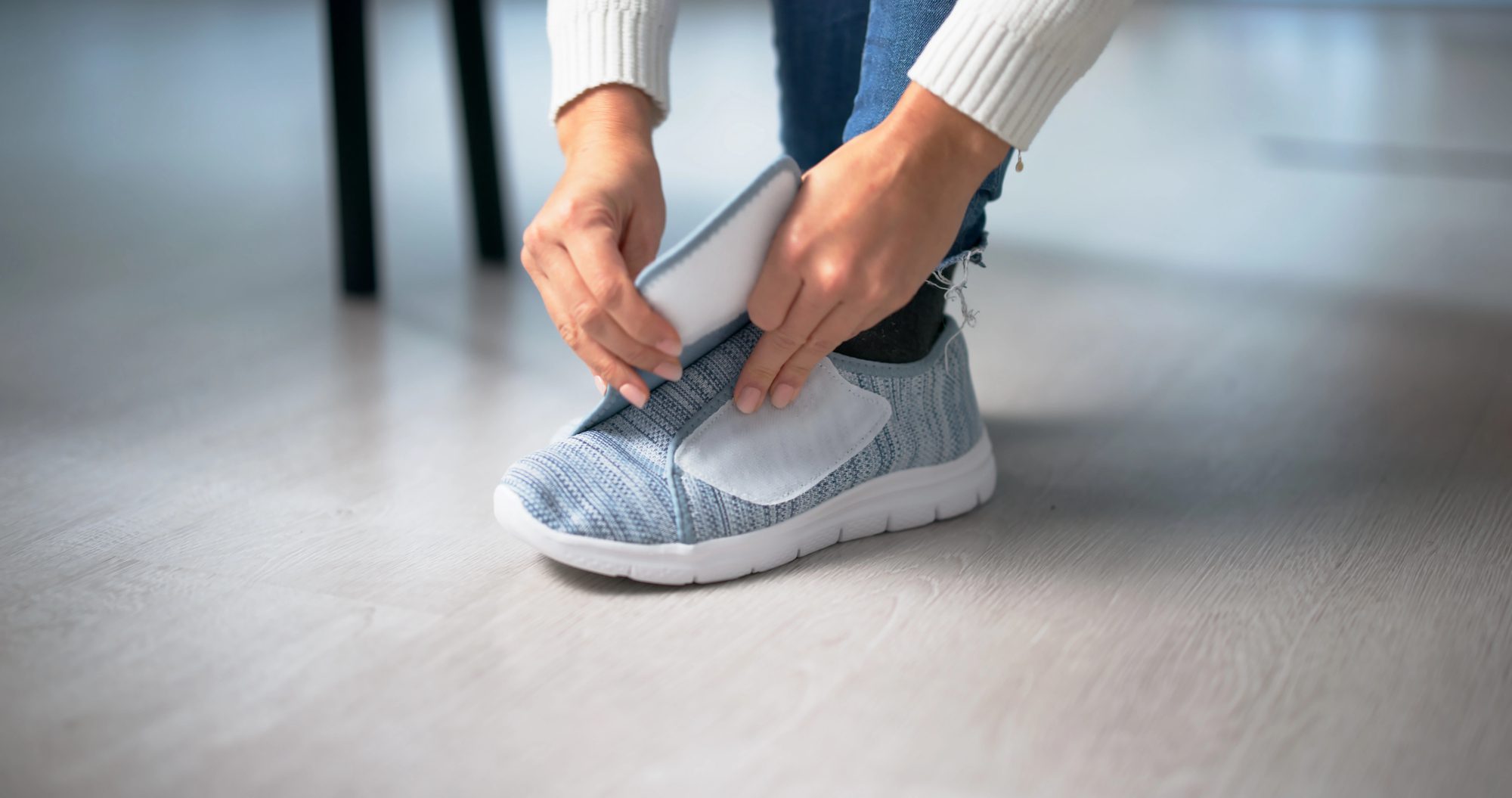
Feet do not always remain the same size from morning until evening. Heat, travel, prolonged sitting and standing can contribute to swelling. Laces, straps or other adjustable closures allow the fit to be changed without forcing the foot into a rigid shape.
This can be especially useful during flights, conferences and long office days when opportunities to remove or change footwear are limited.
Cushioning With Stability
Hard surfaces are common in corporate buildings, hotels, airports and exhibition halls. Suitable cushioning can reduce the harshness of repeated steps, but the shoe should still feel steady beneath the foot.
A professional should be able to change direction, use stairs and move through crowded spaces without feeling that the shoe is unstable or excessively flexible.
A Fit That Matches the Actual Foot
Brand size alone is unreliable. Width, toe-box shape, internal depth and construction vary between models. Both feet should be measured because one may be slightly larger than the other.
Professionals dealing with pressure sensitivity, wider feet or diabetes-related concerns may find that purpose-designed diabetic shoes offer a more practical starting point than conventional narrow business footwear. The important question is not what the shoe is called, but whether its structure suits the person wearing it.
Foot Comfort Has a Cognitive Cost
Persistent discomfort does not stay politely below the ankle. It competes for attention.
A person trying to follow a financial presentation should not also be calculating how soon they can sit down. A speaker should not be shifting weight to avoid a painful spot inside a shoe. A manager visiting a warehouse should be watching the surroundings, not shortening each step because the forefoot feels cramped.
This does not mean comfortable footwear will transform leadership performance. It means avoidable physical irritation can occupy mental space that would be better used elsewhere.
Foot comfort also affects movement choices. When walking becomes unpleasant, people naturally begin looking for ways to avoid it. They take the lift for one floor, postpone a lunchtime walk or remain seated during a break. One uncomfortable day is unimportant. A pattern of avoiding movement because footwear feels restrictive is more concerning.
The strongest executive wellness habits are often the ones that make healthier behaviour easier rather than relying on discipline every time.
A One-Minute Foot Check Belongs in the Morning Routine
Busy professionals are surrounded by routines. They check calendars, messages, weather, traffic and travel documents before leaving home. A brief foot inspection can sit beside those habits without turning the morning into a medical ceremony.
Look for redness, cuts, blisters, swelling, cracks, unusual warmth or changes around the nails. The soles should also be checked, using a mirror when necessary. Feet should be washed in warm rather than hot water, dried carefully and protected with clean socks and suitable footwear.
Any persistent sore, blister, colour change, loss of sensation, unusual temperature or swelling deserves medical attention. Trying to solve a suspicious foot problem with an over-the-counter corn treatment, aggressive filing or improvised padding can make matters worse.
The purpose of a daily check is not to create anxiety. It is to notice small changes while they are still small.
Business Travel Requires More Planning
Travel places unusual demands on the feet. There may be early departures, long periods of sitting, rushed connections and more walking than the itinerary suggests. Shoes that are acceptable during a normal office day may become uncomfortable after several hours in an airport or at a trade event.
A sensible travel plan includes a familiar pair of well-fitting shoes rather than brand-new footwear being tested during the trip. Socks should remain dry and free from thick seams or folds. Travellers should also avoid walking barefoot in hotel rooms, airport lounges or other shared spaces.
Packing an alternative pair can help when the schedule combines formal meetings with extended walking. The replacement should still be chosen for fit rather than used as an excuse to carry an equally restrictive shoe in a different style.
For some travellers, diabetic shoes can bridge the gap between supportive construction and a presentable appearance, allowing the same pair to work across business travel, meetings and everyday movement.
Footwear Should Support the Professional, Not the Dress Code Alone
Corporate dress has changed considerably. Many workplaces now accept polished trainers, walking shoes and wider silhouettes that would once have been considered too casual. This creates room for professionals to make better footwear decisions without appearing careless.
Even in formal environments, elegance should not require compression. A clean, well-maintained shoe that allows natural movement is usually more convincing than an expensive pair that causes the wearer to limp by late afternoon.
Employers and event organisers can contribute as well. Seating during long functions, reasonable breaks, accessible meeting locations and acceptance of health-conscious footwear all support a more inclusive professional environment. Executive wellness is often presented as a personal responsibility, but workplace design influences how realistic those personal choices become.
FAQs About Wellness
Can comfortable shoes prevent every diabetes-related foot problem?
No. Suitable footwear may help reduce unnecessary pressure and rubbing, but it cannot eliminate every risk. Blood glucose management, daily foot checks and regular medical care remain essential.
Should a person with diabetes buy shoes in a larger size?
Not automatically. Shoes that are too large may allow the foot to slide and rub. The better approach is to choose the correct length, width and internal depth for the person’s actual foot shape.
When should new shoes be worn?
New footwear should be introduced gradually rather than worn for an entire workday immediately. The feet should be checked afterward for redness, rubbing or pressure marks.
When is professional advice necessary?
A doctor, podiatrist or qualified healthcare professional should be consulted when there is numbness, persistent pain, swelling, skin damage, a change in foot shape, previous ulceration or uncertainty about the correct footwear. Diabetes-related nerve damage can allow apparently minor injuries to progress without obvious pain, making early assessment particularly important.
Strong Careers Need a Reliable Foundation
Professionals are taught to protect their time, reputation, concentration and long-term earning ability. Their feet deserve similar attention.
Foot comfort will never be the most glamorous part of executive wellness. That may be precisely why it is so easily neglected. Yet every commute, conference, presentation and business journey begins with the same basic requirement: the ability to stand and move safely.
For someone living with diabetes, choosing appropriate footwear is not about becoming preoccupied with health. It is a practical way to remove avoidable pressure from an already demanding day.
Wellness does not begin at the desk, in the gym or during an annual medical examination. Sometimes, it begins with what touches the ground first.