Most business owners hit the same wall eventually. The space feels tired, the energy is off, and clients aren’t lingering the way they used to. The knee-jerk reaction? Call a contractor, tear out the flooring, gut the layout, and brace for weeks of disruption.
But here’s what commercial designers figured out a long time ago: the upgrades that actually shift how people feel in a space are almost never structural. They’re visual.
Swapping out a feature wall, rethinking your lighting layers, or installing custom neon signs can completely redefine how a commercial space looks and functions. These aren’t cosmetic band-aids, either. Visual upgrades influence foot traffic, dwell time, and even how much customers are willing to spend.
A study published by the Journal of Business Research found that ambient lighting and interior aesthetics directly affect consumer purchasing behavior and brand perception.
The five upgrades below consistently deliver the biggest visual impact with the smallest budget and timeline: no construction permits, no three-month closures, no demolition dust on your inventory.
1. Custom Neon Signage: The One Upgrade That Does All the Heavy Lifting
If you could only pick one upgrade from this entire list, this is it. A single custom neon piece mounted on a focal wall can transform a space from forgettable to “wait, this place is new, right?” faster than any paint job or furniture swap ever could.
There’s a reason every trendy cocktail bar, boutique hotel lobby, and co-working space in the last five years has leaned into neon. It works on multiple levels simultaneously. As ambient lighting, it casts a warm, inviting glow that overhead fluorescents can’t replicate.
As branding, it puts your business name, tagline, or logo on the wall in a format that’s impossible to ignore (and practically begs to be photographed). As a design anchor, it gives the eye somewhere to land in an open-plan layout that might otherwise feel flat.
What makes modern LED neon particularly smart for commercial spaces is the practicality underneath the aesthetics. These signs run cool to the touch, use less energy than traditional glass neon, and last 50,000+ hours on average.
They mount flush to the wall, so you’re not sacrificing floor space or shelf real estate. For retail stores, restaurants, salons, offices, or fitness studios, that kind of dual-purpose functionality (lighting plus branding in one fixture) is hard to beat.
The real advantage, though, is perception. Visitors consistently associate neon-lit spaces with modernity, creativity, and polish. That psychological shortcut is worth more than most people realize.
A fresh neon installation sends the same “we just renovated” signal as new flooring, but for a fraction of the cost and zero operational downtime.
2. One Accent Wall Can Fool Anyone Into Thinking You Gutted the Place
This one sounds deceptively simple, and that’s exactly why it gets overlooked. A single accent wall, done right, reshapes a room’s visual weight. It draws attention away from whatever you’re not ready to update (aging carpet, mismatched fixtures) and toward something that feels deliberate and fresh.
The keyword here is deliberate. A coat of trendy dark green paint on one wall isn’t automatically an accent wall. The best commercial accent walls use texture, depth, or contrasting materials: think wood slat paneling behind a reception desk, a dark matte surface paired with warm indirect lighting, or a richly colored wall that serves as the backdrop for your neon sign.
When you combine a strong accent wall with custom signage, the two elements anchor each other, making a ten-foot stretch of wall feel like a designed feature rather than an afterthought.
Budget-wise, a professional accent wall typically costs between $500 and $3,000, depending on materials and size. Compare that to a full interior repaint (which often runs $5,000 to $15,000+ for commercial spaces) and the value becomes obvious. You’re spending a fraction but getting most of the visual return.
3. Swap the Lighting Layers, Not the Fixtures
Here’s what most people get wrong about commercial lighting: they think about brightness when they should be thinking about layers. A space lit entirely by overhead panels (the standard office setup) feels clinical. Flat. Unwelcoming. But add even one secondary lighting layer, whether that’s wall-mounted sconces, under-counter LED strips, or a neon accent piece, and the entire mood shifts.
Hospitality designers have understood this for decades. Restaurants, hotels, and high-end retail stores almost never rely on a single light source. They layer ambient lighting (the base), task lighting (functional), and accent lighting (decorative and atmospheric) to create depth and warmth.
The good news for business owners? You don’t need to rip out your existing ceiling grid to achieve this. Adding supplementary layers around and below your current fixtures can improve a room’s perceived quality without altering the electrical infrastructure.
Warm-toned lighting (2700K to 3000K color temperature) makes people feel relaxed, comfortable, and more inclined to stay. Cool-toned lighting (4000K+) keeps things sharp and focused.
Most commercial spaces benefit from strategically mixing both: cooler tones for work and display areas, and warmer tones for lounge zones, reception, and social spaces. That contrast alone can make a tired office feel newly designed.
4. Environmental Graphics That Make Blank Walls Earn Their Keep
Empty walls in a commercial space aren’t just wasted real estate. They actively work against you. A blank white wall in a retail store says “we ran out of ideas” the same way an empty shelf says “we ran out of stock.” Both erode confidence.
Environmental graphics solve this without requiring permanent changes. Vinyl murals, frosted glass decals, branded typography, or large-format prints can turn any unused wall, window, or partition into a visual asset. They reinforce your brand identity, guide foot traffic through the space, and create that “designed” look that customers associate with well-run businesses.
The best implementations pair environmental graphics with dimensional elements. A motivational quote printed as a large wall decal looks nice enough. But that same quote rendered as a custom neon sign, mounted against a contrasting painted wall? That’s a social media moment waiting to happen.
And for businesses that rely on foot traffic and word of mouth (restaurants, salons, fitness studios, retail boutiques), those shareable visual moments have genuine marketing value that outlasts any ad campaign.
5. Rethink the Layout Before You Rethink the Floor Plan
Sometimes the problem isn’t what your space looks like. It’s how it flows. Rearranging furniture, display units, and seating areas costs nothing but time, and the impact can be surprisingly dramatic. Commercial spaces often settle into their original layout and never revisit it, even as the business evolves.
Retail stores benefit from opening sightlines between the entrance and the back wall (so customers can see depth, not a barricade of shelves). Offices benefit from creating distinct zones for focused work, collaboration, and casual interaction.
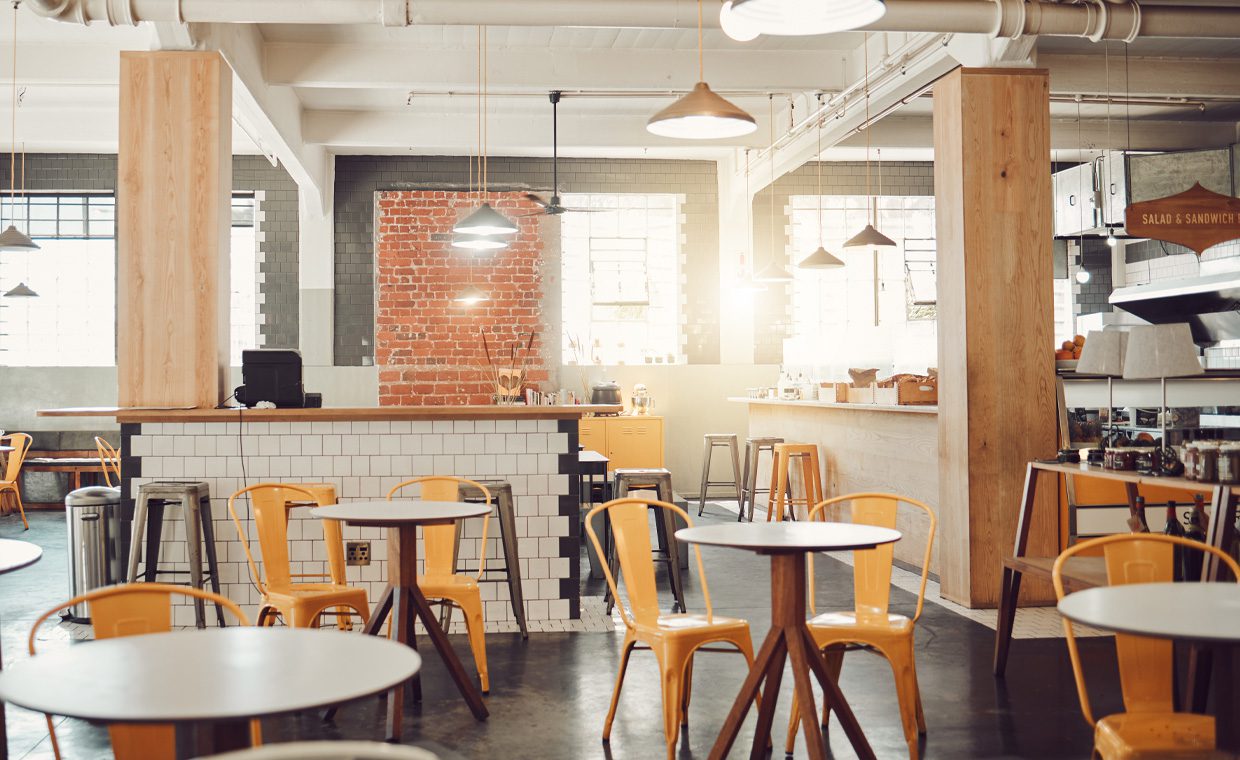
Restaurants benefit from varying seating densities to create both intimate and social seating areas. None of these changes requires moving a single outlet or load-bearing wall.
The psychology here is straightforward. When people enter a space and can intuitively navigate it, they feel comfortable. When they feel comfortable, they stay longer. And when they stay longer, they spend more.
Pair a smart layout reconfiguration with a visual focal point (a neon-lit feature wall at the back of the store, for instance), and you’ve essentially designed a visual pathway that guides movement and attention exactly where you want it.
The Renovation You Don’t Actually Need
The common thread across all five of these upgrades? They change perception without changing structure. A client walking into your refreshed space won’t inventory your ceiling tiles or inspect the subfloor.
They’ll respond to what they see and how it makes them feel. Visual upgrades target exactly that emotional response, and they do it faster, cheaper, and with zero operational disruption.
Custom neon signage, in particular, is worth considering first because it checks so many boxes at once: branding, lighting, design anchor, and social media appeal, all in a single wall-mounted installation.
If you’re exploring that route, working with a dedicated LED neon sign company ensures you get a piece built to commercial-grade specifications, properly sized for your space, and designed to match your brand identity exactly.
The spaces that leave the strongest impression on customers aren’t always the ones with the biggest budgets. More often, they’re the ones where someone made five smart choices instead of one expensive one.