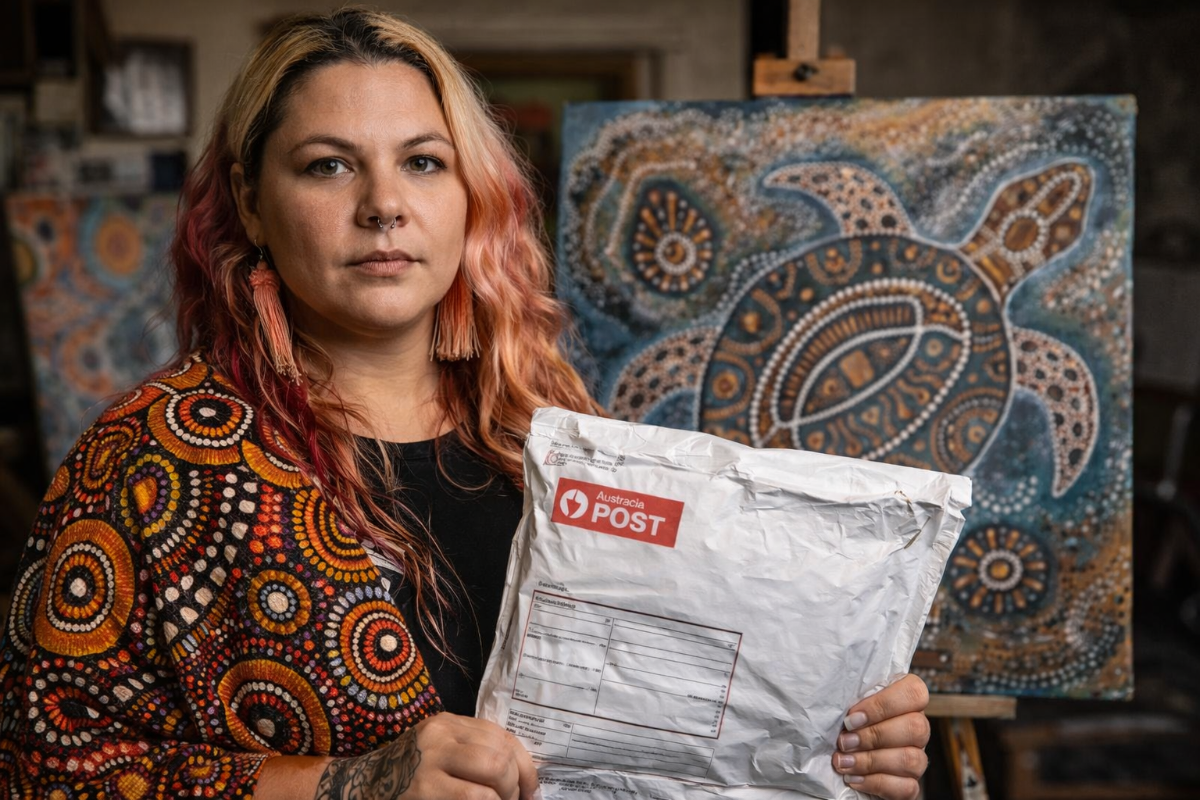
The Australian art community was left shocked and frustrated after Australia Post confirmed it had lost a $4,000 artwork by Aboriginal artist Bobbi Lockyer just days before Christmas. The incident, reported by ABC News, has reignited debate around how Indigenous art is handled, valued, and protected within commercial and postal systems.
For Bobbi Lockyer, a celebrated contemporary Aboriginal artist whose work is recognized both nationally and internationally, the loss was more than financial. It represented the disappearance of a deeply personal cultural expression one that carried story, heritage, and identity far beyond its market price.
This article explores what happened, who Bobbi Lockyer is, the cultural importance of Bobbi Lockyer art, and why the incident has struck such a nerve across Australia’s creative and Indigenous communities.
What Happened: The Lost Artwork Incident
According to reports, the artwork valued at approximately $4,000 was sent via Australia Post in the lead-up to Christmas. The piece never reached its destination. After repeated inquiries, Australia Post confirmed that the artwork was lost in transit.
The timing added to the distress. The Christmas period is a crucial season for artists, particularly Indigenous artists who rely on sales through exhibitions, collectors, and online platforms such as the Bobbi Lockyer shop. Losing a major artwork at this time meant not only financial loss but also emotional harm.
Australia Post later issued an apology, acknowledging the seriousness of the situation. However, the apology did little to ease concerns around accountability, compensation, and the broader treatment of Indigenous artworks within institutional systems.
Who Is Bobbi Lockyer?
To understand the weight of this incident, it’s essential to understand who Bobbi Lockyer is and why her work matters.
Bobbi Lockyer is a proud Ngarluma, Kariyarra, Nyul Nyul, and Yawuru artist based in Western Australia. She is widely recognised as a multidisciplinary creative working across painting, illustration, fashion, digital media, and public art.
As a Bobbi Lockyer artist, her work is deeply rooted in Country, community, and contemporary Indigenous identity. Her designs have appeared in major collaborations, exhibitions, and cultural projects, bridging traditional storytelling with modern visual language.
Her art is not just decorative it is narrative-driven, often exploring themes of land, ancestry, resilience, and Indigenous futures.
Bobbi Lockyer Art: Cultural and Artistic Significance
Bobbi Lockyer art stands out for its bold use of colour, flowing forms, and symbolic storytelling. Her paintings often represent landscapes, waterways, and cultural connections passed down through generations.
In Aboriginal art traditions, artworks are not simply objects they are repositories of knowledge. Losing a piece of Indigenous art is not the same as losing a mass-produced item. It means the loss of a story, a moment in time, and a cultural voice.
This is why many Indigenous artists and advocates argue that institutions must treat Aboriginal artworks with greater care and cultural sensitivity, especially when they are entrusted with transporting them.
The Role of the Bobbi Lockyer Shop
The Bobbi Lockyer shop plays an important role in making her work accessible to a global audience. Through her official platform, collectors can purchase original artworks, prints, fashion pieces, and collaborations that directly support the artist.
For many contemporary Indigenous artists, online shops are not just retail spaces they are self-determined economic tools. They allow artists to control pricing, storytelling, and representation without relying solely on galleries or third parties.
The loss of an original artwork disrupts this ecosystem. It affects trust, timelines, and the artist’s ability to meet commitments to collectors and exhibitions.
Australia Post’s Response and Public Reaction
Australia Post stated it was investigating how the artwork went missing and apologized for the distress caused. While compensation processes exist, critics argue that standard insurance payouts rarely reflect the true value of Indigenous art, especially when cultural significance is taken into account.
Public reaction was swift. Artists, collectors, and cultural commentators took to social media to express outrage and disappointment. Many questioned how a national postal service could lose a clearly labelled, high-value artwork particularly one created by a prominent Aboriginal artist.
The incident also raised concerns about whether Indigenous artworks receive the same level of care and priority as other high-value items.
A Broader Issue: Indigenous Art and Institutional Care
This case has opened a wider conversation about how Aboriginal art is handled by institutions, including postal services, galleries, and commercial partners.
Historically, Indigenous art has often been:
- Undervalued
- Mishandled
- Commercialized without adequate protections
While progress has been made, incidents like this suggest systemic gaps remain. Many artists argue that stronger protocols should be in place for transporting original Indigenous artworks, including specialised handling, tracking, and accountability.
Why This Loss Matters Beyond Money
Although the artwork was valued at $4,000, its true worth cannot be measured in dollars alone.
For Indigenous artists, each piece is connected to:
- Family lineage
- Cultural knowledge
- Country and land
- Personal lived experience
The loss of such a work is emotionally devastating. It also raises ethical questions about how institutions engage with Indigenous cultural property.
As a Bobbi Lockyer artist, her work represents contemporary Aboriginal voices that deserve respect, protection, and recognition at every level.
Bobbi Lockyer Now: Moving Forward After the Incident
Despite the disappointment, Bobbi Lockyer has continued to focus on her creative practice, community engagement, and future projects. Her career reflects resilience a trait deeply embedded in Indigenous storytelling and survival.
The incident has also led to increased public awareness of her work. Many people who were previously unfamiliar with Bobbi Lockyer art have since explored her portfolio, exhibitions, and official shop.
In that sense, the conversation has helped amplify discussions around Indigenous artists’ rights, responsibilities of institutions, and the importance of cultural respect.
Lessons for the Art and Logistics Industry
This case highlights several critical lessons:
- Indigenous artworks require special handling protocols
- Compensation must reflect cultural value, not just market price
- Institutions must engage with Indigenous artists respectfully and transparently
- Public accountability matters when trust is broken
For artists, it also underscores the importance of documentation, tracking, and insurance though many argue the burden should not rest solely on creators.
Conclusion: More Than a Lost Painting
The loss of Bobbi Lockyer’s artwork by Australia Post is not just a logistical failure it is a cultural moment that exposes deeper issues around respect, responsibility, and recognition.
Bobbi Lockyer art represents living culture. Losing such a piece is a reminder that Indigenous creativity deserves the highest level of care, not just apologies after the fact.
As conversations continue, many hope this incident leads to meaningful change ensuring that no Aboriginal artist has to experience the same loss again.