• 2020 Ultimate Luxury Holiday Gift Guide
  • Activity
  • Art Basel Special Issue
  • Art Basel Winter Issue – Jeff Koons
  • Art Week 2024 Issue | Deepak Chopra Cover Story
  • Aspen 2024 Power Couple Issue – Amy & Gary Green
  • Capital Corner
  • Checkout
  • Coming Soon
  • Disclaimer – Privacy Policy
  • Fall 2021 Issue
  • Fall Issue 2025 Salvatore Ferragamo Jr.
  • Forgot Password
  • Groups
  • Holiday 2021
  • Home
  • Home 1
  • Impact Wealth Community
  • Impact Wealth Issues – A Luxury Lifestyle Family Office Magazine
  • Impact Wealth Magazine
  • Impact Wealth Subscription – Magazine and Newsletter
  • Impact Wealth Summer Issue 2025 – Stephen Ross
  • Impact Wealth’s Summer 2023 Issue
  • Issue Winter 2021 – Tim Draper
  • Members
  • Messages
  • My account
  • Press
  • Reset Password
  • Resources
  • Shop
  • Signup
  • Special Issue Steelpointe Yacht Show – 2021
  • Spring 2022 – The Trailblazers Issue
  • Spring 2023 Issue
  • Spring 2024 Issue with Jackie Siegel
  • Spring 2025 Issue with Cover Star Wilbur Ross
  • Spring Special 2021 Issue
  • Summer 2021 Issue
  • Summer 2022
  • Summer 2024 Issue with our Cover Star Richard Taite
  • ttest
  • User Profile
  • Wealth with Impact – Podcast
  • Winter 2021 Issue
  • Winter 2023 Issue
  • Winter 2023 Palm Beach Issue – Kimberly Guilfoyle
Friday, March 20, 2026
  • Login
  • Register
Subscribe
Impact Wealth
No Result
View All Result
  • Lifestyle
    • Health & Wellness
    • Fine Dining & Beverage
    • Fashion
    • Event Coverage
    • The Arts
    • Resources
  • Travel
    • Travel Lifestyle
  • Investing
    • Wealth
    • Retirement
    • Real Estate
    • Philanthropy
    • Family Office Trends
  • Impact Interviews
  • Subscribe Now
  • About Us
    • Press
  • Join Our Community
  • Sign up for Newsletter
  • Lifestyle
    • Health & Wellness
    • Fine Dining & Beverage
    • Fashion
    • Event Coverage
    • The Arts
    • Resources
  • Travel
    • Travel Lifestyle
  • Investing
    • Wealth
    • Retirement
    • Real Estate
    • Philanthropy
    • Family Office Trends
  • Impact Interviews
  • Subscribe Now
  • About Us
    • Press
  • Join Our Community
  • Sign up for Newsletter
No Result
View All Result
Impact Wealth
No Result
View All Result
Home Legal Rights

Blockchain for Secure Evidence in Legal Proceedings

by Muhammad Ahmad
in Legal Rights
Blockchain for Secure Evidence in Legal Proceedings

The legal system depends heavily on evidence authenticity, transparency, and reliability. Courts require clear proof that documents, digital records, and physical evidence remain unchanged from the moment investigators collect them until they appear in court. However, traditional evidence management systems sometimes face challenges such as data tampering, chain-of-custody disputes, and inefficient documentation processes.

This is where Blockchain Legal Evidence is transforming the legal landscape. Blockchain technology introduces a decentralized and tamper-resistant method for storing and verifying evidence records. By recording data in a cryptographically secured ledger, blockchain creates a transparent and verifiable history of every action related to legal evidence.

Moreover, legal professionals increasingly explore blockchain to strengthen digital forensics, case documentation, and evidence authentication. The ability to maintain an immutable record of events makes blockchain a powerful tool for ensuring that legal evidence remains trustworthy and legally defensible.

As courts move toward digital transformation, Blockchain Legal Evidence systems are emerging as a reliable infrastructure for evidence management in modern legal proceedings.

Understanding Blockchain Legal Evidence

Blockchain is a distributed ledger technology that records transactions across multiple nodes in a secure network. Each transaction forms a block, and once added to the chain, it cannot be altered without consensus from the network participants.

In the legal context, Blockchain Legal Evidence refers to using blockchain systems to store and verify evidence-related records such as:

  • Digital documents

  • Forensic reports

  • Chain-of-custody logs

  • Multimedia evidence files

  • Timestamped legal records

Consequently, blockchain helps create a verifiable audit trail that courts and investigators can rely on during legal proceedings.

Why Evidence Integrity Matters?

Evidence integrity is the foundation of justice. Courts must confirm that evidence remains authentic and untampered.

However, traditional systems often rely on centralized databases that can be vulnerable to:

  • Unauthorized access

  • Data modification

  • Record deletion

  • Documentation errors

Blockchain solves these issues by providing a permanent digital ledger where each record is cryptographically linked to previous entries.

How Blockchain Ensures Evidence Integrity?

Maintaining evidence integrity requires strict control over how evidence is recorded, stored, and accessed. Blockchain technology strengthens this process through several mechanisms.

Cryptographic Hashing

Each piece of evidence uploaded to a blockchain-based system receives a unique cryptographic hash. This hash acts like a digital fingerprint.

If anyone attempts to modify the original evidence file, the hash changes immediately. Consequently, investigators and courts can detect tampering instantly.

Distributed Verification

Unlike centralized databases, blockchain networks distribute data across multiple nodes.

Moreover, each node verifies the accuracy of the data before adding it to the chain. Therefore, no single party can manipulate the evidence record.

Transparent Audit Trail

Blockchain automatically records every action involving evidence, including:

  • Evidence submission

  • Data verification

  • Chain-of-custody transfers

  • Court access requests

This creates a complete and transparent audit trail, strengthening trust in Blockchain Legal Evidence systems.

Benefits of Immutability and Timestamping

Two core blockchain features make it ideal for legal evidence management: immutability and timestamping.

Immutability

Immutability means that once data enters the blockchain, it cannot be changed or deleted.

Therefore, legal professionals gain confidence that evidence records remain permanent and reliable.

Benefits include:

  • Protection against data tampering

  • Stronger evidentiary credibility in court

  • Clear historical records of evidence handling

Moreover, immutable records reduce disputes over whether evidence has been altered.

Timestamping

Blockchain systems automatically timestamp every transaction.

This means legal professionals can verify exactly when evidence was:

  • Collected

  • Uploaded

  • Reviewed

  • Presented in court

Consequently, blockchain timestamping strengthens chain-of-custody documentation.

Use Cases in Courts and Legal Investigations

The adoption of Blockchain Legal Evidence continues to grow across multiple legal sectors.

Digital Evidence Verification

Law enforcement agencies increasingly collect digital evidence such as:

  • Emails

  • Social media posts

  • Surveillance footage

  • Mobile phone data

Blockchain can record digital fingerprints of these files to prove their authenticity during court proceedings.

Chain-of-Custody Management

Maintaining a clear chain of custody is essential in criminal investigations.

Blockchain systems record every transfer of evidence between investigators, forensic experts, and prosecutors. Therefore, courts receive a transparent and verifiable custody history.

Intellectual Property Disputes

Blockchain also helps protect intellectual property rights.

Creators can timestamp their work using blockchain records. Consequently, they can prove ownership in copyright or patent disputes.

Document Authentication

Legal firms can store document hashes on blockchain networks to prove document authenticity.

This approach prevents forgery and ensures contracts remain unchanged.

Comparison of Traditional Evidence Systems vs Blockchain Evidence Systems

Feature Traditional Evidence Systems Blockchain Legal Evidence
Data Storage Centralized databases Distributed ledger
Tamper Resistance Moderate Extremely high
Transparency Limited access Transparent audit trail
Chain-of-Custody Tracking Manual documentation Automated ledger records
Evidence Verification Time-consuming Instant hash verification

This comparison shows how blockchain introduces stronger reliability for evidence verification.

Smart Contracts for Automated Legal Processes

Smart contracts are self-executing digital agreements stored on blockchain networks. These programs automatically enforce predefined conditions.

In legal systems, smart contracts can streamline several processes.

Automated Evidence Access

Courts or investigators can use smart contracts to control evidence access.

For example, a smart contract can grant access only to authorized parties such as:

  • Judges

  • Prosecutors

  • Defense attorneys

  • Forensic analysts

Moreover, the system logs every access event on the blockchain.

Legal Workflow Automation

Smart contracts can automate routine legal workflows.

Examples include:

  • Evidence submission approvals

  • Deadline enforcement

  • Document verification procedures

Consequently, legal institutions can reduce administrative workload.

Contract Dispute Resolution

Blockchain-based smart contracts can also simplify contract enforcement.

When predefined conditions trigger the contract, the system automatically executes the legal agreement.

Therefore, disputes related to contract performance become easier to resolve.

Regulatory and Compliance Considerations

Although Blockchain Legal Evidence provides many advantages, regulatory compliance remains a crucial factor.

Legal systems must ensure blockchain implementations meet national and international regulations.

Data Protection Laws

Many countries enforce strict privacy laws regarding data storage.

Legal blockchain systems must comply with regulations such as:

  • Data protection frameworks

  • Digital evidence standards

  • Judicial evidence handling rules

Moreover, blockchain platforms often store only hash values instead of full documents to maintain privacy compliance.

Legal Admissibility Standards

Courts require evidence to meet specific admissibility criteria.

Therefore, blockchain evidence systems must demonstrate:

  • Accurate recordkeeping

  • Reliable authentication methods

  • Transparent chain-of-custody tracking

Once these standards are satisfied, blockchain records can become admissible in court.

Comparison of Legal Evidence Management Methods

Evidence Management Method Security Level Transparency Efficiency
Paper Documentation Low Low Low
Digital Database Systems Moderate Moderate High
Blockchain Legal Evidence Very High Very High Very High

This comparison highlights why many institutions view blockchain as the next evolution in legal evidence management.

Challenges and Adoption Hurdles

Despite its benefits, the adoption of Blockchain Legal Evidence still faces several challenges.

Technical Complexity

Blockchain systems require specialized expertise to design and maintain.

Many legal institutions currently lack professionals with blockchain knowledge.

Integration with Legacy Systems

Courts often rely on older digital systems.

Integrating blockchain with these legacy platforms may require significant upgrades.

Legal Uncertainty

Many jurisdictions have not yet defined clear legal frameworks for blockchain evidence.

Therefore, courts must carefully evaluate how blockchain records align with existing laws.

Cost and Infrastructure

Developing a secure blockchain infrastructure may require substantial investment.

However, as technology matures, costs continue to decrease.

Future Trends in Legal Blockchain Applications

The role of Blockchain Legal Evidence will likely expand as legal systems modernize.

Blockchain-Based Evidence Registries

Courts may create national blockchain registries for digital evidence.

These systems would allow investigators to register evidence securely at the moment of collection.

Integration with Digital Forensics

Future digital forensic tools may automatically generate blockchain records for collected evidence.

Consequently, investigators can preserve evidence authenticity instantly.

Cross-Border Legal Cooperation

Blockchain networks could enable secure evidence sharing between international law enforcement agencies.

Moreover, this capability could strengthen global investigations involving cybercrime.

Artificial Intelligence and Blockchain

Combining blockchain with artificial intelligence could enhance legal data analysis.

AI systems may review blockchain evidence logs to detect patterns or inconsistencies in investigations.

Frequently Asked Questions

What is Blockchain Legal Evidence?

Blockchain Legal Evidence refers to the use of blockchain technology to record, verify, and secure legal evidence data in a tamper-resistant digital ledger.

How does blockchain protect legal evidence?

Blockchain protects evidence through cryptographic hashing, decentralized storage, and immutable records. These mechanisms prevent unauthorized modifications.

Can blockchain evidence be used in court?

Yes, courts may accept blockchain records as evidence if they meet admissibility requirements such as authenticity, reliability, and proper chain-of-custody documentation.

What types of evidence can blockchain store?

Blockchain systems can store verification records for documents, digital files, forensic reports, contracts, and multimedia evidence.

Are blockchain legal systems widely used today?

Adoption is growing, but many legal institutions are still exploring pilot programs and regulatory frameworks for blockchain-based evidence systems.


Tags: Blockchain Evidence ManagementBlockchain in LawBlockchain Legal EvidenceDigital Evidence SecurityLegal Evidence Technology
Previous Post

Phenom 300E: Perfect for Buyers Prioritizing Refinement and Finish

Related Posts

Legal Rights

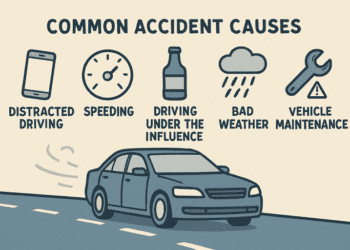
Common Causes of Car Accidents and How to Avoid Them

Legal Rights

When Permissive Use Car Insurance Applies and How It Can Affect Your Car Accident Claim

Legal Rights

Why Legal Documentation Is the Foundation of Smart Wealth Planning

Legal Rights

Do You Enjoy Riding a Bike? Here’s How You Can Protect Yourself at All Times

Family

How NSW Divorce Duration Affects Your Family Law Journey

Legal Rights

Divorce in San Jose: Why Silicon Valley’s Compensation Structures Create the Most Financially Complex Divorce Cases in California

No Result
View All Result
Facebook Instagram Linkedin

Phenom 300E Perfect for Buyers Prioritizing Refinement and Finish
6 Companies Combining Bitcoin Mining With Treasury Accumulation
The Top 10 Countries with the Most Supercars
best ways to manage debt and rebuild financial stability
how to start investing with no experience step by step
Taking A Closer Look At 5 Of The Top Cash Home Buyers In The US
The Hidden Financial Systems Behind Successful Entrepreneurs
Corporate and VAT Tax Consultants in Dubai: Strategic Planning for Sustainable Growth
How Your Hormones Are Sabotaging Your Weight Loss Goals

Categories

  • Beauty
  • Biography
  • Business
  • Career
  • Celebrity
  • Charitable Events
  • Culture
  • Entertainment
  • Environment
  • Environmental Health
  • Events
  • Family
  • Family Office
  • Fashion
  • Feature
  • Finance
  • Fine Dining & Beverage
  • Health & Wellness
  • Impact Investing
  • Impact Leaders
  • Interviews
  • Investing
  • Legal Rights
  • Lifestyle
  • Luxury Living
  • Marketing
  • Net Worth
  • Philanthropy
  • Politics
  • Profile
  • Real Estate
  • Resource Guide
  • Retirement
  • Rights
  • Sustainability
  • Tech
  • The Arts
  • Travel
  • Travel Lifestyle
  • Uncategorized
  • Upcoming Event
  • Vehicles
  • Wealth
  • Wealth Management

© 2025 ImpactWealth  | Disclaimer – Privacy Policy

No Result
View All Result
  • Lifestyle
    • Health & Wellness
    • Fine Dining & Beverage
    • Fashion
    • Event Coverage
    • The Arts
    • Resources
  • Travel
    • Travel Lifestyle
  • Investing
    • Wealth
    • Retirement
    • Real Estate
    • Philanthropy
    • Family Office Trends
  • Impact Interviews
  • Subscribe Now
  • About Us
    • Press
  • Join Our Community
  • Sign up for Newsletter

© 2020 ImpactWealth

Welcome Back!

Login to your account below

Forgotten Password? Sign Up

Create New Account!

Fill the forms below to register

All fields are required. Log In

Retrieve your password

Please enter your username or email address to reset your password.

Log In
No Result
View All Result
  • Lifestyle
    • Health & Wellness
    • Fine Dining & Beverage
    • Fashion
    • Event Coverage
    • The Arts
    • Resources
  • Travel
    • Travel Lifestyle
  • Investing
    • Wealth
    • Retirement
    • Real Estate
    • Philanthropy
    • Family Office Trends
  • Impact Interviews
  • Subscribe Now
  • About Us
    • Press
  • Join Our Community
  • Sign up for Newsletter

© 2020 ImpactWealth