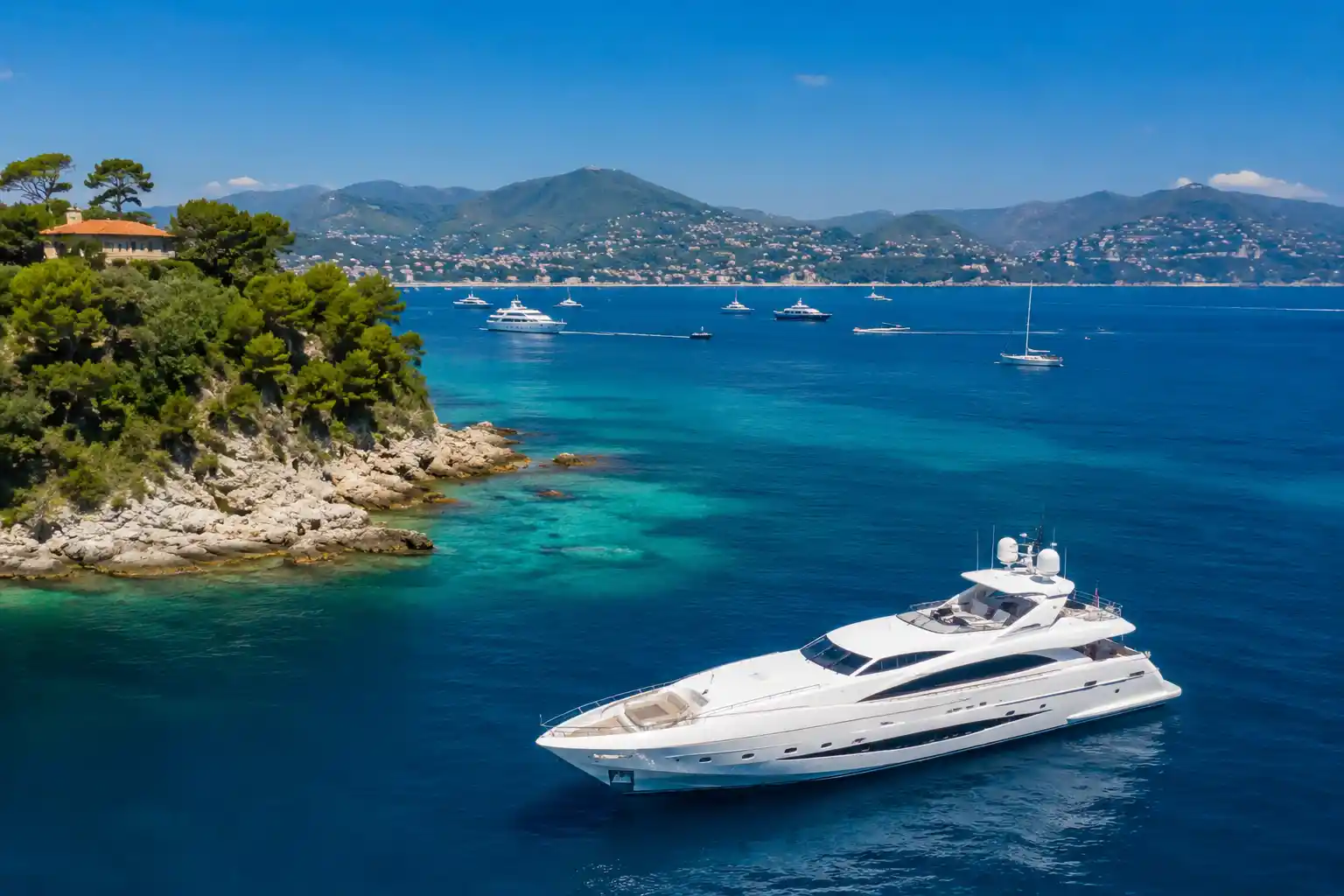
The world of yacht charter destinations continues to evolve as ultra-high-net-worth travelers increasingly structure their lives around seasonal maritime migration. In 2026, the concept of travel is no longer fixed to geography but to fluid, experience-driven routes shaped by climate, exclusivity, and access. The rise of yacht charter destinations reflects this shift, where elite travelers move seamlessly between curated coastlines rather than traditional holiday spots. Within the first weeks of summer, the Mediterranean transforms into the global capital of Mediterranean yacht charter activity, while winter months see an equally powerful surge in Caribbean yacht charter demand, reinforcing a year-round cycle of luxury yacht charter 2026 movement.
At the center of this ecosystem sits superyacht travel, a lifestyle defined not only by vessels but by precision-timed itineraries, marina availability, and social calendars that orbit global events. From the French Riviera to the Greek Islands, these routes are no longer just destinations—they are interconnected stages of a broader luxury mobility network shaped by privacy, experience, and exclusivity.
Why Yacht Charter Destinations Define the Modern Luxury Calendar?
The modern luxury calendar is increasingly dictated by ocean currents, weather systems, and social seasonality rather than conventional tourism patterns. High-net-worth individuals no longer ask where to travel—they decide when and how their yacht will move. As a result, yacht charter destinations function as temporal anchors in a global cycle of elite mobility.
Seasonality drives every decision. Summer in the Mediterranean offers calm seas and dense cultural programming, while winter in the Caribbean provides warm waters and secluded anchorages. This rhythm is reinforced by marina scarcity in peak months, where berths in Monaco, Saint-Tropez, or Mykonos are secured years in advance.
Several structural forces define this behavior:
- Weather stability dictating navigation safety and comfort
- Event-based migration tied to regattas, festivals, and film festivals
- Limited superyacht marina infrastructure in high-demand regions
- Privacy-driven relocation away from overcrowded luxury resorts
Ultimately, the luxury calendar is no longer seasonal in the traditional sense. It is a moving system of access points where yachts replace hotels as the primary unit of accommodation and identity.
The Mediterranean: The Undisputed Summer Capital of Yachting
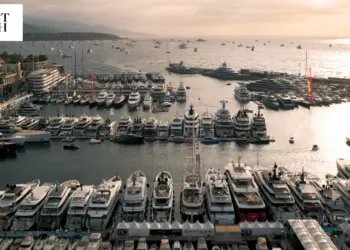
The Mediterranean remains the epicenter of Mediterranean yacht charter activity, commanding the highest concentration of superyachts between June and September. Its dominance is not accidental; it is engineered through centuries of maritime infrastructure, cultural prestige, and tightly clustered luxury destinations.
The French Riviera continues to anchor this ecosystem, where Monaco, Cannes, and Saint-Tropez form a triangular circuit of wealth visibility and event-driven demand. Meanwhile, the Amalfi Coast offers a slower, cinematic cruising experience, where vertical cliffside towns define the rhythm of navigation.
The Greek Islands have emerged as a powerful counterbalance—less formal, more expansive, and increasingly favored for long-range island-hopping itineraries. Similarly, Ibiza and Mallorca define the Balearic model, where nightlife, design hotels, and private beach clubs merge into a continuous social flow. Croatia and Montenegro, once secondary routes, now attract fleets seeking quieter waters and lower congestion without sacrificing Adriatic beauty.
Together, these regions form a tightly interconnected summer network where yachts rarely stay anchored for long. Instead, they move in choreographed patterns shaped by weather windows and social calendars.
Inside the Most Exclusive Yacht Routes of 2026
In 2026, superyacht travel routes are becoming more curated than ever, with owners and charter guests prioritizing narrative-driven journeys rather than static port stays. The idea of simply “visiting” a destination has been replaced by structured maritime arcs that combine culture, nightlife, and natural seclusion.
French Riviera event circuits remain the most structured. Yachts follow the Cannes Film Festival, Monaco Grand Prix, and summer beach club season in tightly scheduled progression. In contrast, Greek island hopping offers flexibility, where itineraries adjust dynamically to wind patterns and guest preference.
Amalfi coastal cruising continues to emphasize visual luxury slow navigation between Positano, Capri, and Ravello creates a cinematic rhythm that defines Italian summer prestige. Ibiza routes, meanwhile, combine daytime anchoring in turquoise coves with nighttime transitions into world-renowned clubs and private villas.
These itineraries reflect a deeper shift: destinations are no longer endpoints but nodes in a connected luxury system.
Regional Yacht Routing Dynamics of 2026
| Region | Peak Season | Luxury Appeal | Yacht Experience Level |
|---|---|---|---|
| French Riviera | June–August | High-society events, prestige marinas | Ultra-exclusive |
| Amalfi Coast | July–September | Scenic cruising, romantic landscapes | Premium leisure |
| Greek Islands | June–September | Island diversity, privacy, flexibility | Highly versatile |
| Balearic Islands | June–August | Nightlife, beach clubs, design culture | Social luxury |
| Croatia & Montenegro | July–September | Seclusion, affordability, natural beauty | Emerging elite |
These regional dynamics illustrate how yacht charter destinations operate as interconnected luxury ecosystems rather than isolated geographies. Each region contributes a different emotional and experiential layer to the global yacht calendar.
Why the Caribbean Dominates Winter Yacht Travel?
When the Mediterranean quiets in late autumn, attention shifts to the Caribbean, where Caribbean yacht charter demand peaks between December and April. This seasonal inversion creates a seamless global yacht circuit that ensures continuous luxury mobility.
The British Virgin Islands remain the most reliable cruising ground, offering protected waters and short-distance navigation ideal for relaxed itineraries. St. Barts delivers a contrasting experience—high fashion, celebrity visibility, and boutique luxury concentrated in a compact island environment. The Bahamas provide scale, with hundreds of islands enabling extended exploration and private anchoring opportunities.
The Grenadines, though less commercialized, attract seasoned yacht travelers seeking untouched natural environments and quieter social scenes. Together, these destinations reinforce the Caribbean’s role as a winter sanctuary within the broader luxury yacht charter 2026 ecosystem.
Comparing Global Yacht Charter Regions
The global yacht map is increasingly defined by a balance between Mediterranean intensity and Caribbean tranquility. Each region serves a different psychological and experiential purpose, shaping how itineraries are constructed.
Mediterranean routes emphasize culture density, high-profile events, and short-distance navigation. Caribbean routes prioritize relaxation, privacy, and extended cruising freedom. Europe offers historical depth and structured luxury, while tropical destinations deliver emotional escape and spatial openness.
- Mediterranean: event-driven, fast-paced, socially dense
- Caribbean: slow travel, privacy-focused, nature-centric
- Europe: cultural immersion with structured luxury infrastructure
- Tropics: emotional retreat and long-duration anchoring
This duality ensures year-round demand across global fleets, reinforcing the importance of yacht charter destinations in balancing seasonal migration flows.
Global Yacht Charter Comparison
| Destination | Season Strength | Key Advantage |
|---|---|---|
| French Riviera | Summer | Prestige events and elite networking |
| Greek Islands | Summer | Freedom of exploration and privacy |
| Amalfi Coast | Summer | Scenic coastline and cultural richness |
| Ibiza & Mallorca | Summer | Entertainment and social luxury |
| Caribbean Islands | Winter | Warm weather and secluded cruising |
| Croatia & Montenegro | Summer | Emerging luxury with lower congestion |
The comparison highlights how luxury yacht charter 2026 strategies depend heavily on seasonal optimization, with fleets repositioning globally to follow demand cycles.
The Onboard Experience: What Defines Modern Yacht Luxury
The onboard experience has become the key differentiator in superyacht travel. While destinations set the context, yachts now operate as fully autonomous luxury ecosystems that shape the entire journey.
Crew service now reaches near-hospitality perfection. For example, Michelin-trained chefs lead dining programs, while wellness specialists design recovery and fitness routines at sea. In addition, experience managers coordinate every detail to ensure seamless guest flow. Spa facilities, cryotherapy rooms, and yoga decks further highlight the growing focus on wellbeing onboard.
Water-based recreation has also expanded at a remarkable pace. Jet tenders, seabobs, diving platforms, and floating lounges turn the ocean into a private playground. At the same time, dining evolves into curated culinary experiences that match leading restaurants in Monaco or New York.
Privacy protocols also play a central role. Yachts now use encrypted communication systems, restricted-access decks, and discreet service workflows. As a result, high-profile guests maintain control over visibility and interaction at all times.
Ultimately, onboard luxury no longer depends on size. Instead, it depends on how smoothly every experience connects from one moment to the next.
Billionaire Travel Behavior and Yacht Mobility
Modern billionaire travel patterns now rely on synchronization rather than spontaneity. Private jets and yachts operate as a single mobility system. Consequently, guests can move from air to sea within minutes. For instance, a traveler may land in Nice by jet and board a yacht almost immediately, continuing a planned Mediterranean route without delay.
Moreover, this behavior reflects a deeper shift in wealth culture. Privacy has become a core asset. Therefore, yachts provide controlled environments where movement does not reduce security or exclusivity. Event-based chartering—especially around film festivals, fashion weeks, and major sporting events—further strengthens this structured travel rhythm.
At the same time, younger wealth holders are reshaping expectations. They value flexibility, digital integration, and immersive experiences more than ownership. As a result, demand is rising for curated yacht charter destinations rather than fixed private assets.
The Future of Yacht Charter Destinations
The future of yacht charter destinations will be shaped by three forces: sustainability, technology, and geographic expansion. First, eco-marinas continue to grow across the Mediterranean, while hybrid propulsion systems are becoming standard across new fleets. This shift reflects stronger environmental awareness in the ultra-luxury sector.
In addition, AI-assisted itinerary planning is emerging quickly. It optimizes routes based on weather, crowd levels, and guest preferences. At the same time, new regions such as the Red Sea and Southeast Asia are entering the global charter map.
Despite these changes, one principle remains constant. Exclusivity does not depend on geography alone. Instead, it depends on access and timing.
Unique Insight: Destinations as Curated Emotional Systems
The biggest shift in luxury travel is clear: yacht charter destinations are no longer fixed points on a map. Instead, they function as curated emotional systems shaped by mood, identity, and access.
Today, travelers choose itineraries based on emotional outcomes. They may seek serenity, celebration, privacy, or visibility. Therefore, geography matters less than experience design. In turn, itineraries now matter more than destinations themselves.
As a result, exclusivity has become time-based rather than location-based. For example, a quiet Greek island cove may feel completely private at dawn but crowded just hours later. This shift changes how value is defined in superyacht travel. Yachts now act as floating ecosystems that control access and shape experience in real time.
Frequently Asked Questions
What are the best yacht charter destinations in 2026?
The top yacht charter destinations include the French Riviera, Greek Islands, Amalfi Coast, Ibiza, and the Caribbean islands such as St. Barts and the BVI.
Why is the Mediterranean the top yacht charter region?
Because of its dense concentration of luxury ports, cultural events, and ideal summer weather conditions.
What is the best time for yacht charter destinations?
Summer (June–September) in the Mediterranean and winter (December–April) in the Caribbean.
How much does a luxury yacht charter cost?
Costs vary widely, but luxury yacht charter 2026 rates typically range from tens of thousands to several million dollars per week depending on vessel size.
Which is better: Mediterranean or Caribbean yacht charter?
Mediterranean offers cultural intensity, while the Caribbean provides privacy and relaxed cruising.
What are the most exclusive yacht destinations?
Monaco, St. Barts, Capri, and select Greek islands are among the most exclusive.
Can you combine multiple yacht charter destinations in one trip?
Yes, most superyacht travel itineraries are designed as multi-destination routes.
Why do billionaires use yacht charter destinations instead of owning yachts?
Chartering offers flexibility, reduced maintenance, and access to a wider variety of vessels.
What is included in a luxury yacht charter experience?
Crew service, gourmet dining, water sports equipment, and fully customized itineraries.
Why are yacht charter destinations important in luxury travel planning?
Because they define seasonal movement, availability, and the structure of global elite travel networks.