For more than two decades, private space companies competed for relevance while governments remained the dominant force in orbital activity. That balance has changed. The emergence of reusable launch systems, commercial satellite infrastructure, and private capital has created an entirely new economic layer above Earth.
At the center of this transformation stands SpaceX.
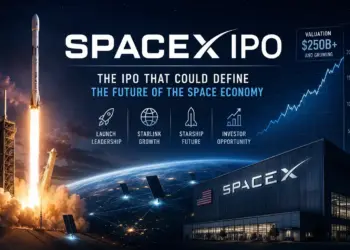
Although the company remains private, speculation around a future SpaceX IPO has intensified because of its growing valuation, expanding revenue base, and increasingly strategic role in communications, defense, and transportation infrastructure. Yet the significance of a public listing goes far beyond investor excitement.
A potential SpaceX IPO would represent the moment when space transitions from an experimental technology sector into a recognized infrastructure asset class.
Rather than becoming another large-cap technology listing, SpaceX could establish the financial blueprint for how markets evaluate launch capability, orbital networks, deep-space logistics, and planetary-scale communications.
The implications extend across every segment of private space exploration.
Why SpaceX Became the Benchmark for Private Space Exploration Companies?
The modern commercial space industry exists because launch economics changed.
Historically, reaching orbit required enormous government budgets and low launch frequency. SpaceX introduced a different model centered around reusable rockets, vertically integrated manufacturing, and rapid launch iteration.
The result was a dramatic reduction in cost per mission.
Today, most private space exploration companies are evaluated relative to SpaceX across several dimensions:
- Launch cadence
- Cost efficiency
- Satellite deployment capability
- Revenue diversification
- Long-term infrastructure value
Unlike earlier aerospace businesses that depended almost entirely on government procurement cycles, SpaceX developed a hybrid model that combines commercial demand with institutional contracts.
That combination has transformed investor expectations.
A future SpaceX IPO would effectively create a market benchmark that defines how investors price orbital infrastructure businesses.
The Evolution of Private Space Exploration Companies
The private space sector has evolved through three broad stages.
Phase One: Government Partnership Era
Early private aerospace businesses generated most revenue from government agencies and defense contracts. Growth depended heavily on public budgets.
Phase Two: Commercial Launch Expansion
Companies began offering satellite deployment services to telecommunications operators, scientific institutions, and commercial customers.
Phase Three: Infrastructure and Platform Economics
The industry now focuses on owning long-term orbital assets.
Revenue increasingly comes from:
- Connectivity services
- Data infrastructure
- Satellite subscriptions
- Logistics networks
- Defense integration
This shift explains why investors increasingly compare leading space firms to infrastructure platforms rather than traditional aerospace manufacturers.
SpaceX Dominance in Reusable Rocket Technology
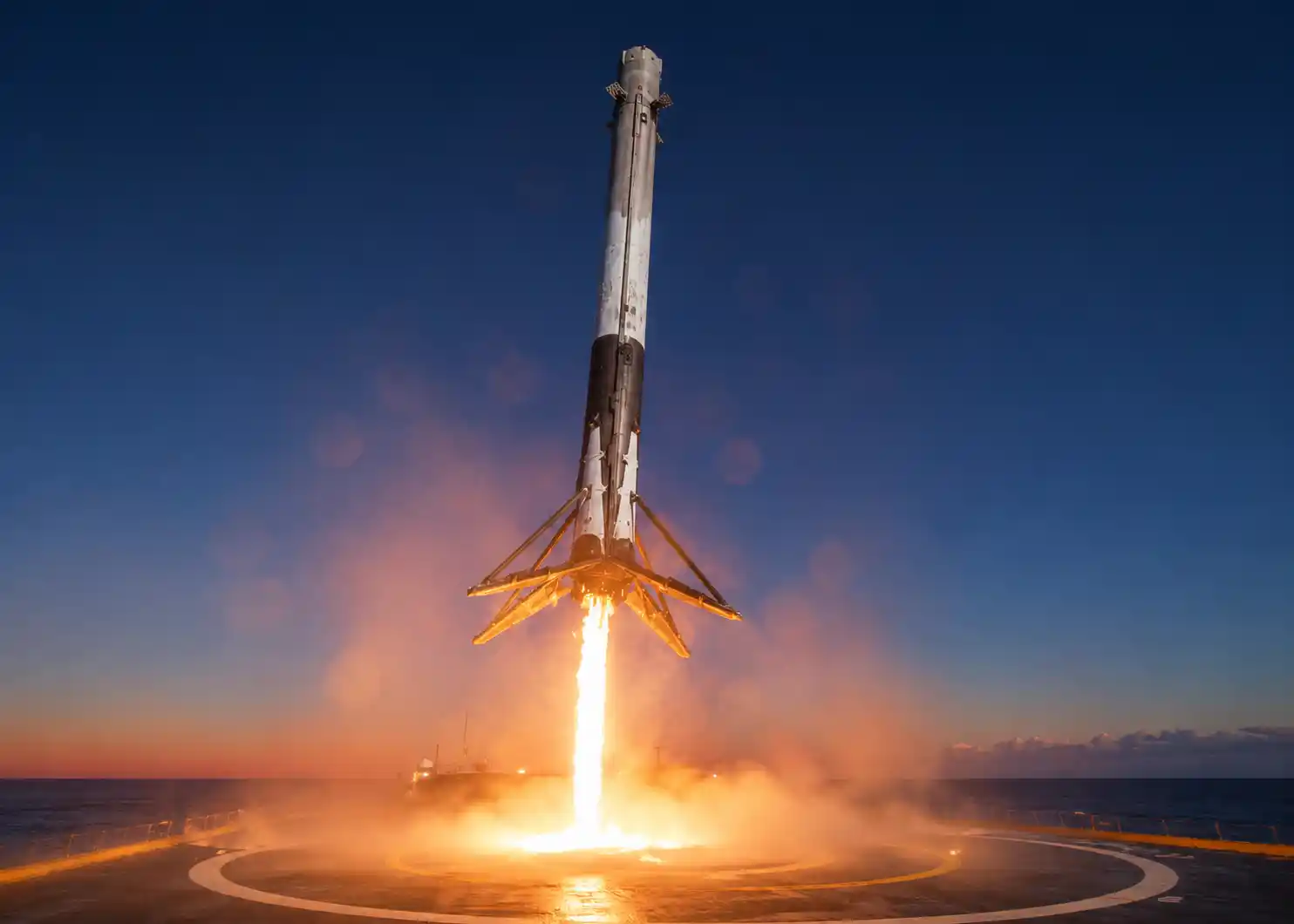
SpaceX transformed launch economics through reusable rocket architecture.
Instead of treating rockets as disposable hardware, the company built systems capable of repeated missions with lower refurbishment costs.
This altered three major variables:
Lower Cost Per Orbit
Reducing launch costs expands the addressable market for satellite deployment and space operations.
Higher Mission Frequency
Rapid turnaround supports more launches and stronger asset utilization.
Scalable Infrastructure Growth
Lower transportation costs enable larger orbital networks and future interplanetary systems.
Competitors are pursuing similar approaches, but SpaceX retains a significant operational lead through accumulated launch data and manufacturing scale.
This operational advantage heavily influences SpaceX valuation expectations.
Starlink Satellite Network and the Rise of Orbital Internet Infrastructure
If launch systems created the foundation, Starlink created recurring economics.
The Starlink satellite network introduced a subscription-based model that shifted SpaceX from project revenue to recurring cash generation.
This distinction matters because financial markets generally reward predictable revenue streams.
Starlink contributes strategic advantages:
- Global broadband expansion
- Distributed communications architecture
- Subscription economics
- Government connectivity applications
- Data infrastructure positioning
The future of satellite internet increasingly depends on integrated launch and communications ecosystems.
If investors eventually gain exposure through a SpaceX IPO, many may view Starlink as the company’s largest long-term valuation driver.
Starship Program Economics and Deep-Space Commercialization
Starship may ultimately become SpaceX’s most economically disruptive initiative.
Unlike existing launch systems, Starship is designed around extreme scalability.
Its economic rationale includes:
- Lower cost per delivered kilogram
- Large-scale cargo deployment
- Orbital refueling potential
- Lunar logistics
- Mars transportation capability
The significance of Starship program economics is not immediate profitability.
Its importance lies in creating a transportation layer that enables future industries.
Those industries could include:
- Orbital manufacturing
- Resource extraction
- Space tourism
- Scientific infrastructure
- Deep-space supply chains
Investors evaluating a future IPO would likely assign option value to these long-duration opportunities.
Government Contracts and Defense Partnerships
Space commercialization does not eliminate government participation.
Instead, government demand increasingly accelerates private infrastructure.
SpaceX benefits from several structural advantages:
- National security launch demand
- Satellite communications support
- Strategic logistics applications
- Resilience for communications networks
Defense relationships strengthen long-term revenue visibility and support premium valuation frameworks.
This dynamic also influences how competitors pursue growth.
Comparing SpaceX with Broader Industry Players
A SpaceX IPO would reshape competitive positioning across the entire market.
Blue Origin
Blue Origin possesses significant financial backing and long-term ambitions but operates with slower commercialization timelines.
Innovation Capacity: High
Funding Strength: Very strong
Scalability: Developing
Government Dependency: Moderate
Rocket Lab
Rocket Lab has built a reputation around operational execution and focused launch economics.
Innovation Capacity: High
Funding Strength: Public-market access
Scalability: Strong in niche segments
Government Dependency: Moderate
OneWeb
OneWeb emphasizes connectivity and communications.
Innovation Capacity: Moderate
Funding Strength: Strategic investors
Scalability: Network dependent
Government Dependency: Elevated
Boeing Space Division
Boeing benefits from institutional scale but often moves more slowly than venture-driven competitors.
Innovation Capacity: Moderate
Funding Strength: Extensive
Scalability: Established
Government Dependency: High
Emerging Space Startups
Smaller entrants focus on specialized technologies including robotics, analytics, propulsion, and orbital services.
Their challenge remains achieving scale before capital cycles tighten.
Venture Capital, Secondary Markets, and Institutional Space Investing
Private markets already treat SpaceX as a reference asset.
Secondary transactions involving private shares increasingly influence perceptions of valuation.
Three investor groups are becoming more active:
Venture Capital Firms
Seeking platform exposure to frontier technologies.
Sovereign Wealth Funds
Interested in strategic infrastructure ownership.
Institutional Investors
Looking for long-duration growth sectors beyond conventional technology.
However, private ownership limits liquidity.
A SpaceX IPO could solve this constraint and significantly expand institutional participation.
That transition could redirect capital into adjacent startups and accelerate industry growth.
Why the SpaceX IPO Reflects the Macro Trends of 2026?
Several investment themes are converging simultaneously.
Rise of Frontier Technology Investing
Capital increasingly targets sectors with transformative potential.
Infrastructure-Scale Private Companies
Large private firms now remain private longer and build enormous operating scale before listing.
Convergence of AI, Satellites, and Communications
Space assets increasingly support intelligence systems, automation, and global connectivity.
Long-Term Capital Allocation
Investors seek durable infrastructure with multi-decade growth profiles.
Orbital Infrastructure Markets
Economic value creation is beginning to move beyond Earth-bound networks.
The SpaceX IPO aligns with each of these structural trends.
Risks and Challenges That Could Affect SpaceX Valuation
The future remains uncertain despite strong momentum.
Major risks include:
Regulatory Complexity
International licensing and spectrum allocation remain challenging.
Capital Intensity
Space businesses require sustained investment over long periods.
Technical Risk
Launch failures and development setbacks remain unavoidable realities.
Geopolitical Competition
Satellite networks increasingly intersect with national security interests.
LEO Congestion
Competition in low-earth orbit may intensify over time.
These risks could influence timing, pricing, and investor sentiment.
The Future of Private Space Exploration
Space commercialization appears to be moving toward infrastructure ownership rather than isolated missions.
Several themes may define the next decade:
Orbital Manufacturing
Factories operating in microgravity environments.
Lunar Economy Development
Permanent infrastructure supporting resource utilization.
Mars Colonization Roadmap
Long-term settlement economics and transportation systems.
Satellite-Driven Global Internet Expansion
Connectivity reaching underserved regions.
AI-Enabled Space Systems
Autonomous operations and intelligent network management.
Deep-Space Logistics
Movement of cargo, energy, and information beyond Earth orbit.
Space is increasingly becoming an economic layer rather than a destination.
The SpaceX IPO as the Pricing Mechanism for the Entire Industry
The most important implication of a future listing is not fundraising.
It is price discovery.
A public SpaceX valuation would become the benchmark used to evaluate:
- Launch providers
- Satellite operators
- Orbital infrastructure platforms
- Deep-space logistics companies
- Communications networks
It would establish investor expectations for growth, margins, and capital efficiency.
This mechanism could unlock accelerated funding across the ecosystem.
More importantly, it would redefine space as a commercial asset class rather than a scientific endeavor.
In that sense, the SpaceX IPO will not merely reflect the future of space exploration.
It may define the financial architecture that enables it.
Frequently Asked Questions
What is the SpaceX IPO?
The SpaceX IPO refers to the potential public listing of SpaceX shares on a stock exchange, allowing broader investor participation in the company.
Why is SpaceX important for private space exploration?
SpaceX reduced launch costs, accelerated innovation cycles, and demonstrated that orbital infrastructure can become commercially sustainable.
How does SpaceX make money?
Revenue comes primarily from launch services, Starlink subscriptions, government contracts, and infrastructure-related activities.
What companies compete with SpaceX?
Major competitors include Blue Origin, Rocket Lab, OneWeb, Boeing’s space operations, and emerging specialized startups.
Will Starlink become a separate IPO?
There has been ongoing market speculation, but no confirmed timeline exists for an independent public listing.
What is Starship used for?
Starship is designed for large cargo transport, deep-space missions, lunar operations, and future Mars exploration.
Why are investors interested in space companies?
Investors view space as a frontier infrastructure market with long-term growth and strategic importance.
What are the risks of space investments?
Key risks include technical failures, regulation, capital requirements, competition, and geopolitical uncertainty.
When could the SpaceX IPO happen?
No official date has been announced, but markets continue monitoring liquidity conditions and company priorities.
Is SpaceX leading the space economy?
SpaceX currently holds a leading position across launch capability, orbital connectivity, and commercialization initiatives.