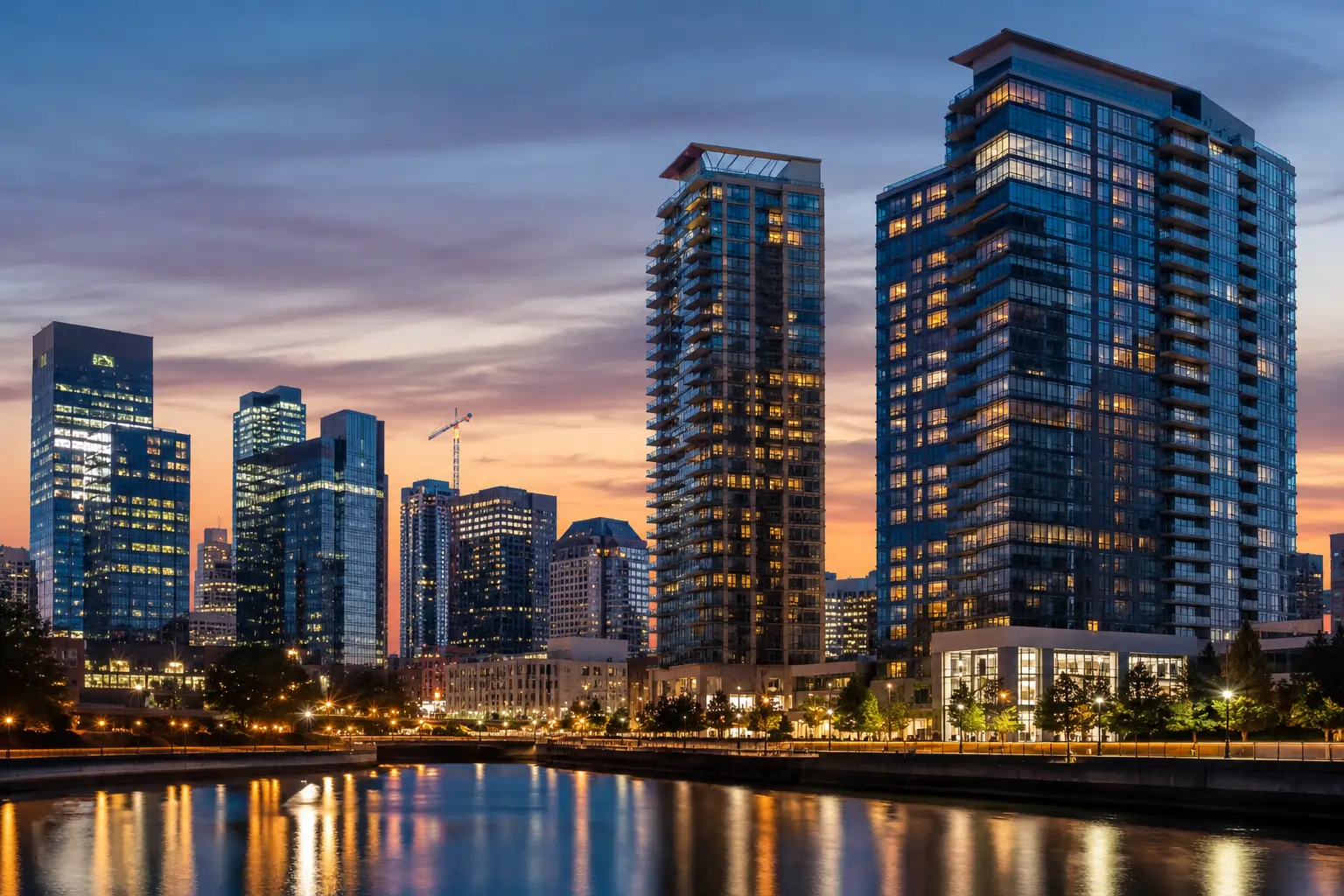
The global commercial property landscape is undergoing one of the most significant transformations in decades. As work habits evolve, technology reshapes infrastructure needs, and consumer behavior continues to change, investors are increasingly seeking commercial real estate opportunities beyond office towers. While traditional office assets once dominated institutional portfolios, the market in 2026 reflects a broader pursuit of diversification, resilience, and long-term income generation.
Leading research from CBRE, JLL, Savills, Knight Frank, PwC, and other global property advisory firms highlights a clear trend: capital is flowing toward industrial facilities, logistics hubs, data centers, mixed-use developments, hospitality assets, and infrastructure-linked properties. These sectors are benefiting from powerful structural shifts including e-commerce expansion, digital transformation, urban redevelopment, and changing demographic preferences.
As a result, commercial real estate opportunities beyond office towers are becoming central to modern investment strategies. Investors are no longer focused solely on traditional central business district skyscrapers. Instead, they are building diversified portfolios designed to capture growth across multiple economic cycles while reducing concentration risk.
Why Are Investors Moving Beyond Office Towers in 2026?
The office sector continues to adapt to hybrid work models that emerged during the previous decade. Although premium office properties remain important in major global cities, demand patterns have changed substantially.
Companies are increasingly optimizing workspace footprints, prioritizing flexibility, and investing in technology-enabled environments rather than expanding office square footage. This shift has encouraged investors to explore sectors offering stronger occupancy trends and more predictable cash flows.
Several macroeconomic factors are accelerating this movement:
- Hybrid and remote work adoption
- Rising demand for digital infrastructure
- Expansion of e-commerce networks
- Urban redevelopment initiatives
- Population migration toward suburban markets
- Increased focus on portfolio diversification
- Growing demand for operational real estate assets
Institutional investors now recognize that future growth will likely come from multiple sectors rather than relying heavily on office buildings alone. Consequently, alternative commercial real estate assets have become increasingly attractive for pension funds, sovereign wealth funds, private equity firms, and family offices worldwide.
What Are the Most Profitable Commercial Real Estate Opportunities Beyond Office Towers?
Several sectors stand out as particularly attractive in the current investment environment. Their appeal stems from strong demand fundamentals, long-term growth drivers, and the ability to generate competitive returns.
Key Emerging Asset Categories
| Asset Class | Growth Driver | Investor Appeal | Risk Level |
|---|---|---|---|
| Industrial Warehouses | E-commerce growth | Stable tenant demand | Moderate |
| Logistics Facilities | Supply chain modernization | Long-term leases | Moderate |
| Data Centers | Digital infrastructure demand | High recurring income | Moderate |
| Mixed-Use Developments | Urban regeneration | Multiple revenue streams | Moderate |
| Hospitality Assets | Tourism recovery | Growth potential | Moderate to High |
| Retail Centers | Experiential retail demand | Redevelopment upside | Moderate |
| Infrastructure-Linked Assets | Public investment expansion | Stable cash flow | Low to Moderate |
These categories represent some of the most promising high-yield commercial assets available to global investors in 2026.
How Is Industrial Real Estate Driving New Commercial Growth?
Among all emerging sectors, industrial real estate growth remains one of the strongest global investment themes.
The rise of e-commerce has fundamentally changed supply chain requirements. Retailers, manufacturers, and third-party logistics providers require larger and more sophisticated distribution networks capable of supporting rapid delivery expectations.
As a result, logistics property investment has become a priority for institutional capital. Modern warehouses are increasingly located near major transportation corridors, airports, ports, and population centers.
Several trends continue to support industrial expansion:
- Same-day delivery expectations
- Growth of online retail sales
- Supply chain regionalization
- Manufacturing reshoring initiatives
- Automation and robotics integration
- Increased inventory storage requirements
Industrial facilities often benefit from long lease terms and relatively low operating costs compared with many traditional commercial assets. Investors value these characteristics because they contribute to stable cash flow generation and long-term portfolio resilience.
Global logistics hubs across North America, Europe, Asia-Pacific, and the Middle East continue to attract significant investment activity as companies modernize distribution networks.
The Rise of Data Centers as Essential Real Estate Infrastructure
One of the most dynamic examples of commercial real estate opportunities beyond office towers is the rapid expansion of data centers.
Digital infrastructure has become a critical component of modern economies. Cloud computing, artificial intelligence, streaming services, financial technology, and enterprise software platforms all require extensive data storage and processing capacity.
This has fueled unprecedented data center real estate demand.
Unlike traditional office buildings, data centers function as mission-critical infrastructure supporting digital ecosystems. Occupiers often commit to long-term contracts, creating predictable revenue streams for property owners.
Key growth drivers include:
- Artificial intelligence adoption
- Cloud computing expansion
- Enterprise digital transformation
- Internet of Things connectivity
- Edge computing deployment
- Growing cybersecurity requirements
As governments and corporations continue investing in digital capabilities, data center assets are increasingly viewed as strategic long-term investments rather than niche property categories.
Retail Reinvention and Consumer Experience Strategies
For years, many investors viewed retail properties with caution due to the growth of online shopping. However, the narrative has changed significantly.
The modern retail real estate transformation is centered on experience, convenience, and community engagement.
Successful retail properties today are less dependent on traditional department stores and more focused on creating destinations that combine shopping, dining, entertainment, healthcare, and lifestyle services.
Key retail trends include:
- Experiential retail concepts
- Mixed-use integration
- Last-mile fulfillment capabilities
- Omnichannel shopping support
- Food and beverage expansion
- Wellness-oriented tenants
Investors increasingly target high-performing retail centers that can adapt to changing consumer preferences. Rather than competing directly with e-commerce, these assets complement digital shopping ecosystems while providing experiential value that online platforms cannot replicate.
Hospitality Assets Benefit from Global Mobility
Another area attracting investor attention is hospitality.
Hospitality real estate opportunities have expanded as global travel demand continues to recover and evolve. Business travel, leisure tourism, remote work mobility, and international events all contribute to rising occupancy rates across many markets.
Hotels, resorts, serviced apartments, and extended-stay accommodations are benefiting from:
- Increased international tourism
- Growth in domestic travel
- Flexible work arrangements
- Rising demand for lifestyle experiences
- Expansion of convention and event activity
Investors are particularly interested in properties located near transportation hubs, tourism destinations, healthcare centers, and mixed-use districts.
While hospitality assets may involve greater operational complexity than industrial properties, they also offer opportunities for revenue growth through active management strategies.
Which Alternative Asset Classes Are Outperforming Traditional Office Towers?
The strongest-performing sectors often share a common characteristic: they are aligned with long-term structural trends rather than short-term economic cycles.
Alternative assets gaining significant traction include:
Mixed-Use Developments
Mixed-use development investment continues to attract capital because these projects integrate residential, retail, office, hospitality, and entertainment components within a single environment.
Benefits include:
- Multiple income sources
- Enhanced tenant demand
- Greater urban connectivity
- Improved asset resilience
- Community-oriented design
Life Science Facilities
Research laboratories and biotechnology campuses have emerged as attractive alternatives due to ongoing innovation in healthcare and pharmaceuticals.
Self-Storage Properties
Population mobility and urban density trends support growing demand for storage facilities, particularly in metropolitan areas.
Healthcare Real Estate
Medical office buildings, outpatient centers, and specialized healthcare facilities benefit from aging populations and expanding healthcare needs.
Infrastructure-Linked Properties
Assets connected to transportation, energy, telecommunications, and logistics networks increasingly attract investors seeking long-term stability.
These sectors represent a growing segment of alternative commercial real estate assets capable of generating durable returns while supporting broader economic development.
The Growing Importance of Suburban Commercial Markets
Suburban commercial growth has become another defining trend in global property investment.
Population migration patterns and evolving lifestyle preferences have encouraged businesses and consumers to spend more time outside traditional city centers.
This shift has increased demand for:
- Neighborhood retail centers
- Medical facilities
- Logistics hubs
- Flexible office spaces
- Mixed-use communities
- Hospitality properties
Investors are finding opportunities in suburban locations where land availability, affordability, and population growth create favorable development conditions.
Suburban assets often provide attractive yields while benefiting from long-term demographic trends.
Infrastructure-Linked Property Investment Expands
Infrastructure spending is increasingly influencing real estate investment decisions.
Governments worldwide are investing heavily in transportation systems, digital connectivity, renewable energy networks, and urban modernization projects.
Properties located near major infrastructure developments frequently experience enhanced value creation due to improved accessibility and economic activity.
Infrastructure-linked opportunities include:
- Transit-oriented developments
- Airport-related commercial assets
- Logistics corridors
- Renewable energy support facilities
- Telecommunications infrastructure sites
As public and private investment in infrastructure grows, associated property sectors are expected to benefit from stronger tenant demand and improved long-term performance.
Global Capital Diversification Trends Reshape Investment Strategy
One of the most significant developments in 2026 is the rise of the global property diversification strategy.
Institutional investors increasingly recognize the risks of concentrating capital in a single property type or geographic market.
Diversification now extends across:
- Asset classes
- Geographic regions
- Economic sectors
- Tenant profiles
- Income structures
This strategy supports real estate portfolio expansion while improving resilience during periods of market volatility.
Cross-border investment activity remains strong as investors seek exposure to emerging growth markets, technology hubs, logistics corridors, and urban redevelopment districts.
The result is a more balanced approach that emphasizes adaptability and long-term value creation.
Sector Performance Comparison
| Sector | Demand Trend | Return Potential | Long-Term Stability |
| Industrial & Logistics | Very Strong | High | High |
| Data Centers | Extremely Strong | High | High |
| Mixed-Use Developments | Strong | Moderate to High | High |
| Hospitality Assets | Growing | Moderate to High | Moderate |
| Retail Redevelopment | Improving | Moderate | Moderate |
| Infrastructure-Linked Assets | Strong | Moderate | High |
| Traditional Office Towers | Mixed | Moderate | Moderate |
This comparison highlights why many investors are reallocating capital toward sectors demonstrating stronger growth fundamentals.
What Does the Future Hold for Diversified Commercial Real Estate Markets?
The future of commercial property investment appears increasingly diversified.
Rather than abandoning office assets entirely, investors are repositioning portfolios to balance traditional holdings with emerging sectors that align with long-term economic trends.
The next phase of commercial real estate will likely be characterized by:
- Greater sector diversification
- Technology-enabled asset management
- Sustainability-focused development
- Increased infrastructure integration
- Enhanced urban regeneration initiatives
- Continued logistics network expansion
- Growing digital infrastructure investment
The concept of commercial real estate opportunities beyond office towers reflects a broader transformation in investor thinking. Success is no longer defined solely by ownership of landmark office buildings. Instead, investors are prioritizing flexibility, resilience, and exposure to sectors benefiting from structural economic change.
As industrial facilities, data centers, hospitality properties, mixed-use developments, and infrastructure-linked assets continue expanding, they are reshaping global commercial real estate markets. Investors who embrace diversification and focus on future-ready assets may be better positioned to capture sustainable growth and long-term value creation in the evolving property landscape.
Conclusion
The expansion of commercial real estate opportunities beyond office towers represents one of the most important investment trends of 2026. Structural shifts in work culture, technology adoption, e-commerce growth, and urban redevelopment are driving capital toward diversified property sectors with stronger long-term fundamentals.
From industrial real estate growth and logistics property investment to data center real estate demand, hospitality real estate opportunities, and mixed-use development investment, investors are discovering new avenues for income generation and portfolio resilience.
As global markets continue evolving, the most successful strategies will likely emphasize diversification, adaptability, and exposure to sectors positioned for long-term economic relevance. The future of commercial real estate belongs not to a single asset class, but to a balanced ecosystem of resilient, high-performing properties built for the demands of tomorrow.
FAQs: Commercial Real Estate Opportunities Beyond Office Towers
1. What are commercial real estate opportunities beyond office towers?
Commercial real estate opportunities beyond office towers include industrial warehouses, logistics facilities, data centers, hospitality properties, mixed-use developments, healthcare real estate, retail redevelopment projects, and infrastructure-linked assets. These sectors are attracting investors due to stronger growth drivers and diversification benefits.
2. Why are investors reducing exposure to traditional office buildings?
Many investors are reducing office exposure because hybrid work models, evolving workplace strategies, and changing tenant requirements have altered office demand patterns. Diversified asset classes often provide more stable occupancy trends and alternative income streams.
3. Why is industrial real estate considered a high-growth sector?
Industrial real estate benefits from e-commerce expansion, supply chain modernization, manufacturing reshoring, and rising demand for distribution facilities. These trends continue to drive strong tenant demand and long-term rental growth.
4. What makes logistics property investment attractive in 2026?
Logistics properties support modern delivery networks and supply chains. Their strategic locations, long-term leases, and growing importance in global commerce make them attractive investments for institutional and private investors.
5. Why is data center real estate demand increasing?
Data center demand is rising because of cloud computing, artificial intelligence, digital transformation, streaming services, and increased data consumption. These facilities are now viewed as critical infrastructure supporting the digital economy.
6. Are retail properties still a good investment?
Yes. Modern retail assets focused on experiential shopping, entertainment, dining, healthcare, and mixed-use integration continue to attract investors. Successful retail centers are adapting to changing consumer preferences and omnichannel retail strategies.
7. What are mixed-use developments?
Mixed-use developments combine residential, retail, office, hospitality, and recreational components within a single project. They create diversified income streams and often benefit from strong community engagement and urban regeneration trends.
8. How do hospitality real estate opportunities generate returns?
Hospitality assets generate income through room revenues, events, food and beverage operations, and tourism-related services. Growing global travel demand has strengthened investment interest in hotels, resorts, and serviced accommodations.
9. What role does infrastructure play in commercial real estate investing?
Infrastructure projects such as transportation networks, airports, logistics corridors, and digital connectivity systems can significantly increase nearby property values and tenant demand, creating attractive investment opportunities.
10. What are alternative commercial real estate assets?
Alternative commercial real estate assets include data centers, self-storage facilities, healthcare properties, life science campuses, student housing, logistics facilities, and other specialized sectors that differ from traditional office and retail investments.
11. How does a global property diversification strategy reduce risk?
A global property diversification strategy spreads investments across multiple asset classes, regions, and economic sectors. This approach helps reduce concentration risk and improves portfolio resilience during market fluctuations.
12. What is the future outlook for commercial real estate opportunities beyond office towers?
The outlook remains strong as investors increasingly prioritize resilient, technology-driven, and income-producing assets. Industrial facilities, logistics hubs, data centers, mixed-use developments, and infrastructure-linked properties are expected to remain key growth sectors throughout the coming decade.