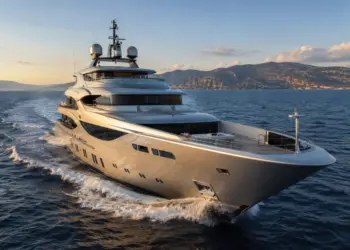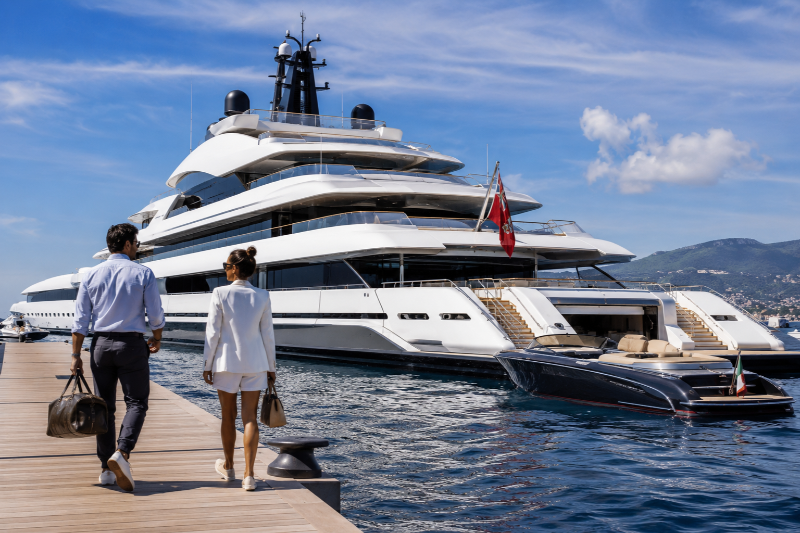
The global market for mega yachts for sale is entering a new phase in 2026. Demand remains strong across established luxury hubs; however, the buyer profile is changing faster than many industry analysts expected. Younger ultra-high-net-worth individuals (UHNWIs), particularly technology founders, digital investors, and globally mobile entrepreneurs, are reshaping the dynamics of the luxury yacht market. Moreover, the rise of intergenerational wealth transfer is accelerating this transformation as trillions of dollars move toward younger affluent buyers with very different lifestyle priorities.
Unlike previous generations of yacht owners, modern buyers increasingly view yacht ownership as an immersive lifestyle platform rather than a static prestige symbol. Consequently, purchasing behavior now reflects broader changes in luxury consumption. Experiences, flexibility, wellness, privacy, and technology integration often matter more than traditional displays of wealth. Meanwhile, social perceptions around luxury have evolved, encouraging affluent buyers to seek assets that combine exclusivity with utility and personalization.
The superyacht industry has responded quickly. Designers, shipbuilders, and brokers now prioritize sustainability systems, hybrid propulsion, smart automation, and wellness-oriented interiors. Additionally, global brokerage networks are expanding digital access to buyers from emerging wealth centers across the Middle East, Asia, and parts of Africa. As a result, the ecosystem surrounding mega yachts has become more sophisticated, technology-driven, and globally interconnected.
In many ways, the modern yacht market reflects a broader redefinition of ultra-luxury assets. Ownership increasingly revolves around mobility, privacy, experience, and lifestyle integration. Therefore, mega yachts are no longer simply floating symbols of wealth. They are evolving into highly personalized environments that support work, leisure, family travel, entertainment, and long-term lifestyle flexibility.
Why Mega Yachts Are Attracting a New Generation of Buyers?
One of the most important forces driving demand for mega yachts for sale is generational wealth transfer. Financial institutions estimate that trillions in private wealth will shift from older generations to younger heirs throughout the next decade. Consequently, younger wealthy buyers are entering luxury markets with different expectations and behavioral patterns than traditional yacht owners.
Technology entrepreneurs and startup founders represent a particularly influential segment. Many accumulated wealth rapidly through venture-backed businesses, digital assets, or technology exits. Moreover, these buyers often value privacy, mobility, and personalized experiences more than conventional luxury assets such as large estates or formal collections. A mega yacht offers a combination of exclusivity and functionality that aligns closely with these preferences.
Younger affluent consumers also prioritize experiential luxury. Instead of focusing purely on ownership symbolism, they seek assets that enhance lifestyle quality and social flexibility. Therefore, yachts increasingly function as private retreats, mobile offices, wellness environments, and entertainment platforms.
Several trends explain this shift:
- Rising interest in private travel experiences
- Increased demand for flexible luxury assets
- Greater emphasis on family-oriented leisure
- Expansion of remote executive lifestyles
- Preference for experiential status markers
Meanwhile, social media and digital visibility have altered how luxury assets influence cultural perception. In contrast to older generations, younger UHNW individuals often prefer understated sophistication rather than overt displays of wealth. As a result, yacht ownership now centers more on customization, usability, and personal experience.
Changing Expectations in the Mega Yacht Market
The expectations surrounding mega yacht ownership have evolved dramatically in recent years. Buyers in 2026 increasingly demand vessels that integrate modern aesthetics, digital technology, and environmental efficiency without compromising luxury standards.
Modern yacht design now emphasizes open spaces, natural materials, wellness areas, and seamless indoor-outdoor integration. Moreover, minimalist architecture and resort-inspired interiors have become highly desirable among younger owners. Traditional ornate styling has gradually lost appeal in many segments of the market.
Technology expectations have also increased substantially. Buyers frequently request fully integrated smart systems that control lighting, entertainment, climate, security, and onboard services through centralized digital interfaces. Additionally, advanced connectivity has become essential as more owners conduct business remotely while traveling.
Wellness-oriented design is another defining trend. Many new-generation buyers prioritize health, recovery, and personal performance. Consequently, yachts increasingly include:
- Spa facilities and recovery rooms
- Meditation and wellness suites
- Advanced fitness centers
- Air purification systems
- Nutritional dining concepts
The demand for customization continues to reshape shipbuilding strategies. Buyers no longer accept standardized luxury experiences. Instead, they seek highly personalized layouts and technology ecosystems tailored to individual lifestyles.
| Buyer Segment | Preference Shift | Yacht Features Prioritized | Investment Motivation | Market Impact |
|---|---|---|---|---|
| Traditional UHNW Buyers | Prestige-focused ownership | Formal interiors, large entertaining spaces | Status preservation | Stable legacy demand |
| Tech Entrepreneurs | Experience-driven luxury | Smart systems, connectivity, wellness spaces | Lifestyle flexibility | Faster innovation cycles |
| Younger Family Offices | Long-term experiential assets | Family-oriented layouts, sustainability systems | Multi-use lifestyle value | Demand for customization |
| Digital Wealth Creators | Mobility and privacy | Remote work infrastructure, hybrid propulsion | Global mobility | Expansion of modern yacht categories |
Technology and Innovation Reshaping Yacht Ownership
Technology now sits at the center of the modern luxury yacht experience. In many cases, buyers evaluate onboard systems with the same scrutiny they apply to luxury real estate or aviation assets. Therefore, innovation has become a major competitive factor in the yacht brokerage market.
AI-enabled navigation systems are increasingly common in ultra-luxury yachts. These systems optimize routing, fuel efficiency, weather adaptation, and safety monitoring. Moreover, automation reduces operational complexity while improving the onboard experience for owners and crew alike.
Digital integration has also transformed daily life onboard. Smart cabins, biometric access systems, predictive maintenance platforms, and advanced entertainment ecosystems now define premium yacht experiences. Additionally, satellite connectivity enables uninterrupted business operations for globally mobile executives.
Shipbuilders are also investing heavily in advanced engineering technologies. Hybrid propulsion systems, lightweight materials, and energy optimization software improve efficiency while meeting stricter maritime regulations. Consequently, innovation now influences both operational performance and buyer perception.
Several technologies shaping the market include:
- AI-assisted navigation and automation
- Smart environmental controls
- Predictive maintenance systems
- Integrated cybersecurity protections
- Hybrid and electric propulsion solutions
Meanwhile, technology increasingly influences resale value. Buyers often prioritize future-ready vessels capable of adapting to evolving digital standards. As a result, technologically outdated yachts may depreciate faster than modernized competitors.
Lifestyle Transformation Behind Yacht Demand
The modern surge in mega yachts for sale reflects deeper changes in affluent lifestyles. Increasingly, wealthy individuals seek assets that support flexibility, privacy, and mobility across both professional and personal environments.
The rise of remote executive culture has played an important role. Entrepreneurs, investors, and business leaders can now operate globally from virtually anywhere with reliable connectivity. Consequently, yachts have become mobile workspaces capable of supporting high-level business operations while simultaneously offering leisure and privacy.
Family usage patterns have also evolved. Younger wealthy buyers frequently prioritize multi-generational experiences and private travel over traditional luxury tourism. Moreover, yachts provide controlled environments that combine entertainment, security, and exclusivity in ways that hotels or resorts cannot always replicate.
Wellness-focused travel further contributes to demand growth. Many affluent consumers increasingly associate luxury with health optimization, stress reduction, and personalized environments. Therefore, yachts appeal to buyers seeking more intentional and flexible travel experiences.
In addition, mega yachts offer advantages that align with modern wealth behavior:
- Enhanced privacy and security
- Flexible global mobility
- Personalized hospitality experiences
- Controlled social environments
- Direct access to exclusive destinations
As a result, yachts are increasingly viewed as integrated lifestyle ecosystems rather than occasional luxury assets.
| Category | Traditional Yacht Buyers | New Generation Buyers | Key Difference | Market Outcome |
|---|---|---|---|---|
| Ownership Motivation | Prestige and status | Experience and functionality | Utility-focused luxury | Broader buyer demographics |
| Design Preference | Formal luxury interiors | Minimalist wellness aesthetics | Lifestyle personalization | Design innovation growth |
| Technology Expectations | Basic luxury systems | Fully integrated smart ecosystems | Digital dependence | Rapid onboard tech adoption |
| Sustainability Priorities | Secondary consideration | Core purchasing factor | Environmental awareness | Hybrid yacht expansion |
| Usage Patterns | Seasonal leisure | Continuous lifestyle integration | Remote work compatibility | Increased annual utilization |
Sustainability and the Future of Luxury Yachting
Sustainability has become an increasingly important factor in luxury purchasing decisions, including within the superyacht sector. Younger affluent buyers often expect environmental responsibility alongside luxury performance. Consequently, yacht builders are under growing pressure to innovate.
Hybrid propulsion systems represent one of the most visible developments. These technologies reduce fuel consumption, lower emissions, and improve operational efficiency. Meanwhile, some shipyards are exploring alternative fuels and battery-supported systems for future yacht models.
Environmental awareness among UHNW buyers continues to rise. In contrast to previous decades, many wealthy consumers now evaluate luxury purchases through environmental and social lenses. Therefore, sustainability increasingly affects brand reputation and resale desirability within the yacht market.
Regulatory changes also influence market behavior. Maritime authorities continue introducing stricter environmental standards related to emissions, waste management, and fuel efficiency. As a result, builders investing early in green technologies may gain competitive advantages.
Key sustainability trends include:
- Hybrid propulsion adoption
- Energy-efficient onboard systems
- Sustainable interior materials
- Reduced-emission engineering
- Improved water treatment technologies
Nevertheless, balancing sustainability with ultra-luxury expectations remains complex. Large yachts still require significant operational resources. However, innovation continues narrowing the gap between environmental responsibility and luxury performance.
Why Yacht Brokers Are Seeing a Shift in Demand?
The yacht brokerage industry is changing rapidly as buyer behavior evolves. Digital platforms, virtual tours, and global sales networks have increased accessibility across the luxury marine sector. Consequently, buyers can now evaluate mega yachts for sale from almost anywhere in the world.
Transparency expectations have also increased. Younger buyers often conduct extensive independent research before engaging brokers. Therefore, brokerage firms increasingly provide detailed technical data, operational histories, and digital presentations to remain competitive.
Meanwhile, global demand patterns are becoming more diversified. Wealth creation in the Middle East, Southeast Asia, and emerging technology markets continues expanding the international buyer base. As a result, brokers must operate with broader geographic reach and stronger digital infrastructure.
Competition among sellers has intensified as inventory visibility improves online. Consequently, modern brokerage firms increasingly focus on:
- Data-driven marketing strategies
- Enhanced digital buyer experiences
- Faster international transaction processes
- Virtual yacht showcases
- Lifestyle-oriented branding
The brokerage market now resembles other premium asset industries where digital accessibility and information transparency strongly influence purchasing behavior.
Investment Perspective: Are Mega Yachts Good Assets?
From a purely financial perspective, mega yachts rarely function like traditional appreciating investments. Most vessels depreciate over time, particularly without consistent maintenance and modernization. Therefore, buyers should approach yacht ownership with realistic expectations.
Operational expenses remain substantial. Crew salaries, docking fees, maintenance, insurance, fuel, and refits can collectively represent significant annual costs. Additionally, larger yachts often require extensive technical support to maintain optimal performance and resale value.
However, financial analysis alone does not fully explain yacht demand. Many owners evaluate yachts primarily through lifestyle value rather than conventional investment metrics. Consequently, ownership decisions often resemble ultra-luxury consumption behavior rather than portfolio allocation strategies.
Some owners partially offset costs through charter activity. Charter income can generate revenue during unused periods, although profitability varies significantly depending on vessel size, location, operating costs, and market demand.
Important ownership considerations include:
- Long-term depreciation
- High operational costs
- Maintenance complexity
- Charter revenue potential
- Liquidity limitations
As a result, yachts function best as lifestyle assets for individuals who prioritize experience, mobility, and exclusivity over purely financial returns.
Future of Mega Yachts for Sale in 2026 and Beyond
The future of mega yachts for sale will likely reflect broader changes in technology, wealth distribution, and luxury consumption. Customization is expected to expand further as buyers demand increasingly personalized onboard experiences.
AI-driven maritime systems may soon improve navigation, predictive maintenance, environmental optimization, and operational safety. Meanwhile, smart yacht ecosystems could integrate seamlessly with owners’ homes, aircraft, and digital lifestyles.
Fractional ownership models may also grow in popularity. Younger affluent consumers sometimes prioritize access and flexibility over full ownership responsibilities. Consequently, hybrid ownership and charter structures could become more common across certain yacht segments.
Emerging global wealth hubs will continue influencing demand growth. Buyers from the Middle East, Asia, and rapidly expanding technology economies are expected to play larger roles in shaping future market trends.
Key developments likely ahead include:
- Expanded smart automation systems
- Growth of hybrid propulsion technologies
- Increased modular yacht customization
- Broader adoption of fractional ownership
- Greater integration of wellness design concepts
Nevertheless, the market will probably remain highly specialized. Ultra-luxury yacht ownership requires significant capital, operational planning, and long-term commitment.
Unique Insight: The Structural Shift Behind Modern Yacht Demand
The growing interest in mega yachts for sale among younger wealthy buyers reflects much deeper structural changes in global wealth behavior. Luxury consumption is increasingly becoming experience-centric rather than possession-centric. Consequently, affluent consumers often prioritize flexibility, usability, and emotional value over static displays of wealth.
Younger UHNW individuals typically evaluate assets through lifestyle integration rather than symbolic ownership alone. Technology usability, mobility, and personalized experiences now influence purchasing decisions across multiple luxury sectors, including aviation, hospitality, real estate, and yachting.
Moreover, modern buyers increasingly seek assets that support multiple functions simultaneously. A yacht can serve as a private residence, executive workspace, wellness retreat, entertainment venue, and travel platform within a single environment. Therefore, the definition of luxury utility has expanded significantly.
The future yacht market may ultimately blend ownership, chartering, subscription access, and fractional participation into more flexible structures. As a result, mega yachts are evolving from static prestige assets into dynamic luxury ecosystems designed around experience, mobility, and personalization.
Conclusion
The market for mega yachts for sale is evolving alongside broader changes in wealth creation, luxury behavior, and global mobility. Younger affluent buyers are reshaping the superyacht industry through their focus on technology, wellness, sustainability, and lifestyle flexibility. Consequently, yacht builders, brokers, and designers are adapting rapidly to new expectations.
Unlike previous generations, modern buyers increasingly prioritize experiential value over traditional status signaling. Meanwhile, technological innovation and environmental awareness continue redefining what ultra-luxury ownership means in practice. The result is a more dynamic, globally connected, and innovation-driven yacht market.
Although yacht ownership still involves substantial financial commitment and operational complexity, demand remains strong because these vessels increasingly function as integrated lifestyle environments. Therefore, the future of the superyacht market will likely center on personalization, flexibility, sustainability, and immersive luxury experiences rather than conventional prestige alone.
FAQs
Why are mega yachts for sale attracting younger buyers?
Younger wealthy buyers prioritize experiences, mobility, privacy, and lifestyle flexibility. Mega yachts support these preferences through customizable luxury environments and advanced technology integration.
How much does a mega yacht cost in 2026?
Prices vary widely depending on size and customization. Entry-level mega yachts may start around several million dollars, while ultra-luxury superyachts can exceed hundreds of millions.
Are yachts a good investment?
Yachts generally depreciate over time. However, many owners view them as lifestyle assets rather than financial investments.
What is changing in yacht design trends?
Modern yacht design increasingly emphasizes wellness, minimalism, sustainability, smart technology, and indoor-outdoor living integration.
Who buys mega yachts today?
Today’s buyers include tech entrepreneurs, private investors, family offices, global executives, and younger ultra-high-net-worth individuals.
Do yachts generate income through chartering?
Yes. Some owners offset operational costs by chartering their yachts during unused periods, although profitability depends on market conditions and operating expenses.
What are the biggest costs of yacht ownership?
Major costs include crew salaries, maintenance, insurance, docking fees, fuel, and periodic refits.
How is technology changing yachts?
Technology is improving navigation, automation, energy efficiency, cybersecurity, entertainment systems, and remote operational capabilities onboard.
Is sustainability important in yacht buying?
Yes. Many modern buyers prioritize hybrid propulsion, fuel efficiency, and environmentally responsible engineering solutions.
What is the future of the superyacht market?
The future likely includes smarter yachts, greater sustainability, increased customization, and more flexible ownership models such as fractional participation.