The global billionaire class is entering a fundamentally different phase of wealth strategy. In 2026, Luxury Asset Optimization has become far more important than visible accumulation alone. Ultra-high-net-worth individuals increasingly treat private jets, superyachts, luxury residences, and experiential assets as interconnected components within broader wealth-management ecosystems. Consequently, operational efficiency now matters almost as much as exclusivity itself.
Rising operating expenses, geopolitical uncertainty, tax scrutiny, and shifting generational priorities are reshaping how affluent investors manage luxury holdings. Moreover, family offices have become increasingly data-driven, using sophisticated analytics to monitor utilization rates, liquidity exposure, and long-term asset performance. According to insights frequently highlighted by Forbes, Bloomberg, and the Knight Frank, billionaire wealth strategies now emphasize flexibility, mobility, and strategic access rather than ownership excess.
Meanwhile, luxury ownership itself is evolving into a more experience-focused model. Billionaires increasingly prioritize shared-access aviation, charter utilization, diversified global real estate, and concierge ecosystems that support both lifestyle and productivity. Private aviation ownership, for example, increasingly functions as mobility infrastructure rather than symbolic prestige. Similarly, superyacht asset management now revolves around operational efficiency, hospitality potential, and networking utility.
As a result, affluent investors are balancing lifestyle ambitions with capital preservation in more disciplined ways. Family offices are expanding, younger wealthy generations are influencing portfolio behavior, and luxury assets are becoming productivity tools integrated into broader billionaire wealth management 2026 strategies. The era of static ownership is gradually giving way to agile, optimized luxury ecosystems designed for global lifestyles.
Why Billionaires Are Rethinking Luxury Asset Ownership?
Luxury ownership no longer exists in isolation from broader economic realities. Operational expenses associated with private aviation, yacht maintenance, staffing, insurance, and global property portfolios have increased substantially in recent years. Therefore, billionaires are becoming more selective about how assets contribute to both lifestyle value and financial efficiency.
Global economic uncertainty has also accelerated this shift. Inflationary pressure, geopolitical volatility, and changing tax frameworks have encouraged affluent investors to prioritize liquidity and adaptability. In contrast to earlier decades, many ultra-high-net-worth investments now emphasize optionality over permanent ownership structures.
Moreover, billionaires increasingly evaluate utilization rates across luxury holdings. A private jet sitting idle for most of the year represents inefficiency rather than prestige. Similarly, underused waterfront properties or infrequently chartered yachts create operational drag within luxury portfolio diversification strategies.
Several factors are influencing this transition:
- Rising maintenance and staffing expenses
- Increased tax transparency and regulatory oversight
- Growing emphasis on operational efficiency
- Expanding family office oversight capabilities
- Greater focus on liquidity preservation
Nevertheless, exclusivity still matters deeply within UHNW lifestyle economics. The difference is that billionaires increasingly optimize luxury assets for strategic functionality rather than symbolic accumulation alone.
How Luxury Assets Are Becoming Operational Ecosystems?
Modern luxury assets increasingly operate as integrated ecosystems supporting business mobility, family coordination, hospitality, and global networking. Consequently, billionaires now view many lifestyle assets as operational infrastructure.
Private aviation ownership illustrates this transformation clearly. Aircraft are increasingly used to maximize executive mobility, reduce logistical friction, and improve scheduling flexibility across multiple global markets. Moreover, private jet fractional ownership trends continue to expand because affluent investors seek access efficiency without assuming full operational burdens.
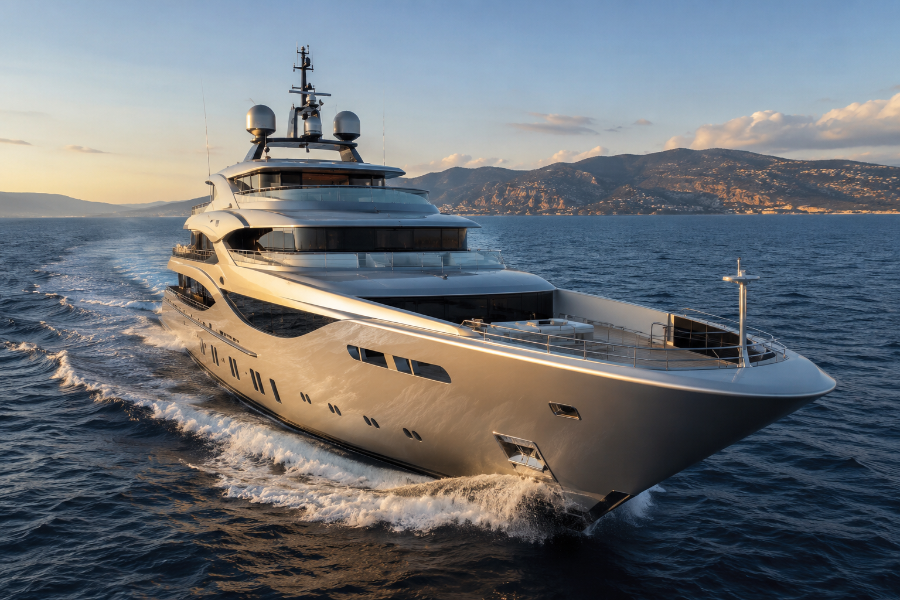
Meanwhile, superyacht asset management has evolved beyond leisure. Yachts now function as floating hospitality venues, networking environments, and mobile executive retreats. Family offices increasingly coordinate charter utilization strategies that offset ownership costs while preserving flexibility for personal use.
Luxury real estate has undergone similar changes. Rather than purchasing trophy homes purely for prestige, billionaires increasingly assemble geographically diversified property portfolios aligned with mobility, tax planning, and lifestyle flexibility objectives. Properties in financial hubs, resort destinations, and politically stable jurisdictions often support broader family office wealth trends.
Operational ecosystems surrounding UHNW assets now commonly include:
- Concierge management platforms
- Integrated travel coordination systems
- Asset utilization analytics
- Cybersecurity infrastructure
- Cross-border tax planning services
Additionally, luxury assets increasingly connect through centralized family office management systems. This integration allows affluent investors to monitor operational costs, usage patterns, staffing efficiency, and liquidity exposure more effectively.
Key Drivers Behind Luxury Asset Optimization in 2026
| Factor | Wealth Impact | Operational Benefit | Lifestyle Advantage | Industry Trend |
|---|---|---|---|---|
| Rising operating costs | Preserves liquidity | Improves efficiency tracking | Reduces unnecessary overhead | Greater asset consolidation |
| Economic uncertainty | Enhances capital flexibility | Encourages diversification | Supports mobility planning | Increased shared-access models |
| Tax optimization | Improves wealth preservation | Simplifies global compliance | Supports residency flexibility | Expansion of family offices |
| Fractional ownership growth | Reduces capital concentration | Improves utilization rates | Increases convenience | Private aviation expansion |
| Technology integration | Enhances oversight | Centralizes asset management | Streamlines lifestyle operations | Data-driven luxury ecosystems |
Why Family Offices Are Leading the Shift Toward Optimization?
Family offices have become central drivers of Luxury Asset Optimization. In 2026, many billionaire households operate sophisticated management structures resembling private investment firms rather than traditional wealth-administration offices.
These organizations increasingly rely on data-driven decision-making. Consequently, luxury holdings are evaluated according to utilization efficiency, maintenance costs, liquidity exposure, and strategic relevance. Family office executives often review luxury assets alongside alternative investments, private equity positions, and global real estate allocations.
Moreover, centralized oversight enables more effective operational coordination. Private aviation schedules, yacht staffing, property management, cybersecurity systems, and tax planning can all operate within a unified infrastructure. As a result, affluent investors gain improved visibility across complex global asset ecosystems.
Family offices are also expanding their role in luxury portfolio diversification. Many now oversee:
- Alternative investment growth
- Shared-access luxury partnerships
- Experiential luxury investments
- Sustainability-focused asset reviews
- Cross-border mobility planning
However, the sophistication of these structures also reflects generational change. Younger billionaire families increasingly demand digital transparency, flexible ownership structures, and technology-enabled reporting systems. Therefore, family offices are evolving into highly analytical operational hubs supporting both wealth preservation and lifestyle optimization.
How Shared Luxury Models Are Changing UHNW Ownership Trends?
Shared-access luxury models continue gaining momentum among ultra-high-net-worth investors. While exclusivity remains valuable, billionaires increasingly prioritize flexibility and efficiency over maintaining underutilized assets.
Fractional jet ownership has become particularly attractive. Rather than absorbing full aircraft ownership costs, many affluent investors now prefer structured access arrangements that provide convenience without operational complexity. Additionally, these models support liquidity preservation during uncertain economic cycles.
Superyacht charter utilization strategies are also becoming more common. Owners increasingly offset operational expenses through selective charter programs while maintaining private access windows for personal use. Consequently, yachts evolve into partially revenue-generating hospitality assets.
Co-investment luxury real estate structures have expanded as well. High-value properties in global gateway cities or resort destinations increasingly involve partnership models designed to reduce idle capital exposure.
Several shared luxury trends now dominate UHNW markets:
- Membership-based aviation programs
- Subscription-style concierge ecosystems
- Shared wellness and hospitality clubs
- Co-investment resort residences
- Flexible mobility access platforms
Nevertheless, these models also create challenges. Privacy concerns remain significant among billionaire families. Operational coordination can become complex, particularly when multiple stakeholders share usage schedules. In addition, security protocols require careful management across shared-access ecosystems.
Even so, flexibility increasingly outweighs rigid ownership structures for many affluent investors.
Luxury Asset Models Compared in 2026
| Asset Model | Flexibility Level | Cost Efficiency | Lifestyle Benefit | Ideal UHNW User |
|---|---|---|---|---|
| Full ownership | Moderate | Lower | Maximum control | Legacy-focused billionaires |
| Fractional ownership | High | Strong | Flexible access | Globally mobile executives |
| Charter utilization | Very high | High | Reduced operational burden | Experience-focused investors |
| Membership access | Extremely high | Very strong | Convenience and scalability | Younger UHNW professionals |
| Co-investment structures | Moderate to high | Strong | Shared diversification | Family office consortiums |
Why Younger Billionaires Are Reshaping Luxury Wealth Strategies
Younger wealthy generations are transforming luxury asset strategy in measurable ways. Unlike previous billionaire cohorts, many digital-native investors prioritize mobility, flexibility, and experiences over static ownership.
This generational shift influences everything from private aviation ownership to luxury real estate diversification. Younger billionaires often prefer adaptable access models that align with entrepreneurial lifestyles and global mobility patterns. Consequently, luxury ecosystems increasingly revolve around seamless service integration rather than asset accumulation.
Sustainability awareness also shapes emerging UHNW behavior. Many affluent younger investors scrutinize the environmental impact of yachts, aircraft, and large property portfolios more carefully than earlier generations did. Therefore, efficiency and responsible utilization increasingly influence luxury asset decisions.
Moreover, experiential luxury investments continue gaining momentum. Exclusive wellness retreats, curated networking environments, and personalized travel ecosystems often deliver stronger lifestyle value than maintaining rarely used physical assets.
Key generational shifts include:
- Preference for flexible ownership structures
- Digital-first wealth management expectations
- Increased sustainability awareness
- Focus on global mobility access
- Greater emphasis on experiential value
As a result, luxury asset optimization increasingly reflects broader cultural changes occurring across billionaire wealth management 2026 strategies.
Risks and Challenges Facing Luxury Asset Optimization
Despite its advantages, Luxury Asset Optimization presents meaningful risks. Operational complexity remains one of the largest concerns. Coordinating aircraft logistics, yacht staffing, international compliance, and cross-border tax frameworks requires substantial expertise.
Meanwhile, geopolitical uncertainty complicates global asset strategies. Regulatory changes, sanctions risks, and shifting residency rules can rapidly affect mobility planning and property ownership structures. Consequently, family offices must remain highly adaptive.
Rising maintenance costs also continue pressuring luxury holdings. Even optimized ecosystems require substantial staffing, insurance, cybersecurity protection, and infrastructure investment. In addition, sustainability scrutiny is intensifying across private aviation and superyacht sectors.
Several major risks shape UHNW asset strategies today:
- Cybersecurity threats targeting affluent households
- Privacy exposure through digital platforms
- Regulatory unpredictability
- Increasing operational expenses
- Reputational scrutiny regarding sustainability
Nevertheless, affluent investors continue refining optimization strategies because the broader benefits often outweigh these operational challenges.
Why Luxury Assets Are Becoming Productivity Tools
Luxury assets increasingly function as performance-enhancing infrastructure rather than passive status symbols. Consequently, billionaires now evaluate luxury holdings according to time efficiency, mobility enhancement, and relationship-building potential.
Private aviation ownership provides perhaps the clearest example. Aircraft allow executives to access multiple global markets within compressed schedules while maintaining privacy and operational control. Therefore, private aviation increasingly supports productivity as much as comfort.
Similarly, yachts now operate as high-level networking environments where business discussions, investment relationships, and family governance meetings can occur within highly controlled settings. In contrast to traditional hospitality venues, these environments offer privacy, personalization, and mobility simultaneously.
Luxury residences also support broader operational objectives. Strategically located homes provide access to financial hubs, regulatory flexibility, educational opportunities, and global lifestyle coordination. Moreover, experiential environments increasingly influence how affluent individuals build relationships and maintain business networks.
As a result, premium assets increasingly enhance:
- Executive time efficiency
- Global mobility coordination
- High-level networking opportunities
- Family governance operations
- Lifestyle continuity across jurisdictions
Luxury, therefore, increasingly revolves around optimized performance rather than visual display alone.
Why the Future of UHNW Wealth May Depend on Optimization Rather Than Ownership
The future of ultra-high-net-worth investments may depend less on accumulation and more on strategic optimization. Affluent investors increasingly prioritize adaptability, liquidity, and operational efficiency within interconnected luxury ecosystems.
Liquidity has become especially important in uncertain markets. Consequently, billionaires increasingly avoid tying excessive capital into underutilized physical assets. Instead, they favor structures that provide scalable access and operational flexibility.
Meanwhile, operational efficiency itself is becoming a subtle status marker among affluent circles. Sophisticated family offices now compete through technological integration, seamless service coordination, and intelligent asset utilization strategies. Luxury brands are responding by expanding concierge ecosystems, subscription platforms, and integrated mobility services.
Moreover, younger wealthy generations continue reshaping expectations surrounding ownership. Flexibility, personalization, sustainability, and global access increasingly define premium lifestyle experiences. Therefore, luxury ecosystems compete not only through exclusivity but also through convenience and operational sophistication.
This transformation reflects a broader cultural evolution within billionaire communities. Ultra-wealthy individuals increasingly value efficiency alongside exclusivity. Luxury assets now function as integrated business and lifestyle infrastructure rather than isolated trophies.
Consequently, the future of billionaire wealth management may revolve around building highly efficient, experience-driven ecosystems tailored to global lifestyles. Seamless mobility, strategic access, data-driven oversight, and operational performance are becoming just as important as prestige itself.
FAQs
What is luxury asset optimization?
Luxury asset optimization refers to the strategic management of high-value lifestyle assets such as private jets, yachts, luxury real estate, and experiential investments to maximize efficiency, flexibility, and long-term wealth preservation.
Why are billionaires rethinking luxury ownership?
Billionaires are reassessing ownership because rising operational costs, economic uncertainty, tax pressures, and changing generational preferences are encouraging more flexible and efficient asset strategies.
How do family offices manage luxury assets?
Family offices increasingly use centralized systems, analytics platforms, operational tracking, and global coordination strategies to oversee luxury assets alongside broader investment portfolios.
Why is fractional ownership becoming more popular?
Fractional ownership reduces capital concentration while providing flexible access to premium assets such as private aviation and luxury real estate.
How are luxury assets becoming operational tools?
Luxury assets now support mobility, networking, executive productivity, hospitality, and global lifestyle coordination rather than functioning solely as prestige symbols.
What trends are shaping UHNW wealth strategies in 2026?
Major trends include shared-access luxury models, family office expansion, technology integration, sustainability awareness, experiential investments, and global mobility planning.
Why are younger billionaires changing luxury investment behavior?
Younger billionaires often prioritize flexibility, digital transparency, mobility, sustainability, and personalized experiences over static ownership structures.
What challenges affect luxury asset optimization?
Operational complexity, cybersecurity threats, geopolitical uncertainty, sustainability scrutiny, and rising maintenance costs all influence modern luxury asset strategies.
How do billionaires balance lifestyle and liquidity?
Many affluent investors now use fractional ownership, charter utilization, diversified real estate structures, and flexible access models to preserve liquidity while maintaining premium lifestyles.
What is the future of luxury asset management?
The future will likely emphasize interconnected service ecosystems, operational efficiency, technology-driven oversight, flexible access models, and highly personalized global mobility solutions.