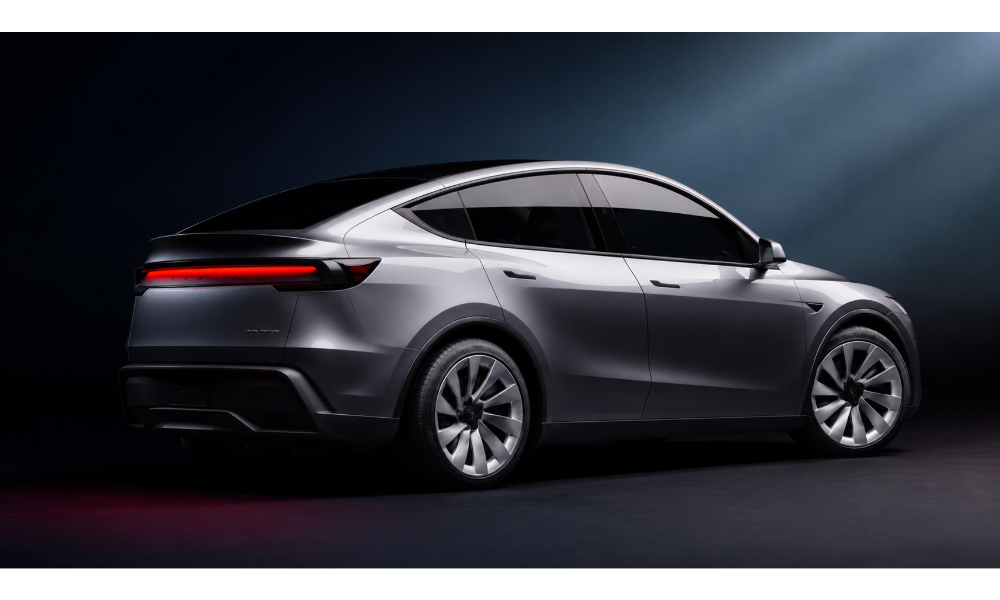
The global electric vehicle market has become far more crowded than it was just a few years ago. Legacy automakers now offer polished electric SUVs, while Chinese manufacturers are expanding aggressively across Europe, Asia, and emerging markets. However, Tesla Model Y Dominance remains one of the defining stories of the automotive industry in 2026.
The reason is not simply sales volume. The Tesla Model Y has become a benchmark for how modern consumers evaluate premium mobility. Buyers no longer choose vehicles only for badge prestige, engine refinement, or handcrafted interiors. Instead, many affluent consumers increasingly view vehicles as technology platforms. Therefore, the Model Y continues to attract attention because it combines transportation, software, connectivity, and digital convenience in a way many competitors still struggle to match.
Moreover, electric SUVs have become the preferred body style in the premium EV market. Families, executives, and technology-focused professionals want a vehicle that delivers spacious practicality without sacrificing status or performance. The Model Y fits that demand precisely. As a result, it remains among the world’s best-selling EVs and continues to lead across North America, Europe, and China.
Tesla also benefits from a strong ecosystem advantage. Its Supercharger network, software updates, and connected ownership experience create loyalty that goes beyond the vehicle itself. Meanwhile, BMW, Mercedes-Benz, Audi, BYD, and Hyundai continue investing heavily to close the gap. Nevertheless, Tesla’s brand recognition and operational scale still give it a meaningful lead.
Why Tesla Model Y Dominance Continues in 2026?
Tesla’s continued success with the Model Y begins with manufacturing scale. The company operates high-output production facilities in the United States, Germany, and China. Consequently, it can deliver vehicles faster and at lower cost than many premium competitors. That scale allows Tesla to maintain strong margins while keeping pricing competitive.
The Model Y is also Tesla’s most strategically important vehicle because it addresses the broadest audience. Sedans remain relevant, yet SUVs dominate global demand. Therefore, Tesla placed its most scalable technology into the body style most buyers want.
Several factors support that continued leadership:
- Global production hubs reduce delivery times
- Lower manufacturing costs support flexible pricing
- SUV practicality appeals to families and executives
- Familiar Tesla branding encourages repeat purchases
- Strong resale values increase buyer confidence
Additionally, Tesla’s ability to adjust pricing quickly gives it an advantage in a highly competitive market. While luxury rivals often struggle with dealer structures and regional pricing complexity, Tesla can change pricing globally through its direct sales model.
How Tesla Built the Most Powerful EV Ecosystem?
Tesla sells more than a vehicle. It sells an integrated ownership system that extends from charging to software to digital services. That is a major reason Tesla Model Y Dominance persists.
The Supercharger network remains central to this strategy. For example, long-distance travel in a Tesla often feels easier because charging locations are integrated directly into navigation. Drivers receive route planning, battery preconditioning, and charger availability in real time. In contrast, many rivals still rely on fragmented third-party charging providers.
Moreover, over-the-air updates keep the Model Y current long after purchase. Features improve without visiting a dealership. This changes ownership expectations in the luxury EV market.
Tesla’s ecosystem includes:
- Supercharger access
- Mobile app vehicle controls
- Remote diagnostics
- AI-assisted driving features
- Integrated energy products
As a result, buyers often remain within Tesla’s ecosystem for years, making switching less attractive.
Key Drivers Behind Tesla Model Y Dominance
| Factor | Consumer Benefit | Market Advantage | Luxury Appeal | Competitive Impact |
|---|---|---|---|---|
| Production Scale | Faster delivery | Lower cost | Wide availability | Hard to match |
| Supercharger Network | Easy charging | Infrastructure lead | Convenience | Strong loyalty |
| Software Updates | Continuous improvement | Product longevity | Tech prestige | Major differentiator |
| Pricing Strategy | Better value | Sales volume | Accessible premium | Pressures rivals |
| Brand Recognition | Trust | Global reach | Social status | Market resilience |
Why Affluent Buyers Continue Choosing the Tesla Model Y?
Luxury buyers are changing. Traditional markers such as wood trim, leather craftsmanship, and mechanical refinement still matter. However, younger affluent consumers increasingly prioritize digital convenience.
The Model Y appeals because it blends luxury with technology. Its minimalist interior may not feel traditionally opulent like a Mercedes-Benz EQE SUV, yet many buyers see that simplicity as modern sophistication. Moreover, the interface mirrors consumer electronics more than conventional automobiles.
Affluent buyers value:
- Executive-friendly space
- Strong acceleration
- Minimalist design
- Brand prestige in tech circles
- High resale value
Meanwhile, Tesla ownership often carries social signaling among technology professionals. The vehicle communicates innovation awareness rather than old-world luxury. Consequently, the Model Y resonates strongly with entrepreneurs, executives, and younger high-income urban buyers.
How the Model Y Compares With Luxury EV Rivals?
Competition in the premium electric crossover category has intensified. However, Tesla still holds important advantages.
BMW’s iX3 offers refined driving dynamics and traditional luxury quality. Mercedes focuses on cabin comfort. Audi emphasizes craftsmanship. BYD offers strong pricing. Hyundai delivers excellent value and design innovation. Nevertheless, Tesla combines software, charging, and scale more effectively than any single rival.
Key comparison areas:
- Tesla leads in software integration
- BMW leads in driving refinement
- Mercedes excels in cabin luxury
- Audi offers traditional premium craftsmanship
- BYD leads in aggressive pricing
- Hyundai offers strong design value
Tesla’s advantage is not perfection in every category. Instead, it offers the most complete ownership ecosystem.
Luxury EV SUV Comparison in 2026
| Model | Core Strength | Technology Advantage | Luxury Focus | Market Position |
|---|---|---|---|---|
| Tesla Model Y | Ecosystem | OTA software | Tech luxury | Global leader |
| BMW iX3 | Driving dynamics | Balanced systems | Executive premium | Strong Europe |
| Mercedes EQE SUV | Comfort | Advanced displays | Traditional luxury | Premium niche |
| Audi Q8 e-tron | Build quality | Solid integration | Classic prestige | Stable |
| BYD Sealion | Price | Fast innovation | Value luxury | Rising challenger |
| Hyundai Ioniq 5 | Design | Efficient platform | Modern mainstream | High growth |
The 2026 luxury EV SUV segment shows how different brands compete using distinct strengths rather than identical strategies. Tesla Model Y leads through its connected ecosystem, while European brands such as BMW iX3, Mercedes-Benz, and Audi continue focusing on traditional premium values like comfort, craftsmanship, and driving refinement.
Tesla’s Influence on Global Luxury EV Culture
Tesla has reshaped what luxury means in automotive markets. Historically, luxury depended on craftsmanship, materials, and heritage. However, Tesla introduced a different idea: technology as status.
Minimalist interiors are now common because Tesla proved many buyers prefer clean interfaces over complex dashboards. Consequently, competitors increasingly adopt larger displays and software-centric cabin layouts.
Tesla’s influence includes:
- EV ownership as a status symbol
- Digital-first luxury expectations
- Younger affluent buyer appeal
- Software-driven brand loyalty
- Lifestyle-oriented branding
As a result, the Model Y has become part of a broader cultural shift where mobility reflects digital identity.
Why Tesla Still Leads Despite Growing Competition?
Tesla’s leadership comes from execution speed. The company scales faster than many competitors because it controls manufacturing, software, and sales more directly.
Moreover, global brand recognition remains powerful. Tesla is one of the few EV brands instantly recognized across major international markets. Therefore, it benefits from trust even among first-time EV buyers.
Its advantages include:
- Manufacturing efficiency
- Direct sales model
- Global brand power
- AI-driven product marketing
- Ecosystem lock-in
However, pressure is increasing. Chinese automakers continue moving quickly, while established luxury brands are improving software capabilities.
Risks Facing Tesla Model Y Dominance
No market leader remains unchallenged forever. Tesla faces significant risks despite its current strength.
Pricing wars in China and Europe are intensifying. BYD and other Chinese manufacturers can undercut Tesla aggressively. Consequently, margins may tighten. Moreover, legacy automakers are gradually improving software and battery performance.
Risks include:
- Rising EV competition
- Political controversies
- Supply chain pressures
- Battery material costs
- Consumer expectation shifts
Nevertheless, Tesla’s current lead remains substantial because infrastructure and software advantages are difficult to replicate quickly.
Why the Model Y Represents the Future of Luxury Mobility?
The Model Y symbolizes the merging of technology and transportation. Consumers increasingly expect cars to behave like connected devices. Therefore, the future of premium mobility is less about mechanical engineering alone and more about digital integration.
Tesla recognized this earlier than most automakers. As a result, it positioned the Model Y as a lifestyle platform. Owners gain navigation intelligence, charging access, app integration, and software improvements in a unified ecosystem.
This is the deeper meaning of Tesla Model Y Dominance. It reflects a market shift where affluent buyers value:
- Seamless software
- Charging convenience
- Connected services
- Practical design
- Digital prestige
The Model Y proves that practicality can outperform exclusivity in the premium EV era. Moreover, it shows that luxury buyers increasingly prioritize convenience over traditional craftsmanship alone.
The Broader Meaning of Tesla Model Y Dominance
The success of the Model Y reveals a structural change in the luxury automotive market. Traditional prestige brands built loyalty through heritage and design language. Tesla built loyalty through ecosystem convenience.
That distinction matters. Affluent consumers increasingly compare digital experiences across all products they own. Smartphones, smart homes, and connected vehicles now form part of the same lifestyle. Therefore, Tesla’s integration creates long-term loyalty that many rivals still cannot match.
In contrast, some legacy automakers still treat software as an added feature. Tesla treats software as the product itself. Consequently, the Model Y continues to lead not because it offers the most lavish interior, but because it delivers a connected lifestyle platform.
FAQs
Why is the Tesla Model Y still so popular?
It combines SUV practicality, strong performance, software integration, and charging convenience in a highly recognizable global brand.
What makes the Model Y dominate the EV market?
Production scale, competitive pricing, software updates, and Tesla’s charging infrastructure are key drivers.
How does Tesla compare to luxury EV rivals?
Tesla leads in ecosystem integration, while brands like BMW and Mercedes often lead in traditional luxury refinement.
Why do affluent buyers choose Tesla?
Many affluent buyers value technology, convenience, and digital status as much as traditional automotive prestige.
Is the Tesla Supercharger network still an advantage?
Yes. It remains one of Tesla’s strongest competitive advantages globally.
How important is Tesla software integration?
It is central. Software defines navigation, updates, ownership experience, and brand loyalty.
What are the biggest competitors to the Model Y?
BMW iX3, Mercedes EQE SUV, Audi Q8 e-tron, BYD Sealion, and Hyundai Ioniq 5.
Does Tesla still lead in EV innovation?
Tesla remains influential, although competitors are narrowing the gap in batteries and software.
Why is the Model Y successful globally?
Its balance of practicality, pricing, performance, and infrastructure makes it broadly attractive.
Could Tesla lose EV market dominance in the future?
Yes. Stronger competition, pricing pressure, and market shifts could reduce Tesla’s lead over time.