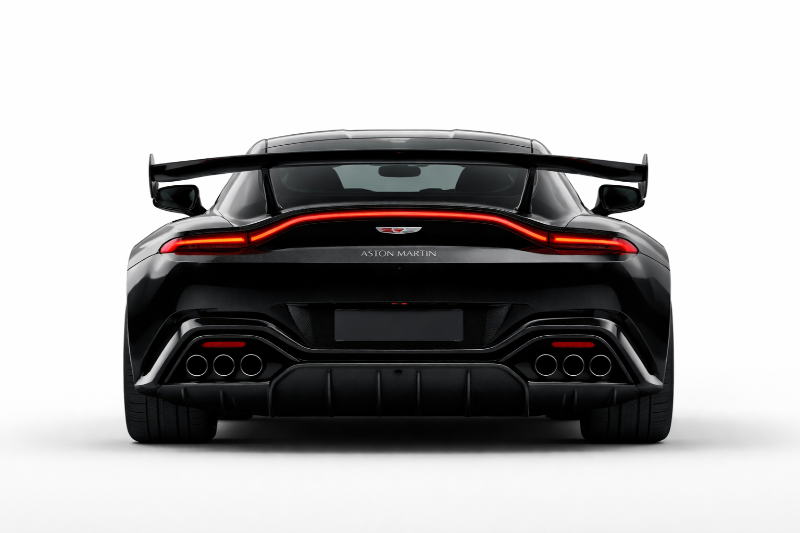
The Aston Martin Vantage RS prototype has recently been spotted undergoing high-intensity testing, and it is already generating serious attention in the performance car world. Caught on camera at the Nürburgring, the prototype appears to push the boundaries of Aston Martin’s current Vantage platform. What immediately stands out is its unusual eight-exhaust setup, a feature that has sparked widespread debate among enthusiasts and analysts.
At first glance, this development mule looks like a radical evolution of the standard Vantage. However, deeper inspection suggests this is not just a styling exercise. Instead, it appears to be part of a broader engineering program focused on extracting maximum track performance from Aston Martin’s already potent V8-powered sports car.
The Aston Martin Vantage RS prototype signals a potential return of a more aggressive, track-focused variant possibly reviving the RS or AMR naming strategy. With aerodynamic upgrades, chassis refinement, and experimental exhaust architecture, this model could sit at the top of the Vantage performance hierarchy in 2026.
Overview of Aston Martin Vantage RS Prototype
The Aston Martin Vantage RS prototype has been spotted testing under heavy camouflage, but several key details remain visible. The most notable observation is its aggressive stance and race-oriented modifications, indicating that this is not a simple facelift but a performance-driven evolution of the current generation.
The prototype has been seen pushing hard around Nürburgring’s demanding corners, suggesting that Aston Martin is focusing heavily on real-world track validation. This aligns with the brand’s ongoing push to compete more directly with high-performance track weapons from Germany and Italy.
Key observed characteristics include:
- Heavily camouflaged bodywork indicating active development
- Wider stance compared to the standard Vantage
- Fixed rear wing for increased downforce
- Prototype testing behavior at high-speed circuits
- Aggressive cooling and exhaust modifications
This suggests the Aston Martin Vantage RS prototype is still in an early-to-mid development stage, where both performance tuning and aerodynamic refinement are actively being tested.
Eight-Exhaust Setup Mystery Explained
The most controversial and discussed feature of the Aston Martin Vantage RS prototype is its eight-exhaust layout. The rear end shows a total of eight exhaust tips arranged in a dual-layer configuration: four outer pipes and four central pipes.
This is a significant departure from the standard Vantage, which uses a conventional quad-exhaust system. The unusual design immediately raises questions about whether all exhausts are functional or partially cosmetic.
Possible interpretations include:
- Dual exhaust routing system for testing different flow configurations
- Partial cosmetic mock-up for camouflage and design confusion
- Emissions and acoustic testing mule setup
- Heat distribution experiment for high-performance tuning
- Prototype disguise to mislead competitor analysis
However, industry observers suggest that not all eight exhausts are likely functional. Instead, this setup may allow engineers to experiment with multiple exhaust flow strategies during development.
The Aston Martin Vantage RS prototype therefore appears to be in a phase where engineering flexibility is prioritized over final production design.
Performance Context of the Vantage RS
Under the hood, the Aston Martin Vantage RS prototype is expected to continue using a heavily tuned version of the AMG-sourced 4.0-liter twin-turbocharged V8 engine. This engine already powers the latest Vantage and is known for its strong performance output.
Current performance baseline includes:
- Power output: ~656–670 hp
- 0–100 km/h: ~3.4 seconds
- Top speed: 200+ mph class
- Rear-wheel drive performance layout
For the RS variant, expectations include improved thermal management, sharper throttle response, and increased track durability rather than just raw horsepower gains.
Likely performance upgrades:
- Revised engine calibration for sustained track use
- Enhanced cooling system for high-load driving
- Transmission tuning for faster shifts
- Improved torque delivery in mid-range RPMs
The Aston Martin Vantage RS prototype is clearly being developed as a more focused machine, prioritizing consistent lap performance over straight-line acceleration gains.
Design & Aerodynamic Changes (Spy Evidence)
Spy shots of the Aston Martin Vantage RS prototype reveal several notable aerodynamic upgrades. The most obvious is the addition of a fixed rear wing, which suggests a serious focus on downforce and track stability.
Other visible design indicators include:
- Larger front splitter for improved front-end grip
- Rear diffuser enhancements for better airflow management
- Wider stance for increased stability in high-speed corners
- Lower ride height compared to standard Vantage
- Aggressive cooling duct modifications
These changes strongly indicate that the RS variant is being engineered for circuit performance rather than daily usability. The aerodynamic package alone suggests a significant increase in downforce levels compared to the standard model.
Key Comparison Table
| Feature | Aston Martin Vantage RS Prototype | Standard Vantage |
|---|---|---|
| Exhaust Layout | Eight-exhaust experimental setup | Quad exhaust |
| Aerodynamics | Fixed wing, aggressive splitter | Active aero, road-focused |
| Powertrain | Tuned AMG 4.0L V8 (expected) | AMG 4.0L V8 |
| Focus | Track performance | Balanced road + sport |
| Design Language | Race-inspired prototype styling | Luxury performance coupe |
Engineering & Powertrain Speculation
The Aston Martin Vantage RS prototype likely represents a deeper engineering evolution rather than a simple cosmetic upgrade. While the AMG-derived V8 remains the core power unit, the prototype’s configuration suggests significant recalibration work.
Engineering focus areas likely include:
- Advanced exhaust flow experimentation for performance tuning
- Improved thermal efficiency under track stress
- Suspension geometry revisions for sharper handling
- Brake system upgrades for repeated high-speed stops
- Weight reduction through lightweight materials usage
The unusual eight-exhaust setup may also indicate emissions or acoustic testing flexibility, allowing engineers to simulate different configurations during development.
Consequently, the Aston Martin Vantage RS prototype appears to be a multi-purpose engineering platform designed to validate multiple performance pathways before final production decisions are made.
Read also: Why Nissan’s e-Power Could Replace Traditional Hybrids in 2026
Why the Eight-Exhaust Setup Matters?
The eight-exhaust configuration is more than just a visual talking point. In performance car development, such experimental layouts often signal advanced testing stages where manufacturers evaluate airflow, backpressure, and sound tuning.
Possible reasons include:
- Multi-mode exhaust routing system testing
- Prototype disguise strategy for spy confusion
- Acoustic tuning for track-specific regulations
- Heat management experimentation under load
- Visual differentiation for halo model positioning
This setup strongly suggests that Aston Martin is pushing the boundaries of its Vantage platform. The Aston Martin Vantage RS prototype is likely being developed as a halo variant, sitting above the standard model in both performance and exclusivity.
Market Positioning of the Vantage RS
If brought to production, the Aston Martin Vantage RS prototype would likely sit at the top of the Vantage lineup. Its closest competitors would be high-performance track-focused machines from Europe.
Expected positioning:
- Above standard Vantage models
- Direct rival to Porsche 911 GT3 / GT3 RS segment
- Limited-production halo sports car
- Track-first engineering philosophy
Competitor Comparison Table
| Model | Power | Focus | Weight Philosophy | Track Intent |
|---|---|---|---|---|
| Aston Martin Vantage RS | ~670+ hp (expected) | Track-focused | Lightweight performance tuning | High |
| Porsche 911 GT3 RS | ~518 hp | Track weapon | Extreme lightweight focus | Very High |
| Ferrari 296 GTB | ~819 hp hybrid | Balanced performance | Hybrid efficiency focus | High |
| McLaren Artura | ~671 hp hybrid | Tech performance | Lightweight hybrid structure | Medium-High |
This positioning highlights that the Aston Martin Vantage RS prototype is aimed at serious enthusiasts who prioritize circuit capability over everyday comfort.
Why the Vantage RS Stands Out?
The Aston Martin Vantage RS prototype stands out mainly because of its experimental nature. Moreover, its extreme aero upgrades and unusual exhaust setup clearly show a bold new development direction from Aston Martin. Therefore, this prototype signals a major step toward a more track-focused future for the Vantage lineup.
Key standout factors:
- Rare eight-exhaust experimental setup
- Strong aero evolution compared to the base model
- Clear focus on track performance and lap times
- Likely limited-production exclusivity
- More aggressive stance than the standard Vantage
In addition, this mix of features suggests Aston Martin may want to push the Vantage into a higher performance class. Consequently, it could compete more directly with hardcore track-focused sports cars.
Performance vs Track Usability
The development direction of the Aston Martin Vantage RS prototype raises an important question: how far can performance go before road comfort suffers? While extra downforce and a stiffer setup improve lap times, they often reduce daily driving comfort.
Expected trade-offs include:
- Stiffer suspension for better cornering control
- Less comfort on normal roads
- Higher tire and brake wear in daily use
- Increased maintenance and running costs
However, these trade-offs are normal for RS-level performance cars. Moreover, manufacturers accept these limits because the main goal is maximum track performance, not daily comfort. Therefore, the Vantage RS prototype clearly targets serious driving enthusiasts rather than casual buyers.
Superyacht Industry Trends 2026
The Aston Martin Vantage RS prototype also reflects major industry trends in 2026. Despite strong pressure toward electrification, many brands still invest in high-performance internal combustion sports cars. Consequently, the demand for raw driving emotion remains strong.
Key Superyacht Market Trends:
- Return of track-focused ICE performance cars
- More aero testing in real-world prototypes
- Limited-edition halo models for brand value
- Mixing race engineering with road legality
- Strong demand for analog driving feel
Moreover, Aston Martin follows this direction closely with the Vantage RS prototype. Therefore, the brand continues to focus on emotional driving experience instead of full electrification in this segment.
Benefits and Limitations
Benefits
- Stronger track performance potential
- Better aerodynamic stability at high speed
- Strong brand halo effect for Aston Martin
- More engaging and sharp driving feel
- High exclusivity and collector appeal
Limitations
- Likely very high price
- Limited comfort for daily driving
- Prototype uncertainty about final design
- Stiffer ride quality on roads
- Niche market appeal only
Moreover, these limitations are typical for extreme performance models. However, buyers in this segment usually accept them in exchange for performance and exclusivity.
FAQ
What is the Aston Martin Vantage RS prototype?
It is a heavily modified test version of the Vantage. It likely previews a future high-performance RS or AMR model with a stronger focus on track driving.
Why does it have eight exhaust pipes?
The eight-exhaust setup likely supports testing and development. Some pipes may not work fully, as engineers may use them to test different exhaust flow setups.
Is it more powerful than the standard Vantage?
It will likely be more performance-focused. However, gains may come more from tuning, cooling, and handling rather than a huge power increase.
Will it become a production model?
A production version is not confirmed yet. However, strong testing activity suggests Aston Martin is seriously considering it.
Is it focused on track driving?
Yes. All spy evidence clearly shows a track-first design with aerodynamic and chassis upgrades aimed at circuit performance.