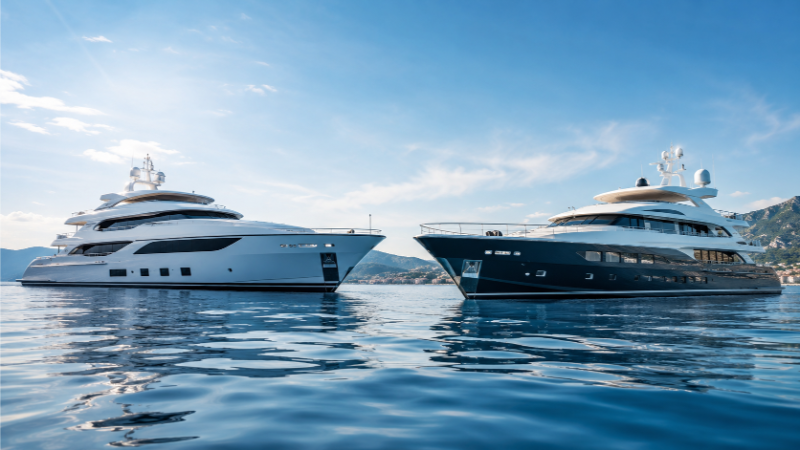
Owning a private yacht in 2026 is the ultimate symbol of luxury, freedom, and operational efficiency. For high-net-worth individuals, a private yacht is more than a vessel it represents status, lifestyle, and unparalleled convenience at sea. Unlike private yacht charters, ownership allows for complete control over itineraries, onboard experiences, and privacy.
Moreover, with advancements in technology, eco-friendly propulsion, and smart automation, yachts today combine sophistication with operational efficiency. The modern yacht owner can enjoy extended voyages without compromising comfort, while maintaining control over costs and maintenance.
Consequently, the private yacht market continues to expand globally, with trends highlighting personalization, hybrid technology, and high-end amenities. From the Mediterranean to the South Pacific, millionaires are investing in yachts not just for travel, but for networking, entertainment, and family leisure.
Private Yacht Ownership Trends in 2026
The private yacht industry in 2026 is marked by innovation, sustainability, and personalization. Key trends include:
- Eco-Friendly and Hybrid Yachts: Many new builds feature hybrid propulsion systems or fully electric engines, reducing emissions and operating costs.
- Smart Automation: Advanced technology allows for automated navigation, safety monitoring, and onboard climate control.
- Fractional Ownership: Shared yacht programs offer access to luxury yachts without the full financial commitment of outright ownership.
- Rising Demand: Ultra-high-net-worth individuals increasingly prefer private yachts over chartering, valuing privacy and exclusivity.
These trends indicate a shift from traditional ownership to technology-enhanced, environmentally conscious vessels, making yacht ownership both a lifestyle and strategic investment.
Why Millionaires Choose Private Yachts?
Millionaires often favor private yachts over chartered vessels for several reasons:
- Convenience and Control: Unlike charters, owners can travel on their own schedule without negotiating availability or paying recurring rental fees.
- Status Symbol: Owning a yacht signals wealth, exclusivity, and sophistication in social and business circles.
- Personalized Experiences: From bespoke itineraries to customized onboard amenities, owners enjoy tailored voyages.
Luxury yacht cruises offer immersive experiences, while operational efficiency ensures the yacht can be enjoyed without unnecessary stress or downtime.
Types of Yachts
Yachts come in various forms, each catering to different needs and lifestyles.
- Motor Yachts: Engine-powered vessels designed for speed, comfort, and long-distance cruising. Popular among those who prefer modern amenities and fast travel.
- Sailing Yachts: Traditional sailing vessels favored for leisure, sport, and eco-conscious navigation.
- Catamarans: Twin-hull yachts offering stability, spacious decks, and family-friendly layouts.
- Superyachts: Ultra-luxury yachts over 24 meters, equipped with multiple decks, spa facilities, cinemas, and gyms.
Yacht Type vs Luxury Features & Ideal Use
| Yacht Type | Luxury Features | Ideal Use |
|---|---|---|
| Motor Yacht | Spa, gym, cinema, multiple decks | Long-distance cruising |
| Sailing Yacht | Open deck, sail-driven, eco-friendly | Leisure, sport, exploration |
| Catamaran | Spacious cabins, stability, family-friendly | Family trips, social gatherings |
| Superyacht | Multiple decks, private chef, entertainment systems | Entertaining, luxury lifestyle |
Key Benefits of Private Yacht Ownership
Privacy and Exclusivity
Private yachts ensure complete discretion. Owners avoid crowded marinas or resort-based travel, allowing high-profile individuals to relax without intrusion.
Personalized Experiences and Itineraries
From selecting destinations to curating onboard events, owners have full control over their journey. Every cruise can be customized to match their lifestyle preferences.
Luxury Amenities Onboard
Modern yachts feature:
- Spa and wellness centers
- Private cinemas
- Fully equipped gyms
- Outdoor lounges and dining areas
These amenities allow travelers to enjoy a luxury yacht cruise experience comparable to a five-star resort, without ever leaving the vessel.
Operational Efficiency
Running a private yacht efficiently requires planning and expert management:
- Crew Management: Professional captains, chefs, and support staff ensure smooth operations.
- Maintenance and Refit Planning: Regular upkeep preserves yacht performance and value.
- Fuel Efficiency: Hybrid propulsion and smart navigation reduce fuel consumption and environmental impact.
Effective management ensures the yacht is ready for immediate travel, enhancing both convenience and return on investment.
Read also: Small Electric Boats for Lakes: Best Models, Prices & Buying Guide
Costs Involved in Private Yacht Ownership
Owning a yacht involves significant financial commitments beyond the initial purchase price. These costs vary widely based on the yacht’s size, age, usage, crew requirements, and marina location.
Purchase Price
- Small/Luxury Yachts (30–40 ft): ~$500,000–$2 million, depending on age and equipment.
- Mid‑Size Yachts (40–80 ft): ~$1 million–$8 million, often with basic crew onboard.
- Large/Superyachts (80 ft+): $5 million–$200 million+, with ultra‑custom designs and high‑end finishes commanding the top end of the scale.
Operating Costs (Annual)
- Rule of Thumb: Annual operating costs generally run 10 %–15 % of the yacht’s purchase price. For a $10 million yacht, that means roughly $1 million–$1.5 million per year.
Major Cost Categories
- Crew Salaries: For larger yachts, a full team including captain, engineers, stewards, and deckhands can cost $1.2 M–$1.8 M+ per year.
- Fuel & Operations: Depending on cruising frequency and speed, fuel costs can range from $30 k to several hundred thousand dollars annually for larger yachts.
- Insurance: Typically around 1 %–3 % of vessel value per year (e.g., $200 k–$400 k+ for a superyacht).
- Dockage & Marina Fees: Premium marinas may charge $30–120 per foot per month, easily adding $100 k+ annually on larger yachts.
- Maintenance & Repairs: Routine upkeep like hull servicing, engine checks, and refits can account for 10 %–15 % of value annually.
Depreciation and Resale Value
- Yachts generally depreciate fastest in the first few years (often 30 %–50 % on new builds).
- Well‑maintained yachts with current technology and desirable features tend to retain value better and are more attractive on resale markets.
Financing and Tax Considerations
- Sales Tax and VAT: In places like the U.S., sales tax can be 6 %–10 %+, while European VAT can reach 20 % depending on flag and port.
- Financing: Many owners leverage yacht financing to spread the initial cost over several years, but interest and fees should be factored into total ownership cost.
- Strategic Tax Planning: International owners often register yachts under flags or in jurisdictions with favorable tax rules to reduce duty, VAT, or import fees, which can significantly lower up‑front and ongoing costs.
Annual Operating Costs Breakdown
| Expense Category | Estimated Annual Cost ($) |
|---|---|
| Crew Salaries | 200,000 – 500,000 |
| Dockage & Marina Fees | 50,000 – 200,000 |
| Maintenance & Refit | 100,000 – 300,000 |
| Fuel & Utilities | 50,000 – 150,000 |
| Insurance | 25,000 – 100,000 |