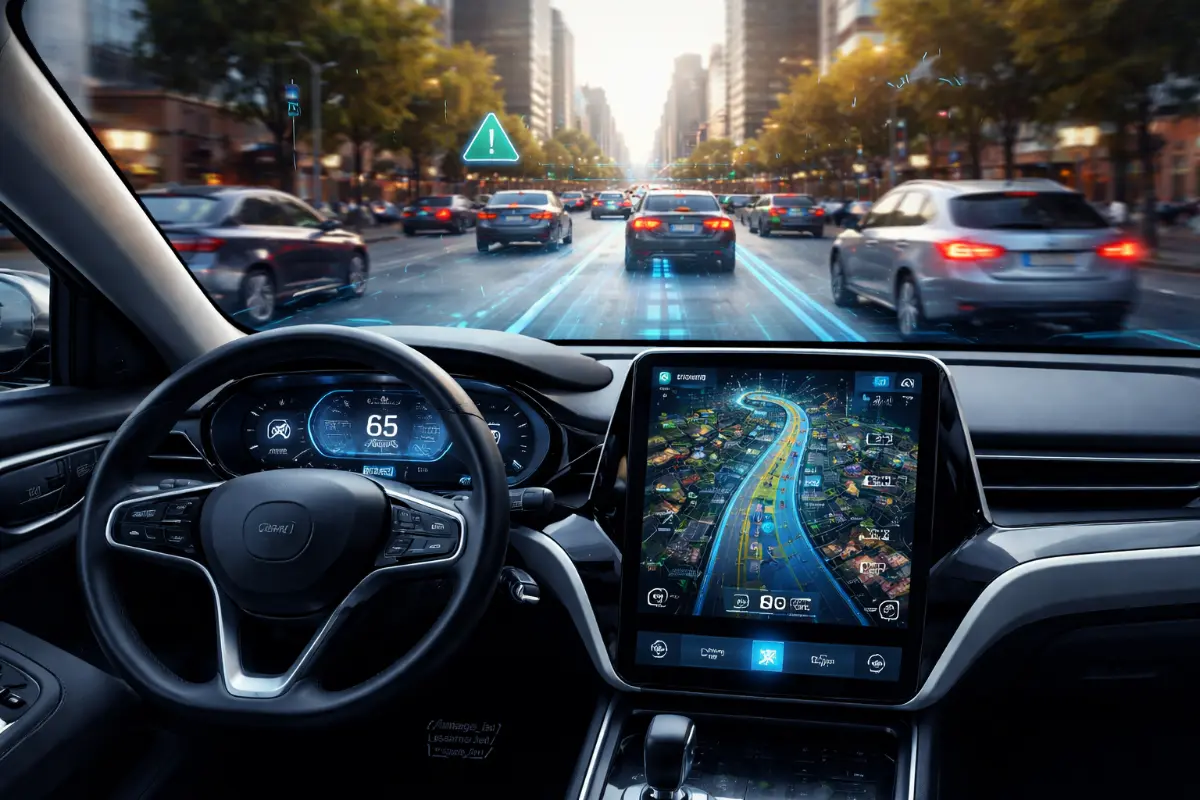
Modern roads are becoming more crowded every year. Urban populations are growing, and daily commutes are getting longer. As a result, automakers are developing smarter vehicles that can handle traffic more efficiently.
This is where Traffic-Smart Car Technology comes into play. These advanced systems help vehicles analyze traffic patterns, communicate with other cars, and adapt driving behavior automatically. Consequently, drivers experience smoother rides, shorter commute times, and safer journeys.
Today’s vehicles are not just machines with engines and wheels. They are intelligent platforms powered by sensors, artificial intelligence, and real-time data. Moreover, many modern cars can anticipate traffic congestion, adjust speed automatically, and even suggest better routes before drivers realize there is a problem ahead.
In this article, we will explore how Traffic-Smart Car Technology works, the systems behind it, and the vehicles that are leading this technological transformation.
The Rise of Traffic-Smart Car Technology
Traffic congestion has become one of the biggest challenges in modern cities. Long delays, fuel waste, and road accidents are common problems drivers face every day.
However, Traffic-Smart Car Technology is changing how vehicles interact with traffic conditions.
These technologies rely on a combination of:
-
Artificial intelligence
-
Advanced sensors
-
High-resolution cameras
-
GPS navigation
-
Cloud-based traffic data
-
Vehicle-to-vehicle communication
Together, these systems allow vehicles to make real-time decisions on the road.
For example:
-
Cars can automatically slow down when traffic ahead becomes dense.
-
Navigation systems can reroute drivers around accidents.
-
Smart cruise control maintains safe distances between vehicles.
Therefore, modern cars are becoming active participants in traffic management rather than passive machines.
Key Technologies That Help Cars Outsmart Traffic
AI-Powered Navigation Systems
Traditional navigation systems only provide directions. However, modern AI-powered navigation tools go much further.
They analyze:
-
Historical traffic patterns
-
Real-time road conditions
-
Weather conditions
-
Accident reports
Consequently, they can predict congestion before drivers reach it.
Benefits include:
-
Faster route suggestions
-
Reduced travel time
-
Dynamic rerouting during traffic jams
-
Better fuel efficiency
Many modern vehicles update navigation routes every few seconds based on live traffic information.
Adaptive Cruise Control
Adaptive Cruise Control (ACC) is one of the most widely used traffic-smart features in modern cars.
Unlike traditional cruise control, ACC automatically adjusts vehicle speed based on traffic conditions.
Key capabilities include:
-
Maintaining safe distance from vehicles ahead
-
Automatically slowing down in traffic
-
Accelerating when traffic clears
-
Reducing driver fatigue during long commutes
Moreover, advanced versions include Stop-and-Go functionality, allowing the vehicle to completely stop and restart in heavy traffic.
This is particularly useful in congested city environments.
Predictive Traffic Systems
Predictive traffic systems use large amounts of data to anticipate congestion.
These systems analyze:
-
Traffic sensors on roads
-
GPS data from thousands of vehicles
-
Navigation app data
-
Historical congestion patterns
Therefore, vehicles can detect potential traffic problems before they occur.
For example:
-
A car may suggest leaving earlier for a trip.
-
The navigation system may reroute around an accident.
-
Drivers receive alerts about upcoming congestion.
Consequently, commuters can avoid unnecessary delays.
Vehicle-to-Vehicle Communication (V2V)
Vehicle-to-vehicle communication allows cars to share information directly with nearby vehicles.
This technology enables cars to exchange data such as:
-
Speed
-
Position
-
Sudden braking events
-
Road hazards
As a result, vehicles can react to potential dangers faster than human drivers.
For example:
-
If a car brakes suddenly ahead, nearby vehicles receive an instant alert.
-
Cars approaching intersections can coordinate movement to reduce accidents.
Moreover, V2V communication forms the foundation of future autonomous driving systems.
How Automakers Integrate Smart Traffic Systems?
Creating intelligent traffic-aware vehicles requires advanced engineering and powerful computing systems.
Automakers combine multiple technologies to make Traffic-Smart Car Technology possible.
Sensors and Cameras
Modern vehicles contain dozens of sensors.
These include:
-
Radar sensors
-
LiDAR sensors
-
Ultrasonic sensors
-
High-definition cameras
Together, these devices detect:
-
Other vehicles
-
Pedestrians
-
Lane markings
-
Traffic signals
Consequently, the vehicle understands its environment in real time.
GPS and Cloud Data
GPS technology allows vehicles to track their precise location.
However, GPS alone is not enough. Modern systems connect to cloud servers that collect traffic data from millions of drivers.
This enables:
-
Real-time traffic monitoring
-
Instant route updates
-
Predictive congestion analysis
Therefore, drivers receive smarter navigation recommendations.
Real-Time Traffic Analytics
Traffic-smart cars continuously process large amounts of data.
Advanced onboard computers analyze:
-
Speed of surrounding vehicles
-
Distance between cars
-
Traffic flow patterns
Consequently, the vehicle can adjust its driving behavior to maintain optimal efficiency.
This level of analysis was impossible in older vehicles.
Traffic-Smart Car Technologies and Their Benefits
| Technology | Key Feature | Driver Benefit |
|---|---|---|
| AI Navigation | Real-time route optimization | Faster travel times |
| Adaptive Cruise Control | Automatic speed adjustment | Reduced fatigue |
| Predictive Traffic Systems | Traffic forecasting | Avoid congestion |
| Vehicle-to-Vehicle Communication | Data sharing between cars | Improved safety |
| Smart Traffic Alerts | Instant road condition updates | Better awareness |
These technologies work together to create a safer and more efficient driving experience.
Popular Cars Featuring Traffic-Smart Technology
Many automakers are integrating smart traffic systems into their vehicles. Some brands lead the industry with advanced driver assistance features.
Leading Examples
-
Tesla vehicles with AI autopilot capabilities
-
BMW models with intelligent driving assistants
-
Mercedes-Benz cars with advanced driver support
-
Toyota vehicles equipped with safety sense technology
-
Hyundai and Kia models with smart cruise control
Moreover, these technologies are gradually becoming standard even in mid-range vehicles.
Popular Vehicles with Traffic-Smart Features
| Vehicle Model | Starting Price | Smart Traffic Features | Availability |
|---|---|---|---|
| Tesla Model 3 | $40,000+ | AI navigation, autopilot, traffic-aware cruise | Global |
| BMW 5 Series | $58,000+ | Traffic jam assist, predictive navigation | Global |
| Mercedes E-Class | $60,000+ | Active distance assist, lane guidance | Global |
| Toyota Camry | $28,000+ | Adaptive cruise, lane assist | Global |
| Hyundai Sonata | $27,000+ | Smart cruise control, highway driving assist | Global |
Therefore, drivers have multiple options depending on their budget and feature preferences.
Benefits of Traffic-Smart Car Technology
Reduced Commute Times
One of the biggest advantages of Traffic-Smart Car Technology is faster travel.
Smart navigation systems constantly search for the most efficient routes.
Consequently, drivers spend less time stuck in traffic.
Enhanced Road Safety
Traffic-smart vehicles monitor surroundings continuously.
They can detect potential dangers and warn drivers early.
Safety improvements include:
-
Automatic emergency braking
-
Collision warnings
-
Lane departure alerts
-
Blind spot monitoring
Therefore, accidents can be prevented before they happen.
Improved Fuel Efficiency
Traffic congestion leads to unnecessary fuel consumption.
Smart systems reduce fuel waste by:
-
Avoiding stop-and-go traffic
-
Maintaining steady speeds
-
Optimizing routes
As a result, drivers save money and reduce emissions.
Reduced Driver Stress
Long traffic jams are stressful and exhausting.
However, smart driving systems handle many routine tasks automatically.
Drivers benefit from:
-
Automated speed adjustments
-
Traffic-aware cruise control
-
Real-time navigation updates
Consequently, commuting becomes much more comfortable.
The Future of Traffic-Smart Vehicles
The next generation of Traffic-Smart Car Technology will be even more advanced.
Several emerging trends are shaping the future of smart mobility.
Autonomous Driving
Self-driving technology is rapidly evolving.
Future vehicles will use traffic data, AI, and sensors to navigate roads without human input.
Consequently, traffic flow could become more organized and efficient.
Smart Cities
Cities are beginning to integrate connected infrastructure.
Examples include:
-
Smart traffic lights
-
Connected road sensors
-
Vehicle communication networks
Therefore, cars will interact with city infrastructure to optimize traffic flow.
Vehicle-to-Everything (V2X) Communication
V2X technology expands communication beyond vehicles.
Cars will connect with:
-
Traffic signals
-
Road infrastructure
-
Emergency vehicles
-
Public transport systems
As a result, traffic management will become highly coordinated.
Frequently Asked Questions
What is Traffic-Smart Car Technology?
Traffic-Smart Car Technology refers to advanced vehicle systems that analyze traffic conditions and automatically adjust driving behavior to improve safety and efficiency.
Do smart traffic systems reduce accidents?
Yes. Features such as adaptive cruise control, collision alerts, and vehicle-to-vehicle communication significantly improve road safety.
Are traffic-smart cars fully autonomous?
Not yet. Most vehicles still require driver supervision, although autonomous technology is rapidly advancing.
Do these systems work in all cities?
Most smart traffic features rely on GPS and cloud data, so they work in many regions. However, their effectiveness increases in cities with connected infrastructure.
Are traffic-smart features expensive?
Many advanced features were once limited to luxury vehicles. However, they are now becoming common even in mid-range cars.