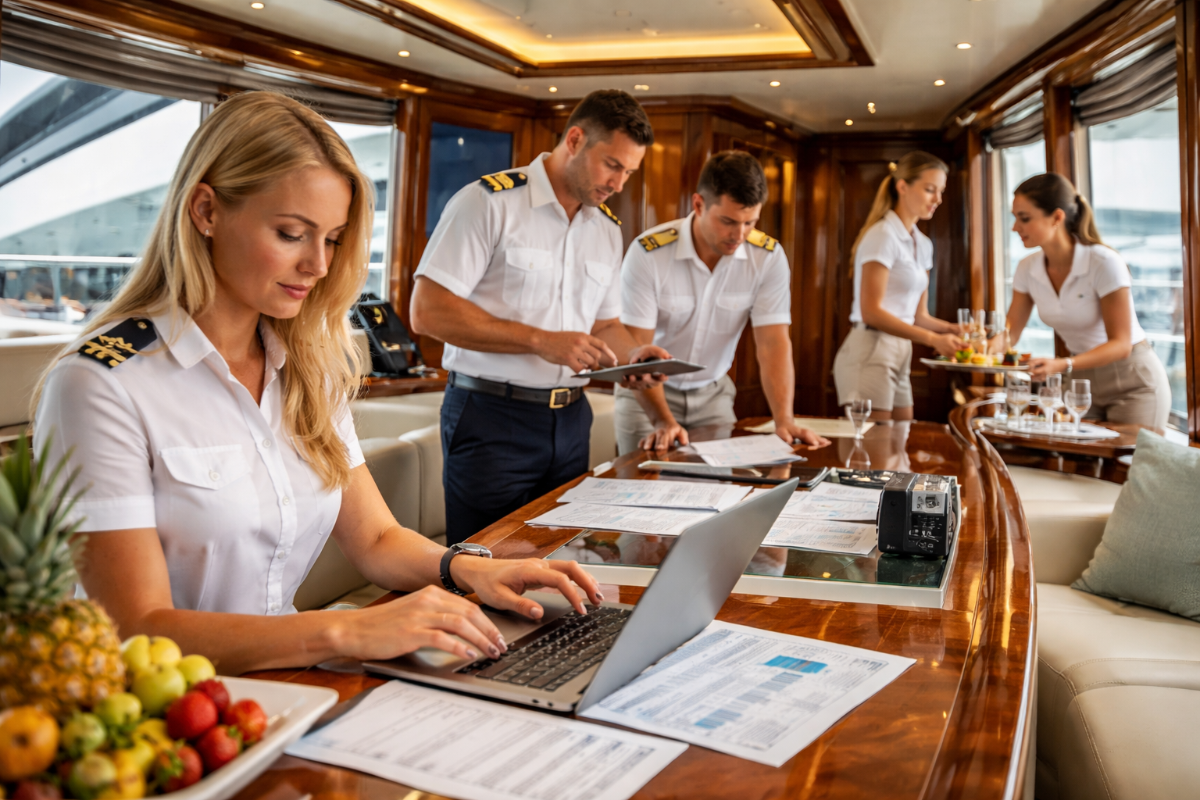
The luxury world of superyachts often evokes images of pristine decks, exotic destinations, and elite hospitality. However, behind the glamour lies a highly complex operational system that keeps these floating palaces running smoothly. One of the most complicated administrative tasks in this ecosystem is Superyacht Crew Payroll.
Managing payroll for superyacht crew is not as simple as transferring monthly salaries. Crews often come from multiple countries, work under different contract structures, and operate across various international waters and jurisdictions. As a result, captains, yacht managers, and owners must navigate tax laws, employment regulations, currency fluctuations, and maritime compliance standards.
Moreover, superyachts frequently move between regions such as the Mediterranean, Caribbean, and Asia-Pacific. Each region introduces different payroll considerations, creating additional administrative challenges. Consequently, managing Superyacht Crew Payroll requires specialized systems, compliance knowledge, and strong coordination between onboard staff and shore-based management teams.
This article explores the hidden complexity of Superyacht Crew Payroll, the global regulatory landscape, payment systems, compliance requirements, and the operational challenges faced by yacht owners and management companies.
The Global Superyacht Industry and Its Workforce
The global superyacht sector has experienced steady growth over the past decade. New builds, luxury charters, and expanding ownership markets have significantly increased the demand for skilled maritime professionals.
Superyachts typically employ diverse international crews. A single vessel may include crew members from Europe, Asia, South America, and Oceania. This diversity improves onboard service quality but complicates payroll management.
Moreover, crew rotation schedules, seasonal contracts, and temporary staff during charter seasons add further complexity.
Typical Crew Roles on Superyachts
Superyacht crews consist of multiple departments working together to ensure smooth operations.
Common crew positions include:
-
Captain
-
First Officer
-
Engineers
-
Deckhands
-
Stewardesses and Stewards
-
Chefs
-
Bosuns
-
Pursers
Each role often has different salary structures, benefits packages, and contract lengths. Therefore, managing Superyacht Crew Payroll requires precise record-keeping and coordination.
Why Superyacht Crew Payroll Is So Complex?
Managing payroll on land is already complicated. However, the maritime environment introduces additional variables that make Superyacht Crew Payroll uniquely challenging.
Multi-National Crew Members
Crew members usually come from different countries with varying tax obligations.
For example:
-
A British deckhand
-
A Filipino stewardess
-
A South African engineer
-
An Australian chef
Each crew member may be subject to different income tax rules depending on residency status, contract terms, and time spent at sea.
Moreover, payroll teams must ensure that tax compliance aligns with both maritime and national regulations.
Rotational Contracts
Unlike traditional employment structures, many superyacht crew members work rotational schedules.
Common rotations include:
-
2 months on / 2 months off
-
3 months on / 1 month off
-
Seasonal charter contracts
Consequently, payroll calculations must account for leave, rotations, and contract changes throughout the year.
Vessel Flag State Regulations
Every yacht operates under a flag state, which determines the legal jurisdiction governing employment conditions.
Popular flag states include:
-
Cayman Islands
-
Malta
-
Marshall Islands
-
Isle of Man
Each jurisdiction has specific maritime employment standards that influence payroll requirements.
Therefore, payroll managers must ensure compliance with the vessel’s flag state regulations.
International Regulations Affecting Superyacht Crew Payroll
The global maritime industry follows strict regulatory frameworks to protect crew welfare and maintain operational standards.
Several international regulations directly impact Superyacht Crew Payroll.
Maritime Labour Convention (MLC)
The Maritime Labour Convention (MLC 2006) sets minimum employment standards for seafarers worldwide.
It includes rules related to:
-
Timely wage payments
-
Employment contracts
-
Hours of work and rest
-
Crew welfare protection
Therefore, payroll systems must ensure that wages are calculated correctly and paid on time to meet MLC requirements.
Tax Residency Rules
Crew members often work in international waters for extended periods. However, they may still be subject to tax obligations in their home country.
Tax treatment depends on:
-
Residency status
-
Days spent in territorial waters
-
Local tax exemptions for seafarers
Consequently, payroll managers must carefully track employment records and work locations.
Social Security Contributions
Some crew members may be required to contribute to social security systems depending on their nationality or employment contract.
Examples include:
-
European Union social security frameworks
-
National insurance schemes
-
Maritime pension contributions
These factors directly influence Superyacht Crew Payroll calculations.
Payment Systems Used in the Superyacht Industry
Because superyachts operate globally, payroll payment methods must be flexible and reliable.
Below is a comparison of common payroll methods used in the industry.
| Payroll Method | Advantages | Disadvantages |
|---|---|---|
| Bank Transfers | Secure and widely accepted | International transfer fees |
| Digital Payroll Platforms | Automated calculations and compliance | Requires specialized software |
| Cash Payments | Immediate access for crew | Security risks and compliance concerns |
| Multi-Currency Accounts | Simplifies international payments | Requires financial management expertise |
Digital payroll systems are becoming increasingly popular. They automate calculations, manage exchange rates, and ensure compliance with international maritime regulations.
Moreover, these platforms reduce administrative workload for captains and pursers.
Managing Multi-Currency Crew Payments
Currency management is another major challenge in Superyacht Crew Payroll.
Superyachts frequently operate in different economic regions where exchange rates fluctuate regularly.
For example:
-
Mediterranean season may involve euros
-
Caribbean season often uses US dollars
-
Crew may prefer payments in their home currency
Consequently, payroll managers must balance operational efficiency with crew preferences.
Currency Conversion Challenges
Currency conversion introduces several financial considerations:
-
Exchange rate fluctuations
-
International bank fees
-
Payment delays
-
Financial reporting complications
Moreover, inaccurate conversions may result in incorrect salary payments.
Multi-Currency Payroll Systems
Many yacht management companies now use payroll platforms that support multi-currency accounts.
These systems offer benefits such as:
-
Automated exchange rate updates
-
Transparent payroll records
-
Faster international payments
-
Reduced banking fees
Therefore, digital payroll technology is becoming essential for efficient Superyacht Crew Payroll management.
Compliance Requirements Across Major Yachting Regions
Superyachts travel across global regions where compliance requirements vary significantly.
Below is a comparison of key payroll compliance considerations by region.
| Region | Key Payroll Considerations | Compliance Focus |
|---|---|---|
| Mediterranean | Seasonal charter contracts | EU labor and tax rules |
| Caribbean | Short-term charter operations | Local maritime regulations |
| United States | Strict employment compliance | Tax reporting requirements |
| Asia-Pacific | Growing superyacht markets | Immigration and visa rules |
Moreover, yacht management companies must ensure documentation is accurate when vessels enter new jurisdictions.
Failure to comply can lead to penalties or operational restrictions.
Challenges for Yacht Owners and Management Companies
Managing Superyacht Crew Payroll is not only a technical process but also a strategic responsibility for owners and management firms.
Several operational challenges arise in daily yacht operations.
Administrative Complexity
Manual payroll processes can quickly become overwhelming.
Payroll managers must handle:
-
Crew contracts
-
Leave tracking
-
tax documentation
-
currency conversions
-
compliance audits
Consequently, many yacht managers are transitioning to integrated digital systems.
Crew Satisfaction and Trust
Timely and accurate payroll payments are essential for maintaining crew morale.
Delayed payments or incorrect deductions can quickly damage trust between crew and management.
Moreover, experienced crew members often choose employers based on payroll reliability and transparency.
Legal and Financial Risk
Payroll errors may expose yacht owners and management companies to legal risk.
Possible consequences include:
-
Tax penalties
-
Regulatory fines
-
employment disputes
-
reputational damage
Therefore, maintaining a structured payroll system is essential.
Technology Transforming Superyacht Crew Payroll
Digital innovation is rapidly transforming how the maritime industry handles payroll administration.
Modern payroll platforms integrate multiple operational functions into one centralized system.
These systems often include:
-
Automated payroll calculations
-
Crew management databases
-
Document storage
-
Leave and rotation tracking
-
compliance monitoring
Moreover, digital tools provide real-time reporting that helps management companies monitor payroll across multiple vessels.
Consequently, technology is reducing administrative burden while improving accuracy.
The Future of Superyacht Crew Payroll
The superyacht industry continues to expand globally, with new markets emerging in Asia, the Middle East, and the Americas.
This growth will likely increase demand for skilled international crew members.
As a result, Superyacht Crew Payroll systems must evolve to handle:
-
larger multinational teams
-
stricter compliance standards
-
more complex tax regulations
-
growing digital integration
Moreover, automation and AI-driven payroll platforms are expected to become standard across large yacht fleets.
Therefore, investing in reliable payroll infrastructure will be essential for long-term operational success.
Frequently Asked Questions
What is superyacht crew payroll?
Superyacht crew payroll refers to the process of managing salary payments, contracts, taxes, and benefits for crew members working on superyachts operating internationally.
Why is superyacht crew payroll complicated?
It is complicated because crews come from multiple countries, operate under different tax rules, and work on vessels that travel between various jurisdictions.
How are superyacht crew usually paid?
Most superyacht crew members receive payments through international bank transfers or digital payroll systems that support multiple currencies.
Do yacht crew pay income tax?
Tax obligations depend on the crew member’s nationality, residency status, and maritime tax exemptions offered by certain countries.
What software is used for superyacht crew payroll?
Many yacht management companies use specialized maritime payroll platforms that automate payroll calculations, manage compliance, and support multi-currency payments.