In 2026, the most significant risk to a modern estate isn’t market volatility; it’s the silent depreciation of physical infrastructure. For the high-net-worth individual, a luxury residence is a portfolio of complex assets that require a proactive risk mitigation strategy. The swimming pool is a primary example of an infrastructure node that is often overlooked until a catastrophic maintenance failure occurs. Achieving operational excellence requires moving beyond traditional care and embracing autonomous systems that treat asset preservation as a measurable financial goal.
The current standard of estate management has shifted. It is no longer about the visibility of a maintenance crew; it is about the reliability of the “invisible” systems that protect the property’s valuation from the ground up.
Risk Mitigation Preventing Accelerated Asset Depreciation
A premium swimming pool is a delicate structural asset. Its surface integrity is under constant threat from the “sandpaper effect”—the abrasive wear caused by fine sediment and organic debris settling on the floor. When sand is allowed to accumulate, the physical movement of water and swimmers grinds these particles into the bespoke plaster, leading to micro-fissures and thinning liners. This isn’t a cosmetic issue; it’s a structural liability.
Regional contractors specializing in high-value properties report that a failure to manage this sediment can force a resurfacing project years ahead of schedule. At current 2026 labor and material rates, this is a significant five-figure hit to the property’s maintenance budget. Integrating a specialized inground pool vacuum such as the Sora 70 is a calculated move to extend the life of these surfaces. By providing consistent, surgical debris removal, these systems act as a physical insurance policy, ensuring the pool’s finish reaches its maximum lifespan without the need for premature capital injections.
Operational Logic Decoupling OPEX from Legacy Infrastructure
Modern estate management increasingly prioritizes the elimination of “ghost loads”—energy drains that offer zero return on investment. The legacy model of pool care is a prime example of this inefficiency. Relying on a centralized filtration pump to provide the hydraulic force for a suction cleaner is a high-cost, low-yield strategy. It forces a massive mechanical system to work at peak pressure for hours just to relocate a small volume of debris.
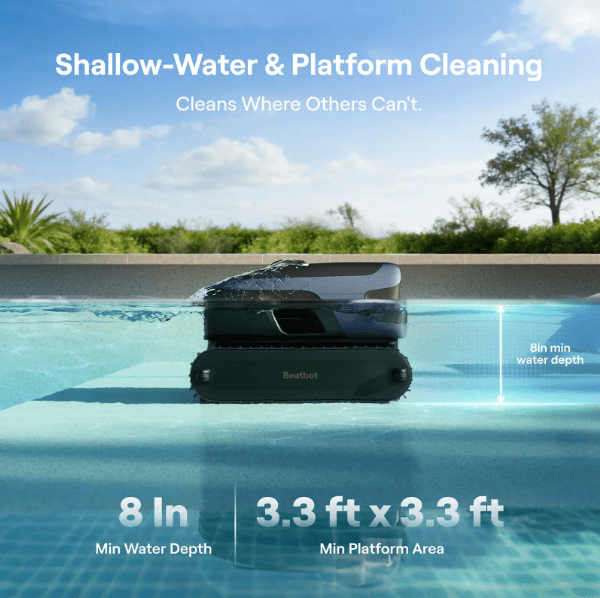
The transition to a dedicated robotic pool vacuum is a strategic shift toward hydraulic isolation. By delegating cleaning tasks to an independent, low-voltage unit, estate managers can allow the primary filtration loop to run at its most efficient, low-RPM baseline. High-performance units from brands like Beatbot utilize independent power and intelligent path planning to execute cleaning cycles with a fraction of the energy required by central plumbing. This precision-driven approach effectively slashes the daily energy footprint of the estate’s outdoor systems, turning a historically wasteful process into a lean, data-driven operation.
Optimizing Appraisal Value Through Automated Maintenance
A well-maintained pool is a significant multiplier for property appraisal. However, “well-maintained” in 2026 means more than just clear water. It means an environment that is free from the chalky mineral rings and organic buildup that eventually stain expensive masonry and tile work. Traditional cleaners often miss these high-visibility areas because they lack the spatial awareness to navigate complex pool geometries.
Advanced autonomous systems utilize sonar-based mapping to ensure that every square inch of the aquatic environment—floor, walls, and waterline—is scrubbed and filtered daily. This consistent removal of organic matter stabilizes water chemistry at the source. It reduces the dependency on aggressive chemical treatments that can degrade the pool’s heaters and plumbing over time. For the wealth manager, this is about reducing long-term replacement costs and maintaining the pristine “as-commissioned” state of the property.
Conclusion
The standard for elite property management has moved from manual oversight to automated reliability. In the high-performance residential landscape of 2026, the homes that command the highest valuations are those that treat maintenance as a foundational infrastructure.
Choosing to automate aquatic care is an exercise in wealth preservation. It transforms a labor-intensive liability into a self-sustaining asset that protects itself against the elements. As technology continues to evolve, the most valuable luxury an estate can offer is a frictionless environment that preserves its own value. Future-proofing your property starts with the systems that work in the background to ensure your most visible assets remain as pristine as the day they were built.