The luxury yacht industry has long symbolized opulence, innovation, and engineering mastery. However, in recent years a new priority has entered the spotlight: sustainability. As environmental awareness grows worldwide, shipbuilders, yacht owners, and designers are increasingly embracing eco-conscious technologies and practices. This shift has given rise to a powerful new concept in the marine world Sustainable Luxury Yachts.
Today’s high-end yachts are no longer judged solely by their size, speed, or interior elegance. Instead, environmental performance, energy efficiency, and responsible material sourcing have become essential considerations. Consequently, luxury yacht builders are integrating advanced propulsion systems, renewable energy technologies, and sustainable design philosophies into their vessels.
This article explores how sustainability is transforming the luxury yacht industry, the innovations driving change, and the future of eco-conscious superyachts.
Why Sustainability Matters in the Luxury Yacht Industry?
Luxury yachts operate in some of the world’s most pristine marine environments. From the Mediterranean to the Caribbean, these vessels navigate ecosystems that are highly sensitive to pollution and climate change. Therefore, reducing environmental impact has become a critical responsibility for yacht manufacturers and owners alike.
Traditionally, large yachts relied heavily on diesel engines that produced high levels of emissions. These emissions contribute to marine pollution, air quality issues, and climate change. Moreover, conventional yacht construction often involved materials and manufacturing processes that generated significant waste.
However, industry stakeholders now recognize the importance of balancing luxury with environmental stewardship. Sustainable yacht design aims to minimize ecological footprints while maintaining the comfort and sophistication that define the luxury experience.
Key reasons sustainability matters in this sector include:
-
Protection of marine ecosystems
-
Reduction of carbon emissions
-
Compliance with international environmental regulations
-
Rising demand from eco-conscious yacht buyers
-
Long-term operational efficiency
As a result, Sustainable Luxury Yachts are rapidly becoming the new standard rather than a niche innovation.
The Shift Toward Hybrid and Electric Yacht Propulsion
A major evolution in yacht engineering is happening in the way vessels generate and use propulsion power. Shipbuilders are gradually moving away from relying solely on conventional diesel engines and are adopting cleaner propulsion technologies. Consequently, modern yachts increasingly integrate hybrid and electric systems that deliver better fuel efficiency while reducing emissions and operational noise.
Hybrid Propulsion Systems
Hybrid propulsion solutions blend traditional marine diesel engines with electric motors and onboard battery banks. This configuration allows the yacht to switch between different power modes depending on cruising conditions and energy demand. For example, the vessel may rely on electric power for quiet, low-speed navigation in coastal areas, while diesel engines support higher speeds or longer offshore journeys.
For instance:
-
Diesel mode for high-speed cruising
-
Electric mode for silent, low-emission navigation
-
Hybrid mode for optimized fuel efficiency
Moreover, hybrid propulsion significantly reduces fuel consumption during low-speed cruising or when navigating protected marine areas.
Fully Electric Yachts
Fully electric yachts represent the next stage of sustainable innovation. These vessels rely entirely on battery-powered propulsion systems.
Benefits include:
-
Zero direct emissions
-
Extremely quiet operation
-
Lower vibration levels
-
Reduced maintenance requirements
However, battery capacity and charging infrastructure still present challenges for long-distance cruising. Consequently, hybrid propulsion currently remains the most practical solution for large yachts.
Traditional vs Hybrid Yacht Propulsion
| Feature | Traditional Diesel Yachts | Hybrid/Electric Yachts |
|---|---|---|
| Fuel Consumption | High | Lower |
| Emissions | High CO₂ output | Reduced or zero |
| Noise Levels | Loud engine noise | Silent or very quiet |
| Maintenance | Frequent servicing | Lower maintenance |
| Environmental Impact | Significant | Much lower |
As technology evolves, propulsion systems will continue to improve the sustainability profile of modern luxury yachts.
Eco-Friendly Materials and Sustainable Yacht Design
Beyond propulsion, yacht builders are rethinking how vessels are constructed. Sustainable yacht design focuses on reducing environmental impact throughout the entire lifecycle of the yacht.
Sustainable Materials
Shipyards now incorporate environmentally responsible materials into yacht construction and interiors.
Common eco-friendly materials include:
-
Recycled aluminum and steel
-
Bamboo and sustainably sourced wood
-
Recycled fabrics and carpets
-
Low-VOC paints and coatings
-
Composite materials with lower environmental impact
Moreover, these materials often deliver excellent durability while reducing resource consumption.
Lightweight Structural Design
Weight plays a crucial role in yacht efficiency. The lighter the vessel, the less energy it requires for propulsion. Consequently, naval architects increasingly rely on lightweight composite structures and optimized hull designs.
Hydrodynamic modeling also helps reduce drag and improve fuel efficiency. These innovations allow Sustainable Luxury Yachts to travel farther while consuming less energy.
Efficient Interior Layout
Interior design also contributes to sustainability. Modern yachts prioritize natural lighting, improved insulation, and optimized air circulation systems.
Therefore, onboard energy demand decreases without sacrificing comfort.
The Role of Solar Power and Energy-Efficient Systems
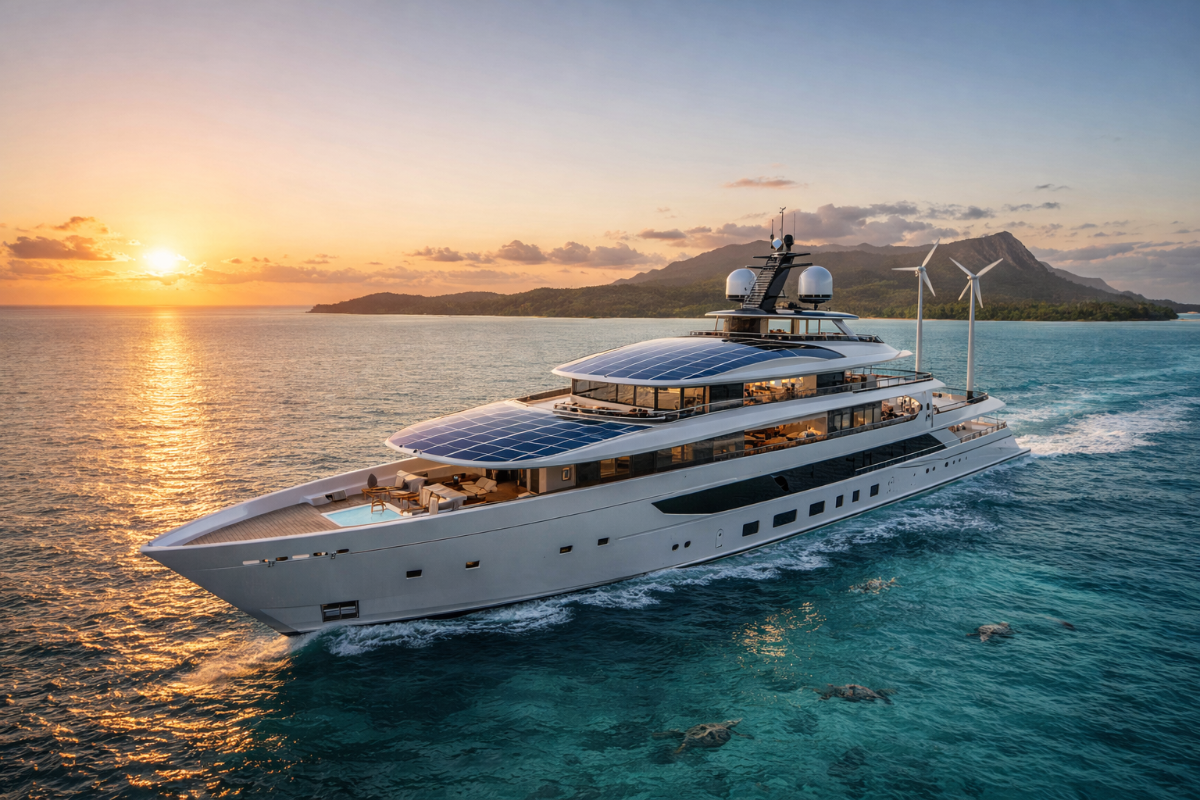
Clean energy solutions have become a major focus in modern yacht engineering. Designers increasingly integrate renewable power sources into yacht architecture to reduce dependence on traditional fuel systems. As a result, technologies such as onboard solar arrays and intelligent energy management platforms are helping modern vessels operate more efficiently while lowering their environmental footprint. Moreover, these systems allow yachts to generate supplemental electricity during cruising, which supports navigation equipment, lighting, and other onboard operations without placing additional load on diesel generators.
Solar Integration on Yachts
Solar panels installed on decks, roofs, or superstructures can generate renewable energy for onboard systems.
Typical applications include:
-
Lighting systems
-
Navigation equipment
-
Climate control support
-
Battery charging
Although solar power alone cannot fully power large superyachts, it significantly reduces reliance on generators.
Energy-Efficient Systems
Modern yachts also incorporate smart energy management systems that optimize power usage.
These systems monitor and control:
-
HVAC systems
-
Lighting
-
Water desalination
-
Battery storage
Consequently, energy consumption becomes more efficient and predictable.
Conventional vs Sustainable Yacht Systems
| Feature | Conventional Yacht Systems | Sustainable Yacht Systems |
|---|---|---|
| Power Source | Diesel generators | Hybrid + solar |
| Energy Efficiency | Moderate | High |
| Carbon Footprint | Large | Significantly reduced |
| Operational Cost | Higher fuel cost | Lower long-term cost |
| Environmental Impact | High | Reduced |
These technologies collectively support the transition toward more sustainable maritime luxury.
Regulations Influencing Greener Yacht Production
Regulatory pressure also plays a significant role in shaping the future of yacht sustainability.
International maritime organizations and national authorities are introducing stricter environmental standards to reduce pollution from marine vessels.
Key regulatory influences include:
-
Emission control areas (ECAs)
-
Limits on sulfur content in marine fuels
-
Carbon emission reduction targets
-
Waste management requirements
Moreover, ports and marinas increasingly favor environmentally friendly vessels. Some locations offer incentives or reduced docking fees for yachts that meet sustainability standards.
Consequently, yacht manufacturers must adapt their designs to remain compliant with evolving regulations.
How Shipyards and Owners Are Adopting Sustainable Innovation?
Leading yacht builders are investing heavily in sustainable technologies and research.
Shipyard Innovation
Modern shipyards focus on:
-
Energy-efficient manufacturing processes
-
Waste reduction strategies
-
Sustainable supply chains
-
Research into alternative fuels
Additionally, many shipyards now collaborate with environmental engineers and marine scientists to develop greener vessels.
Owner Demand
Yacht owners themselves are also driving change. Many high-net-worth individuals prioritize sustainability in their purchasing decisions.
Owners increasingly request features such as:
-
Hybrid propulsion
-
Solar power systems
-
Sustainable interiors
-
Waste reduction technologies
Moreover, environmentally responsible yachts align with the personal values and public image of many owners.
As demand grows, Sustainable Luxury Yachts are becoming a symbol of responsible luxury.
Future Trends in Eco-Conscious Superyachts
The evolution of sustainable yacht technology continues rapidly. Several emerging innovations could reshape the industry in the coming decades.
Hydrogen-Powered Yachts
Hydrogen fuel cells offer a promising zero-emission energy source. These systems generate electricity through a chemical reaction between hydrogen and oxygen, producing only water as a byproduct.
Although infrastructure challenges remain, hydrogen technology could revolutionize yacht propulsion.
Advanced Battery Technology
Next-generation batteries will provide greater storage capacity and faster charging times. Consequently, fully electric yachts may become practical for long-distance cruising.
AI-Based Energy Optimization
Artificial intelligence may soon manage onboard energy systems automatically. Smart algorithms could optimize power usage, propulsion efficiency, and battery performance in real time.
Circular Yacht Design
Future yachts may also embrace circular design principles. This approach focuses on:
-
Recyclable materials
-
Modular components
-
Easy upgrades and repairs
-
Reduced lifecycle waste
These innovations will further strengthen the role of Sustainable Luxury Yachts in the maritime industry.
Frequently Asked Questions
What are sustainable luxury yachts?
Sustainable luxury yachts are high-end vessels designed to minimize environmental impact through eco-friendly propulsion systems, renewable energy, and sustainable materials.
Are hybrid yachts better for the environment?
Yes. Hybrid yachts reduce fuel consumption and emissions by combining diesel engines with electric motors and battery systems.
Can yachts run completely on solar power?
Currently, solar power alone cannot fully power large yachts. However, it can significantly support onboard systems and reduce generator usage.
Do sustainable yachts cost more?
Initial costs may be higher due to advanced technology. However, operational costs often decrease because of improved fuel efficiency and lower maintenance requirements.
What is the future of eco-friendly yachts?
The future includes hydrogen propulsion, advanced batteries, AI-powered energy systems, and more sustainable construction methods.