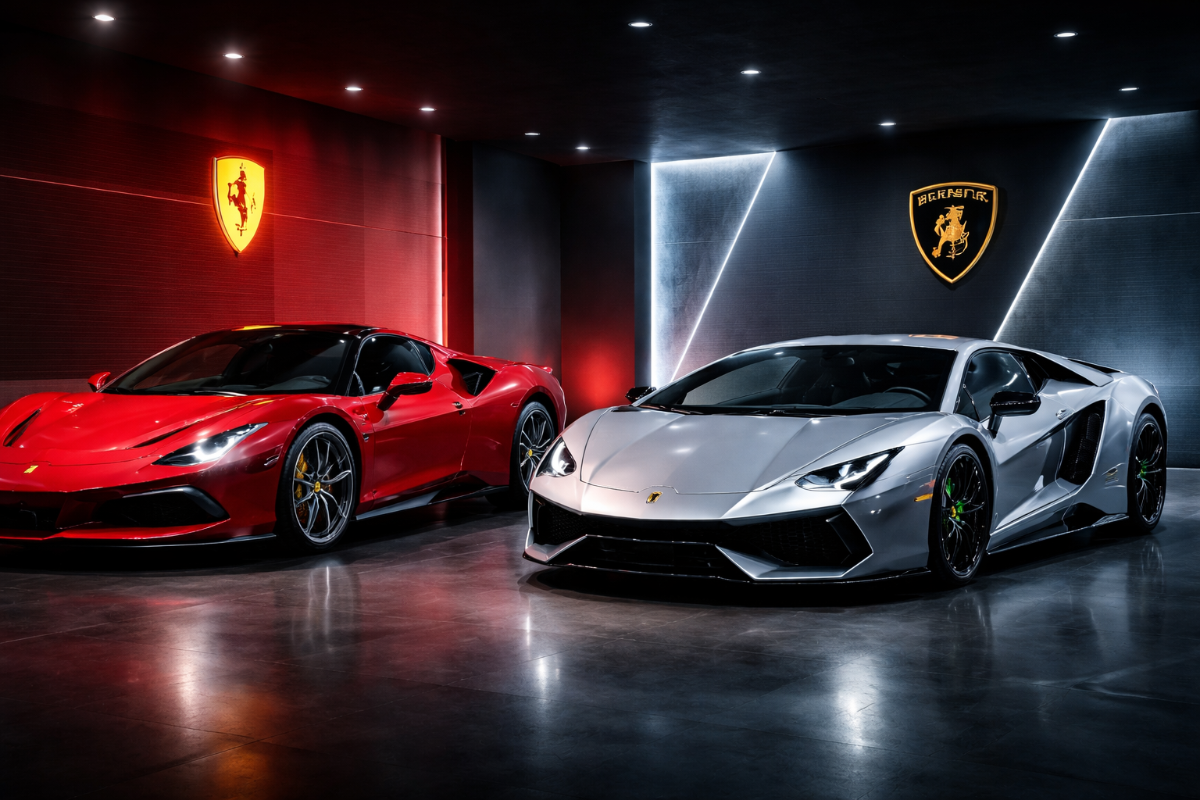
The high-performance automotive world is entering a new era. Electrification is reshaping how supercars are engineered, marketed, and experienced. While many luxury brands are accelerating their electric plans, others are moving more cautiously. This contrast is especially clear when examining the Ferrari vs Lamborghini EV Strategy.
Both brands share Italian heritage, extreme performance DNA, and loyal global fanbases. However, their electrification strategies are diverging. Ferrari is steadily pushing forward with hybrids and preparing for a fully electric supercar, while Lamborghini has chosen to slow its EV rollout and prioritize hybrid technology first.
This difference is not simply about technology. It reflects deeper brand philosophies, market expectations, and strategic investment decisions. Understanding the Ferrari vs Lamborghini EV Strategy helps explain how two iconic supercar manufacturers are navigating the transition to electric mobility.
Ferrari’s EV Roadmap and Hybrid Transition
Ferrari has embraced electrification as a way to enhance performance rather than replace it. The company views electric technology as an extension of its racing innovation.
The transition started with hybrid systems.
The Ferrari LaFerrari introduced hybrid technology in 2013, combining a V12 engine with an electric motor for improved power and efficiency. Since then, Ferrari has expanded its hybrid lineup with models such as the Ferrari SF90 Stradale and Ferrari 296 GTB.
These vehicles show how Ferrari integrates electric power without compromising its core identity.
Key Elements of Ferrari’s Electrification Strategy
Hybrid First Approach
Ferrari continues to develop plug-in hybrid powertrains. These systems deliver instant torque and improve acceleration while maintaining the emotional sound of combustion engines.
First Fully Electric Ferrari
Ferrari has confirmed that its first fully electric car will debut in 2025. Production will take place at a new facility in Maranello dedicated to electrified vehicles.
Technology From Racing
Ferrari’s Formula 1 experience heavily influences its EV strategy. Hybrid energy recovery systems used in racing are now appearing in road cars.
Performance Enhancement
Ferrari positions electrification as a performance upgrade. Electric motors fill torque gaps and improve handling through advanced torque vectoring.
Therefore, Ferrari’s roadmap shows a clear commitment to electrification while preserving the performance characteristics customers expect.
Lamborghini’s EV Timeline and Strategic Slowdown
Lamborghini is also investing in electrification, but its timeline is noticeably slower. The brand believes its customers still prefer the emotional experience of combustion engines.
Consequently, Lamborghini has focused heavily on hybrid technology before introducing a fully electric model.
Lamborghini’s Electrification Plan
The company’s strategy revolves around a program called Direzione Cor Tauri, which outlines its sustainability goals.
Key milestones include:
-
Hybridizing the entire lineup by the mid-2020s
-
Introducing the first fully electric Lamborghini in the second half of the decade
-
Reducing emissions while preserving engine character
However, Lamborghini executives have publicly expressed caution about rushing into EVs.
They argue that current battery technology cannot yet replicate the emotional appeal of high-revving engines.
As a result, Lamborghini’s EV strategy emphasizes delayed electrification combined with hybrid performance upgrades.
Ferrari vs Lamborghini EV Strategy: Key Differences
Although both brands aim to reduce emissions and meet regulatory requirements, their approaches differ in several important ways.
Electrification Timeline
| Strategy Element | Ferrari | Lamborghini |
|---|---|---|
| First Hybrid Supercar | LaFerrari (2013) | Sian (2019 mild hybrid) |
| Plug-in Hybrid Expansion | Multiple models already available | Hybrid rollout underway |
| First Fully Electric Car | Expected around 2025 | Planned after 2028 |
| Electrification Investment | Dedicated EV factory | Gradual hybrid transition |
| Technology Source | Strong F1 influence | Audi / Volkswagen group support |
Ferrari clearly leads in hybrid adoption and EV readiness. Lamborghini, however, prefers a cautious rollout.
Brand Philosophy Differences
The Ferrari vs Lamborghini EV Strategy also reflects how each brand defines performance.
Ferrari Philosophy
Ferrari sees electrification as an engineering opportunity.
Electric motors provide:
-
Instant torque
-
Faster acceleration
-
Improved traction control
-
Advanced power management
Therefore, Ferrari integrates electric technology into its core performance philosophy.
Lamborghini Philosophy
Lamborghini focuses more on raw emotional driving experiences.
For Lamborghini buyers, the drama of a screaming V10 or V12 engine is a major selling point.
Consequently, the company fears that full electrification might dilute its brand identity.
This difference explains why Lamborghini prefers to keep combustion engines alive for as long as possible.
Performance vs Electrification Debate
Electric vehicles deliver impressive performance numbers. Instant torque allows EVs to achieve incredible acceleration.
However, supercar enthusiasts often argue that performance is more than just speed.
Traditional Supercar Appeal
Supercars traditionally provide:
-
Engine sound and vibration
-
Mechanical engagement
-
High-revving power delivery
-
Driver feedback
Electric vehicles change that experience significantly.
EV Performance Advantages
Electric technology offers several benefits:
-
Faster acceleration
-
Lower center of gravity
-
Improved weight distribution
-
Advanced torque vectoring
Ferrari believes these benefits enhance the driving experience.
Lamborghini, however, worries about losing emotional engagement.
Therefore, the debate between performance and electrification continues within the supercar industry.
Regulatory Pressure and Emissions Targets
Government regulations play a major role in shaping the Ferrari vs Lamborghini EV Strategy.
Global emissions standards are becoming stricter every year.
Regions such as:
-
The European Union
-
The United States
-
China
are enforcing aggressive carbon reduction targets.
Impact on Supercar Manufacturers
Low-volume manufacturers once enjoyed regulatory flexibility. However, these exemptions are gradually disappearing.
Consequently, brands must reduce emissions to avoid penalties.
Ferrari has already taken steps to address this issue by expanding hybrid technology.
Lamborghini must follow similar paths, although its timeline is slower.
Investment and Market Positioning
Electrification requires enormous financial investment.
Developing EV platforms, battery systems, and manufacturing facilities costs billions of dollars.
Each brand manages its electrification investments differently.
Ferrari Investment Strategy
Ferrari operates as an independent luxury performance brand. It invests heavily in internal research and development.
The company recently expanded its Maranello facilities to support EV production.
This move signals long-term commitment to electrification.
Lamborghini Investment Strategy
Lamborghini benefits from support within the Volkswagen Group, particularly from Audi’s EV research and technology platforms.
Therefore, Lamborghini can delay EV development slightly while relying on group resources.
Strategic Positioning
| Strategic Factor | Ferrari | Lamborghini |
|---|---|---|
| Ownership Structure | Independent luxury brand | Part of Volkswagen Group |
| EV Investment Model | Internal R&D and facilities | Shared technology platforms |
| Market Position | Innovation-driven performance | Emotion-driven performance |
| Customer Messaging | Electrification improves speed | Combustion emotion still essential |
| EV Launch Urgency | High | Moderate |
These strategic differences strongly influence how each brand approaches electrification.
Customer Expectations and Collector Mindset
Supercar buyers are not typical car consumers. Many customers are collectors who value exclusivity and heritage.
This makes electrification particularly complex for brands like Ferrari and Lamborghini.
Ferrari Customer Base
Ferrari buyers often appreciate technological innovation.
Many collectors see hybrid Ferraris as the next evolution of performance engineering.
Therefore, electrified Ferraris are generally well received.
Lamborghini Customer Base
Lamborghini customers often prioritize drama, sound, and emotional impact.
The aggressive styling and roaring engines define the brand’s appeal.
Consequently, Lamborghini must introduce EVs carefully to avoid alienating its audience.
Frequently Asked Questions
Why is Ferrari moving faster toward electric vehicles?
Ferrari views electrification as a performance advantage. Electric motors improve acceleration, handling, and power delivery.
When will Ferrari release its first electric car?
Ferrari plans to launch its first fully electric vehicle around 2025.
Why is Lamborghini slowing down its EV rollout?
Lamborghini believes its customers still value combustion engine sound and emotion. Therefore, it prefers a hybrid transition first.
Will Lamborghini eventually produce electric supercars?
Yes. Lamborghini plans to introduce its first fully electric model later in the decade.
Are electric supercars as exciting as traditional ones?
Electric supercars offer incredible acceleration and advanced technology. However, some enthusiasts miss the sound and mechanical engagement of combustion engines.
The Future of Electric Supercars
The Ferrari vs Lamborghini EV Strategy highlights two possible paths for high-performance electrification.
Ferrari is betting that electric technology can enhance the supercar experience.
Lamborghini believes emotional driving engagement still depends on combustion engines.
However, the industry is evolving rapidly.
Battery technology is improving.
Charging infrastructure is expanding.
Governments continue to push toward zero-emission mobility.
Therefore, even the most traditional supercar brands will eventually transition to electric power.
The question is not if but how quickly.