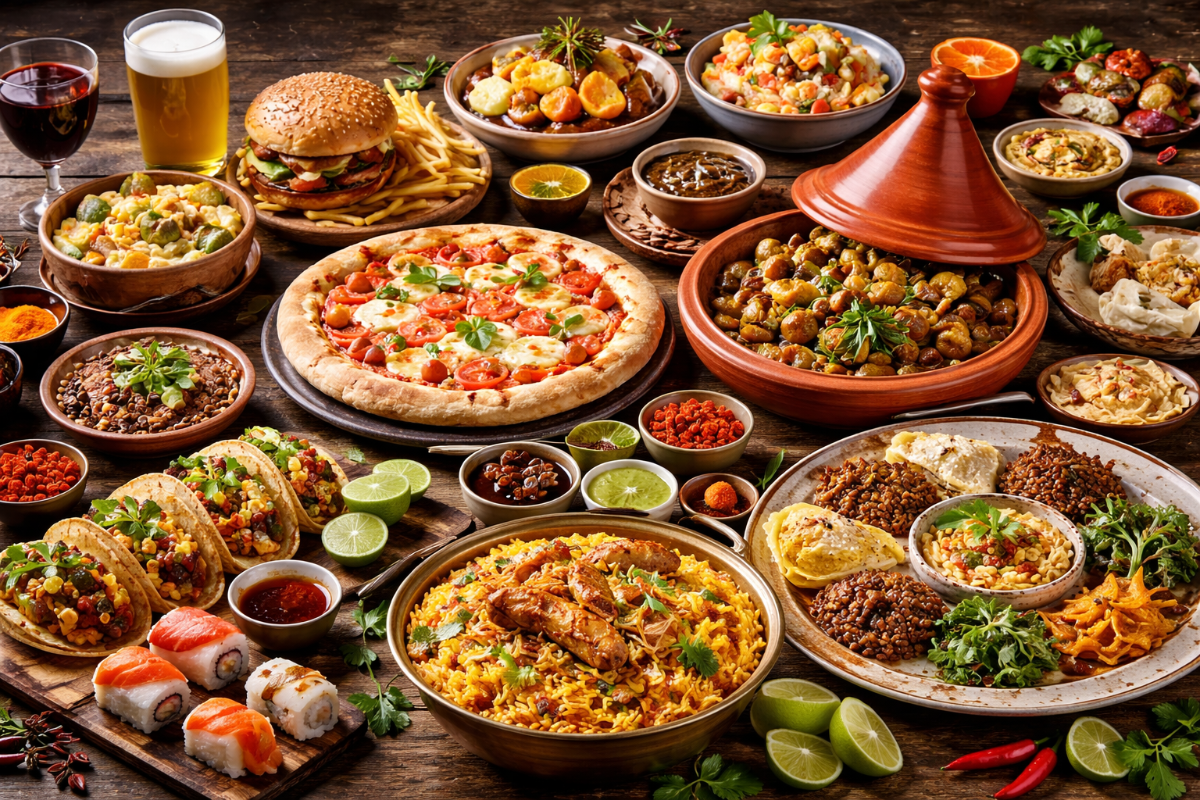
Food is never just food. It is memory, migration, identity, and survival served on a plate. When we explore Famous Traditional Foods Around the World, we uncover more than recipes we encounter centuries of history, climate adaptation, spiritual practice, and community rituals. Every national dish carries a narrative shaped by geography, trade routes, colonization, and local ingenuity.
For travel enthusiasts and culinary students alike, Famous Traditional Foods Around the World offer insight into how societies evolved. Ingredients reveal agricultural patterns; cooking techniques expose technological advancement; spices trace ancient trade networks. Moreover, traditional dishes often reflect religious guidelines, seasonal cycles, and social hierarchy.
In today’s interconnected era, Famous Traditional Foods Around the World continue to influence tourism, hospitality, and global dining trends. Street food markets, heritage restaurants, and culinary festivals now function as cultural gateways. Consequently, cuisine has become one of the strongest ambassadors of national identity, bridging borders through shared sensory experience.
North America: Heritage Shaped by Migration
North American cuisine is a tapestry woven from Indigenous traditions, European colonization, and modern multiculturalism.
United States – Hamburger & Southern Barbecue
The hamburger, often considered quintessentially American, evolved from German minced beef traditions brought by immigrants in the 19th century. However, Southern barbecue reflects deeper regional diversity. Slow-cooked meats smoked over wood represent both Indigenous cooking techniques and African influences introduced during the transatlantic slave trade.
-
Key Ingredients: Beef, pork, corn, beans
-
Techniques: Smoking, grilling, slow roasting
-
Cultural Significance: Community gatherings, state fairs, regional pride
-
Global Popularity: Extremely high
Mexico – Tacos & Mole
Mexican cuisine, recognized by UNESCO as Intangible Cultural Heritage, blends Indigenous maize-based traditions with Spanish-introduced livestock and spices. Tacos showcase corn tortillas filled with meats, vegetables, or seafood. Mole, however, represents culinary complexity often combining chili peppers, chocolate, seeds, and spices.
-
Historical Influence: Aztec and Mayan foodways, Spanish colonization
-
Religious Significance: Festival dishes tied to Catholic celebrations
-
Tourism Impact: Major driver of culinary tourism
South America: Indigenous Roots with Colonial Layers
South American gastronomy reflects Andean agriculture, Amazonian biodiversity, and Iberian influence.
Peru – Ceviche
Ceviche, Peru’s national dish, uses fresh fish cured in citrus juice. Pre-Columbian civilizations prepared similar dishes, later adapted with Spanish-introduced limes.
-
Key Ingredients: Fresh fish, lime, chili, onion
-
Technique: Acid-based curing
-
Global Popularity: Rapidly expanding in fine dining
Brazil – Feijoada
Feijoada, a black bean and pork stew, reflects Portuguese culinary structure combined with African and Indigenous contributions.
-
Cultural Context: Traditionally served on Wednesdays and Saturdays
-
Historical Roots: Colonial plantation era
-
Modern Adaptation: Upscale reinterpretations in urban restaurants
Europe: Tradition Anchored in Regional Identity
European cuisine demonstrates strong ties to terroir—the relationship between land and flavor.
Italy – Pasta & Pizza
Italian pasta traditions trace back to ancient Roman grain culture, later refined regionally. Pizza originated in Naples as a working-class street food before achieving global fame.
-
Staples: Wheat, olive oil, tomatoes
-
Technique: Hand-rolled pasta, wood-fired baking
-
Global Adaptation: Fusion toppings worldwide
France – Coq au Vin
French gastronomy emphasizes technique. Coq au Vin—chicken braised in wine—reflects rural resourcefulness and the refinement of classical French cooking methods.
-
Historical Influence: Medieval peasant cuisine
-
Tourism Impact: Culinary schools and Michelin-star dining
Country & Signature Dish Table
| Country | Famous Dish | Key Ingredients | Cultural Significance | Global Popularity Level |
|---|---|---|---|---|
| USA | Hamburger | Beef, bun, lettuce | Fast-food icon, national identity | Very High |
| Mexico | Tacos | Corn tortilla, meat, salsa | Street food tradition | Very High |
| Peru | Ceviche | Fish, lime, chili | National pride | High |
| Italy | Pizza | Dough, tomato, cheese | Regional heritage (Naples) | Extremely High |
| France | Coq au Vin | Chicken, wine, herbs | Classical culinary technique | High |
| Morocco | Tagine | Meat, spices, dried fruit | Communal dining | Moderate-High |
| Japan | Sushi | Rice, seafood, seaweed | Ritualized preparation | Extremely High |
| Pakistan | Biryani | Rice, meat, spices | Celebration dish | Very High |
Africa: Flavor Through Trade and Adaptation
African cuisine is incredibly diverse, shaped by trade routes across the Sahara, Indian Ocean exchanges, and colonial restructuring.
Morocco – Tagine
Named after the earthenware pot it’s cooked in, tagine combines meat, vegetables, preserved lemons, and spices like cumin and cinnamon.
-
Technique: Slow braising
-
Historical Influence: Arab and Berber traditions
-
Religious Context: Often served during Ramadan
Ethiopia – Injera & Doro Wat
Injera, a fermented flatbread made from teff, accompanies spicy stews such as Doro Wat.
-
Cultural Significance: Communal eating from a shared platter
-
Historical Roots: Ancient grain cultivation
-
Tourism Influence: Growing global recognition
Middle East: Spice Routes and Sacred Traditions
Middle Eastern cuisine reflects ancient Mesopotamian agriculture and Silk Road trade networks.
Lebanon – Mezze & Kibbeh
Lebanese cuisine emphasizes mezze—small shared plates that encourage hospitality.
-
Staples: Chickpeas, olive oil, lamb
-
Technique: Grilling, stuffing, blending
-
Cultural Value: Hospitality and family unity
Turkey – Kebabs
Ottoman culinary traditions influenced Balkan, Middle Eastern, and Central Asian cuisines.
-
Historical Influence: Imperial trade networks
-
Global Spread: Street food adaptation worldwide
Asia: Deeply Layered Culinary Civilizations
Asia’s food culture is shaped by monsoons, river systems, religious philosophies, and dynastic trade.
Pakistan – Biryani
Biryani holds ceremonial significance in Pakistan, often prepared for weddings and religious celebrations. Introduced through Mughal influence, it combines Persian layering techniques with South Asian spices.
-
Ingredients: Basmati rice, meat (chicken, beef, mutton), saffron
-
Technique: Dum cooking (sealed slow steaming)
-
Global Adaptation: Diaspora restaurants worldwide
India – Thali & Curry Traditions
Indian cuisine varies dramatically by region. Thali offers a structured presentation of diverse flavors—sweet, spicy, sour, bitter.
-
Religious Influence: Vegetarianism linked to Hindu and Jain practices
-
Historical Trade: Spice trade shaped global economy
Bangladesh – Hilsa Fish
Hilsa represents national identity and seasonal celebration.
-
Cooking Style: Mustard-based curries
-
Cultural Context: Harvest festivals
Afghanistan – Kabuli Pulao
Kabuli Pulao combines rice, raisins, carrots, and lamb, reflecting Silk Road exchange.
-
Historical Influence: Persian and Central Asian trade
-
Symbolism: Hospitality and abundance
Japan – Sushi
Originally a preservation method, sushi evolved into a refined culinary art.
-
Technique: Vinegared rice balancing
-
Tourism Impact: Culinary pilgrimage destination
Culinary Influence Matrix
| Region | Staple Ingredients | Cooking Technique | Historical Influence | Tourism Impact |
|---|---|---|---|---|
| North America | Corn, beef, beans | Grilling, smoking | European migration | High |
| South America | Fish, potatoes, beans | Curing, stewing | Indigenous + Spanish | Growing |
| Europe | Wheat, dairy, wine | Baking, braising | Medieval agriculture | Very High |
| Africa | Millet, spices | Slow cooking | Trans-Saharan trade | Emerging |
| Middle East | Chickpeas, lamb | Grilling, roasting | Silk Road | High |
| Asia | Rice, spices | Steaming, stir-frying | Mughal & maritime trade | Extremely High |
| Oceania | Seafood, root crops | Earth oven cooking | Polynesian navigation | Niche but growing |
Oceania: Indigenous Knowledge Meets Modern Cuisine
Australia – Meat Pie
British colonial influence shaped Australian cuisine. The meat pie became a working-class staple.
New Zealand – Hangi
Hangi is a Maori earth-oven cooking method where food is buried with heated stones.
-
Cultural Significance: Ceremonial gatherings
-
Technique: Slow steaming underground
-
Tourism Role: Cultural heritage tours
Globalization and the Future of Traditional Foods
Globalization has accelerated the movement of ingredients and techniques. However, it has also sparked renewed interest in authenticity and heritage preservation. Therefore, traditional dishes are increasingly protected under geographic indication (GI) laws.
Moreover, fusion cuisine reflects second-generation diaspora creativity. Korean tacos, butter chicken pizza, and sushi burritos demonstrate adaptive culinary identity. While purists debate authenticity, food historians recognize that cuisine has always evolved through contact and exchange.
Sustainability is also reshaping Famous Traditional Foods Around the World. Chefs now emphasize local sourcing, regenerative agriculture, and reduced food waste. Consequently, traditional preservation methods fermentation, pickling, curing are regaining importance.
Beyond 2026, culinary identity will likely balance heritage conservation with innovation. Technology may transform preparation, but cultural memory remains rooted in flavor. Famous Traditional Foods Around the World will continue serving as edible archives of civilization.
FAQs
1. How do traditional foods develop?
Traditional foods develop through geography, climate, available crops, religious practices, and historical interactions. Over generations, recipes are refined and standardized within communities.
2. How have trade and colonization influenced cuisine?
Trade routes introduced spices, grains, and cooking techniques across continents. Colonization often merged Indigenous ingredients with European culinary frameworks, creating hybrid cuisines.
3. What is the balance between authenticity and modernization?
Authenticity preserves cultural memory; modernization allows accessibility and adaptation. Both coexist, reflecting dynamic food systems.
4. What role does cuisine play in tourism?
Cuisine drives experiential travel. Food festivals, cooking classes, and street markets attract visitors seeking cultural immersion.