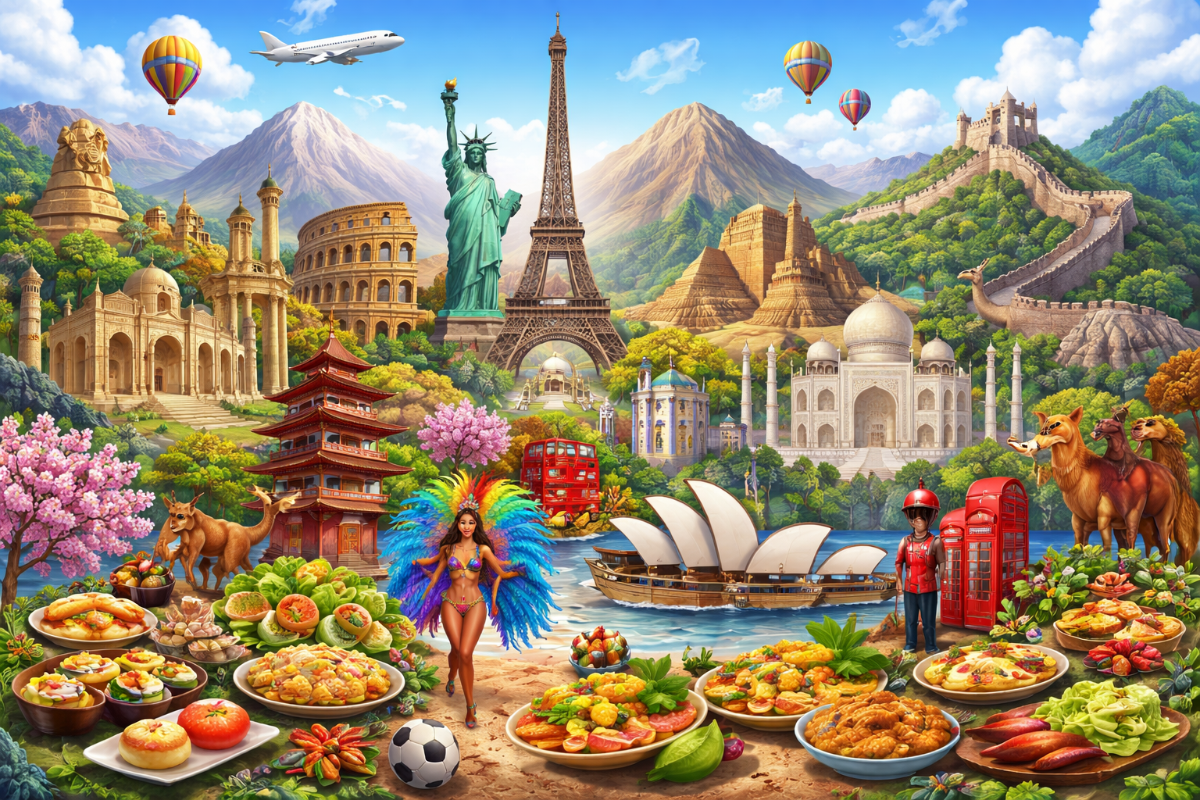
Famous Things Every Country is Known For are more than just trivia facts or travel clichés they are reflections of identity. They capture the traditions people protect, the landscapes they cherish, the foods they cook, and the ideas they export to the world. From the skyline of Paris to the deserts of Saudi Arabia, each nation carries recognizable symbols shaped by centuries of history.
Understanding the Famous Things Every Country is Known For helps travelers, educators, and cultural enthusiasts see the deeper story behind tourism brochures. Landmarks tell of empires and revolutions; cuisine reveals geography and migration; festivals show shared values; exports highlight economic strengths. Consequently, a nation’s reputation becomes a blend of culture, commerce, and collective memory.
Moreover, globalization has amplified the Famous Things Every Country is Known For. Social media, streaming content, and international trade have transformed local traditions into global phenomena—from K-pop concerts to Italian espresso culture. Therefore, exploring these national icons is not just fun geography it’s insight into how nations influence the modern world.
Why Countries Become Known for Certain Things?
Countries develop global reputations through four main forces:
-
Historical Legacy – Empires, revolutions, or innovations leave lasting impressions.
-
Geography & Resources – Climate shapes cuisine, industry, and lifestyle.
-
Culture & Tradition – Festivals, art, and rituals create identity.
-
Economics & Exports – Products, technologies, and brands travel globally.
For example, Italy is associated with Renaissance art, pasta, and fashion; Japan with precision engineering and anime; Brazil with carnival and football passion. These reputations evolve over time, however, reflecting changing economies and cultures.
Famous Things by Region
1. North America
United States
-
Landmarks: Statue of Liberty, Grand Canyon
-
Cuisine: Burgers, BBQ, Thanksgiving turkey
-
Traditions: Super Bowl
-
Exports: Hollywood films, tech innovations
-
Contribution: Internet development, aviation industry
-
Reputation: Cultural powerhouse with global media influence
Canada
-
Landmarks: Niagara Falls
-
Cuisine: Maple syrup, poutine
-
Traditions: Winter sports culture
-
Exports: Timber, oil, tech talent
-
Reputation: Natural beauty and high quality of life
Mexico
-
Landmarks: Chichén Itzá
-
Cuisine: Tacos, mole, tequila
-
Traditions: Día de los Muertos
-
Exports: Avocados, automobiles
-
Reputation: Rich indigenous heritage and vibrant culture
Consequently, North America blends modern innovation with cultural diversity.
2. South America
Brazil
-
Landmarks: Christ the Redeemer
-
Cuisine: Feijoada
-
Festivals: Rio Carnival
-
Exports: Coffee, soybeans
-
Contribution: Football legends like Pelé
-
Reputation: Energy, music, and football passion
Argentina
-
Landmarks: Patagonia glaciers
-
Cuisine: Asado barbecue
-
Traditions: Tango dance
-
Exports: Beef, wine
-
Contribution: Literary giants like Jorge Luis Borges
Moreover, South America’s reputation is tied to music, nature, and football culture.
3. Europe
France
-
Landmarks: Eiffel Tower
-
Cuisine: Croissants, fine wine
-
Traditions: Cannes Film Festival
-
Exports: Luxury fashion brands
-
Contribution: Enlightenment philosophy
Germany
-
Landmarks: Brandenburg Gate
-
Cuisine: Sausages, pretzels
-
Traditions: Oktoberfest
-
Exports: Cars from BMW
-
Contribution: Engineering excellence
United Kingdom
-
Landmarks: Big Ben
-
Cuisine: Fish and chips
-
Traditions: Royal ceremonies
-
Contribution: Industrial Revolution
Therefore, Europe’s reputation blends heritage, art, and industrial innovation.
Country Recognition Table
| Country | Famous For | Category | Global Impact Level | Tourism Influence |
|---|---|---|---|---|
| United States | Hollywood, Tech | Entertainment & Innovation | Very High | Very High |
| Italy | Pizza, Renaissance Art | Cuisine & Art | Very High | Very High |
| Japan | Anime, Electronics | Culture & Tech | Very High | High |
| Brazil | Carnival, Football | Festivals & Sports | High | High |
| Egypt | Pyramids | Ancient History | Very High | Very High |
| Australia | Great Barrier Reef | Nature | High | Very High |
4. Africa
Egypt
-
Landmarks: Great Pyramid of Giza
-
Cuisine: Koshari
-
Exports: Cotton
-
Contribution: Ancient civilization knowledge
-
Reputation: Cradle of history
South Africa
-
Landmarks: Table Mountain
-
Cuisine: Braai barbecue
-
Traditions: Ubuntu philosophy
-
Contribution: Anti-apartheid movement led by Nelson Mandela
Africa’s fame often connects to natural wonders and deep history.
5. Middle East
United Arab Emirates
-
Landmarks: Burj Khalifa
-
Cuisine: Shawarma
-
Exports: Oil, tourism
-
Reputation: Modern luxury
Saudi Arabia
-
Landmarks: Kaaba
-
Contribution: Birthplace of Islam
Turkey
-
Landmarks: Hagia Sophia
-
Cuisine: Kebabs
-
Traditions: Whirling dervishes
Consequently, the Middle East blends ancient heritage with modern wealth.
6. Asia
Japan
-
Landmarks: Mount Fuji
-
Cuisine: Sushi
-
Traditions: Cherry Blossom Festival
-
Exports: Electronics, anime
China
-
Landmarks: Great Wall of China
-
Cuisine: Dim sum
-
Exports: Manufacturing goods
India
-
Landmarks: Taj Mahal
-
Cuisine: Curry dishes
-
Traditions: Diwali
-
Contribution: Yoga and mathematics
Asia’s influence spans spirituality, technology, and massive populations.
7. Oceania
Australia
-
Landmarks: Sydney Opera House
-
Cuisine: Meat pies
-
Nature: Great Barrier Reef
New Zealand
-
Landmarks: Milford Sound
-
Contribution: Film tourism from The Lord of the Rings
Therefore, Oceania is known for natural beauty and adventure tourism.
Cultural & Economic Contribution Matrix
| Country | Primary Industry/Export | Cultural Symbol | Historical Contribution | International Perception |
|---|---|---|---|---|
| Japan | Electronics | Cherry Blossoms | Robotics innovation | Precision & discipline |
| France | Fashion | Eiffel Tower | Enlightenment ideas | Elegance |
| Egypt | Tourism | Pyramids | Ancient mathematics | Timeless history |
| USA | Tech & Media | Statue of Liberty | Space exploration | Innovation leader |
| India | IT Services | Yoga | Zero concept | Spiritual & intellectual |
| Brazil | Coffee | Carnival | Football legends | Passionate culture |
How Countries Build Global Reputation?
-
Tourism Marketing – Countries promote landmarks and experiences.
-
Media & Entertainment – Films, music, and influencers shape perception.
-
Economic Branding – Products like Swiss watches or Korean electronics build identity.
-
Diplomacy & Culture Exchange – Festivals and cultural missions improve visibility.
However, stereotypes can oversimplify reality. For example, Switzerland is known for watches and chocolate but also excels in banking and diplomacy.
The Future of National Identity Beyond 2026
Globalization is reshaping what nations are famous for:
-
Digital Culture: TikTok creators showcase local traditions globally.
-
Sustainable Tourism: Eco-travel highlights conservation efforts.
-
Hybrid Identities: Diaspora communities blend cuisines and art.
-
Tech Innovation: AI, biotech, and renewable energy redefine reputation.
Consequently, a country’s image is no longer fixed. Nations like South Korea gained global recognition through K-pop and technology within one generation.
Therefore, Famous Things Every Country is Known For will continue evolving as cultures interact, economies shift, and stories spread faster than ever.
FAQs
1. How do countries build global reputation?
Through tourism promotion, exports, cultural diplomacy, and media presence.
2. Does tourism influence perception?
Yes. Tourists associate countries with landmarks, cuisine, and hospitality experiences.
3. What role does media play?
Movies, social media, and news shape global awareness and stereotypes.
4. Are stereotypes accurate?
Not always. They simplify complex societies. Consequently, deeper exploration reveals diversity.
5. How do economic branding strategies work?
Countries promote signature industries like Swiss watches or Japanese electronics to create recognition.