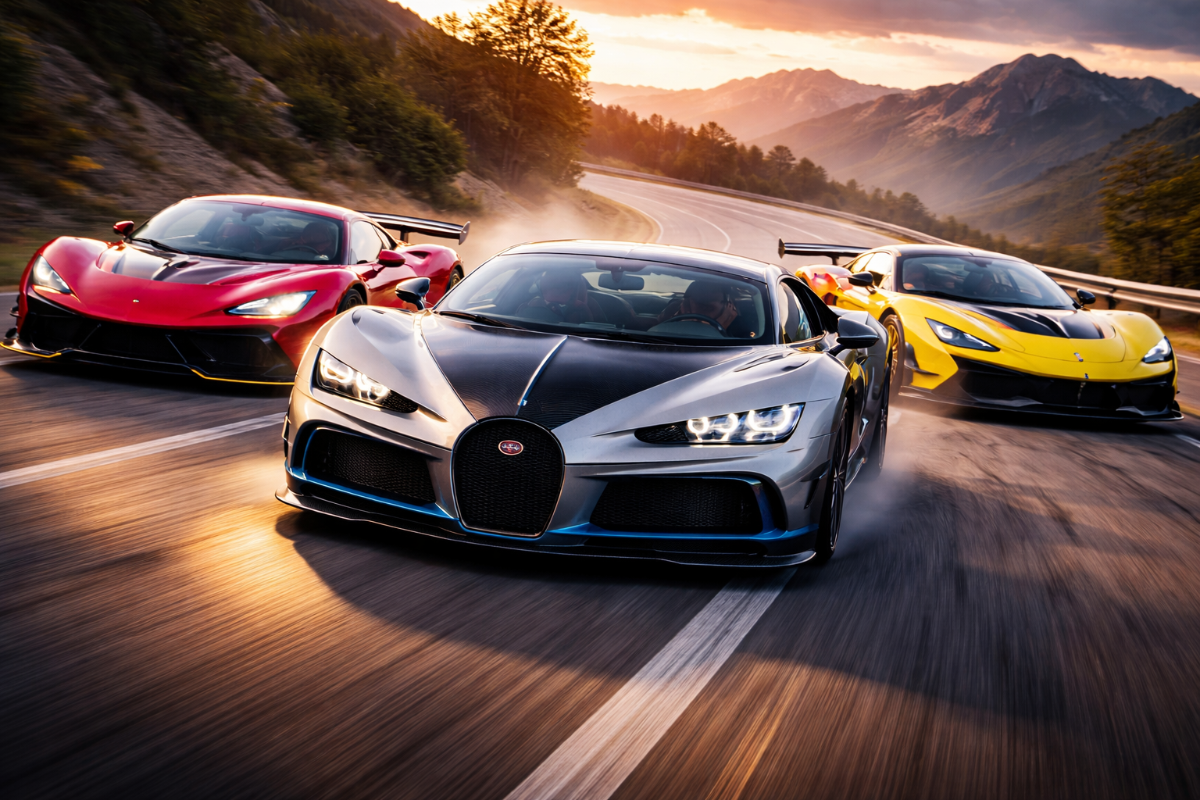
Over the past decade, Fast Cars Evolution has been remarkable, transforming the landscape of automotive performance. Electrification, advanced aerodynamics, AI-assisted systems, lightweight engineering, and software-driven dynamics have collectively reshaped what cars can achieve on road and track. Performance enthusiasts and hypercar collectors have witnessed a technological arms race where engineering innovation directly translates into higher speeds, faster acceleration, and improved handling.
Moreover, hybrid integration and fully electric drivetrains are no longer futuristic concepts they are mainstream features of elite performance cars. Manufacturers have combined traditional combustion engines with electric motors to enhance torque delivery, optimize acceleration, and reduce response times. Consequently, Fast Cars Evolution has blurred the lines between mechanical precision and digital intelligence.
Furthermore, material science breakthroughs, including carbon fiber, titanium alloys, and composite engineering, have enabled drastic reductions in vehicle weight without compromising safety or stability. Coupled with AI-assisted systems for traction control and predictive aerodynamics, these innovations have redefined high-speed driving. Understanding Fast Cars Evolution is essential for investors, engineers, and enthusiasts seeking to appreciate the synergy of speed, technology, and design that defines the next generation of hypercars and supercars.
1. Decade Overview: Performance Metrics from 2016–2026
Over ten years, cars have evolved in speed, acceleration, and efficiency. The integration of hybrid and electric systems accelerated performance while lowering emissions.
Decade-by-Decade Performance Metrics
| Year | Top Speed (km/h) | 0–100 km/h (s) | Horsepower | Power-to-Weight Ratio (hp/kg) | Drivetrain Type |
|---|---|---|---|---|---|
| 2016 | 330 | 3.2 | 650 | 0.45 | RWD / ICE |
| 2018 | 340 | 3.0 | 700 | 0.47 | AWD / ICE |
| 2020 | 360 | 2.8 | 750 | 0.50 | Hybrid AWD |
| 2022 | 380 | 2.5 | 850 | 0.52 | Hybrid AWD |
| 2024 | 400 | 2.3 | 1,050 | 0.55 | Plug-in Hybrid |
| 2026 | 420+ | 2.1 | 1,200+ | 0.60 | Full Electric |
Key Takeaways
-
Top speeds increased by nearly 100 km/h in a decade.
-
Acceleration times from 0–100 km/h dropped nearly a full second.
-
Power-to-weight ratios improved due to lightweight composites and hybrid drivetrains.
-
Electric integration became prominent by 2026, achieving instant torque delivery.
2. Evolution of Hybrid and Electric Performance
Hybrid and electric systems have redefined Fast Cars Evolution:
-
Torque fill technology: Electric motors assist combustion engines during acceleration.
-
Regenerative braking: Enhances performance while improving energy efficiency.
-
All-electric hypercars: Deliver unprecedented instant acceleration and top-end speed.
Consequently, electrification has accelerated performance metrics while enabling sustainable high-speed mobility.
3. Advanced Aerodynamics and Lightweight Engineering
Aerodynamic optimization has become central to automotive speed evolution:
-
Active rear wings and diffusers improve downforce at high speeds.
-
Variable ride height systems reduce drag.
-
Carbon fiber and titanium chassis reduce weight, improving power-to-weight ratios.
Moreover, lightweight composites combined with software-assisted stability systems ensure these extreme speeds are manageable and safe.
4. Software-Driven Dynamics
AI-assisted traction, predictive suspension, and adaptive stability control have redefined car handling:
-
Real-time torque vectoring improves cornering.
-
Predictive aerodynamics adjust for wind and track conditions.
-
Data analytics optimize engine mapping for maximum performance.
Therefore, modern hypercars and supercars rely on a synergy between mechanical engineering and digital intelligence.
5. Market Trends and R&D Investment
The Fast Cars Evolution is fueled by strategic investment:
-
R&D budgets for hypercars exceed tens of millions per model.
-
AI, simulation, and wind-tunnel testing accelerate innovation.
-
Investor confidence in EV hypercars is growing due to performance and sustainability potential.
As a result, companies prioritize both engineering excellence and brand prestige.
6. Technology Innovations in the Last Decade
Key Technological Innovations
| Feature | 2016 | 2020 | 2026 |
|---|---|---|---|
| Material Use | Aluminum + basic carbon fiber | Carbon fiber monocoque | Full carbon-titanium composites |
| Hybrid / Electric Integration | None or mild hybrid | Parallel hybrid | Full hybrid / full electric |
| Software Systems | Basic ECU mapping | Advanced traction control | AI-assisted performance tuning |
| Aerodynamic Enhancements | Fixed aero | Active spoilers | Fully adaptive aero & drag reduction |
| Stability Control | Mechanical ABS & ESC | Digital adaptive ESC | AI predictive stability & torque vectoring |
Insights
-
Materials have shifted from aluminum to full carbon-titanium composites.
-
Electric and hybrid systems dominate acceleration and torque strategies.
-
AI-driven stability systems allow safe handling at extreme velocities.
7. Hypercar vs Supercar Evolution
Hypercars:
-
Focused on top-speed records and track performance.
-
Limited production to showcase technology.
-
Incorporate hybrid/electric systems and active aerodynamics.
Supercars:
-
Balanced between speed and daily usability.
-
Higher production volume.
-
Performance evolution includes lightweight materials and hybrid integration.
Consequently, hypercars push boundaries while supercars adopt technologies proven in experimental vehicles.
8. Real-World Implications
Fast cars are faster, but real-world usability is key:
-
Electric torque reduces response times in traffic.
-
AI-assisted systems improve safety at high speeds.
-
Lightweight composites reduce energy consumption and improve handling.
Moreover, drivers benefit from precision engineering, predictive safety, and better fuel/energy efficiency.
Forward-Looking Insights Beyond 2026
The next stage of Fast Cars Evolution will integrate:
-
AI-assisted handling and torque optimization
-
Solid-state batteries with high energy density
-
Fully electric hypercars achieving top speeds beyond 450 km/h
-
Lighter, stronger composite materials for both performance and sustainability
As a result, hypercars and supercars will continue pushing speed limits while embracing electrification and intelligent systems.
Conclusion
A decade of innovation has redefined speed. From combustion engines to hybrid and fully electric drivetrains, aerodynamic sophistication, and AI-assisted systems, the Fast Cars Evolution highlights how technology and engineering innovation drive automotive performance. Enthusiasts, investors, and engineers can anticipate a future where speed, sustainability, and intelligence converge in hypercars and supercars leading into and beyond 2026.
FAQ: Fast Cars Evolution
How have top speeds changed over a decade?
Top speeds increased from ~330 km/h in 2016 to over 420 km/h in 2026.
Are electric cars faster than combustion hypercars?
Electric hypercars offer instant torque and rapid acceleration, often outperforming combustion-only cars in 0–100 km/h times.
How complex is maintenance?
Advanced materials, hybrid systems, and AI-driven components increase maintenance complexity and cost.
Are these cars good investments?
Limited-production hypercars often appreciate due to technology, rarity, and brand prestige.
What will shape fast cars beyond 2026?
AI-assisted dynamics, solid-state batteries, fully electric hypercars, and lightweight composites will define the next decade.