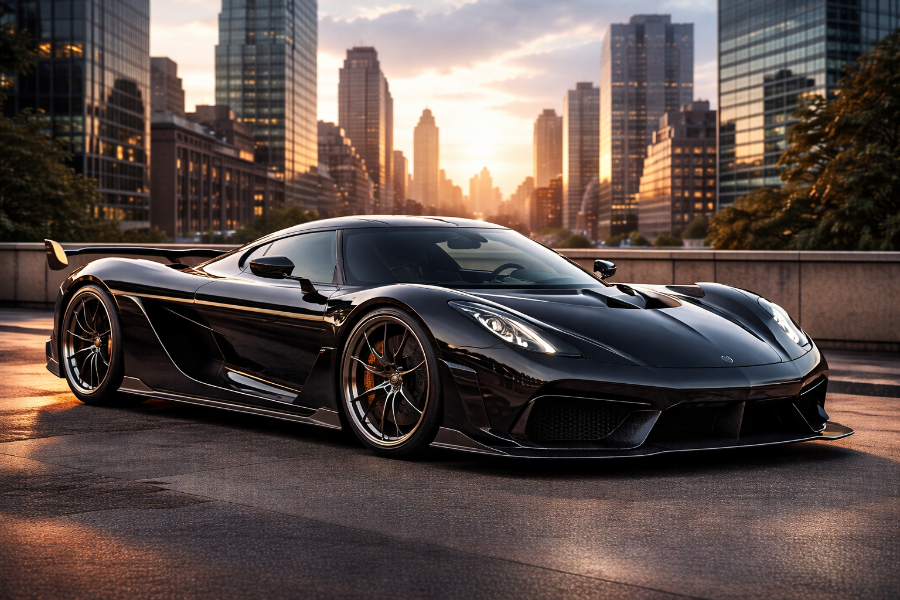
For performance enthusiasts and luxury buyers alike, the appeal of extreme speed has never been stronger. The modern era of factory-built supercars and hypercars has redefined what is possible straight from the showroom floor. Today’s manufacturers deliver astonishing acceleration, record-breaking top speeds, and track-ready handling without requiring aftermarket tuning or custom builds. As a result, buyers can access engineering excellence that was once reserved for experimental or race-only vehicles.
Moreover, advancements in aerodynamics, lightweight materials, hybrid systems, and electric powertrains have enabled automakers to push boundaries while maintaining road legality and manufacturer warranties. These Fastest Cars You Can Buy Today represent the pinnacle of factory engineering, combining raw power with sophisticated control systems designed for both track and street use.
Consequently, Fastest Cars You Can Buy Today Without Custom Builds are not just performance machines they are investment-grade automobiles, often produced in limited numbers and backed by elite brands. For collectors, investors, and driving purists, these street-legal performance vehicles deliver unmatched speed without compromising authenticity or reliability.
What Defines the Fastest Cars You Can Buy Today Without Custom Builds?
The Fastest Cars You Can Buy Today Without Custom Builds are strictly production models sold by manufacturers in factory specification. These vehicles achieve their performance figures through OEM engineering, validated testing, and regulatory compliance. They exclude modified, tuned, or one-off custom builds, ensuring buyers receive performance exactly as delivered from the factory.
Key benchmarks include:
-
Verified top speed claims
-
Manufacturer-certified 0–60 mph times
-
Factory horsepower ratings
-
Street legality and production availability
Top Factory Production Cars by Speed
The following table highlights the top factory production cars by speed, showcasing verified performance metrics straight from the manufacturer. These vehicles achieve extreme top speeds, blistering 0–60 mph acceleration, and massive horsepower all without aftermarket modifications. Moreover, they demonstrate how modern engineering balances raw power with street-legal usability. For enthusiasts and collectors alike, this ranking provides a snapshot of the fastest production-ready hypercars and supercars currently available. Consequently, these cars represent the pinnacle of factory-built performance, combining speed, control, and exclusivity.
| Car Model | Top Speed | 0–60 mph | Horsepower | Base Price (USD) |
|---|---|---|---|---|
| Bugatti Chiron Super Sport | 273 mph | 2.3 sec | 1,577 hp | $3.9M |
| SSC Tuatara | 265+ mph | 2.5 sec | 1,750 hp | $2.0M |
| Koenigsegg Jesko Absolut | 330 mph (theoretical) | 2.5 sec | 1,600 hp | $3.0M |
| Hennessey Venom F5 | 311 mph (target) | 2.6 sec | 1,817 hp | $2.1M |
| Rimac Nevera | 258 mph | 1.85 sec | 1,914 hp | $2.2M |
Note: All vehicles listed are factory-built hypercars available for purchase, not aftermarket-modified builds.
Engine Configurations and Powertrain Technologies
The Fastest Cars You Can Buy Today Without Custom Builds achieve their remarkable speeds through diverse engine configurations and advanced powertrain technologies. While some rely on traditional internal combustion engines (ICE), others use hybrid systems or fully electric platforms to deliver extreme acceleration and top speeds. Understanding these differences helps enthusiasts, collectors, and buyers appreciate the engineering behind each hypercar.
| Powertrain Type | Performance Characteristics | Advantages | Limitations |
|---|---|---|---|
| Internal Combustion (V8/V12) | High top speed, visceral power | Mechanical simplicity, sound | Emissions, thermal limits |
| Hybrid Systems | Explosive acceleration, efficiency | Torque fill, improved control | Added complexity, weight |
| Electric Powertrains | Instant torque, record acceleration | Zero lag, advanced traction | Range, thermal management |
V8 and V12 Internal Combustion Engines
Many factory-built supercars still use naturally aspirated or twin-turbocharged V8 and V12 engines. V8 engines balance weight and power, offering explosive acceleration and compact packaging for mid-engine layouts. In contrast, V12 engines often produce higher peak horsepower, smoother torque delivery, and iconic exhaust notes. Moreover, V12s usually appear in flagship hypercars, emphasizing performance prestige and mechanical refinement.
Hybrid Powertrains
Hybrid powertrains combine high-output ICE with electric motors, providing instant torque and enhanced acceleration. For instance, hybrid hypercars often use electric torque to fill gaps in low RPM ranges, while gasoline engines deliver sustained power at higher speeds. Consequently, hybrids achieve both blistering 0–60 mph times and improved fuel efficiency without compromising street legality.
Fully Electric Hypercars
Fully electric hypercars, like the Rimac Nevera, showcase instantaneous torque and near-silent operation. These vehicles often outperform traditional ICE cars in short sprints due to the immediate delivery of electric power. However, they face limitations such as battery weight, thermal management, and range constraints, particularly at top speeds.
Key Engine Differences
-
Power delivery: ICE offers linear build-up, hybrids blend torque fill, electric delivers instant acceleration
-
Weight and packaging: V12 engines are heavier; V8s are compact; electric batteries add substantial mass
-
Sound and character: ICE engines provide mechanical exhaust notes, hybrids combine sound with electric whine, electric is near-silent
-
Efficiency: Hybrids and electric hypercars achieve better energy efficiency; ICE hypercars consume more fuel at top speed
By comparing these engine types, buyers can select the best combination of speed, track performance, and drivability. The diversity of powertrains ensures that top factory production cars cater to a range of preferences from traditional combustion enthusiasts to cutting-edge electric performance seekers.
Overview: Fastest Cars You Can Buy Today Without Custom Builds
The Fastest Cars You Can Buy Today Without Custom Builds attract enthusiasts with extreme speed, precision engineering, and exclusivity delivered straight from the factory. Enthusiasts can explore the world’s fastest cars to understand how manufacturers achieve record-breaking speeds. Unlike modified or aftermarket-tuned vehicles, manufacturers design, test, and certify these production hypercars and factory-built supercars to achieve record-breaking performance while remaining street legal. Consequently, buyers access verified speed, reliability, and manufacturer-backed warranties.
Moreover, engineers use advanced aerodynamics, lightweight carbon-fiber construction, and high-output powertrains to push performance limits. Internal combustion engines, hybrid systems, and fully electric platforms now coexist at the top of the spectrum. As a result, acceleration, top speed, and track capability no longer depend on a single engine type. Therefore, enthusiasts can enjoy extreme performance with the assurance of factory-grade precision.
Key Performance Factors and Ownership Considerations
Several key performance factors define the fastest factory-built cars:
-
Verified top speed: Manufacturers test or independently validate maximum velocity
-
0–60 mph acceleration: Vehicles deliver instant torque with advanced launch control systems
-
Horsepower output: Many modern hypercars exceed 1,500 hp
-
Aerodynamics: Active wings, diffusers, and underbody airflow enhance stability
-
Powertrain configuration: Options include V8, V12, hybrid-assisted, or fully electric systems
In addition, speed alone does not define these vehicles. Chassis rigidity, braking systems, thermal management, and traction control ensure stability at extreme speeds and under heavy braking. Furthermore, factory-built supercars balance raw performance with control, allowing enthusiasts to push limits safely.
From an ownership perspective, these street-legal performance vehicles serve as both passion purchases and alternative assets. Limited production numbers, brand prestige, and advanced technology enhance long-term value. Consequently, many buyers consider the fastest production cars not only as driving machines but also as collectible investments. Therefore, the Fastest Cars You Can Buy Today Without Custom Builds set the benchmark for the next generation of speed-focused production cars, proving that unmatched performance can come directly from the factory.
The Future of Speed: What Comes Next
Looking ahead, the Fastest Cars You Can Buy Today Without Custom Builds are setting the foundation for the next generation of speed-focused production cars. Electrification, advanced materials, and AI-assisted driving dynamics will continue to push performance limits. As a result, factory-built vehicles will increasingly rival race cars delivered straight from the showroom, uncompromised, and ready to dominate both road and track.
Frequently Asked Questions (FAQs)
Are factory hypercars reliable?
Yes, when properly maintained. They are engineered and tested to manufacturer standards, unlike modified builds.
How expensive is maintenance?
Annual maintenance can range from $50,000 to over $100,000 depending on brand and usage.
Are these cars street legal?
Yes. All listed vehicles meet road-legal requirements in approved markets.
Can they be driven daily?
While possible, most owners limit daily use due to cost, ride stiffness, and practicality.