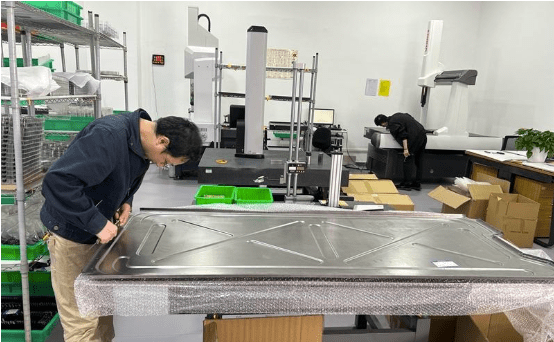
Precision, repeatability and compliance are the hallmarks of modern manufacturing. The consumers of the aerospace, automobile or medical application demand high standards of components. CNC machining services have become a requirement in meeting these expectations in order to perform well in not only being precise but also in the compliance with the structures of quality control as stipulated. This comes with machining metals through modernized methodologies which is used to assure of the stability and usability of the same in the different applications.
This article covers the key aspects of the machining standards including material accuracy, inspection requirements, surface finish requirements, workflow traceability and global certifications. All these aspects are involved in the development of the CNC machining that improves the quality management within all the stages of the process until production.
Material Accuracy and Dimensional Precision
Quality begins with choice of material and precision of dimensions. The CNC machining services guarantee tight tolerances on parts and frequently to sub-micro tolerances in the more advanced applications. These dimensions can be replicated and thus it does not have assembly failures and compatibility of the parts is assured.
Machining metal requires a definite plan regarding each alloy since hardness, grain structure, and thermal conductiveness of alloy are factors that define the end dimensions. Thermal distortion is minimized with toolpath optimization, spindle stability and high-tech coolant systems. This ensures that these processes reproduce even complex geometries to be uniform within the production batches.
The variability can be eliminated by manufactures through either controlling the machining or the raw material in the earliest stage of production. This is not only efficient in the quality verification at the final stage of the downstream, but also the verification of the products under harsh conditions.
Inspection Protocols and Verification
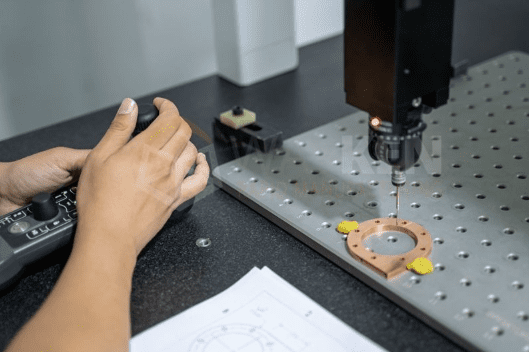
The manufacturing standards are grounded on rigorous inspection. CNC machining services are joined with in-process inspection where measurements are captured during machining. This does away with error and reduces on rework. CMMS, laser scanners and vision systems are employed to verify that the completed parts are in a desired design.
In the machining metal, inspection is a special matter of concern because the slightest deviation can result in a mechanical property compromise. As an example, aerospace fasteners can have their load distribution affected even by a 0.01 mm error. There are verification processes to ensure the performance standard of each batch before sending it.
These types of inspection systems are not only accurate, but they also produce documentation to enable traceability. Having the digital system of inspection records allows the manufacturers to obtain trust amongst the customers that require knowing that the industry specific standards are followed.
Surface Finish and Functional Performance
Besides geometry, surface finish is also a definite predictive of quality management, either aesthetic or functional. CNC machining services provide customized finishes to suit exact requirements, e.g. reduced friction in assembly movements, improved sealing of assemblies, or improved adhesion of coats and paints. The measurement of finishes is on a consistent basis in terms of roughness based on a measurable benchmark like Ra (average roughness).
Machining metals may be problematic, with tool marks, micro-cracks or residual stresses possible to be left, unless carefully controlled, in harder alloys. This is now countered by manufacturers with advanced cutting tools, feed rate optimization, coolant scheme and after machining operations such as grinding, lapping or polishing to create a smooth, surface free operation. Stakes are even greater in aerospace components or medical implant applications where biocompatibility, fatigue resistance and safety have requirements which display mirror-like reflectance and reflected edges with no burrs.
Through these constant finishes the relationship between machining accuracy and product performance can be seen in the real world, which ultimately extends the life of the products and allows the products to be dependable in their performance.
Workflow Traceability and Process Control
The management system based on high quality has its roots in total traceability of the production cycle. Its opening is made possible through CNC machining services, in which all processes, i.e. the CAD modeling and generated toolpath, existing toolpath and arrangement, machining, and inspection are recordable. Such a degree of documentation will help manufacturers to know the source of this inaccuracy and take steps to correct in a short period of time thereby avoiding such ills in the subsequent production.
Tolerances and surface integrity may be sensitive even to small variations in hardness, grain structure or batch composition when machining metal is involved. Potent process management- capable features like real time tool life, vibration sensors, thermal mapping, and spindle load sensors, are useful in managing stability and precision. As such information is gathered and processed, manufacturers would be provided with data on the efficiency, repeatability and quality trends at a long-term level which could be applied to action steps.
The Traceability generates customer confidence as well. Such spheres like the medical equipment, aerospace and defense require not only eligible components but also the representation of the integrity of the processes and responsibility.
Global Standards and Certification Alignment
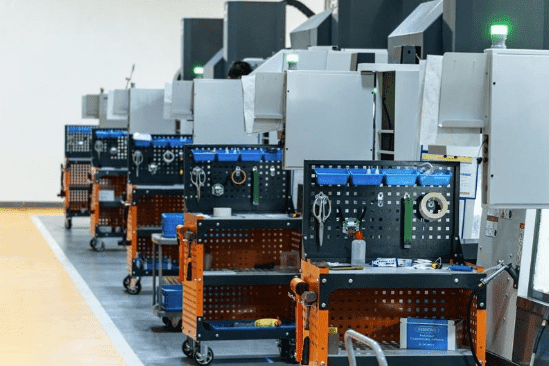
Finally, one should follow the international standards in order to be global. The achievement of the ISO 9001 quality management systems and AS9100 aerospace manufacturing systems is in line with CNC machining services. The practice of these certification makes the processes consistent, controlled and in a state of constant improvement.
These structures are machined to assure that handling of materials, machining plans and inspection procedures are of acceptable international standards. In its eyes, this will allow the clients to have a sense that the components they are handed to them are not only correct, but audited and tested.
Achievement to such certifications will offer culture of competency whereby all the operators, engineers and inspector would contribute towards accomplishing shared objectives. It also improves collaboration between the suppliers and the clients and this is to check whether the elements of adequate scales are smoother integrating into very large scales.
Conclusion
The CNC machining services do not only provide precision; the services just step to make quality accounting resolute along the production line. The conventions in machining, either in material control and material tolerance or in inspection, surface integrity and workflow traceability provide machining with uniform outputs. Any metal machining undertaken in these systems will ensure sustainability and functionality and is aligned with the global standards. All these are bolstered by inculcating confidence, concrete and competence amongst the industries and this constitute an observable standard of excellence in what basically exists in the sector of operating a factory.