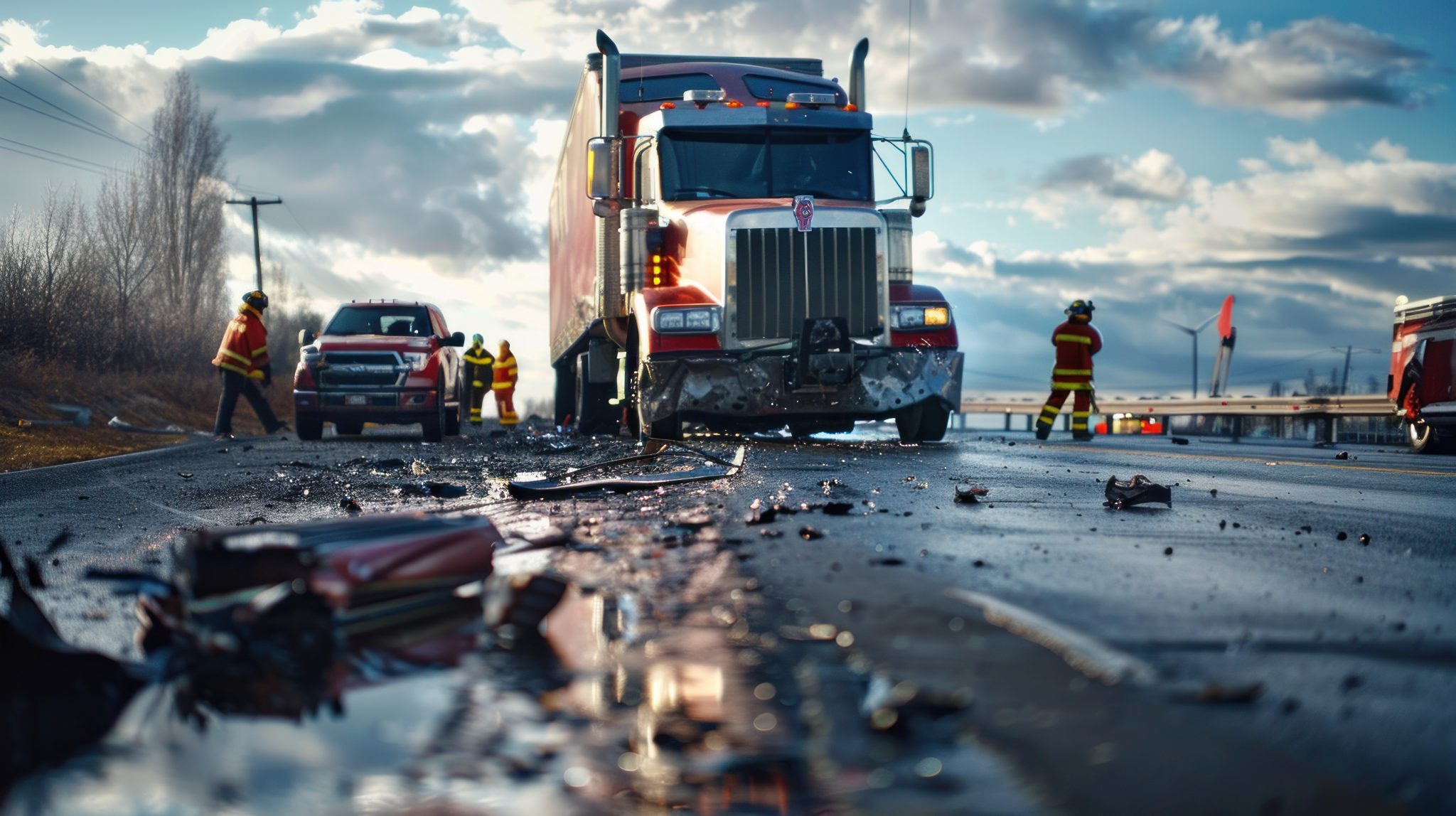
When a person is injured in a collision with a commercial tractor-trailer, one of the first and most pressing questions is, “What is my case worth?” While victims often look for a quick, simple estimate, the truth is that truck accident case value defies immediate, simple valuation. These claims are vastly more complex than typical car accidents due to the severity of the injuries, the depth of federal regulation involved, and the sheer number of corporate entities often brought into the legal dispute.
The severity of trauma, often involving life-altering injuries like spinal cord damage or traumatic brain injury, requires forensic economic analysis to calculate future costs over the victim’s expected lifespan. Furthermore, the defense tactics used by well-funded trucking companies and their insurance carriers are aggressive and require a legal strategy focused on maximum financial recovery.
Determining the true value of a truck accident case is a methodical process that relies heavily on evidence, expert testimony, and the willingness of the legal team to fight in court. It requires calculating not just today’s losses, but decades of future financial needs.
How Injury Severity Shapes Valuation
The single most significant factor driving the truck accident case value is the severity and permanence of the victim’s injuries. Unlike soft-tissue injuries common in car accidents, truck crashes typically result in catastrophic injuries that permanently alter the victim’s ability to work, function, and enjoy life.
Valuation must account for all future financial losses, which include complex categories like lost earning capacity (the difference between what the victim could have earned versus what they can earn now), the cost of future medical surgeries, medications, and physical rehabilitation. Life care planners are often employed to project these costs over 30 or 40 years.
Additionally, non-economic damages, such as pain and suffering, emotional distress, and loss of consortium (the loss of companionship to a spouse), are exponentially higher in catastrophic truck cases. A permanent disability requires a much larger award to reflect the lifetime impact on the victim and their family.
How Liability Complexity Affects Outcomes
The complexity of establishing liability in a truck accident directly influences the outcome and, therefore, the valuation. Trucking negligence can involve multiple failures: driver fatigue, company maintenance failure, cargo overloading, or poor hiring practices.
If the truck driver was found to have violated a federal safety regulation—such as exceeding hours-of-service limits or driving while impaired—it provides strong evidence of negligence per se. This legal finding significantly increases the case value because it establishes clear, undeniable fault, reducing the defendant’s ability to argue mitigation.
Conversely, if the defense can successfully argue comparative negligence—that the victim was partially at fault for the crash—the case value will be reduced by that percentage. Therefore, successfully proving the trucking company’s singular liability is key to protecting the full value of the claim.
How Multiple Defendants Change Negotiations
Truck accident cases often involve multiple liable parties, which dramatically changes the negotiation and valuation dynamic. Beyond the truck driver, defendants can include the motor carrier, the trailer owner, the cargo loader, the maintenance provider, and the manufacturer of a defective part.
Having multiple defendants provides a deep pool of available insurance coverage, making it more likely that the victim can secure an award large enough to cover their catastrophic future costs. This structure often leads to “finger-pointing” among the defendants, where each tries to shift blame to the other.
A sophisticated legal team can exploit this internal conflict, using the defendants’ own evidence against each other to build a stronger, higher-value claim. This complexity ensures that negotiations are prolonged and multi-layered, often yielding results far exceeding what a single-defendant case would provide.
Why Similar Crashes Yield Different Results
It is common for two seemingly similar truck crashes to yield vastly different financial results, demonstrating the subjective nature of valuation. This disparity often comes down to the quality of the evidence, the credibility of the plaintiff, and the venue where the case is tried.
A victim who diligently followed all medical advice, documented their pain, and comes across as highly credible to a jury will command a higher valuation than a plaintiff whose medical adherence or past history is spotty. The jury ultimately decides the value of pain and suffering, making the plaintiff’s personal story paramount.
Furthermore, some legal jurisdictions are known to award significantly higher damages than others. A skilled attorney understands how to leverage these venue differences and present the most compelling, evidence-backed narrative to secure the maximum compensation possible for the specific circumstances of the client’s life.
Why Valuation Takes Time and Evidence
The valuation of a truck accident case value is an arduous, evidence-intensive process, not a simple calculation. It hinges on proving the lifelong severity of the injuries, demonstrating corporate negligence through regulatory violations, and utilizing the leverage created by multiple wealthy defendants.
Any initial estimate provided by an attorney is merely a preliminary projection. The true value crystallizes only after the conclusion of the discovery process, when all medical projections are finalized and all internal company documents exposing negligence have been secured.
Ultimately, the high stakes of these cases demand patience and a legal advocate who is committed to a thorough investigation and prepared to take the case to trial to secure the enormous sums necessary for a lifetime of care.