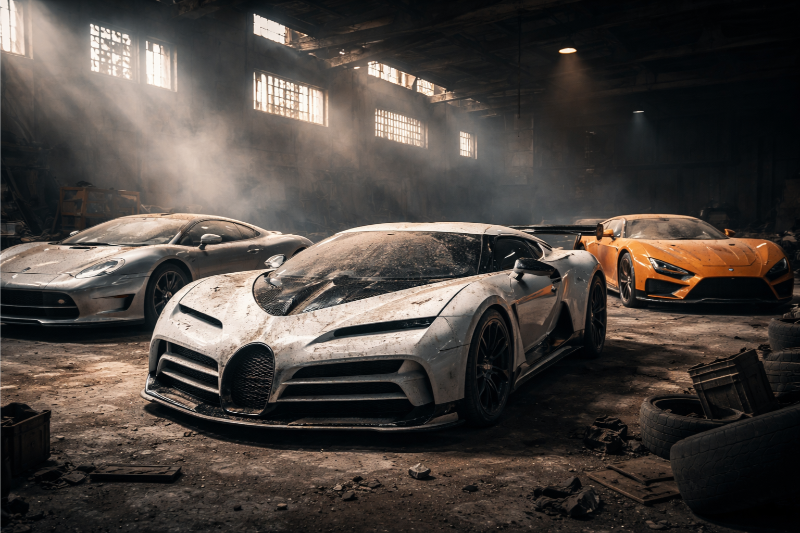
Supercar Market Failure is an intriguing phenomenon where even the most expensive and technologically advanced vehicles struggle to meet expectations. Despite staggering price tags, groundbreaking engineering, limited production runs, and global hype, some ultra-luxury cars fail to achieve commercial success or retain investment value. High-end automotive collapse can occur when consumer demand does not align with brand ambition or market conditions.
Collectors, investors, and enthusiasts often assume that rarity and performance guarantee value, yet the reality of Supercar Market Failure reveals the complexity of the luxury automotive ecosystem. Factors such as production bottlenecks, engineering flaws, and misaligned pricing strategies can all contribute to a vehicle’s underperformance. Consequently, even vehicles that break records in design and innovation may see disappointing sales or plummeting resale values.
Moreover, Supercar Market Failure underscores the financial and strategic risks involved in developing hypercars. Ultra-luxury vehicle miscalculations can stem from overestimating global demand, underestimating regulatory hurdles, or misjudging consumer tastes. For investors and analysts, understanding these failures is crucial for evaluating both individual vehicle projects and broader trends in the premium performance market downturn.
Understanding Supercar Market Failure
Supercar Market Failure occurs when a high-value vehicle fails to deliver on financial, performance, or brand expectations. Commonly cited causes include overpricing, economic downturns, regulatory restrictions, engineering flaws, production delays, weak brand positioning, and shifting consumer preferences. High-stakes hypercar projects often combine extreme R&D expenditures with limited production strategies. While exclusivity can boost desirability, it can also amplify financial risk when demand does not meet projections.
For instance, vehicles with multi-million-dollar development costs may fail to recoup investments if consumer sentiment shifts or competitor models dominate the market. Hyper-limited supply strategies, though intended to reinforce scarcity, can backfire if buyers perceive pricing as unjustified or if market trends favor alternative technologies. Consequently, Supercar Market Failure is not merely a matter of engineering, but also of timing, brand perception, and investor confidence.
Iconic Examples of Supercar Market Failure
Several high-profile vehicles demonstrate the perilous path of ultra-luxury miscalculations. Notable examples include:
-
Jaguar XJ220 – Despite holding the title of the fastest production car in its era, overpricing and a lack of turbocharged power (contrary to marketing promises) led to underwhelming sales.
-
De Tomaso Guarà – Limited appeal outside Italy and inconsistent quality contributed to its commercial failure.
-
SSC Ultimate Aero II – Production delays and unmet performance claims caused investor and enthusiast skepticism.
-
Zenvo ST1 – Extremely limited production combined with an inflated price point created a hypercar investment risk that few buyers were willing to assume.
Each case illustrates the multifactorial nature of Supercar Market Failure, combining economic, technological, and perceptual challenges.
Financial Analysis of Supercar Failures
| Supercar Model | Development Cost | Production Volume | Launch Price | Resale Trend | Loss Estimate | Demand Level |
|---|---|---|---|---|---|---|
| Jaguar XJ220 | $50M | 275 | $650,000 | ↓ 20% | $10M+ | Medium |
| De Tomaso Guarà | $15M | 20 | $250,000 | ↓ 50% | $5M | Low |
| SSC Ultimate Aero II | $60M | 10 | $1.2M | ↓ 30% | $15M | Low |
| Zenvo ST1 | $25M | 15 | $1.8M | ↓ 25% | $7M | Very Low |
Financial breakdowns reveal that even vehicles with exceptional engineering may incur substantial losses when exclusivity, hype, and pricing fail to align with market realities.
Causes of Supercar Market Failure
Overpricing & Consumer Perception
While high prices signal exclusivity, extreme premiums can alienate potential buyers. Consequently, perceived value becomes a central factor in ultra-luxury vehicle miscalculation.
Economic Downturns
Global financial instability can suddenly reduce demand for high-cost vehicles. Hypercar investment risk increases dramatically during recessions or market contractions.
Regulatory Restrictions
Emission laws, safety mandates, and import restrictions can delay launches or limit markets. Vehicles like the Jaguar XJ220 faced compliance hurdles that influenced global appeal.
Engineering Flaws & Production Delays
Even minor design miscalculations can erode consumer confidence. Production delays create hype fatigue, negatively impacting resale and investor sentiment.
Brand Positioning & Market Timing
Weak brand recognition or poor positioning in the luxury market amplifies failure risks. Launching a hypercar during periods of competitor dominance further compounds challenges.
Comparative Failure Factors Table
| Factor | Jaguar XJ220 | De Tomaso Guarà | SSC Ultimate Aero II | Zenvo ST1 |
|---|---|---|---|---|
| Engineering Issue | Medium | Low | High | Medium |
| Regulatory Barrier | High | Low | Medium | Low |
| Market Timing | Medium | High | High | High |
| Brand Perception | Medium | Low | Medium | Low |
| Competitor Pressure | High | Medium | High | Medium |
| Investor Sentiment Impact | High | Medium | High | High |
This comparative overview highlights that failure is rarely caused by a single factor; rather, it is the cumulative effect of multiple strategic, technical, and market-related challenges.
Lessons for Automotive Investors and Collectors
Investors and collectors can mitigate risk by analyzing development costs, market positioning, and timing relative to competitor releases. Ultra-luxury vehicle miscalculations demonstrate that even limited editions do not guarantee appreciation. Moreover, factoring in R&D expenditures and production volumes is critical for evaluating potential resale trends.
Collectors should also consider insurance implications and maintenance costs. Vehicles that fail in the market may encounter higher depreciation or limited secondary market support. Conversely, some hypercars may achieve long-term classic status if rarity and brand legacy are preserved.
Forward-Looking Insights
The future of Supercar Market Failure will be influenced by electrification, sustainability mandates, AI-driven engineering, and shifting buyer psychology. Electric hypercars may reduce mechanical failure risk but introduce regulatory and market uncertainty. Moreover, buyers increasingly prioritize sustainability, which may redefine performance expectations. Consequently, understanding these evolving dynamics is essential for investors, collectors, and analysts navigating the high-stakes premium performance market.
FAQs
Can collectors recover value from a failed supercar?
Recovery depends on scarcity, historical significance, and brand reputation. Certain failures may become collectibles over decades.
Do these vehicles ever appreciate long-term?
Rarely in the short term, but some models eventually gain value if market perception shifts or if they become icons.
What are the insurance implications?
Failed supercars may face higher premiums due to low resale predictability, limited parts, and repair complexity.
Can failed hypercars become future classics?
Yes. Models with limited production, unique design, and historical relevance may achieve classic status despite early market failure.