For much of the twentieth century, it was European cities like Geneva, Milan, and Monte Carlo that were the preferred playgrounds for the super-rich. Offering premium amenities, lucrative tax advantages, and exclusive travel experiences, these desirable cities still remain popular with the jetset and glitterati to this very day. However, since the turn of the century, other cities have emerged as the first port of call for wealthy visitors looking for their next dream destination.
In the Middle East, Abu Dhabi and Dubai have blossomed to become billionaires’ favourites, while Asia has positioned itself as a fertile crescent for visitors looking beyond five-star luxury. Singapore has evolved to become a leading light of the East, with many of the world’s wealthiest choosing to settle in the city-state. However, it’s Macau, the special administrative region of China, that has truly triumphed in recent years, solidifying itself as one of the richest and most sought-after travel destinations for the ultra-rich.
Macau: a gambling Mecca for the new millennium
While gambling itself is outlawed in mainland China, regulation has historically been more relaxed when it comes to Macau. Gambling in the region has been popular since the 1800s, when Macau was still a Portuguese colony. When Portugal handed control of the region back to China in 1999, the decision was made to preserve the gambling economy intrinsic to Macau, with gambling policies remaining in place.
Today, casino experiences and gambling platforms aren’t hard to find. Many gambling hotspots are tourism attractions in their own right, while the online gambling sector has made it easier than ever for first-time gamblers and high rollers alike to enjoy a spin of the reels or a turn at the poker table. Online destinations Ruby Fortune Casino have made wagering more accessible than ever, with beginner-friendly bonuses and lucrative incentives. But Macau has long catered to a distinctly different kind of player, and it’s this ingrained makeup of VIP rooms and high-rolling potential that has largely shaped the gambling destination the region has become today.
An exclusive retail destination
As a free port, Macau enjoys duty-free status, while there’s no value-added tax on purchases. This makes Macau a dream destination for anyone looking to make savings on designer labels and prestige products. Of course, the ultra-rich rarely look twice at the price tag when browsing for a new timepiece or high-end fashion, but Macau’s emergence as an exclusive tourist destination has created an unbeatable retail experience for wealthy visitors.
While Macau certainly caters to the cash-conscious tourist looking for budget-friendly buys, you’re only ever a stone’s throw away from world-renowned designer outlets and luxury shopping in this glitzy Chinese city. Many of Macau’s casino resorts offer five-star retail opportunities, with the City of Dreams boasting iconic brands like Louis Vuitton, Cartier, and Estée Lauder, with many stores remaining open late into the evening. Luxury fashion houses are also well represented at the Studio City resort in the Cotai region, with a sprawling shopping mall playing host to the likes of Gucci, Prada, and Emporio Armani.
For more five-star retail therapy, stick to the Cotai Strip and head to the Four Seasons Hotel. Located within the hotel itself, you’ll find the Shoppes at Four Seasons, a curated shopping experience that brings together the best offerings from celebrated brands like Hermès, Chanel, and Dior.
Unbeatable cultural attractions and international events
Owing to its colonial past, Macau maintains an eclectic character, merging the Cantonese culture of its indigenous inhabitants with a Western European flair courtesy of the Portuguese who first settled the area in the 1500s. This dynamic pairing of personalities has created a distinctly different city, unlike anything else in China or elsewhere.
Gourmands have plenty to look forward to here, with Southeast Asian cuisine sitting alongside European favourites on many menus. While a typical tourist will have no trouble finding plenty of cheap eats here, visitors with bottomless bank accounts and insatiable appetites can take their pick of dozens of award-winning restaurants. In fact, Macau is home to 29 Michelin-starred restaurants, with exclusive eateries like the Jade Dragon in the City of Dreams decorated with no less than three stars.
Those seeking historic cultural attractions can head to the Historic Centre of Macau, an area that’s officially listed as a UNESCO World Heritage Site. Many architectural landmarks in this region have been standing for centuries, with the A-Má Temple dating back to 1488. However, for the super-rich visitor seeking out special experiences, Macau’s more contemporary developments deliver. Macau’s casino resorts are a sight to behold, ranging from neon-lit hedonistic hotspots to destinations inspired by the glamour of Old Hollywood.
Unbeatable accommodation that goes the extra mile
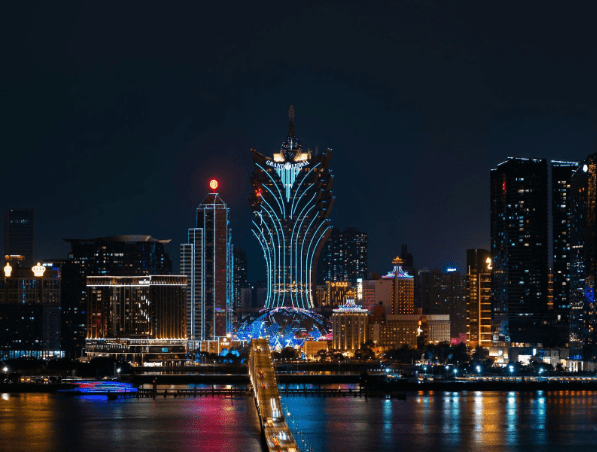
Macau is also home to its fair share of skyscrapers, many of which cater to the needs of wealthy visitors looking to indulge. Macau’s tallest building, the Grand Lisboa, contains a casino, fine-dining establishments, and art installations across its 52 floors. For non-gaming guests looking for luxury accommodation during their stay in Macau, there’s the Mandarin Oriental. With breathtaking views of Nam Van Lake and Macau’s Outer Harbour, it’s the perfect place for wealthy visitors to set up shop during their stay in the city.
A world-class destination for the ultra-rich
While it’s long been synonymous with gambling, Macau’s emergence as a jewel in the crown of the casino industry has led to an explosion in international attention and investment in the region. In 2025, the region chalked up 40.6 million visitor arrivals, up from 34.9 million in 2024. It’s not hard to see why Macau has etched a place in the hearts of the rich and famous. Today, luxury hotels are the standard, while its free port status makes it an obvious destination for designer shopping. Macau’s culinary scene has also upscaled itself to cater to the refined tastes of a richer clientele, offering up Michelin-starred delights that have quickly established the region as a favourite with discerning foodies.