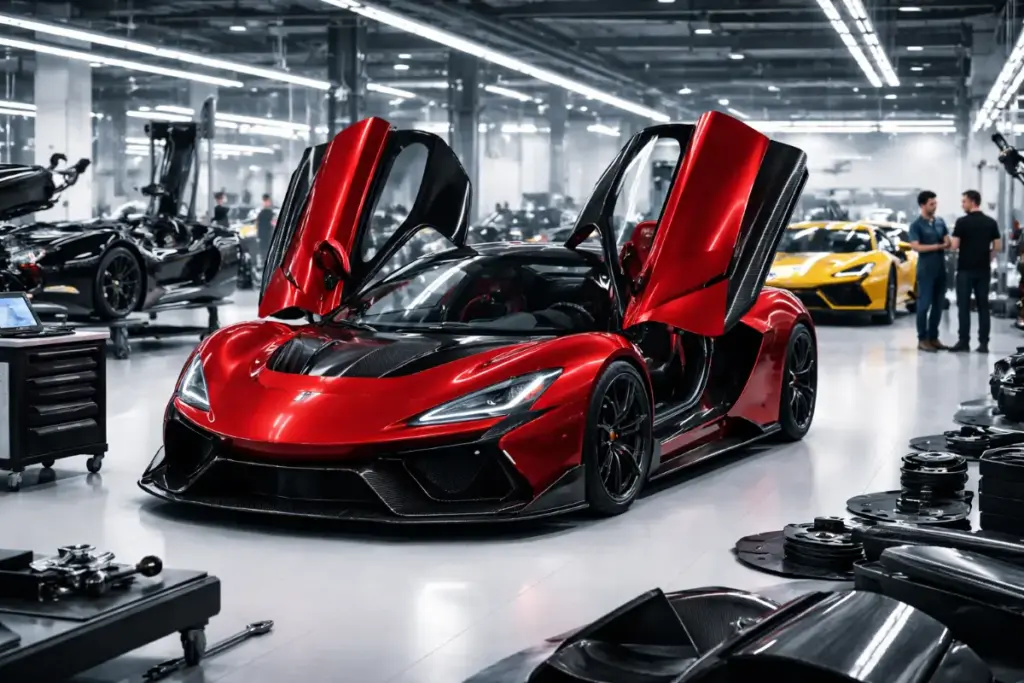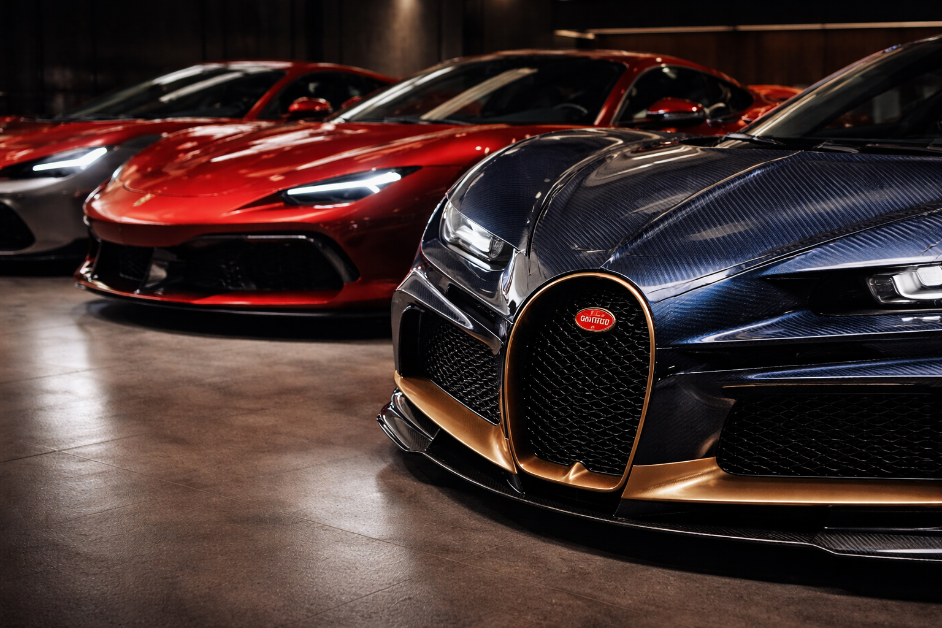
Hypercars represent the absolute peak of automotive ambition. These machines are not simply fast vehicles; they are rolling laboratories packed with innovation. The reason they command multi-million-dollar price tags lies in Hypercar Engineering Secrets a blend of advanced materials, hybrid performance systems, active aerodynamics, and limited-production craftsmanship that few manufacturers can execute.
Moreover, hypercars are built without compromise. From carbon fiber monocoques to aerospace-grade alloys, every component is engineered for extreme performance and minimal weight. However, such exotic automotive engineering requires immense research, specialized manufacturing facilities, and elite engineering talent. Consequently, production costs skyrocket long before the first unit reaches a collector’s garage.
Therefore, when buyers invest millions in these ultra-performance vehicle designs, they are not just paying for speed. They are paying for years of R&D, precision craftsmanship, advanced propulsion systems, and the exclusivity of limited-production supercar manufacturing.
The True Cost of Hypercar Engineering Secrets
At first glance, a hypercar’s price may seem inflated. However, the underlying engineering reveals why these machines demand extraordinary investment. Hypercar Engineering Secrets revolve around pushing physics to its limits while maintaining safety, durability, and regulatory compliance.
Unlike mass-market vehicles, hypercars often involve clean-sheet development. Every system from chassis architecture to software calibration is purpose-built. Consequently, manufacturers allocate hundreds of millions of dollars to development programs before producing even a few dozen vehicles.
Key cost drivers include:
-
Clean-sheet platform development
-
Custom-built engines or hybrid systems
-
Advanced aerodynamic simulations
-
Specialized composite manufacturing
-
Ultra-low production volumes
Moreover, hypercars frequently serve as technology showcases, introducing innovations that later influence mainstream performance cars.
Research and Development: The Hidden Billion-Dollar Investment
One of the biggest Hypercar Engineering Secrets is R&D expenditure. Developing an ultra-performance vehicle design can take 4–7 years. Wind tunnel testing, computational fluid dynamics (CFD), hybrid system calibration, and crash testing all demand enormous resources.
For example, brands like Bugatti and Koenigsegg invest heavily in proprietary engineering solutions. However, because production numbers are often limited to 50–300 units, those costs must be distributed across very few vehicles.
Consequently, each car absorbs millions in development expenses. Therefore, the final price reflects both tangible materials and intangible engineering expertise.
Carbon Fiber Monocoque Construction
Modern hypercars rely on carbon fiber monocoques—lightweight yet exceptionally rigid chassis structures. This exotic automotive engineering solution enhances safety, torsional stiffness, and weight reduction simultaneously.
However, manufacturing a carbon fiber tub is extremely expensive. It involves:
-
Hand-laid composite layers
-
Aerospace-grade resin systems
-
Autoclave curing at high temperatures
-
Precision trimming and bonding
Moreover, each chassis can require hundreds of labor hours. Consequently, the structural foundation of a hypercar alone may cost as much as an entire luxury sedan.
Hybrid and Advanced Propulsion Systems
Another crucial aspect of Hypercar Engineering Secrets is advanced propulsion. Many modern hypercars integrate hybrid systems to boost performance and efficiency.
For instance, models like the Ferrari SF90 Stradale and McLaren P1 combine combustion engines with electric motors to achieve astonishing acceleration figures.
These advanced propulsion systems require:
-
High-voltage battery integration
-
Custom inverter and motor control software
-
Regenerative braking calibration
-
Thermal management for both engine and battery
Consequently, engineering complexity multiplies, significantly increasing production costs.
Major Cost Components in Hypercar Production
| Cost Component | Impact on Price | Explanation |
|---|---|---|
| R&D Investment | Extremely High | Years of clean-sheet development and testing |
| Exotic Materials | High | Carbon fiber, titanium, magnesium components |
| Drivetrain Technology | Extremely High | Hybrid systems, custom engines, electric integration |
| Production Volume | High | Limited units increase per-car cost |
| Wind Tunnel Testing | High | Extensive aerodynamic validation |
| Customization | Variable | Bespoke interiors and finishes |
| Brand Premium | High | Heritage, exclusivity, collector demand |
Active Aerodynamics and Wind Tunnel Testing
Aerodynamics plays a critical role in ultra-performance vehicle design. Hypercars use active aerodynamic systems that dynamically adjust based on speed and driving conditions.
Moreover, brands conduct hundreds of wind tunnel hours to perfect airflow. Adjustable rear wings, underbody diffusers, and air-channeling systems are optimized for maximum downforce without excessive drag.
However, wind tunnel facilities and CFD simulations are costly. Consequently, aerodynamic development becomes one of the most expensive stages in hypercar engineering.
Limited Production Economics
Hypercars are typically produced in extremely limited numbers. Some models are restricted to fewer than 100 units worldwide.
Limited-production supercar manufacturing means:
-
No economies of scale
-
Custom tooling for small batches
-
Highly skilled manual assembly
Therefore, per-unit production costs are dramatically higher than mainstream performance cars. Moreover, exclusivity itself adds market value, driving collector demand.
Hypercar Engineering Feature Comparison
| Model | Chassis Type | Engine Configuration | Hybrid Integration | Top Speed | 0–100 km/h |
|---|---|---|---|---|---|
| Bugatti Chiron | Carbon Fiber Monocoque | Quad-Turbo W16 | No | 420 km/h | 2.4 sec |
| Ferrari SF90 Stradale | Carbon Fiber | Twin-Turbo V8 + 3 Motors | Yes | 340 km/h | 2.5 sec |
| McLaren P1 | Carbon Fiber MonoCage | Twin-Turbo V8 + Motor | Yes | 350 km/h | 2.8 sec |
Bespoke Craftsmanship and Customization
Hypercar buyers expect personalization beyond standard options. Interiors may include:
-
Hand-stitched leather
-
Custom carbon fiber finishes
-
Titanium or gold accents
-
Personalized digital displays
Moreover, manufacturers often collaborate directly with clients during production. Consequently, customization significantly increases both development time and final cost.
Brand Heritage and Market Perception
Hypercar Engineering Secrets also include intangible value. Brands with strong racing heritage command premium pricing. Collectors value limited runs, historical significance, and record-breaking achievements.
Therefore, brand equity becomes a financial multiplier. Even two vehicles with similar specifications may differ significantly in price due to prestige.
The Future of Hypercar Engineering Secrets
The next chapter of Hypercar Engineering Secrets will likely be shaped by electrification and sustainable innovation. Solid-state batteries and fully electric propulsion systems are already influencing next-generation designs.
Moreover, AI-driven performance systems will optimize aerodynamics, torque distribution, and energy efficiency in real time. Lightweight bio-composite materials may replace traditional carbon fiber in certain applications. Consequently, performance and sustainability will merge more seamlessly than ever.
Therefore, while hypercars may continue to cost millions, the value will increasingly reflect cutting-edge technological breakthroughs. As ultra-performance vehicle design evolves, these machines will remain symbols of engineering ambition and of the extraordinary secrets that justify their price.
FAQ: Hypercar Engineering Secrets Explained
1. Why is maintenance so expensive?
Hypercars use specialized parts and require factory-trained technicians, consequently increasing service costs.
2. Do hypercars retain value?
Many limited-production models appreciate over time, especially rare editions.
3. How much is insurance?
Insurance premiums are high due to repair costs and rarity.
4. Can buyers customize extensively?
Yes. Bespoke options are common, however they increase production timelines.
5. Are hypercars good long-term investments?
Some models become highly valuable collectibles, therefore attracting luxury investors.