Ever wonder how some manufacturers are growing while others are just trying to keep the lights on? Between labor shortages, supply chain headaches, and the relentless push to automate everything, the pressure is real. And it’s not slowing down. In this blog, we will share what manufacturing businesses must start doing today if they want to stay relevant tomorrow.
Product Quality Has to Match Public Expectation
Customers are savvier than ever. They don’t just want a good product—they expect transparency, consistency, and value backed by proof. When a customer buys, they’re not just purchasing an item. They’re evaluating the entire experience: packaging, performance, durability, and even the ethics behind production. One weak link in that chain, and they’ll take their dollars elsewhere—loudly, and with screenshots.
The companies pulling ahead are the ones that anchor their production strategy in data and feedback loops. They don’t wait for quality issues to surface months later in customer service reports. They spot anomalies early, using sensors, audits, and automated inspections tied to live dashboards. The shift isn’t toward perfection—it’s toward early correction.
And once customers trust the product, they expect to find proof of performance. Just look at how consumers treat supplement reviews, skin care, and wellness items. In the growing personal care segment, Melaleuca hair products reviews reflect how a health-centered brand can earn customer loyalty by tying quality to long-term wellness. While Melaleuca is best known for its clinically proven supplement packs and essential oils, its expansion into products like dry skin therapies, sunscreens, and beauty care reflects something broader: people now expect their products to align with their health goals, not just perform a task. That demand doesn’t just apply to hair care—it’s shaping every category from food packaging to air filters.
When a brand’s feedback loop is healthy, the quality speaks before the marketing does. And for manufacturers, building that trust means setting up systems that catch what humans miss, long before a customer ever notices.
Lean Is Dead Without Agility
For decades, lean manufacturing was the gospel. Cut the fat. Just-in-time everything. But the pandemic blew a hole through that philosophy. Freight rates spiked. Warehouses emptied. The wrong screw size delayed an entire production line. Suddenly, having zero inventory didn’t look so smart.
Now, agility is the name of the game. Can your operation pivot when a supplier folds? Can you swap materials quickly when lead times triple? The winners today aren’t the ones who minimized cost down to the decimal point—they’re the ones who kept just enough flexibility to stay moving when conditions turned sideways.
That means building a supply chain that isn’t just cheap, but responsive. It means having dual suppliers. It means knowing what can be made in-house in a pinch, and what absolutely can’t. It also means being honest about dependencies—because betting the business on a single vendor or logistics route is no longer a risk. It’s a guarantee of trouble.
Smart manufacturers aren’t ditching lean. They’re evolving it. Efficiency matters. But not if it comes at the cost of survival.
Workforce Investment Is the Only Real Long-Term Strategy
Automation gets the headlines, but people still hold everything together. Machines run lines, sure—but when a process breaks, it’s still a human who decides what to do next. And right now, that human is increasingly hard to find.
You can’t solve a labor shortage with job boards and coffee gift cards. You solve it by building pathways—by training internally, by investing in upskilling, and by treating workers as assets, not costs. Operators who understand systems, not just buttons, stick around longer and contribute more. The same goes for technicians who can troubleshoot across departments and team leads who can read both spreadsheets and people.
Retention doesn’t come from slogans. It comes from creating roles that people grow into, not out of. Companies that put energy into cross-training, clear advancement, and decent working conditions are seeing fewer vacancies and less turnover. It’s not magic. It’s respect that shows up in systems, not posters in the break room.
And when AI tools start becoming more common on the floor, the companies who’ve already trained their people to work with—not fear—new tech will be the ones who scale first. Tech is the tool. People still hold the blueprint.
Digital Infrastructure Has to Stop Being an Afterthought
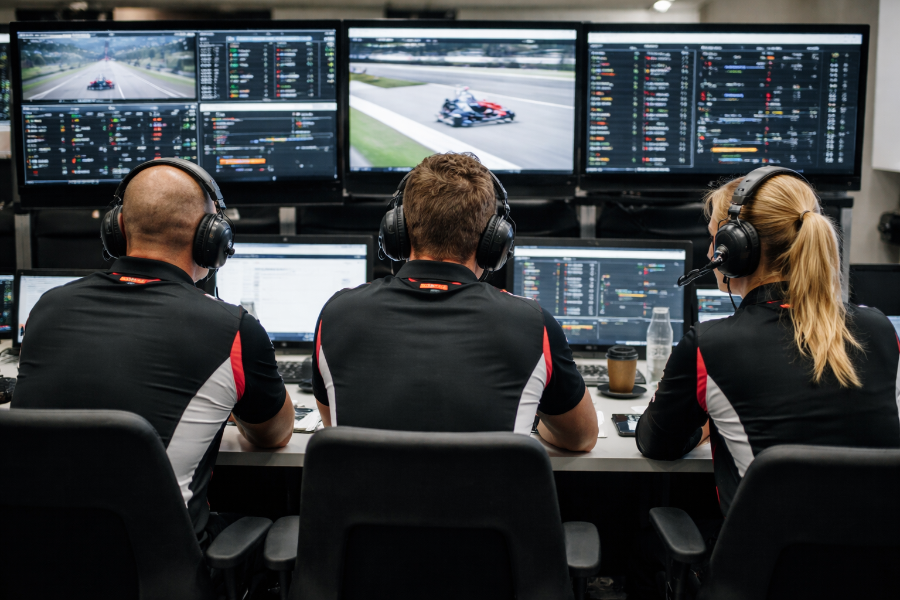
In today’s world, running a factory without a serious digital backbone is like trying to pilot a plane without sensors. You might stay in the air, but you’ll have no idea what’s going wrong until it’s too late. And yet, many manufacturers still treat data like an accessory instead of a utility.
Digital transformation doesn’t mean slapping a dashboard on everything. It means mapping your processes, identifying bottlenecks, and connecting the dots between raw inputs and finished goods—so you can track what’s slowing down, speeding up, or drifting off spec. That’s how you reduce waste, not with blanket directives, but with visibility.
Small-to-mid manufacturers, in particular, hesitate to adopt these systems out of fear of cost or complexity. But modular platforms, plug-and-play sensors, and cloud-based MES solutions are making it possible to scale digitization without tearing up the floor.
The key is starting somewhere: track uptime, monitor energy usage, digitize your work orders. Once the data flows, everything else—from predictive maintenance to real-time forecasting—becomes possible.
Sustainability Is More Than a Buzzword—It’s a Buying Factor
Sustainability used to be a checkbox. Recycle some cardboard, install motion sensor lights, maybe throw in a solar panel. But those days are over. Now, major retailers and regulators are requiring emissions tracking, ethical sourcing, and lifecycle reporting. And consumers? They’re watching too—especially younger ones who can spot greenwashing faster than a marketing team can write a tagline.
The good news is that sustainability and efficiency often align. Reducing scrap, streamlining logistics, and cutting energy usage are all environmentally responsible and economically smart. But the effort has to be intentional. Manufacturers need to know their emissions footprint—not guess. They need to track waste, water, and material impact. Certifications like ISO 14001 aren’t just paperwork—they’re table stakes for contracts with certain buyers.
Those who take it seriously get more than moral credit. They get loyalty, access, and leverage. Those who don’t? They’ll find themselves locked out of supply chains that now require environmental compliance as a default.
Manufacturing isn’t just about what you build anymore—it’s about how fast you adapt, how well you listen, and how clearly you see what’s coming. The industry isn’t standing still, and neither are your customers.
Whether it’s responding to shifting demand, building smarter systems, or simply making sure the product lives up to its promise, the habits that matter now all center on one thing: resilience. It’s not about being perfect—it’s about staying relevant.
And in a world that rewards those who move with purpose, standing still is the riskiest position of all.