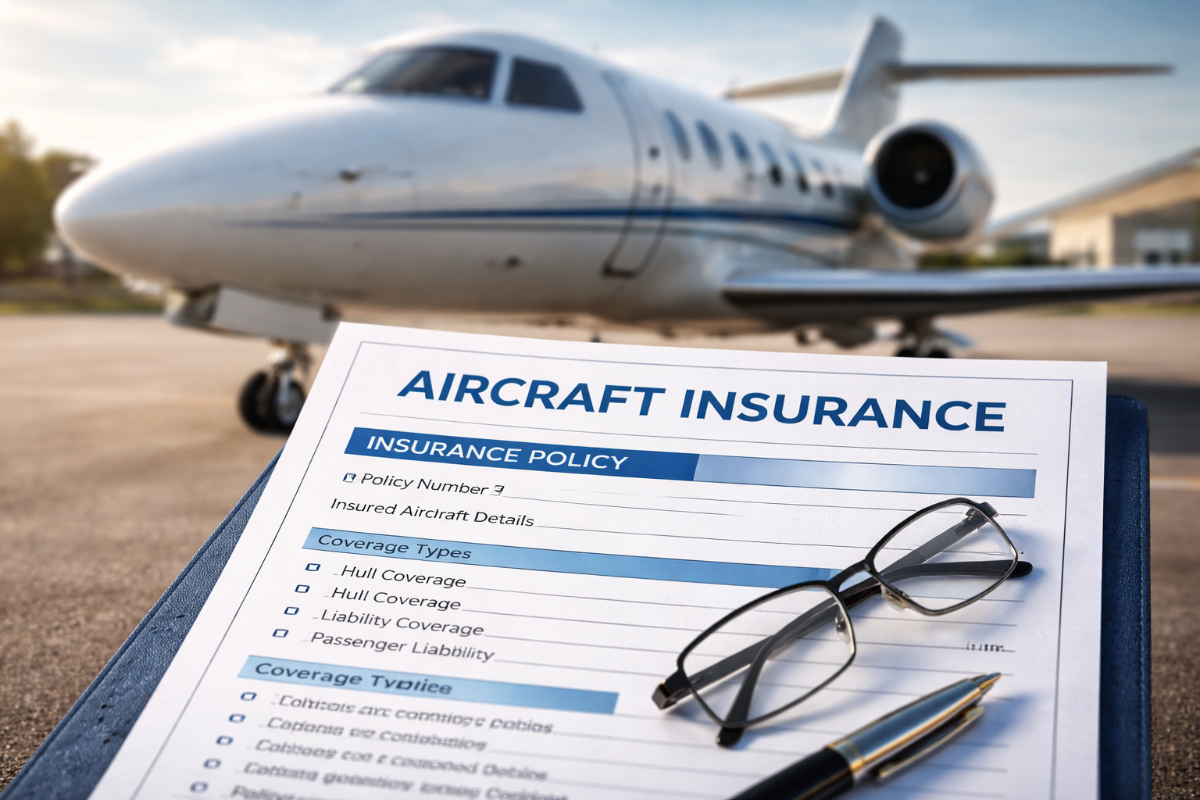
Aircraft ownership comes with significant responsibility. Whether an individual owns a small private airplane or a company operates a fleet of commercial aircraft, managing financial risk is essential. Aircraft Insurance plays a crucial role in protecting aircraft owners from unexpected losses, liability claims, and operational risks.
Aircraft accidents, weather damage, ground incidents, and liability claims can result in substantial financial consequences. Therefore, aircraft owners rely on specialized insurance policies designed specifically for aviation operations.
Moreover, aviation risks differ significantly from other transportation sectors. Because of this, Aircraft Insurance policies are tailored to address complex operational environments, high-value assets, and strict regulatory requirements.
This guide explains how aircraft insurance works, the types of coverage available, cost factors, and how policies differ for private owners and commercial operators.
What Is Aircraft Insurance?
Aircraft Insurance is a specialized type of policy designed to cover airplanes, helicopters, and other aviation assets against financial loss. It protects owners, operators, and aviation businesses from damages, liability claims, and operational interruptions.
Unlike standard vehicle insurance, aviation policies account for:
-
High asset value
-
Specialized maintenance requirements
-
Complex operational risks
-
Passenger liability
-
International aviation regulations
Therefore, aircraft insurance policies typically include both physical damage protection and liability coverage.
Why Aircraft Insurance Is Important?
Aircraft accidents are rare, but when they occur, the financial impact can be severe. Insurance ensures that aircraft owners are not solely responsible for repair costs, legal liabilities, or compensation claims.
Key reasons aircraft insurance is essential include:
-
Protection against expensive repair or replacement costs
-
Liability coverage for passenger injury or property damage
-
Compliance with aviation regulations and airport requirements
-
Financial security for commercial aviation businesses
-
Coverage during ground operations and flight activities
Moreover, aircraft insurance helps aviation businesses maintain operational continuity after unexpected incidents.
Types of Aircraft Insurance Coverage
Aircraft insurance policies are typically structured with multiple coverage components. Each addresses specific aviation risks.
Hull Insurance
Hull insurance covers physical damage to the aircraft itself.
It protects against risks such as:
-
Crash damage
-
Ground collisions
-
Weather damage
-
Hangar incidents
-
Fire damage
Policies may be written as:
-
Ground risk hull insurance – covers the aircraft only when on the ground
-
In-motion hull insurance – covers taxiing and ground movement
-
All-risk hull insurance – covers both ground and flight damage
Hull coverage is usually based on the insured value of the aircraft.
Liability Insurance
Liability coverage protects aircraft owners if their aircraft causes injury or property damage to others.
This includes:
-
Passenger injury claims
-
Damage to airport facilities
-
Third-party property damage
-
Legal defense costs
Consequently, liability insurance is one of the most critical components of aircraft policies.
Passenger Liability Coverage
Passenger liability coverage specifically addresses injuries or claims made by individuals on board the aircraft.
This coverage is particularly important for:
-
Charter services
-
Corporate aviation
-
Air taxis
-
Commercial passenger flights
Moreover, many aviation authorities require minimum passenger liability coverage.
Hangarkeepers Insurance
Hangarkeepers insurance protects businesses that store or service aircraft in hangars.
It covers aircraft that belong to customers while they are:
-
Stored in hangars
-
Under maintenance
-
Being repaired or serviced
Therefore, aviation maintenance facilities and fixed-base operators typically carry this coverage.
In-Flight Insurance
In-flight coverage protects against damage or loss occurring during flight operations.
Coverage may include:
-
Mechanical failure accidents
-
Weather-related incidents
-
Bird strikes
-
Emergency landings
Because aviation risks are highest during flight operations, in-flight coverage is a key element of comprehensive aircraft insurance policies.
Types of Aircraft Insurance Policies
| Policy Type | What It Covers | Typical Users |
|---|---|---|
| Hull Insurance | Physical damage to the aircraft | Private owners, airlines |
| Liability Insurance | Injury or property damage to third parties | All aircraft operators |
| Passenger Liability | Passenger injuries and claims | Charter and commercial operators |
| Hangarkeepers Insurance | Aircraft stored or maintained in hangars | Maintenance facilities |
| In-Flight Coverage | Damage occurring during flight | All aviation operations |
Aircraft Insurance for Private Owners vs Commercial Operators
Insurance needs vary depending on whether the aircraft is used for personal travel or commercial operations.
Private Aircraft Owners
Private aircraft owners typically use their planes for personal travel, training, or recreational flying.
Their policies often focus on:
-
Hull coverage for the aircraft
-
Basic liability protection
-
Limited passenger coverage
Moreover, premiums are often lower because the aircraft operates fewer flight hours compared to commercial fleets.
However, insurers still evaluate pilot experience and training before issuing coverage.
Commercial Aircraft Operators
Commercial operators face greater operational risks because their aircraft carry passengers, cargo, or perform specialized missions.
Therefore, their insurance policies are more complex and may include:
-
Higher liability limits
-
Passenger liability coverage
-
Fleet insurance programs
-
Business interruption coverage
-
Employee liability protection
Consequently, commercial aviation insurance premiums are significantly higher than those for private aircraft.