The Toyota U.S. Investment 2026 marks a significant moment in the evolution of the global automotive industry. As competition intensifies and governments push for localized production, Toyota’s decision to invest over $1 billion into its U.S. manufacturing network signals more than just expansion it reflects a strategic realignment. The move comes at a time when automakers are navigating shifting consumer preferences, rising costs, and regulatory pressures.
Moreover, the United States has become a focal point for automotive innovation, particularly in electrification and advanced manufacturing. By strengthening its domestic footprint, Toyota aims to secure long-term competitiveness while reducing exposure to global supply chain disruptions. This investment is not just about increasing output it’s about future-proofing operations.
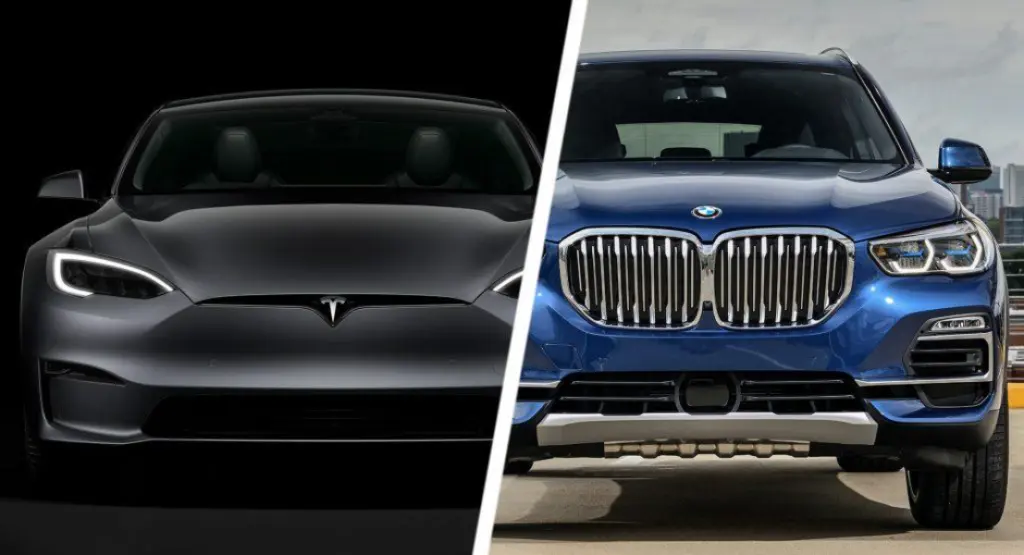
However, this decision also raises important questions. Why now? What does it mean for competitors like Tesla, General Motors, and Ford Motor Company? And how will it shape the future of mobility in North America? This article explores the full implications of Toyota’s bold move.
Overview of Toyota’s $1B+ U.S. Plant Investment
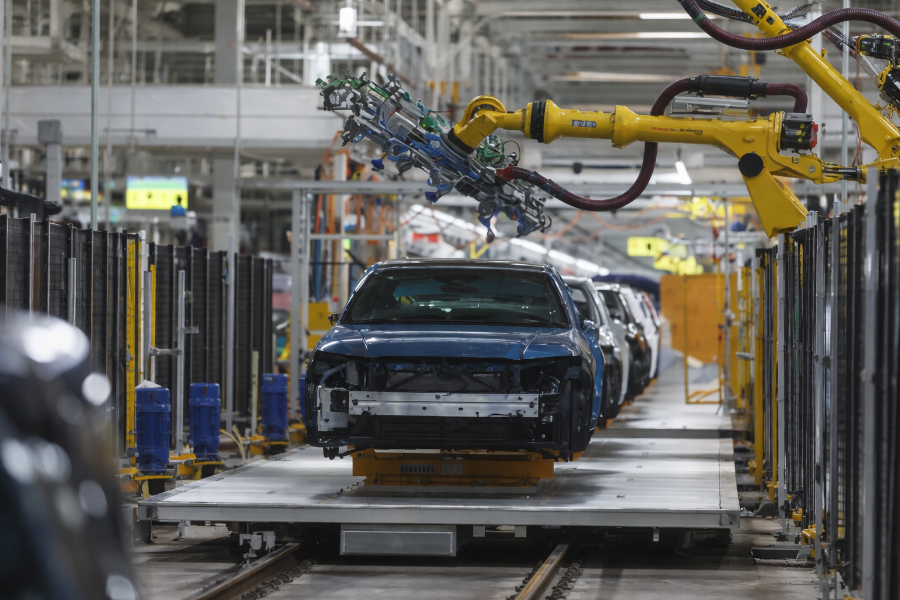
Toyota’s latest investment is part of a broader plan to inject up to $10 billion into its U.S. operations over the next several years. The immediate allocation of $1 billion focuses on enhancing production capacity and upgrading facilities. This includes significant spending on assembly lines, automation, and efficiency improvements.
The centerpiece of this initiative is the Georgetown, Kentucky plant, which will receive the bulk of the funding. This facility is already one of Toyota’s largest globally, and the new investment will enable higher production volumes for key models like the Camry and RAV4. Meanwhile, the Princeton, Indiana plant will expand its capacity for SUV production, particularly the Grand Highlander.
Furthermore, these upgrades are not limited to traditional vehicles. Toyota is integrating flexible manufacturing systems that can accommodate hybrids and future electric vehicles. This adaptability is crucial as the industry transitions toward electrification.
Consequently, the Toyota U.S. Investment 2026 is not just about scale it’s about building a resilient and adaptable manufacturing ecosystem.
Key Locations Driving the Expansion
Toyota’s U.S. footprint spans multiple states, and this investment reinforces its commitment to localized production. The primary locations benefiting from the current funding include:
- Georgetown, Kentucky – Expansion of sedan and crossover production
- Princeton, Indiana – Increased SUV manufacturing capacity
- San Antonio, Texas – Continued focus on truck production
- North Carolina (Battery Plant) – Future EV battery production hub
These locations have been strategically chosen based on existing infrastructure, workforce availability, and proximity to key markets. Moreover, they align with Toyota’s philosophy of “build where you sell.”
The Kentucky plant, in particular, plays a pivotal role. It serves as a cornerstone of Toyota’s North American operations and is now being positioned as a high-capacity, multi-platform facility. Indiana, on the other hand, is becoming a hub for larger vehicles, reflecting strong consumer demand for SUVs.
However, the inclusion of battery production facilities indicates a forward-looking approach. Toyota is preparing for a future where electrification will dominate, even if its current strategy emphasizes hybrids.
Focus Areas: EVs, Hybrids, and Production Upgrades
Toyota’s investment strategy is multifaceted, targeting several key areas:
- Hybrid vehicle expansion
- Battery technology development
- Advanced manufacturing systems
- Supply chain integration
Unlike some competitors, Toyota is not going all-in on fully electric vehicles. Instead, it is doubling down on hybrids as a transitional technology. This approach allows the company to balance emissions reduction with cost efficiency.
Moreover, the integration of advanced robotics and AI-driven systems is improving production efficiency. These upgrades reduce downtime, enhance quality control, and lower long-term costs.
However, Toyota is also investing in battery production, particularly in North Carolina. This indicates that while hybrids are the current focus, EVs remain a critical part of the long-term strategy.
U.S. Policy Influence and Regulatory Drivers
Government policies have played a significant role in shaping Toyota’s investment decisions. The U.S. has introduced incentives aimed at boosting domestic manufacturing and accelerating EV adoption. These include tax credits, subsidies, and stricter emissions standards.
Therefore, by expanding its U.S. operations, Toyota can better align with these policies and qualify for incentives. Local production also helps avoid tariffs and reduces logistical complexities.
Moreover, political pressure to create American jobs has encouraged automakers to invest domestically. Toyota’s move can be seen as both a business decision and a strategic response to regulatory expectations.
However, policy uncertainty remains a challenge. Changes in administration or legislation could impact future incentives, making long-term planning more complex.
Supply Chain Localization Strategy
One of the most critical aspects of the Toyota U.S. Investment 2026 is supply chain localization. The pandemic exposed vulnerabilities in global supply chains, prompting companies to rethink their strategies.
Toyota is addressing this by:
- Increasing local sourcing of components
- Investing in domestic suppliers
- Building battery production capabilities within the U.S.
Consequently, this reduces reliance on overseas suppliers and mitigates risks associated with geopolitical tensions. It also shortens production cycles and improves responsiveness to market demand.
However, localization comes with higher initial costs. Establishing domestic supply chains requires significant investment, but the long-term benefits in stability and efficiency outweigh these challenges.
Competitive Landscape: Toyota vs Rivals
The automotive industry is undergoing a massive transformation, with major players investing heavily in electrification and innovation.
U.S. Investment Comparison
| Company | Estimated U.S. Investment | Focus Areas |
|---|---|---|
| Toyota | $10B (planned) | Hybrids, EVs, manufacturing |
| Tesla | $20B+ | Fully electric vehicles |
| GM | $35B | EVs, batteries, autonomous tech |
| Ford | $30B | EVs, trucks, battery plants |
Toyota’s strategy differs significantly from its competitors. While Tesla focuses exclusively on EVs, and GM and Ford are aggressively transitioning, Toyota is taking a more balanced approach.
Moreover, this diversification reduces risk. If EV adoption slows, Toyota’s hybrid lineup provides a safety net. However, it also raises concerns about whether the company might fall behind in the EV race.
Job Creation and Economic Impact
Toyota’s investment is expected to create thousands of jobs across its U.S. operations. This includes both direct employment at manufacturing plants and indirect jobs in the supply chain.
Key benefits include:
- Increased local employment
- Economic growth in manufacturing regions
- Development of skilled labor
Furthermore, these investments stimulate local economies by supporting small businesses and infrastructure development. States like Kentucky and Indiana stand to benefit significantly.
However, automation may offset some job creation. While new roles will emerge, traditional manufacturing jobs may decline due to increased efficiency.
Electrification Strategy: ICE vs Hybrid vs EV
Toyota’s approach to electrification is unique, focusing on a gradual transition rather than an abrupt shift.
Powertrain Strategy Comparison
| Type | Advantages | Challenges |
|---|---|---|
| ICE | Established, cost-effective | High emissions |
| Hybrid | Fuel efficiency, lower emissions | Limited EV range |
| EV | Zero emissions | High cost, charging infrastructure |
Toyota’s emphasis on hybrids allows it to reduce emissions while maintaining affordability. Moreover, hybrids do not rely heavily on charging infrastructure, making them more practical in many regions.
However, as EV adoption accelerates, Toyota will need to scale its electric offerings to remain competitive.
Long-Term Positioning in North America
The Toyota U.S. Investment 2026 is a cornerstone of the company’s long-term strategy. By strengthening its domestic presence, Toyota is positioning itself as a leader in North America.
This includes:
- Expanding production capacity
- Enhancing technological capabilities
- Building a resilient supply chain
Moreover, the focus on flexibility ensures that Toyota can adapt to changing market conditions. Whether the future leans toward hybrids or EVs, the company is prepared.
However, maintaining this balance will require continuous innovation and strategic investments.
Risks and Challenges
Despite its advantages, Toyota’s strategy is not without risks:
- High investment costs
- Uncertainty in EV demand
- Regulatory changes
- Intense competition
Moreover, competitors are moving into the EV space, which could put pressure on Toyota to accelerate its transition. If consumer preferences shift rapidly, the company may need to adjust its strategy.
However, Toyota’s cautious approach could also prove advantageous if the EV market faces setbacks.
Conclusion
The Toyota U.S. Investment 2026 represents a calculated and strategic move in a rapidly evolving industry. By investing $1 billion in U.S. plants, Toyota is strengthening its manufacturing capabilities, aligning with policy trends, and preparing for the future.
Moreover, its balanced approach to electrification sets it apart from competitors. While others race toward full electrification, Toyota is building a diversified portfolio that mitigates risk.
Consequently, this investment is not just about growth—it’s about resilience, adaptability, and long-term success in North America.
FAQs
1. What is Toyota U.S. Investment 2026?
It refers to Toyota’s plan to invest over $1 billion in U.S. manufacturing as part of a broader $10 billion strategy.
2. Which states are involved?
Key locations include Kentucky, Indiana, Texas, and North Carolina.
3. Is Toyota focusing on EVs?
Toyota is prioritizing hybrids while gradually expanding its EV capabilities.
4. How does this compare to competitors?
Toyota is taking a balanced approach, competitors like Tesla focus solely on EVs.
5. Will this create jobs?
Yes, the investment is expected to generate thousands of jobs and boost local economies.