Everyday driving comes with hidden dangers that most motorists overlook. One simple Road Safety Trick can drastically reduce accident risks, improve reaction times, and prevent life-threatening collisions. By adopting this habit, drivers gain a proactive advantage in identifying hazards early, avoiding panic braking, and maintaining smooth vehicle control in both urban and highway environments.
Even minor errors in judgment like tailgating, distracted driving, or failing to anticipate sudden stops can escalate into severe accidents. The right Road Safety Trick mitigates these risks by creating sufficient space and time to respond safely. Moreover, it reinforces situational awareness, giving drivers the ability to anticipate hazards before they become emergencies.
New drivers, fleet operators, and insurance-conscious motorists benefit particularly from this technique. Not only does it enhance personal safety, but it also reduces liability exposure, decreases insurance claims, and promotes long-term driving confidence. Consequently, mastering this simple, consistent habit is one of the most effective steps toward safer roads.
Understanding the Road Safety Trick
The core Road Safety Trick revolves around maintaining a 3-second following distance and consistently scanning 12–15 seconds ahead. This technique allows drivers to:
-
React earlier to sudden stops, lane changes, or unexpected obstacles
-
Reduce braking emergencies, which often cause rear-end collisions
-
Minimize high-impact crashes by maintaining proper defensive positioning
By consistently applying this trick, drivers can build a proactive road awareness strategy that turns reactive driving into calculated, defensive actions.
Accident Scenarios Table
| Scenario | Common Driver Mistake | How Road Safety Trick Helps | Risk Reduction Impact |
|---|---|---|---|
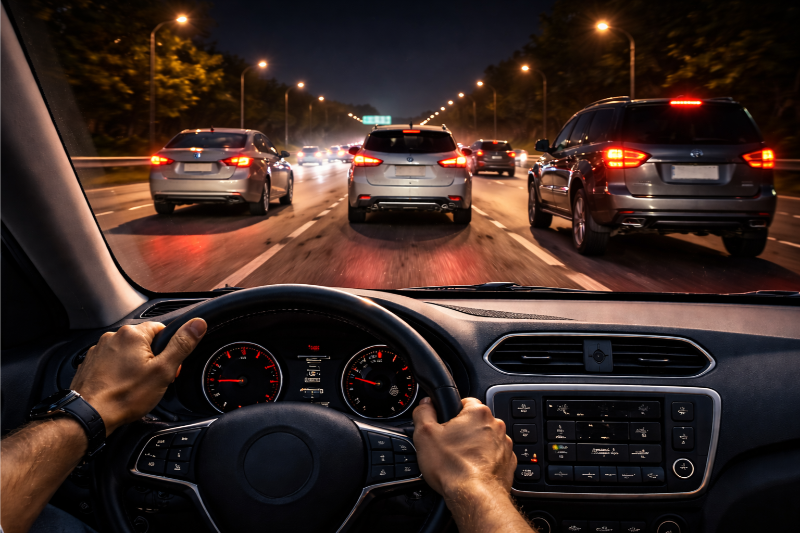
| Tailgating on highway | Following too closely | 3-second gap allows time to react | High |
| Sudden stop at traffic light | Not scanning ahead | Early hazard detection reduces panic braking | Medium-High |
| Merging into traffic | Poor anticipation | 12–15 second scanning identifies safe gaps | High |
| Wet or icy road | Overconfidence in stopping distance | Maintains buffer zone for longer braking distance | High |
| Distracted driving | Looking away from road | Defensive positioning and scanning compensate for delayed reaction | Medium |
Why This Trick Works?
1. Improves Reaction Time
By maintaining a safe following distance and scanning ahead, drivers have more time to process traffic information and respond calmly. Reaction time in critical situations can mean the difference between a minor fender-bender and a major collision.
2. Enhances Situational Awareness
Scanning 12–15 seconds ahead helps identify potential hazards such as stopped vehicles, pedestrians, or sudden lane changes. Consequently, drivers can anticipate hazards before they escalate into accidents.
3. Reduces Braking Emergencies
Maintaining proper spacing prevents sudden stops from forcing abrupt braking. This decreases wear on brakes and tires while minimizing the likelihood of rear-end collisions.
Defensive Driving Habits Table
| Habit | Difficulty Level | Effectiveness Rating | Accident Reduction Potential | Recommended Practice Frequency |
|---|---|---|---|---|
| Maintain 3-second gap | Easy | 9/10 | High | Every trip |
| Scan 12–15 seconds ahead | Moderate | 8/10 | High | Constantly |
| Proper lane positioning | Moderate | 7/10 | Medium-High | Every trip |
| Mirror checks every 5–8 sec | Easy | 8/10 | High | Every trip |
| Smooth acceleration/deceleration | Easy | 7/10 | Medium | Every trip |
| Avoid distractions | Moderate | 9/10 | High | Every trip |
For additional guidance, check out these essential road safety tips and proven defensive driving techniques to further reduce the risk of accidents.
Real-World Applications
-
Urban Traffic: The trick helps navigate stop-and-go traffic by anticipating sudden stops and pedestrian movement.
-
Highways: On high-speed roads, a 3-second following distance provides critical space to avoid rear-end collisions and chain-reaction accidents.
-
Weather Conditions: Wet, icy, or foggy conditions require longer distances, making this trick even more effective.
Moreover, fleet operators can implement this as a standard training procedure to reduce accidents, insurance claims, and liability exposure.
The Future of Road Safety
The future of road safety lies in the powerful combination of human responsibility and advanced technology. As innovation accelerates, AI-assisted driving systems and Advanced Driver Assistance Systems (ADAS) are transforming the way we drive. Features such as real-time hazard detection, automatic emergency braking, lane-keeping assistance, and predictive traffic analytics significantly improve situational awareness and reduce the risk of human error.
At the same time, smart infrastructure is reshaping our roads. Adaptive traffic signals, connected vehicles, and intelligent road signage communicate seamlessly to manage traffic flow and prevent collisions before they happen. These systems do not replace drivers they support them, creating a safer driving environment for everyone.
Ultimately, the most effective path toward accident-free roads is the integration of disciplined, life-saving driving habits with cutting-edge technology. When responsible drivers and intelligent systems work together, safer roads become not just a goal, but a reality.
FAQ: Road Safety Trick
1. How quickly can I build this habit?
Consistency over 2–3 weeks of conscious practice typically engrains this defensive driving method into routine behavior.
2. Does it work differently in urban vs highway settings?
Yes. Urban driving benefits from anticipation of pedestrians and vehicles, while highway driving emphasizes following distance for higher speeds.
3. How does weather affect this trick?
In rain, snow, or fog, increase spacing beyond 3 seconds to accommodate reduced traction and visibility.
4. Will this reduce insurance costs?
Yes. Many insurers recognize defensive driving habits, which can lead to lower premiums over time.
5. Can technology complement this trick?
Absolutely. Advanced driver-assistance systems (ADAS), like forward collision warning, adaptive cruise control, and lane-keeping assist, reinforce the habit and reduce driver error.