Most buyers decide how they feel about a property long before they logically evaluate price, size, or location. These instant reactions are shaped by Buyer Perception Drivers the subtle, often unspoken signals that influence emotional response, trust, and perceived value. Whether someone is a first-time homeowner or a seasoned real estate investor, these drivers quietly steer decisions within seconds of arrival.
Moreover, Buyer Perception Drivers don’t just affect attraction; they influence how much risk a buyer believes they are taking. A well-presented home feels “safe,” “cared for,” and “worth the money,” while small inconsistencies can create doubt even if the numbers technically make sense. Consequently, perception often overrides spreadsheets.
Therefore, understanding Buyer Perception Drivers is no longer optional for homeowners, developers, architects, or long-term investors. These silent factors shape buyer confidence, negotiation behavior, inspection tolerance, and ultimately, final offer price.
Understanding Buyer Perception Drivers in Real Estate
Buyer Perception Drivers are a combination of psychological triggers, environmental conditions, and visual consistency that buyers subconsciously interpret as indicators of quality, maintenance, and future cost. These are not always tied to actual defects but to signals of potential issues.
Property impression factors include:
-
How “settled” or “rushed” a space feels
-
Whether design choices feel intentional or patched together
-
If maintenance appears consistent or reactive
Real estate first-impression signals act as shortcuts. Buyers assume that what they can see reflects what they can’t see.
Curb Appeal: The First Emotional Filter
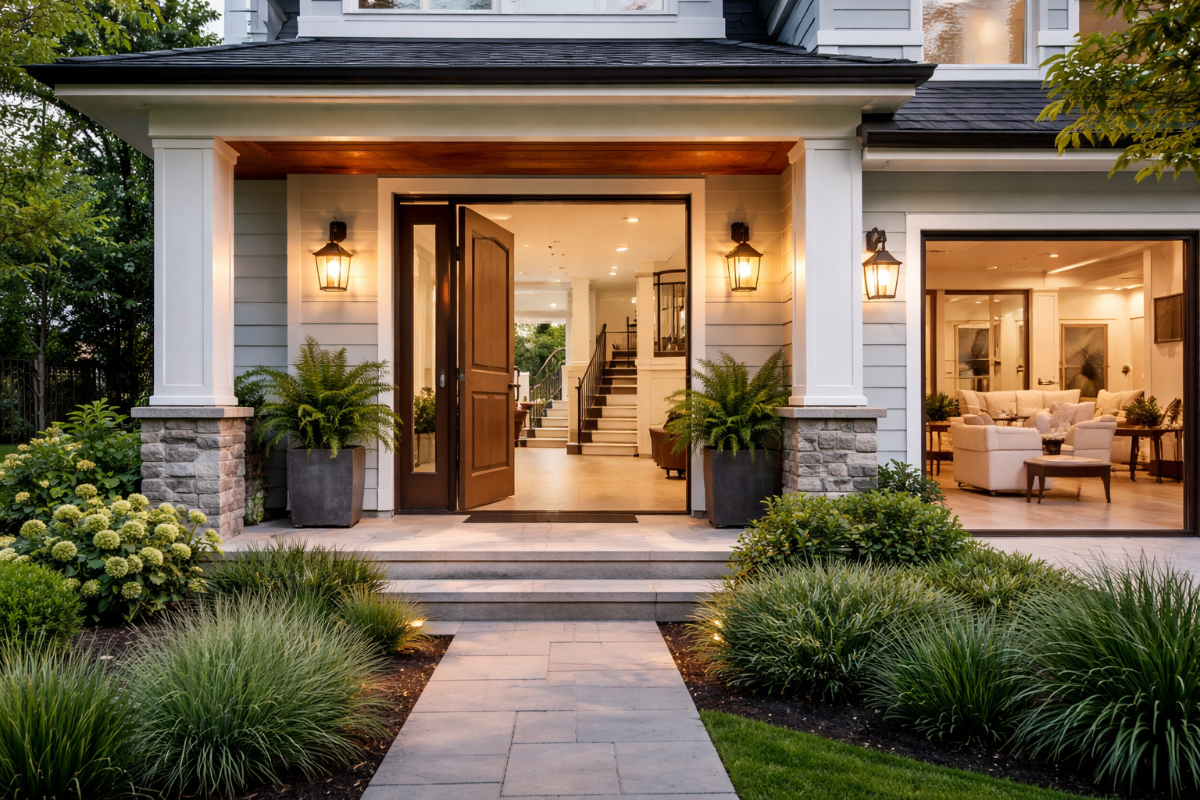
Curb appeal is the earliest and most powerful Buyer Perception Driver. Before stepping inside, buyers subconsciously assess:
-
Landscaping order and symmetry
-
Exterior paint condition
-
Driveway cleanliness
-
Entryway clarity
However, curb appeal isn’t about luxury it’s about care. A modest home with clean lines and trimmed greenery often outperforms a larger property with neglected edges.
Consequently, buyers entering with a positive emotional baseline are more forgiving of interior compromises.
Structural Integrity Signals Buyers Read Instantly
Most buyers can’t technically assess structure but they read signals:
-
Hairline cracks vs. wide fractures
-
Door alignment and smooth operation
-
Window symmetry and sealing
These subconscious buying cues suggest whether a home has “settled naturally” or “been fighting gravity.” Therefore, even cosmetic fixes that improve alignment and visual balance can significantly improve buyer confidence.
Lighting Quality and Emotional Valuation Triggers
Lighting is one of the most underestimated Buyer Perception Drivers.
Buyers subconsciously interpret:
-
Natural light as openness and safety
-
Warm lighting as comfort
-
Dark corners as hidden problems
Moreover, inconsistent color temperatures create mental friction. A home with coherent lighting feels calm and intentional, while mixed tones feel chaotic even if buyers can’t explain why.
Material Finishes and Tactile Judgment
Buyers touch more than they realize:
-
Door handles
-
Railings
-
Counter edges
-
Cabinet doors
These tactile interactions inform perceived durability. Cheap finishes that look fine often fail here, triggering doubt about unseen systems. Therefore, finish consistency matters more than premium branding.
Layout Flow and Movement Psychology
Layout flow is a core Buyer Perception Driver tied to human movement. Buyers subconsciously ask:
-
Can I move naturally through this space?
-
Do rooms connect logically?
-
Are transitions smooth or awkward?
Poor flow increases cognitive load, which reduces emotional attachment. Consequently, even large homes can feel “wrong” if circulation is inefficient.
Ceiling Height Perception (Not Just Measurements)
Ceiling height is as much about perception as numbers.
-
Continuous flooring increases vertical feel
-
Correct lighting placement avoids compression
-
Window height reinforces openness
Therefore, design coherence amplifies spatial generosity without structural changes.
Maintenance Indicators Buyers Never Ignore
Maintenance consistency is one of the strongest real estate first-impression signals.
Buyers notice:
-
Mismatched repair materials
-
Uneven paint touch-ups
-
Temporary fixes
These cues suggest reactive ownership, which increases perceived future cost—often lowering offers more than actual defects would.
First-Impression Elements Buyers Judge Instantly
| Element | What Buyers Subconsciously Assess | Warning Signs | Improvement Strategy | Impact on Offer Price |
|---|---|---|---|---|
| Entryway | Sense of care and welcome | Peeling paint, clutter | Clean, neutral, defined entrance | High |
| Flooring | Maintenance history | Scratches, stains | Refinish or deep clean | Medium–High |
| Windows | Structural health | Fogging, poor seals | Repair seals, clean frames | Medium |
| Doors | Alignment and settling | Sticking or gaps | Adjust hinges, repaint | Medium |
| Landscaping | Ownership pride | Overgrowth, dead zones | Trim, simplify, symmetry | High |
Neighborhood Presentation as a Buyer Perception Driver
Buyers don’t separate property from context. Neighborhood cues include:
-
Street cleanliness
-
Noise levels
-
Building consistency
Moreover, buyers mentally project resale value based on surrounding upkeep. A strong neighborhood elevates tolerance for property flaws, while a weak one magnifies them.
Sound Insulation and Acoustic Comfort
Sound is an invisible emotional valuation trigger.
-
Echo suggests emptiness
-
Street noise suggests stress
-
Soft acoustics suggest comfort
Therefore, rugs, curtains, and acoustic panels quietly enhance perceived livability.
Scent and Memory Association
Scent is processed faster than visuals. Buyers associate:
-
Fresh, neutral scents with cleanliness
-
Strong artificial scents with concealment
However, subtle natural scents (wood, light citrus) reinforce trust and calm.
Overall Ambiance and Design Coherence
Ambiance is the sum of all Buyer Perception Drivers.
-
Consistent materials
-
Unified color logic
-
Balanced lighting
Design coherence reduces mental friction, making buyers feel “at home” faster—which directly correlates with offer strength.
Visible Material & Finish Quality Comparison
| Material / Finish Type | Perceived Durability Level | Maintenance Demand | Cost-to-Upgrade Ratio | Long-Term Value Influence |
|---|---|---|---|---|
| Engineered Wood | High | Medium | Moderate | Strong |
| Natural Stone | Very High | Low | High | Very Strong |
| Laminate | Medium | Low | Low | Moderate |
| Solid Wood | Very High | Medium | High | Strong |
| Ceramic Tile | High | Low | Moderate | Strong |
Long-Term Resale Potential and Perception Consistency
Properties that age well do so because perception remains stable over time. Sustainable materials, timeless layouts, and neutral lighting reduce perception decay protecting resale value even in shifting markets.
The Future of Buyer Perception Drivers Beyond 2026
Looking ahead, Buyer Perception Drivers will evolve through:
-
Smart lighting systems adapting to mood and time
-
Sensory-focused design integrating sound and scent
-
Sustainable finishes signaling long-term cost control
-
AI-powered property presentation tools personalizing virtual and physical tours
Therefore, perception will become more adaptive, data-informed, and emotionally intelligent—reshaping how value is communicated before a word is spoken.
Frequently Asked Questions (FAQ)
When is the best time to stage a property?
Ideally before listing photos and virtual tours, as first impressions now begin online.
Which renovations impact buyer perception most?
Lighting upgrades, entryway improvements, and finish consistency deliver the highest perception return.
What inspection signals do buyers notice instantly?
Cracks, moisture stains, door alignment issues, and inconsistent repairs.
How much does the neighborhood influence buyer decisions?
Significantly buyers mentally price future resale based on surrounding upkeep.
How should sellers prepare for resale psychologically?
Focus on coherence, maintenance clarity, and emotional comfort not just repairs.