• 2020 Ultimate Luxury Holiday Gift Guide
  • Activity
  • Art Basel Special Issue
  • Art Basel Winter Issue – Jeff Koons
  • Art Week 2024 Issue | Deepak Chopra Cover Story
  • Aspen 2024 Power Couple Issue – Amy & Gary Green
  • Capital Corner
  • Checkout
  • Coming Soon
  • Disclaimer – Privacy Policy
  • Fall 2021 Issue
  • Fall Issue 2025 Salvatore Ferragamo Jr.
  • Forgot Password
  • Groups
  • Holiday 2021
  • Home
  • Home 1
  • Impact Wealth Community
  • Impact Wealth Issues – A Luxury Lifestyle Family Office Magazine
  • Impact Wealth Magazine
  • Impact Wealth Subscription – Magazine and Newsletter
  • Impact Wealth Summer Issue 2025 – Stephen Ross
  • Impact Wealth’s Summer 2023 Issue
  • Issue Winter 2021 – Tim Draper
  • Members
  • Messages
  • My account
  • Press
  • Reset Password
  • Resources
  • Shop
  • Signup
  • Special Issue Steelpointe Yacht Show – 2021
  • Spring 2022 – The Trailblazers Issue
  • Spring 2023 Issue
  • Spring 2024 Issue with Jackie Siegel
  • Spring 2025 Issue with Cover Star Wilbur Ross
  • Spring Special 2021 Issue
  • Summer 2021 Issue
  • Summer 2022
  • Summer 2024 Issue with our Cover Star Richard Taite
  • ttest
  • User Profile
  • Wealth with Impact – Podcast
  • Winter 2021 Issue
  • Winter 2023 Issue
  • Winter 2023 Palm Beach Issue – Kimberly Guilfoyle
Friday, April 3, 2026
  • Login
  • Register
Subscribe
Impact Wealth
No Result
View All Result
  • Lifestyle
    • Health & Wellness
    • Fine Dining & Beverage
    • Fashion
    • Event Coverage
    • The Arts
    • Resources
  • Travel
    • Travel Lifestyle
  • Investing
    • Wealth
    • Retirement
    • Real Estate
    • Philanthropy
    • Family Office Trends
  • Impact Interviews
  • Subscribe Now
  • About Us
    • Press
  • Join Our Community
  • Sign up for Newsletter
  • Lifestyle
    • Health & Wellness
    • Fine Dining & Beverage
    • Fashion
    • Event Coverage
    • The Arts
    • Resources
  • Travel
    • Travel Lifestyle
  • Investing
    • Wealth
    • Retirement
    • Real Estate
    • Philanthropy
    • Family Office Trends
  • Impact Interviews
  • Subscribe Now
  • About Us
    • Press
  • Join Our Community
  • Sign up for Newsletter
No Result
View All Result
Impact Wealth
No Result
View All Result
Home Fine Dining & Beverage

The Mathematics of Perfect Table Spacing

by Michael Ahmad
in Fine Dining & Beverage
The Mathematics of Perfect Table Spacing

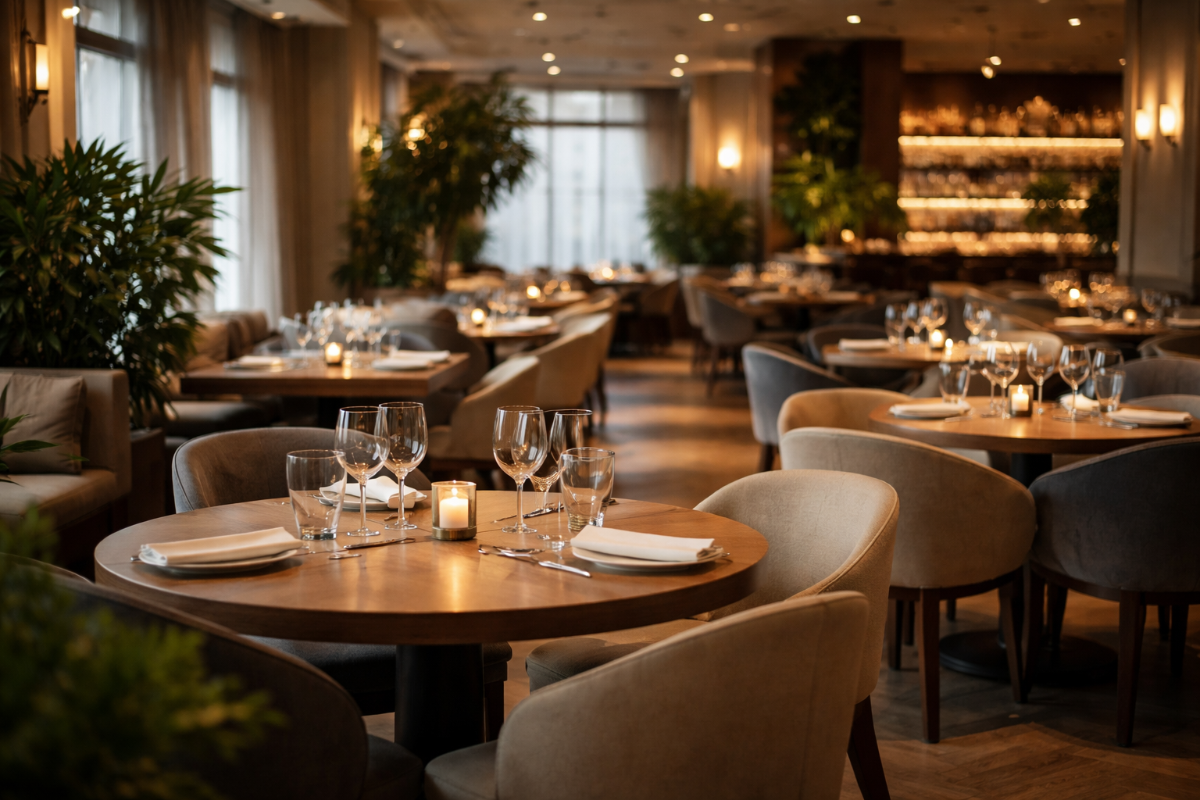
Designing a restaurant is both an art and a science. While lighting, décor, and menu design capture attention, Restaurant Table Spacing quietly determines whether guests feel relaxed or uncomfortable. The distance between tables affects privacy, noise levels, service efficiency, and ultimately the dining experience.

Restaurant owners often focus on maximizing seating capacity. However, placing tables too close together can reduce comfort and harm long-term profitability. On the other hand, spacing tables too far apart may waste valuable floor space. Therefore, successful restaurants rely on careful planning and mathematical layout principles to achieve the perfect balance.

This article explores the science behind Restaurant Table Spacing, the calculations designers use, and how spacing influences comfort, acoustics, and service flow.

Why Restaurant Table Spacing Matters in Restaurant Design?

Restaurant layout planning begins with a simple question: How can a space serve the most guests while keeping them comfortable?

Proper Restaurant Table Spacing directly affects guest satisfaction. When diners feel crowded, they tend to shorten their visit. Consequently, the restaurant loses opportunities for dessert, drinks, or return visits.

Comfort and Personal Space

Guests expect a certain level of personal space when dining. If tables sit too close together, conversations overlap and physical movement becomes difficult.

Adequate spacing provides:

  • Comfortable seating movement

  • Easier access to chairs

  • Reduced accidental contact with neighboring tables

  • Better overall dining atmosphere

Moreover, personal space enhances the perception of quality. Even mid-range restaurants can feel premium when tables are thoughtfully arranged.

Efficient Staff Movement

Restaurant operations depend heavily on staff movement. Servers carry trays, clear dishes, and deliver meals throughout the service period.

Poor spacing creates bottlenecks in walkways. Consequently, staff must take longer routes and service slows down.

Proper Restaurant Table Spacing ensures:

  • Smooth traffic flow for servers

  • Faster table turnover

  • Lower risk of accidents or spills

Therefore, spacing decisions influence both guest satisfaction and operational efficiency.

Mathematical Principles Behind Restaurant Layout Planning

Although restaurant layouts may appear creative, designers rely heavily on measurable planning techniques. Mathematical principles help determine how many tables fit into a room while maintaining comfort.

Space Allocation per Guest

One of the most common calculations in restaurant design is square footage per seat.

Different restaurant categories use different ranges.

Restaurant Type Average Space Per Seat Guest Experience
Fast Casual 12–15 sq ft High turnover, limited privacy
Casual Dining 15–18 sq ft Moderate comfort
Fine Dining 18–22 sq ft Relaxed atmosphere
Luxury Dining 22–30 sq ft Maximum privacy

The formula is straightforward:

Total Dining Area ÷ Space Per Seat = Maximum Seating Capacity

However, designers rarely push the maximum limit because circulation paths require additional space.

Table Clearance Measurements

Designers also calculate clearance zones around each table.

Standard clearance rules include:

  • 18 inches between chair backs and walls

  • 24 inches between occupied chairs

  • 36 inches for main walkways

  • 42–48 inches for primary service aisles

These measurements ensure comfortable movement and efficient service.

Moreover, these dimensions help maintain consistency across the restaurant floor plan.

Balance Between Capacity and Guest Comfort
Every restaurant owner faces the same dilemma: more tables mean more potential revenue. However, overcrowding can quickly damage the dining experience.

The goal of Restaurant Table Spacing is not simply maximizing seats. Instead, designers seek a balance between density and comfort.

The Revenue Density Concept

Revenue density measures how efficiently a restaurant generates income per square foot.

If tables are too sparse, revenue potential decreases. However, if they are too dense, guests feel uncomfortable and stay for shorter periods.

Consequently, the optimal layout often falls in the middle.

Restaurants achieve this balance by:

  • Mixing table sizes

  • Using flexible seating arrangements

  • Adjusting layouts for peak hours

Psychological Perception of Space

Interestingly, guests judge space psychologically rather than mathematically.

For example:

  • A restaurant with wide walkways feels more spacious even with many tables.

  • Strategic placement of plants or partitions creates perceived privacy.

Therefore, Restaurant Table Spacing includes both physical measurement and visual perception.

Role of Acoustics, Privacy, and Service Flow

Spacing affects more than just seating capacity. It directly influences sound levels, guest conversations, and staff productivity.

Acoustic Management

Noise is one of the most common complaints in busy restaurants. When tables are too close together, sound waves bounce between guests and create overwhelming noise.

Proper spacing helps absorb and distribute sound.

Moreover, designers often combine spacing with acoustic materials such as:

  • Upholstered seating

  • Wall panels

  • Ceiling baffles

Consequently, the dining room becomes quieter and more comfortable.

Privacy Between Tables

Privacy plays a critical role in guest satisfaction. Couples, families, and business diners often expect conversations to remain semi-private.

Increasing Restaurant Table Spacing slightly can dramatically improve privacy.

Designers also use:

  • Booth seating

  • Low partitions

  • Decorative screens

These elements create visual boundaries without making the room feel crowded.

Service Flow Optimization

Servers move constantly between the kitchen, bar, and dining area. If tables obstruct pathways, service slows down.

A well-designed layout includes:

  • Primary service lanes

  • Secondary guest walkways

  • Clear access to emergency exits

Therefore, Restaurant Table Spacing becomes part of a larger circulation strategy.

Influence of Luxury Dining Standards

High-end restaurants follow stricter spacing standards. Luxury dining emphasizes comfort, exclusivity, and calm environments.

Consequently, luxury establishments allocate significantly more space per guest.

Luxury Spacing Benchmarks

Dining Category Table Distance Seating Density
Casual Dining 24–30 inches Moderate density
Upscale Dining 30–36 inches Comfortable
Fine Dining 36–48 inches Spacious
Luxury Restaurants 48+ inches Highly private

Greater spacing allows guests to enjoy a slower, more relaxed dining experience.

Moreover, wide spacing enhances presentation. Servers can approach tables elegantly without interrupting neighboring guests.

Perception of Prestige

Luxury restaurants intentionally reduce seating capacity. Although this lowers total seats, it increases perceived exclusivity.

Consequently, guests associate wider Restaurant Table Spacing with premium quality.

Many Michelin-level restaurants even design layouts where no tables share the same direct line of sight.

How Architects and Hospitality Designers Calculate Spacing?

Professional restaurant designers use specialized planning methods to determine the ideal layout.

Zoning the Dining Area

The first step is dividing the restaurant into functional zones.

Common zones include:

  • Dining areas

  • Waiting spaces

  • Bar seating

  • Circulation paths

  • Service stations

Each zone receives a percentage of the total floor area.

Typically:

  • 60–70% for dining

  • 30–40% for service and circulation

This zoning approach ensures the dining area does not consume excessive space.

Modular Table Planning

Designers often use modular grids when arranging tables.

For example:

  • A two-person table may occupy a 30 × 30 inch footprint.

  • A four-person table may require 36 × 36 inches.

By adding chair clearance and walkways, designers calculate the full spatial module.

Example module:

  • Table: 36 inches

  • Chair clearance: 24 inches each side

  • Total module width: 84 inches

Consequently, architects can replicate this module across the floor plan while maintaining consistent spacing.

Digital Layout Simulation

Modern hospitality design increasingly relies on digital tools.

Software allows designers to simulate:

  • Staff movement patterns

  • Guest flow

  • Emergency evacuation routes

These simulations help refine Restaurant Table Spacing before construction begins.

Moreover, digital modeling prevents costly redesigns after opening.

Common Restaurant Table Spacing Mistakes

Even experienced operators sometimes overlook critical spacing factors.

Overcrowding the Dining Floor

Owners often add extra tables during busy periods. However, temporary overcrowding can harm the overall experience.

Guests may feel rushed or uncomfortable.

Ignoring Staff Pathways

Some layouts focus entirely on guest seating. As a result, servers struggle to navigate between tables.

Therefore, circulation lanes must always remain clear.

Poor Table Alignment

Random table placement can create visual clutter and awkward pathways.

Instead, designers align tables along invisible grid systems to maintain order.

Best Practices for Optimal Restaurant Table Spacing

Successful restaurants follow several practical guidelines.

Plan circulation first

Walkways should be defined before placing tables.

Use varied seating types

Booths, banquettes, and communal tables improve space efficiency.

Create visual separation

Plants, screens, and lighting help define zones without reducing seating.

Test layouts physically

Many designers tape table outlines on the floor before final installation.

This real-world testing reveals spacing issues that drawings might miss.

Frequently Asked Questions

What is the ideal distance between restaurant tables?

Most restaurants maintain 24–36 inches between tables. Fine dining establishments often increase spacing to 48 inches or more.

How much space should each restaurant seat have?

Casual restaurants typically allocate 15–18 square feet per seat, while luxury dining venues may provide 22–30 square feet per seat.

Why do fine dining restaurants space tables farther apart?

Greater spacing improves privacy, reduces noise, and enhances the perception of luxury. Consequently, guests feel more relaxed and stay longer.

Can smaller restaurants still maintain good table spacing?

Yes. Smaller venues often use smart layout strategies such as booth seating, flexible tables, and wall-mounted seating to maintain comfort without sacrificing capacity.

Does table spacing affect restaurant revenue?

Yes. Balanced Restaurant Table Spacing improves guest satisfaction and encourages longer visits, repeat customers, and higher spending per table.

Tags: Hospitality Design StandardsRestaurant Floor Plan Optimizationrestaurant interior designRestaurant Layout PlanningRestaurant Table Spacing
Previous Post

19-Year-Old Antonelli Stuns F1 With Record-Breaking Pole in China

Next Post

Bridal Jewelry Sets: How to Pick One That Feels Just Right

Related Posts

Business

From Grain to Glass: How Profitable Are Liquor Stores in Today’s Beverage Economy

Fine Dining & Beverage

Investing in Experience: Why Upscale Restaurants Are Allocating More Budget to Premium Chairs

Fine Dining & Beverage

Why Pepper Mills Matter More Than Pre-Ground Pepper

Entertainment

Ways Families Can Make Dining Out More Fun

Fine Dining & Beverage

What You Notice When Beer Is Freshly Brewed

Fine Dining & Beverage

Miami’s Riverfront Gets a New After-Dark Destination

Next Post

Bridal Jewelry Sets: How to Pick One That Feels Just Right

No Result
View All Result
Facebook Instagram Linkedin

How to Plan and Design Your Dream Luxury Residence
Costume Art at The Met: Why the 2026 Met Gala Is About More Than Red Carpet Fashion
Understanding Forex Trading Regulations in the United States
F1 April Gap Explained The Hidden Work Fans Don’t See
March 2026 Superyacht Sales Report Values, Volume and Market Direction
Top Benefits of Private Jet Charters for Business Travelers
Why Australians Are Switching to Private Jets in 2026
Is Old-School Luxury Back The Hongqi Guoya Revives V8 Presidential Sedans
F1 Legends & Records Who Dominates the History Books

Categories

  • Beauty
  • Biography
  • Business
  • Career
  • Celebrity
  • Charitable Events
  • Culture
  • Entertainment
  • Environment
  • Environmental Health
  • Events
  • Family
  • Family Office
  • Fashion
  • Feature
  • Finance
  • Fine Dining & Beverage
  • Health & Wellness
  • Impact Investing
  • Impact Leaders
  • Interviews
  • Investing
  • Legal Rights
  • Lifestyle
  • Luxury Living
  • Marketing
  • Net Worth
  • Philanthropy
  • Politics
  • Profile
  • Real Estate
  • Resource Guide
  • Retirement
  • Rights
  • Sustainability
  • Tech
  • The Arts
  • Travel
  • Travel Lifestyle
  • Uncategorized
  • Upcoming Event
  • Vehicles
  • Wealth
  • Wealth Management

© 2025 ImpactWealth  | Disclaimer – Privacy Policy

No Result
View All Result
  • Lifestyle
    • Health & Wellness
    • Fine Dining & Beverage
    • Fashion
    • Event Coverage
    • The Arts
    • Resources
  • Travel
    • Travel Lifestyle
  • Investing
    • Wealth
    • Retirement
    • Real Estate
    • Philanthropy
    • Family Office Trends
  • Impact Interviews
  • Subscribe Now
  • About Us
    • Press
  • Join Our Community
  • Sign up for Newsletter

© 2020 ImpactWealth

Welcome Back!

Login to your account below

Forgotten Password? Sign Up

Create New Account!

Fill the forms below to register

All fields are required. Log In

Retrieve your password

Please enter your username or email address to reset your password.

Log In
No Result
View All Result
  • Lifestyle
    • Health & Wellness
    • Fine Dining & Beverage
    • Fashion
    • Event Coverage
    • The Arts
    • Resources
  • Travel
    • Travel Lifestyle
  • Investing
    • Wealth
    • Retirement
    • Real Estate
    • Philanthropy
    • Family Office Trends
  • Impact Interviews
  • Subscribe Now
  • About Us
    • Press
  • Join Our Community
  • Sign up for Newsletter

© 2020 ImpactWealth