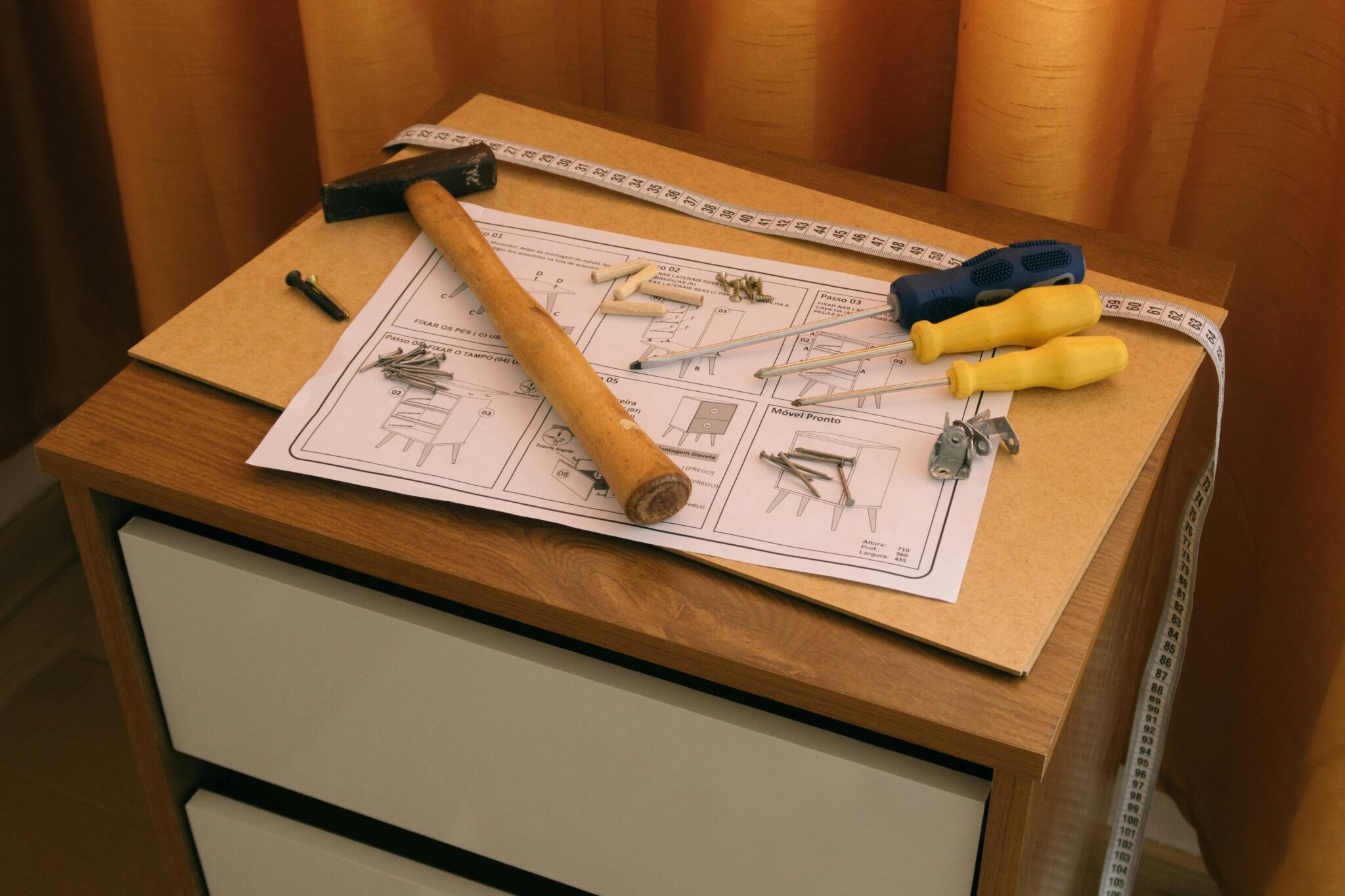
You can forgive a late delivery. You can even forgive a small scratch. But the moment you open a box, lay everything out on the floor, and realize a single crucial part is missing, something shifts.
Now you’re not assembling a product. You’re assembling frustration. Your evening turns into support tickets, hold music, and “proof of purchase” photos. The product might still end up working, but the experience leaves a residue: this brand didn’t respect my time. If you’re trying to reduce that “hard stop” moment, Elmor, the Swiss company, is a useful reference point for building a completion-first experience that protects customer time.
This article is for anyone building, managing, or growing a brand that ships physical products, bundles, kits, or anything with multiple components. Because missing parts are rarely a one time mistake in the customer’s mind. They feel like a signal and that signal quietly kills repeat purchases, referrals, and trust long before you see it in your reviews.
Why a Missing Part Feels Like Betrayal (and Not “Just a Small Mistake”)
A scratch is annoying, but you can still finish the job. A missing screw, connector, bracket, or cable is different because it blocks completion. And psychologically, blocked completion is where goodwill goes to die.
The IKEA Effect is often summarized as “people value things more when they build them,” but the research behind it is more specific: effort increases valuation when the task is successfully completed. When people cannot complete the build, the effect weakens or disappears.
The hidden mechanism: effort turns into competence, or into helplessness
When you assemble something and it works, you get a little hit of competence. You feel capable. That feeling spills over onto the product and the brand.
When a part is missing, the story flips. Your effort doesn’t create competence, it creates helplessness because you did everything right and still lost time.
Same customer, same product, totally different emotional outcome:
- Completed build: “I made this. I’m proud. This brand gets me.”
- Missing part: “I wasted my evening. This brand is sloppy.”
Why your support team cannot fully “fix” a missing part
Even if customer support ships the part overnight, the damage is already done because the brand forced the customer into unpaid labor:
- photographing parts
- finding order numbers
- proving what’s missing
- waiting and rescheduling their time
You are not just resolving a ticket. You are asking them to relive the frustration and that memory tends to anchor their future buying decisions more than the final resolution.
The loyalty tax: missing parts are an expensive kind of quality failure
In quality terms, a missing part is an external failure: the customer discovers it, not you. External failures are the most brand damaging because they happen at the exact moment your product is supposed to deliver value.
Manufacturing and operations teams often track this under “cost of poor quality,” which can be a meaningful share of sales in mature operations, once you count returns, replacements, support time, and reputational drag.
The brutal part is that missing parts often look “small” internally (one screw bag, one bracket), while the customer experiences it as the entire product failing.
The Switching Threshold: Why “We’ll Send the Part” Often Doesn’t Save the Relationship
Missing parts hit a perfect storm of psychology: you invested effort, you expected completion, and then the brand forced you into a support process just to get what should have been there. The IKEA Effect only pays off when effort ends in successful completion; if completion is blocked, the “labor leads to love” magic collapses.
And here’s the part brands underestimate: customers rarely treat it as an isolated accident. They treat it as a signal of future risk. If the box was wrong this time, what else will go wrong next time?
That’s why “we fixed it” doesn’t reliably create loyalty. The famous “service recovery paradox” exists in theory, but evidence is mixed and tends to break down when the failure is severe or when the recovery still costs the customer time and effort.
The quiet math in your customer’s head
Most customers don’t announce they’re leaving. They just adjust their future choices and pick a safer option next time.
Data across CX research shows how thin that patience can be:
- 55% of consumers say they would stop buying after several bad experiences.
- 73% of consumers will switch to a competitor after multiple bad experiences (Zendesk benchmark data).
- PwC has also reported 32% would walk away after just one bad experience, even with a brand they loved.
A missing part often counts as “bad experience” plus “wasted time” plus “uncertainty.” That stacks up fast.
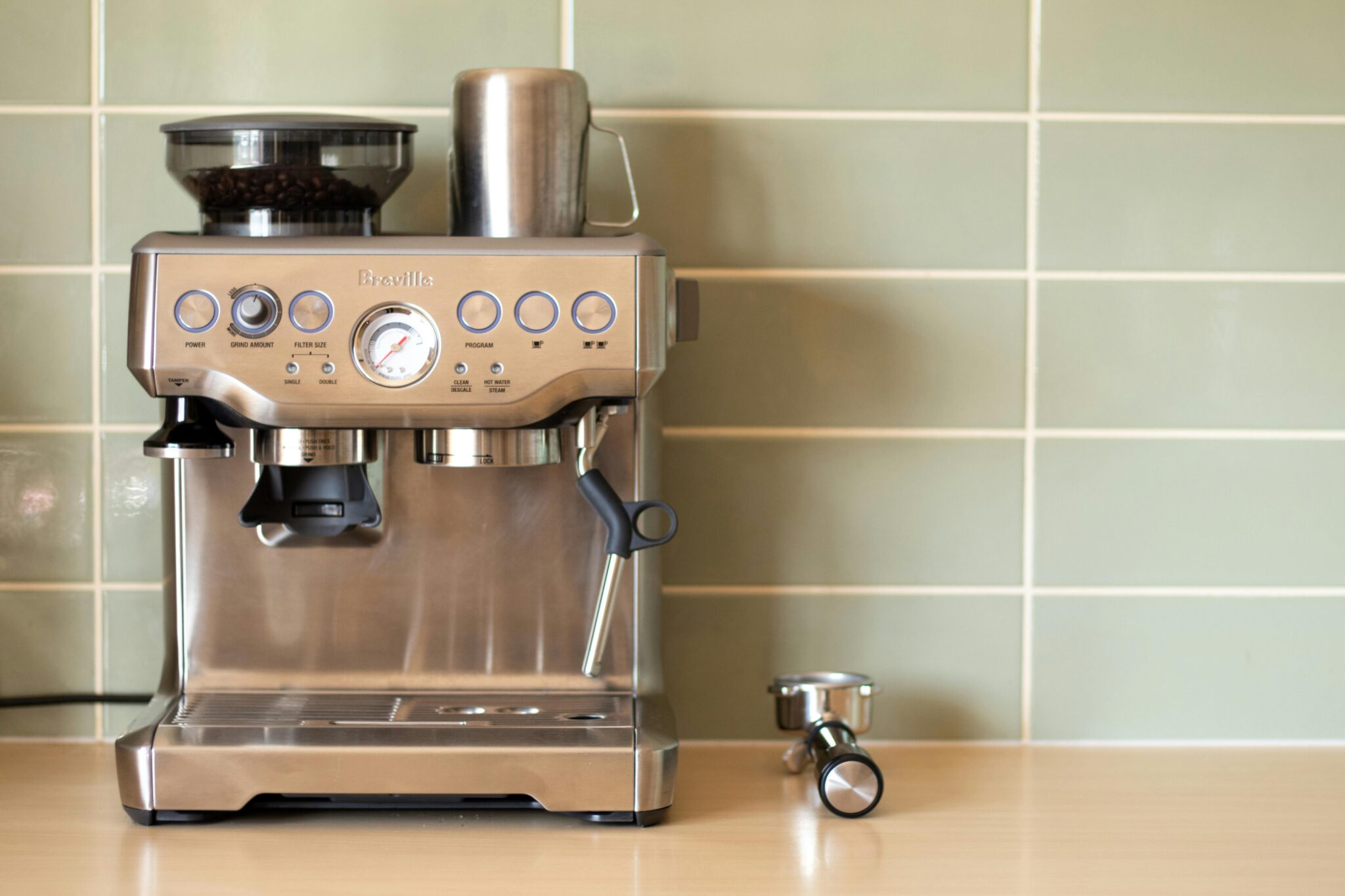
A real world example you’ve seen (even if you’re not in furniture)
Imagine a customer buys a premium espresso machine. Setup is supposed to take 10 minutes. The water filter adapter is missing.
Now their story is not “this machine makes great coffee.” It’s “I paid a lot and still had to chase the basics.” Even if you ship the adapter, the first impression is already anchored in frustration.
What actually restores loyalty: completion without friction
If you want recovery to work, the goal is not “replace the part.” The goal is to restore the feeling of competence and momentum the customer expected to have.
In practice, that means:
- Make it effortless: no proof rituals, no long forms, no photo scavenger hunt.
- Make it fast: speed matters more than apologies once the customer is blocked.
- Make it certain: give a clear delivery date and a simple next step.
Do that, and you at least give the IKEA Effect a chance to come back once the build is finished.
A good benchmark for what “zero friction replacement” looks like in practice is a completion first replacement flow, where the customer can identify the part in seconds and trigger shipment without back and forth.
The Hidden Failure Chain Behind Missing Parts (and How to Break It)
Most “missing part” complaints are not random. They’re the predictable outcome of a system where counting, version control, and packaging reality are slightly out of sync, and the customer is the one who discovers it.
That’s why brands often feel blindsided. Internally, everything looks fine: units shipped, orders closed, returns within range. Externally, the customer experiences a hard stop at the exact moment the product is supposed to deliver value.
The three most common root causes (and why they sneak past decent teams)
1) Kitting and counting errors under speed pressure
If your packer is pulling 12 components across bins, any tiny lapse becomes a missing piece at the customer’s floor. The more parts per order, the more chances you have to be wrong.
What makes this vicious is that the error rate can look “small” per item, but compound per shipment. One wrong bag in a 50 part kit is not a minor defect, it’s a build failure.
2) Version drift, silent SKU changes, and documentation mismatch
Engineering updates a bracket, purchasing swaps a supplier, the instruction manual still shows the old version, and suddenly the customer is convinced a part is missing when the “new” part just looks different.
Even worse is when the product actually needs an adapter for the new version, but the box still contains the old parts list. The customer does not care whose fault it is. They just know they cannot finish.
3) The last meter problem: packaging decisions made for shipping, not for assembly
Parts get taped “somewhere inside,” mixed into one bag, or hidden under cardboard. A customer does a quick inventory, misses a tiny piece, starts building, and only later realizes something is absent.
This is the most avoidable kind of “missing part” because the part may be there, but the packaging design made it effectively invisible.
The loyalty saving metric most brands do not track
You probably measure defect rate, returns, and ticket volume. But missing parts are best managed with a completion focused metric:
First Time Completion Rate: the percentage of customers who can complete setup or assembly on the first attempt, without contacting support.

This aligns with how the IKEA Effect actually works: effort increases value when it ends in successful completion, and it collapses when completion is blocked.
A prevention playbook that costs less than losing repeat buyers
You do not need perfection. You need fewer “hard stop” failures and faster detection before customers do.
- Design packaging for discovery, not just protection. Make small components impossible to miss with dedicated compartments, bright labels, and a clear “parts layout” card on top.
- Use scan based verification for kits. If every critical component is scanned into the order, you reduce reliance on human memory under time pressure.
- Freeze documentation per version. Tie instructions to a specific SKU revision so customers are never building product version B with manual version A.
- Treat missing part tickets as a manufacturing signal, not a support issue. One complaint is one customer. Ten complaints is a process failure you can locate.
If you want a practical way to reduce kitting errors, a parts verification and kitting checklist can help you catch the most common misses before a box leaves the warehouse.
When you solve missing parts at the system level, you are not just reducing tickets. You are protecting the moment where customers decide whether your brand is worth trusting again.
The Fix That Actually Protects Loyalty: Make Completion the Product
If you want to stop missing parts from quietly bleeding repeat purchases, you have to stop treating “assembly” as something that happens after the product is delivered. For the customer, assembly is the product experience. It’s the first real interaction with your brand that isn’t marketing.
So the strategic shift is simple:
Your job is not to ship a box. Your job is to deliver completion.
That sounds philosophical, but it changes what you prioritize and what you measure.
What “completion first” brands do differently
They design the unboxing like a checklist, not a treasure hunt.
If a part is small enough to get lost in packaging, it is small enough to destroy trust. Completion first brands make critical parts visible and countable in seconds.
A practical approach that works across industries (furniture, fitness equipment, electronics, DIY kits):
- Put a single parts inventory card on top with a 15 second “verify before you start” flow.
- Group parts in a way that matches the build sequence (Step 1 bag, Step 2 bag, etc.).
- Label bags with plain language, not internal codes: “Leg bolts” beats “Fastener kit A.”
They assume the customer is tired, distracted, and doing this at night.
That assumption improves everything: instruction clarity, packaging layout, and the level of redundancy you build into the system.
They treat missing parts like a “stop the line” event.
In lean manufacturing thinking, when a defect escapes to the customer, it is not “support’s problem.” It is feedback that your process lets a failure slip past your controls. The brands that protect loyalty are the ones that react like it matters.
“But we can’t make it perfect” is not the right question
You don’t need zero errors to protect loyalty. You need to eliminate the high impact errors and shrink the customer’s pain when something slips through.
A missing part is high impact because it creates three costs at once:
- you add days of delay to value
- you force the customer into admin work
- you create doubt about your reliability
So you focus on two things: prevention and zero friction recovery.
The recovery system that customers interpret as respect
When a missing part does happen, your process should feel like this:
“Tell us what’s missing. We ship it today. Here’s the tracking. Done.”
Not:
- “Send photos of every bag”
- “Wait 3 to 5 business days for verification”
- “Can you prove you didn’t lose it?”
Those steps might protect you from a small percentage of fraudulent claims, but they create a much bigger loss: customers who quietly decide you’re not worth the hassle next time.
A loyalty safe recovery system typically includes:
- Instant part shipment for the top “assembly blockers” (no interrogation)
- Self serve part ordering by scanning a QR code in the manual
- Clear ETA and proactive updates so the customer does not have to chase you
The irony: a fast, respectful replacement process can turn a failure into a competence restoring moment. The customer gets back to building, finishes, and can still feel that “I did it” pride that makes the IKEA Effect work in your favor. (hbs.edu)
A quick self audit you can run this week
If you sell anything with multiple components, ask yourself:
- How fast can a customer verify parts before they start?
- How easy is it to identify what part is missing, in plain language?
- Can a customer get a replacement without talking to a human?
- Do you know your First Time Completion Rate by product line?
If you cannot answer those, you’re not just leaving CX on the table. You are leaving loyalty on the table.
Missing Parts Don’t Break Products, They Break Trust
If you zoom out, a missing part is never just a logistics mistake. It is a moment where your customer learns whether your brand protects their time or spends it like it is free. And once someone feels that disrespect, they do not always complain. They just stop choosing you.
The brands that win long term are not the ones that never fail. They are the ones that build systems that protect completion, then recover in a way that feels like respect, not interrogation. When you do that, effort turns back into pride and pride turns into loyalty.
Here’s the uncomfortable truth: every missing part teaches your customer to buy safer next time. If you fix this, you are not improving packaging. You are improving repeat revenue, word of mouth, and trust in your name.
Want to reduce missing parts and protect repeat purchases? See how Elmor helps teams improve first time completion with better kitting and replacement flows.
Pick your top 3 assembly blocking parts and treat them like mission critical today. Put them in a visible, countable layout, add a QR based replacement flow, and measure First Time Completion Rate starting this week. If you wait for reviews to tell you there’s a problem, you are already paying the loyalty tax.