The global wellness economy is no longer a niche sector riding lifestyle trends—it is a $6.8 trillion engine reshaping consumer behavior, real estate development, tourism, and public health policy worldwide. According to new country rankings released this week by the Global Wellness Institute (GWI), wellness spending now spans 145 countries, with growth accelerating even amid economic uncertainty, geopolitical tension, and rising healthcare costs.
The data tells a clear story: wellness has become structurally embedded in how nations invest, how consumers spend, and how governments think about resilience.
The World’s Largest Wellness Markets
In absolute terms, five countries dominate the global wellness landscape. The United States leads decisively with a $2.1 trillion market—accounting for nearly one-third (32%) of all global wellness spending—followed by China ($950 billion), Germany ($281 billion), Japan ($262 billion), and the United Kingdom ($261 billion). Together, these five nations represent 58% of the global wellness economy.
What is notable is not only scale, but momentum. Every one of the world’s top 25 wellness markets has now surpassed its pre-pandemic (2019) size—many by wide margins. This has occurred despite inflation, currency volatility, and uneven economic recoveries across regions.
As GWI partner economist Thierry Malleret has described it, wellness is not simply resilient—it is “anti-fragile,” strengthening in periods of stress rather than retreating.
The United States: Growth Amid Systemic Strain
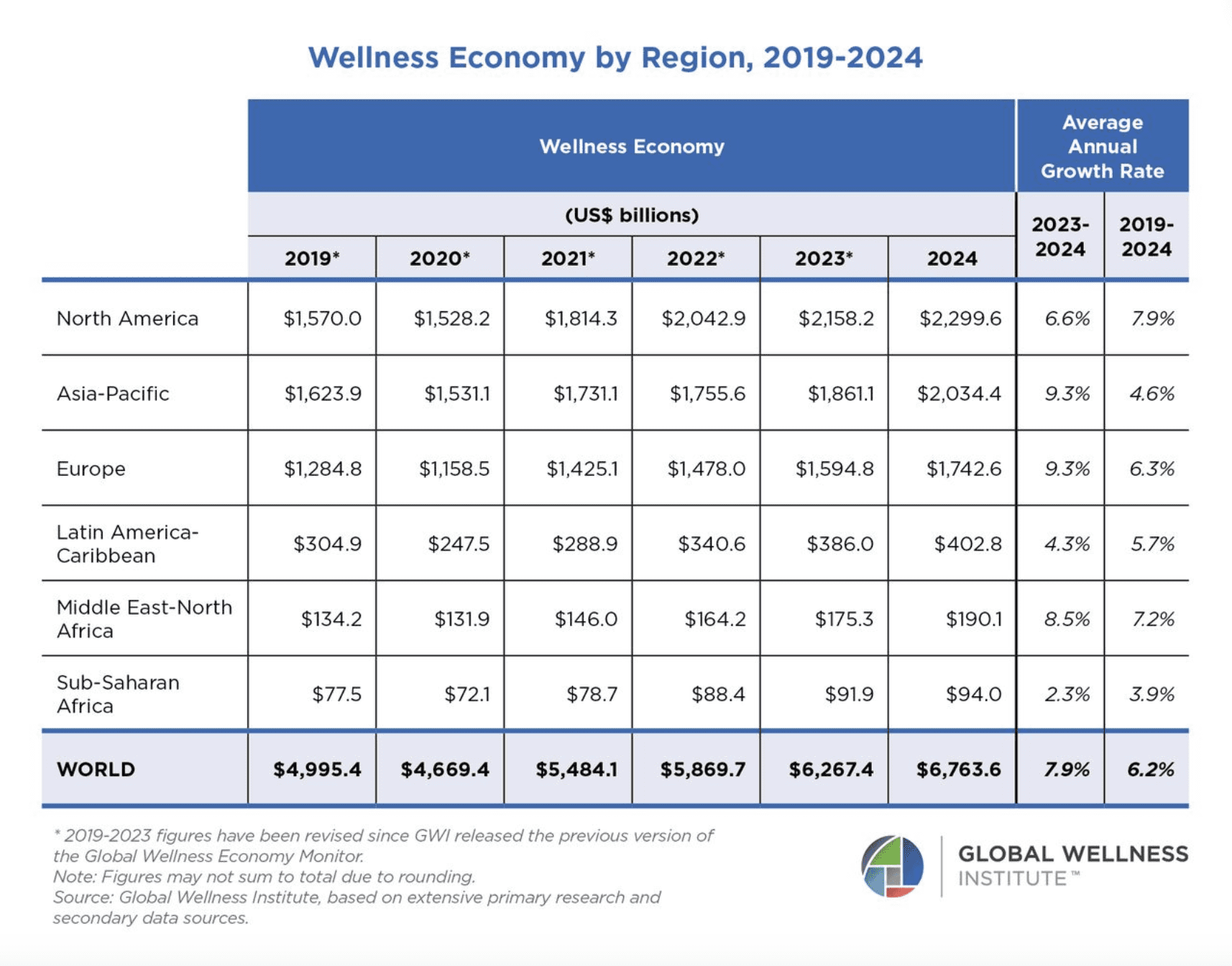
Nowhere is this paradox more visible than in the U.S. While Americans report record levels of stress and dissatisfaction with the healthcare system, wellness spending continues to surge. Between 2023 and 2024 alone, the U.S. wellness market expanded by more than $130 billion—roughly equivalent to the entire wellness economies of Italy or Australia.
This growth reflects a structural shift: consumers are increasingly investing in prevention, longevity, mental health, fitness, nutrition, and wellness-oriented environments as complements—or alternatives—to traditional healthcare.
The Middle East’s Breakout Moment
Among the most striking findings in this year’s rankings is the explosive growth of the Middle East wellness economy, led by the United Arab Emirates and Saudi Arabia.
“One striking finding this year is the remarkable growth of the Middle East wellness economy over the last five years,” said Katherine Johnston, senior research fellow at GWI. “This growth has mainly been driven by an explosive wellness market in the UAE and Saudi Arabia—the region’s largest markets and also the fastest-growing countries in the world since 2019.”
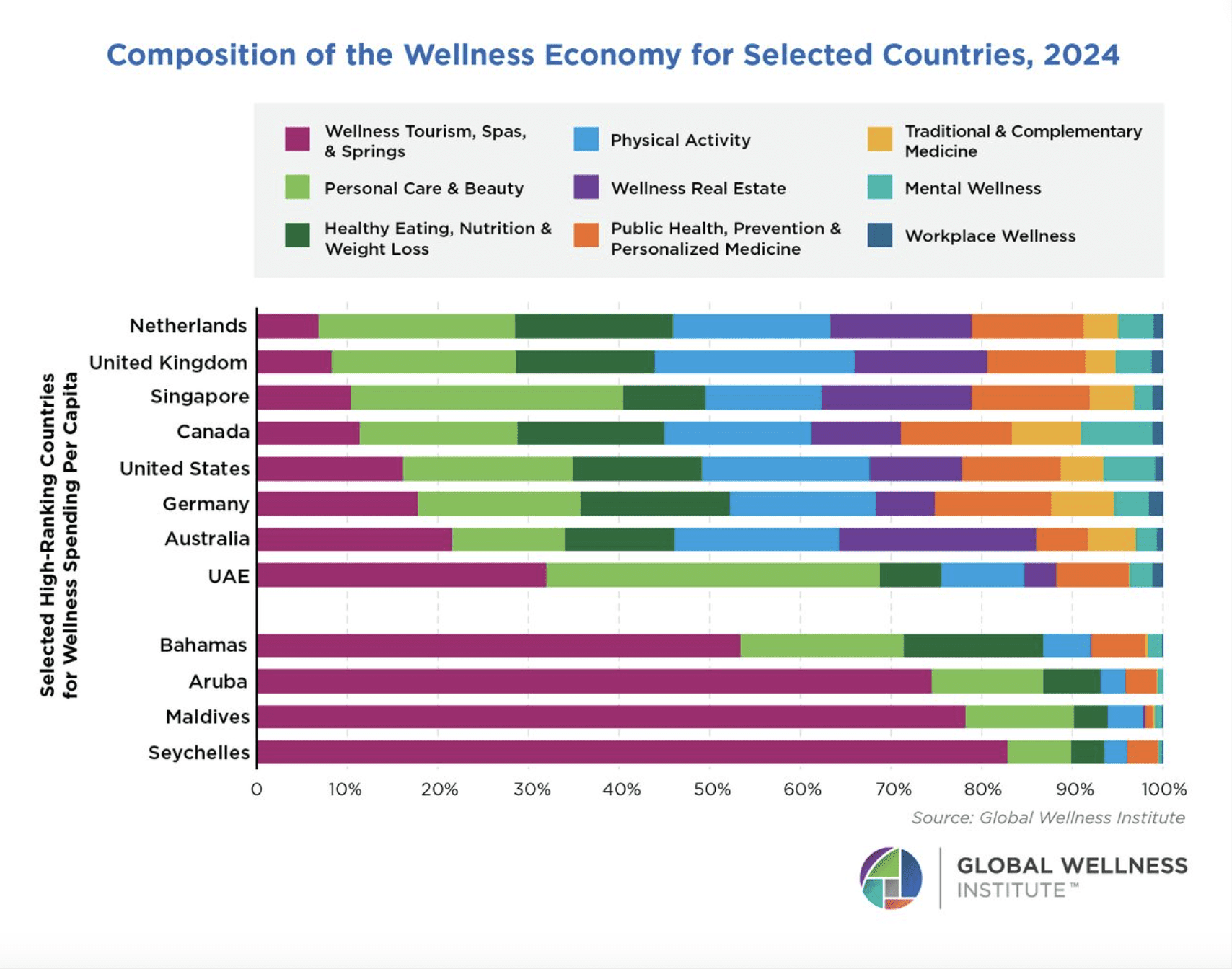
Saudi Arabia, now ranked among the top 25 global wellness markets, posted an extraordinary 12.2% annual growth rate from 2019 to 2024—double the global average—while the UAE recorded the fastest growth of any country worldwide at 14.3% annually. In both cases, wellness tourism, large-scale wellness real estate developments, and government-backed public health initiatives are acting as powerful catalysts.
Fast Growth Beyond the Mega-Markets
While large economies continue to expand, some of the most compelling growth stories are emerging from smaller markets. Countries such as Croatia, Cuba, Romania, Costa Rica, and Kazakhstan have all grown their wellness economies by more than 9% annually since 2019, highlighting the sector’s global reach and adaptability.
India stands out among major markets, climbing from 10th to 7th place globally after posting 11.3% annual growth. Its expansion has been driven by sharp increases in traditional and complementary medicine, wellness tourism, and preventive health practices deeply rooted in cultural heritage.
The Sectors Driving the Boom
Across both large and fast-growing markets, four sectors are responsible for the bulk of wellness expansion:
-
Wellness real estate, now the single largest contributor to global growth
-
Wellness tourism, attracting cross-border spending and long-stay visitors
-
Beauty and personal care, increasingly tied to science-backed wellness outcomes
-
Healthy eating, nutrition, and weight management
Together, these categories reflect a broader shift toward environments and experiences that support long-term health—not just products or services consumed in isolation.
Where Wellness Spending Runs Deepest
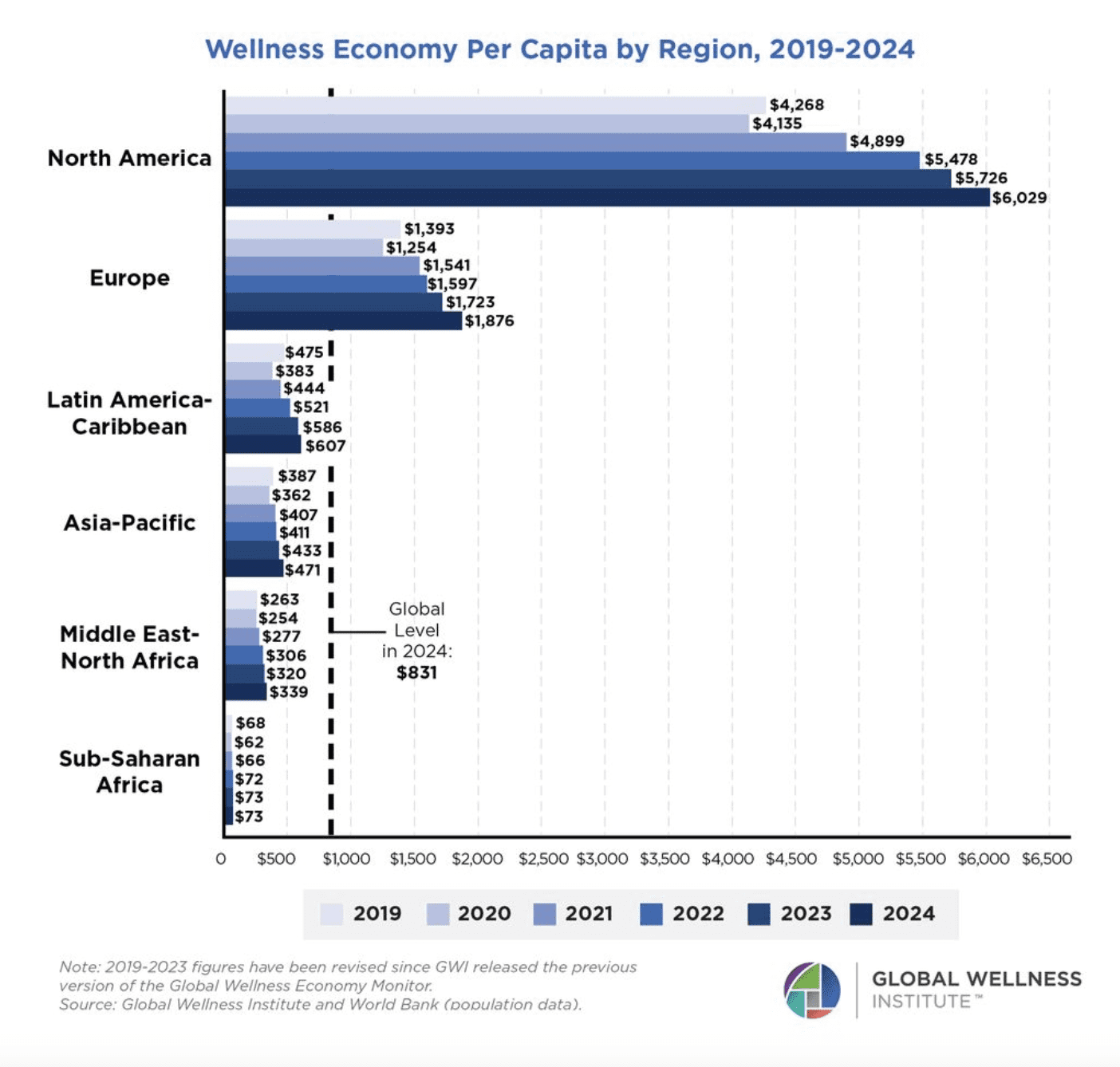
On a per-capita basis, wealth concentration and luxury tourism play an outsized role. Iceland leads global wellness spending at $7,393 per person annually, followed by Switzerland, Aruba, and the United States. Notably, countries reliant on high-end tourism—including Aruba, the Seychelles, and Iceland—see wellness spending far exceed the global average.
Globally, the average individual now spends $831 per year on wellness—more than the average spend on all medical services combined ($806). This crossover marks a profound reordering of consumer priorities.
Looking Ahead
The rankings accompany GWI’s 2025 Global Wellness Economy Monitor, which forecasts the wellness economy will grow to $9.8 trillion by 2029. For investors, developers, policymakers, and brands alike, the implication is clear: wellness is no longer discretionary. It is foundational.
As nations compete to attract capital, talent, and tourism, wellness has become a strategic asset—one that is shaping the future of cities, travel, real estate, and how societies define prosperity itself.